
Choosing your first kettlebell weight is the most critical decision you will make when starting your kettlebell training journey. Pick a weight that is too heavy, and you risk acute shoulder or lower back injuries; pick one that is too light, and you will miss out on the unique neural and muscular benefits of ballistic training. For most beginners, a safe starting point lies between 8 kg and 16 kg, but the ideal size depends heavily on your current strength, lifting history, and the specific exercises you intend to perform.
Quick Answer: General Starting Weight Ranges
As a broad industry benchmark, most active women find their optimal starting point with an 8 kg to 12 kg kettlebell, while most active men are well-suited to start with a 12 kg to 16 kg kettlebell. If you are completely new to resistance training or are recovering from a minor joint injury, starting on the lower end of these ranges—such as 6 kg or 8 kg—is highly recommended to ensure a safe learning curve.
These figures are not rigid rules, but rather baseline starting points that must be adjusted to match your individual physical capabilities. The unique mechanics of kettlebell training require your body to stabilize an offset center of gravity, which places significantly more demand on your joints than traditional dumbbells.
Products mentioned in this guide
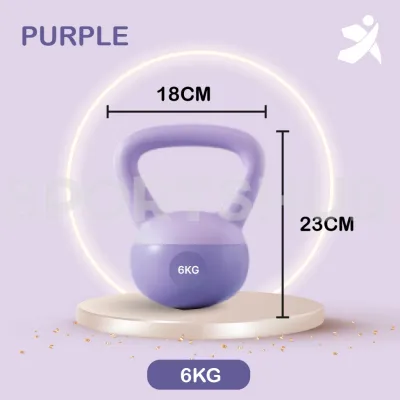
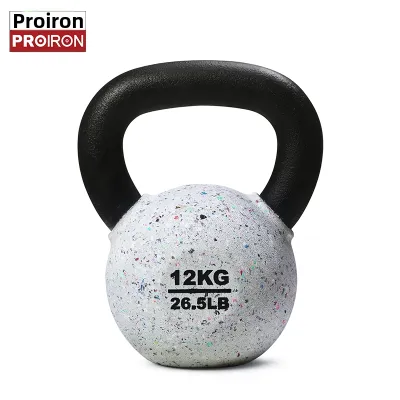
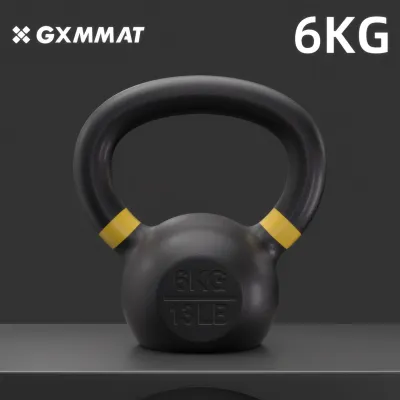
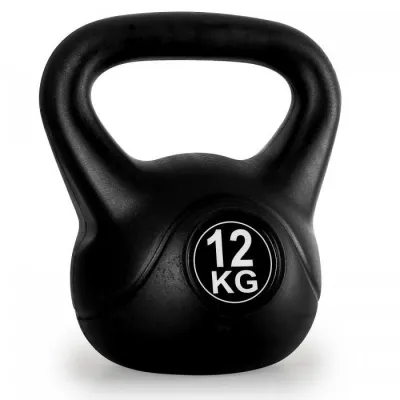
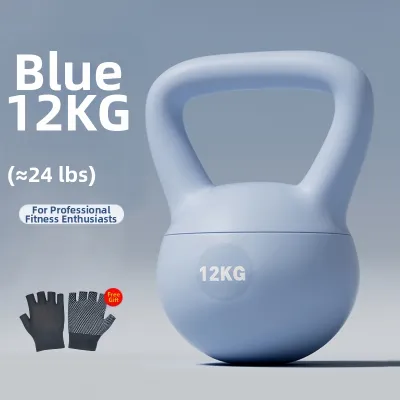
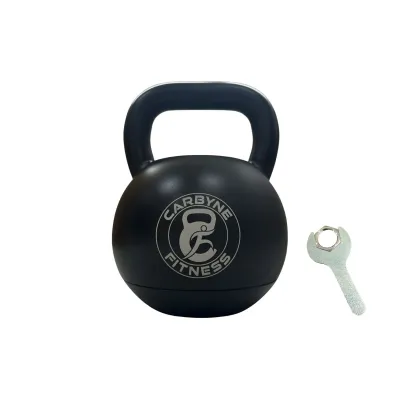
Prices are valid at publication and may change. Please refer to the product page for the latest price.
The foundational philosophy of beginner kettlebell training is simple: prioritize movement mechanics and joint safety over lifting heavy loads. Mastering the alignment of your spine, the power of your hip hinge, and the stability of your shoulder girdle with a manageable weight builds the necessary neural pathways for safe progression. Loading a movement before mastering its mechanics is a direct path to compensation patterns and chronic joint strain.
Step 1: Assess Your Current Fitness and Strength Baseline
Before purchasing your first kettlebell, you must objectively evaluate your current physical condition. Your daily activity level, occupational demands, and overall joint health dictate whether you should stick to the standard baseline weights or adjust your starting point up or down.

Evaluating Your Grip and Core Stability
Your ability to control a kettlebell depends almost entirely on your grip strength and core stability. Unlike a dumbbell, which sits balanced in your palm, a kettlebell constantly pulls away from your center of mass, requiring your wrist and core muscles to work in unison to maintain control.
To gauge your foundational strength, you can perform a few simple, equipment-free self-assessments at home:
- The Plank Test: Attempt to hold a strict forearm plank with a neutral spine and active glutes for a full 60 seconds. If your hips sag or your lower back arches before the minute is up, your core stability needs development.
- The Carry Test: Assess your wrist and grip endurance during daily tasks. If carrying two heavy grocery bags (roughly 5 kg to 8 kg each) up a flight of stairs or down a long corridor causes your wrists to bend or your fingers to slip, your grip strength may be a limiting factor.
- The Bodyweight Squat Test: Perform 15 controlled bodyweight squats to parallel. If your heels lift off the ground, your knees cave inward, or your torso collapses forward, you must address your mobility and lower-body stability.
If you struggle with any of these self-assessments, it is highly advisable to start with a lighter kettlebell, such as an 8 kg bell for men or a 6 kg bell for women. A weak grip or an unstable core will cause your body to compensate by overusing the lower back and neck muscles, which dramatically increases the risk of acute strain during explosive movements.
Adjusting for Prior Lifting Experience
If you already have experience with traditional strength training, such as barbell deadlifts or dumbbell shoulder presses, you might feel tempted to skip the standard beginner weights. However, kettlebell physics differ fundamentally from symmetric gym equipment.
Because the ball of the kettlebell sits several inches away from the handle, it creates a rotational force (torque) that constantly tries to pull your joints out of alignment. A 16 kg dumbbell press feels relatively straightforward because the load is centered directly over your wrist and elbow; pressing a 16 kg kettlebell requires significant rotational stability from your rotator cuff to keep the weight from pulling your arm backward.
Even if you can easily bench press or squat heavy weights, start your kettlebell journey conservatively. Overconfidence is a common pitfall for experienced lifters transitioning to kettlebells. Choosing a weight that matches your dumbbell strength rather than your stabilizing capacity often leads to wrist hyperextension, shoulder impingement, or lower back fatigue.
Step 2: Match the Weight to Your Primary Exercise Type
A single kettlebell weight is rarely perfect for every exercise. To make an informed purchase, you must understand how different kettlebell movements place varying demands on your musculature and skeletal system.
Ballistic Movements (Swings, Snatches, Cleans)
Ballistic movements are explosive, momentum-based exercises that primarily target your posterior chain—the hamstrings, glutes, and lower back. These exercises rely on a powerful hip hinge to drive the weight forward and upward, rather than using your upper body to muscle the weight up.
Because ballistic movements utilize your body’s largest and most powerful muscle groups, they require a surprisingly heavy load to execute correctly. If the kettlebell is too light, you will naturally resort to “arm-pulling” the weight, using your shoulders and biceps to lift it, which defeats the purpose of the hip hinge and can strain your neck.
Conversely, if the kettlebell is too heavy, your glutes and hamstrings will fail to generate enough speed, causing your lower back to round and absorb the shear forces of the swinging weight. For safety, ensure you can maintain a perfectly neutral spine throughout the entire movement. Beginners should generally choose a swing weight that feels challenging but allows them to snap their hips forward explosively without losing their balance.
Grind Movements (Presses, Squats, Turkish Get-Ups)
Grind movements are slow, controlled exercises that require continuous muscle tension and extreme joint stability. Unlike ballistic exercises, grinds do not utilize momentum; you must actively fight the weight through every inch of the range of motion.
Because grinds place a continuous load on smaller stabilizing muscles, particularly in the shoulders and wrists, you must perform them with a lighter weight than your ballistic exercises. For example, if you swing a 16 kg kettlebell, you will likely need to drop down to a 12 kg or even an 8 kg kettlebell to perform a safe overhead military press or a Turkish get-up.
Starting too heavy on grind movements can quickly lead to injury, particularly in the rotator cuff. When pressing overhead, your wrist must remain completely straight and locked; if the weight forces your wrist to bend backward, it places immense strain on your forearm tendons and compromises your shoulder mechanics. Always prioritize a weight that allows you to maintain a straight wrist and a packed shoulder socket.
Step 3: Recognizing the Signs of the Wrong Weight
Once you begin training with your new kettlebell, you must monitor your body’s feedback to verify if you have selected the appropriate weight. Use the following self-diagnostic checklist during your first few workouts to evaluate your choice.
Signals your kettlebell is too heavy:
- Lower Back Discomfort: You feel a dull ache or sharp pinch in your lower back during or after swings, indicating that your lumbar spine is rounding and compensating for weak glutes.
- Wrist Hyperextension: Your wrist bends backward under the weight during overhead presses or when holding the bell in the rack position.
- Loss of Balance: You feel unstable, wobble, or have to take corrective steps during slow movements like the Turkish get-up or goblet squat.
- Shoulder Shrugging: You instinctively shrug your shoulders toward your ears to lift or hold the weight, which overworks your upper trapezius and strains your neck.
Signals your kettlebell is too light:
- Arm-Dominant Swings: You can easily lift the kettlebell to shoulder height using only your arms, without needing to aggressively snap your hips or engage your glutes.
- Lack of Muscle Tension: You do not feel your core, upper back, or glutes actively contracting to stabilize the weight.
- Zero Challenge: You can easily complete 15 to 20 repetitions of a grind movement (like a military press) without feeling any muscular fatigue or loss of speed.
If you experience any of the “too heavy” signals, stop your set immediately. Pushing through a set with compromised form will not build strength; it will only reinforce poor movement patterns and lead to injury. If your weight is too light, you can still use it to practice complex movement paths, but you should plan to transition to a heavier bell to stimulate actual strength and cardiovascular adaptations.
Practical Setup: Using Kettlebells Safely in an HDB Home Gym
Training with kettlebells in a Singapore HDB flat presents unique spatial and environmental challenges. Because HDB living spaces are highly compact and floors are often finished with delicate materials, you must establish a safe training environment to protect your home, your family, and your neighbors.
Space Management Before swinging a heavy piece of cast iron, clear a dedicated training zone. You need at least a two-meter by two-meter clear area to perform swings safely. Ensure there is absolutely no risk of the kettlebell striking walls, television consoles, or low-hanging ceiling fans. Always check your ceiling clearance before attempting overhead presses or snatches, especially if you are tall or have installed false ceilings.
Floor and Noise Protection Standard HDB flooring—whether it is vinyl, laminate, or ceramic tile—is highly susceptible to cracking, denting, or scratching if a metal kettlebell is set down too hard or accidentally dropped. To safeguard your floors and maintain peace with your downstairs neighbors, invest in high-density rubber gym mats. A single layer of cheap yoga matting is entirely insufficient; you need dedicated interlocking rubber puzzle tiles or a solid rubber mat that is at least 15mm to 20mm thick to absorb impact vibrations and dampen acoustic noise.
Safety Boundary Establish a strict safety boundary for your home workouts. If your living room feels too cramped to safely execute a full, uninhibited hip hinge, or if you feel hesitant to train because you are afraid of dropping the bell on your floor, do not force the workout. Modify your exercises to low-velocity grinds, or take your kettlebell to a nearby HDB void deck, active park, or outdoor fitness corner where you have unlimited space and no fear of damaging the floor.
Frequently Asked Questions (FAQ)
Should I buy an adjustable kettlebell as a beginner?
An adjustable kettlebell is an exceptionally practical option for HDB residents due to its compact footprint and cost-effectiveness. Instead of purchasing multiple fixed bells that clutter your living room, a single adjustable unit can span from 8 kg up to 16 kg or 24 kg, saving you space and money. Prices typically range from S$80 to S$200 depending on the mechanism.
However, adjustable models do have notable drawbacks. Because they contain internal plates or dial mechanisms, they are often bulkier than traditional cast-iron bells, which can make the rack position uncomfortable against your forearm. Additionally, some cheaper models have plastic components that may rattle or break if dropped, so it is crucial to choose a high-quality, all-metal adjustable model if you plan to perform explosive ballistic movements.
Do I need to buy two different weights to start?
While you can certainly start your training with a single, moderately weighted kettlebell (such as a 12 kg bell), you will quickly find its utility limited as you progress. Your lower body is naturally much stronger than your upper body, meaning a weight that is perfect for learning the swing will likely be too heavy for you to press overhead safely.
The ideal progression path is to eventually own at least two kettlebells: a lighter bell for upper-body grinds (like presses and Turkish get-ups) and a heavier bell for lower-body ballistics (like swings and goblet squats). This dual-weight setup ensures you can train every muscle group at its appropriate intensity while maintaining perfect form and minimizing your risk of injury.
Community discussion
Share your experience or ask a question. Comments are reviewed before publication.