
The ideal starting kettlebell weight depends on your current strength, fitness background, and the specific exercises you plan to perform. Generally, active individuals often begin with a weight that allows them to learn proper hip-hinge mechanics without straining their lower back or shoulders. For ballistic movements like swings, a slightly heavier bell is necessary to engage the large muscles of the posterior chain, while slower, controlled movements like presses require a lighter load to protect the joints. Rather than searching for a single universal number, you can find your ideal starting point by assessing your physical baseline and testing how your body responds to different loads.
Assess Your Current Strength and Fitness Baseline
Before purchasing your first kettlebell, take an honest inventory of your current physical conditioning and athletic history. If you have experience with barbell training, dumbbell exercises, or consistent bodyweight conditioning, your muscles and connective tissues may already be accustomed to resisting external loads. Conversely, if you are returning to physical activity after a long sedentary period, your initial focus must be on building basic movement patterns rather than lifting heavy weights.
Your baseline assessment should also focus on key physical prerequisites: grip strength, core stability, and shoulder mobility. Kettlebell training is highly dynamic, requiring your hands to maintain a secure hold while your core stabilizes your spine against rotational forces. If you experience limited shoulder mobility or struggle to hold a plank with stable form, starting with a lighter, highly manageable weight is a safer path.
Products mentioned in this guide
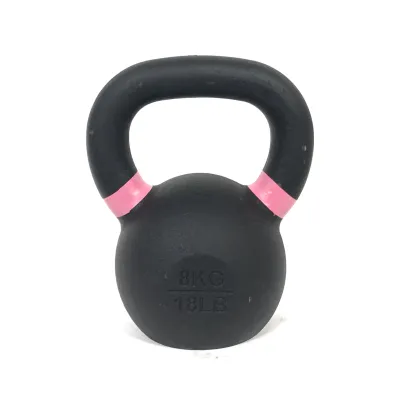
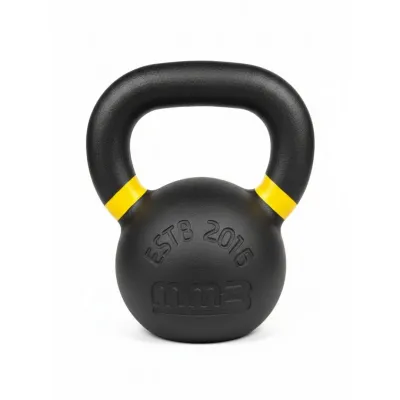
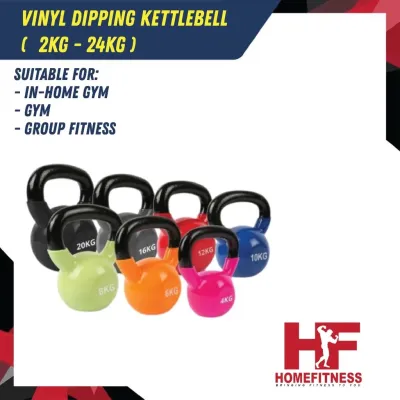

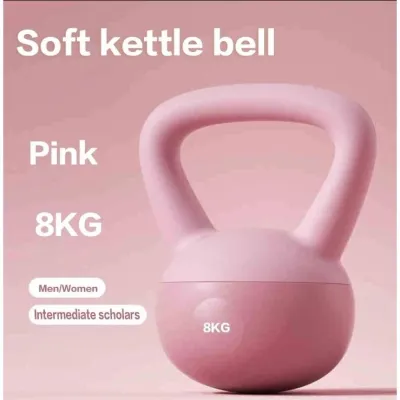
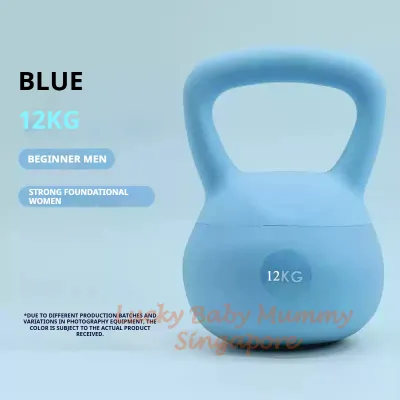
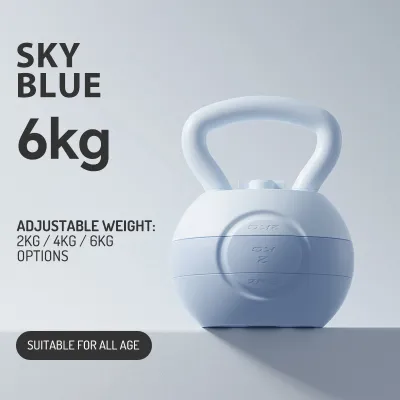
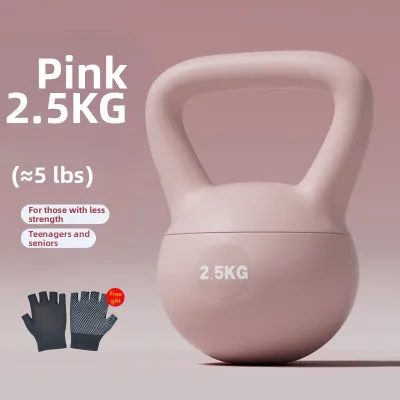
Prices are valid at publication and may change. Please refer to the product page for the latest price.
If you have a history of lower back discomfort, shoulder impingement, or joint limitations, adjust your expectations downward. In these scenarios, the primary goal of your initial training is movement rehabilitation and coordination, not maximum power. Consulting a qualified fitness professional or physical therapist before lifting can help you establish safe boundaries and prevent aggravating old injuries.
Match the Weight to Your Primary Kettlebell Exercises
A common beginner mistake is assuming one kettlebell can serve every exercise in a workout routine. Kettlebell movements generally fall into two distinct biomechanical categories: explosive ballistic movements and slow, controlled grind movements. Because these categories recruit different muscle groups and leverage different mechanical advantages, they require vastly different loads to be effective and safe.

Lower-body dominant movements, such as swings and cleans, utilize the massive power of your glutes and hamstrings, which can easily handle heavier loads. In contrast, upper-body dominant movements, like strict overhead presses, rely on smaller shoulder and arm muscles that fatigue quickly. Attempting to use the same kettlebell for both types of movements will either leave your lower body under-challenged or put your shoulders at serious risk of strain.
Ballistic Movements (Swings, Cleans, Snatches)
Ballistic exercises are dynamic, explosive movements where the kettlebell is swung through space using momentum generated by your hips. For exercises like the basic two-handed swing, using a kettlebell that is too light can actually hinder your progress. If the weight lacks sufficient mass, you may instinctively pull the bell up with your arms and shoulders rather than driving the movement through a powerful hip hinge.
To engage your posterior chain correctly, the kettlebell must provide enough resistance to force your glutes and hamstrings to do the work. When performing a swing, your arms should act merely as ropes, and the bell should feel weightless at the peak of the arc. If you find yourself steering the bell with your upper body or bending at the waist instead of hinging at the hips, the weight or your mechanics need adjustment.
Grind Movements (Presses, Squats, Turkish Get-Ups)
Grind movements are slow, deliberate exercises where you tension your entire body to move the weight along a strict path. For exercises like the overhead press or the goblet squat, your primary focus must be on joint alignment and structural stability. Because these movements do not rely on momentum, your muscles must control the weight through every millimeter of the range of motion.
When pressing a kettlebell overhead, shoulder stability and a neutral wrist position are paramount. If the weight is too heavy, your wrist may bend backward, or your shoulder may shrug upward, placing excessive stress on the rotator cuff. For highly complex, multi-joint exercises like the Turkish get-up, you should start with an exceptionally light weight—or even a shoe balanced on your closed fist—to master the transition phases before adding real resistance.
Practical Testing Methods Before You Buy
If you have access to a local gym, fitness showroom, or sporting goods store, you can perform a few simple physical tests to verify if a specific kettlebell weight is appropriate for your current strength level. These practical checks provide immediate feedback on your joint comfort and grip capacity before you make a financial commitment.
The first diagnostic tool is the “bottoms-up” hold test. Grasp the kettlebell handle and flip the bell upside down so the heavy sphere points directly toward the ceiling, keeping your elbow bent at a ninety-degree angle and your wrist perfectly straight. If you can hold this position stably for ten to fifteen seconds without the bell tilting or your wrist collapsing, you possess the baseline grip strength and shoulder stability required to control that weight.
Next, perform a strict overhead press from the rack position, where the kettlebell rests against the outside of your forearm near your chest. Press the bell slowly overhead until your arm is fully locked out next to your ear. Observe whether you can maintain a straight torso without leaning backward or shrugging your shoulder toward your ear; a clean, stable lockout indicates the weight is manageable for upper-body grinds.
Finally, physically inspect the kettlebell’s design features to ensure a comfortable fit. Check that the handle diameter allows you to wrap your fingers securely without excessive gap or overlap, and verify that the horn spacing is wide enough for both of your hands to fit comfortably side-by-side during two-handed swings. The physical size of the bell itself should not interfere with your forearms or knees during standard movement paths.
Signs Your Kettlebell Is Too Heavy or Too Light
Paying close attention to physical feedback during your training sessions is crucial for preventing injury and ensuring steady progress. Your body will provide clear warning signs when a kettlebell load is inappropriate for your current skill level.
Red flags indicating a kettlebell is too heavy include a rounding of your lower back during hinges, the need to hold your breath to complete a repetition, or a loss of wrist neutrality where the handle bends your hand backward. If you feel a sharp pinch in your shoulders or find yourself using momentum to complete a strict press, the load is exceeding your muscular control. Under these conditions, you must immediately pause your workout, lower the weight, and prioritize form.
Conversely, a kettlebell that is too light will often lead to sloppy mechanics because the lack of resistance fails to trigger proper muscle recruitment. If you can easily perform a swing using only your arms, or if you do not feel your glutes contracting at the top of the movement, the weight is likely too light to teach you correct hip-hinge mechanics. A proper training load should feel challenging yet entirely controllable, allowing you to maintain perfect alignment from the first repetition to the last.
Progression Strategy: When to Move Up in Weight
Progressing in kettlebell training is not merely about surviving a set; it is about demonstrating absolute mastery over your current load. Before you consider moving up to a heavier bell, you should be able to complete your target repetitions and sets with crisp, clean form and zero joint discomfort. For example, if your routine calls for three sets of ten overhead presses, you must be able to complete all thirty repetitions with a neutral wrist and stable shoulders before upgrading.
Another key indicator of readiness is your movement speed and breathing control. If your swings feel snappy, the bell moves effortlessly, and you can maintain a steady, rhythmic breathing pattern throughout the set, your nervous system has adapted to the load. If you are still gasping for air or struggling to stabilize the bell at the end of a set, you need more time at your current weight.
When you do decide to transition to a heavier kettlebell, make incremental jumps to allow your tendons and ligaments time to adapt. You can manage this transition safely by introducing the heavier weight only during the first few repetitions of your initial sets, then finishing the workout with your familiar, lighter bell. This gradual exposure builds strength and confidence without overloading your joints.
Frequently Asked Questions (FAQ)
Should I buy an adjustable kettlebell as a beginner?
Adjustable kettlebells offer space-saving convenience and allow you to increment the weight as you grow stronger, making them an appealing option for home gyms. However, they often lack the seamless, single-piece durability of solid cast-iron or steel competition kettlebells. Before purchasing an adjustable model, carefully inspect the locking mechanisms to ensure the internal plates cannot shift or detach during dynamic, high-velocity swings. Additionally, check that the handle is smooth and free of exposed adjustment dials that could rub against your hands and cause blisters.
Does the kettlebell material or coating affect my choice?
Yes, the surface texture and finish of a kettlebell directly impact your grip security and overall comfort during high-repetition workouts. Powder-coated cast iron provides a slightly textured surface that holds chalk exceptionally well and offers a secure grip even when your hands are sweaty. Smooth enamel or painted finishes can become slippery when wet, while bare steel handles on competition bells offer a highly consistent feel but may require regular maintenance to prevent rust. Avoid kettlebells with rough seam lines along the underside of the handle, as these imperfections can quickly tear your skin during dynamic movements.
Community discussion
Share your experience or ask a question. Comments are reviewed before publication.