
Identifying your golf ball on a busy course is more than just a convenience; it is a fundamental requirement of the game. When playing on crowded courses, hitting the wrong ball can result in a costly two-stroke penalty in stroke play or a loss of hole in match play. While many players use a simple permanent marker to draw dots or lines, a custom golf ball stamp offers a clean, professional, and highly repeatable way to personalize your gear.
Designing and ordering a custom golf ball stamp online is a straightforward process, but it requires careful attention to detail. You must select a design that fits the ball’s unique curved and dimpled surface, choose an ink formula that can withstand the friction of a club face impact, and find a reliable vendor that delivers to your location. By following a structured approach, you can create a durable, regulation-compliant mark that stands out on the fairway.
Check Golf Rules and Design Restrictions Before You Start
Before you begin drafting your custom design, you must ensure that your mark complies with the official Rules of Golf. Under Rule 6.3a, players are responsible for playing the correct ball throughout the round and are highly encouraged to put an identification mark on it. However, there is a distinct line between a personal identification mark and an illegal alignment aid. If your custom design features long, straight lines or complex geometric patterns intended to help you align your putts or tee shots, it could be classified as an artificial alignment aid. While standard alignment lines are generally permitted, overly elaborate designs that assist with swing path or stance alignment must be checked against the R&A and USGA equipment rules to avoid disqualification in official events.
Products mentioned in this guide
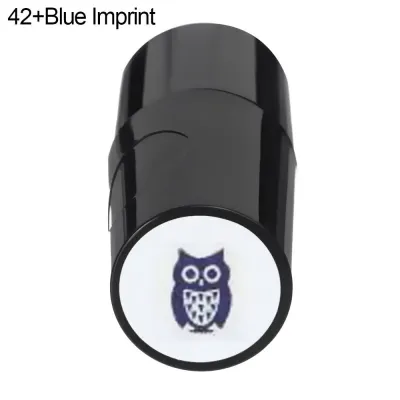
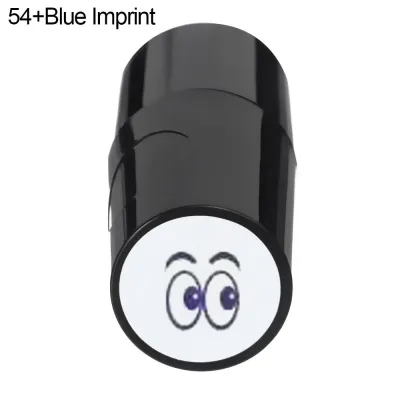
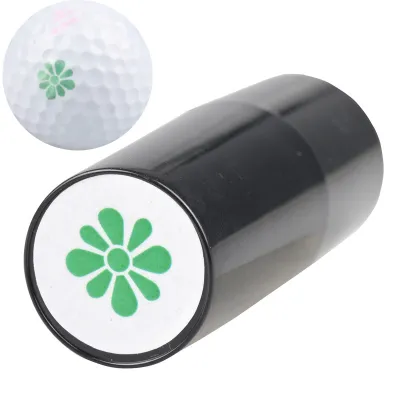
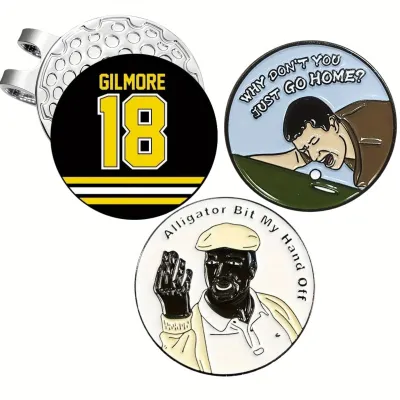
Prices are valid at publication and may change. Please refer to the product page for the latest price.
If you plan to play in competitive amateur tournaments, such as those organized by local golf associations or private clubs, you must be aware of specific local rules. Some high-level tournaments enforce the One Ball Rule, which requires players to use the exact same brand and model of ball during a round. While a custom stamp does not change the physical properties of the ball, a massive, heavy-ink design could theoretically be argued to affect the ball’s weight distribution or aerodynamics. Although this is rare, keeping your design compact and minimal is the safest approach for competitive play.
To ensure the stamp transfers cleanly to the ball, you should keep the design simple and within standard size limits. The ideal diameter for a golf ball stamp is between 10mm and 15mm, with a maximum upper limit of 20mm. Because a golf ball is a sphere, a flat stamp face cannot make full contact with a surface that curves away too sharply. If your design is too large, the outer edges of the stamp will either fail to register or will smudge as you try to press them down. A small, concentrated graphic ensures that the entire stamp face makes even contact with the ball’s cover, resulting in a crisp, legible mark.
Pick the Best Stamp Mechanism and Ink for Golf Balls
When ordering a custom stamp online, you will typically choose between three physical mechanisms: self-inking stamps, pre-inked stamps, and traditional rubber stamps with separate ink pads. For golfers, portability and ease of use on the course or in the locker room are key considerations.

- Pre-Inked Stamps: These are generally the best option for golf balls. They utilize a porous gel or rubber plate that holds the ink internally, allowing for incredibly sharp, high-contrast impressions. They do not have internal moving parts, making them highly durable and compact enough to slip into a pocket of your golf bag.
- Self-Inking Stamps: These devices feature a built-in ink pad and an internal spring mechanism that flips the stamp plate onto the pad after every press. While convenient, the mechanical parts can sometimes clog with sand or dirt from the golf course, and they tend to be bulkier than pre-inked models.
- Traditional Rubber Stamps: These require a separate hand-held stamp and an external ink pad. This setup is highly impractical for mobile use and is best reserved for stamping large batches of balls at home on a flat desk.
The chemical composition of the ink is the most critical factor in determining whether your stamp will survive a round of golf. Golf ball covers are made of highly non-porous synthetic materials, typically Surlyn (an ionomer resin used in distance balls) or urethane (used in premium tour-caliber balls). Standard water-based office stamp inks cannot penetrate or adhere to these slick, non-porous plastics; if used, the ink will simply bead up, smear instantly, or wash off the moment the ball contacts wet grass or morning dew.
You must ensure the vendor provides specialized quick-drying, waterproof, and smudge-proof ink specifically formulated for non-porous surfaces. These solvent-based or oil-based inks dry via evaporation rather than absorption. Once dry, they form a resilient bond with the urethane or Surlyn cover, allowing the mark to withstand the high-velocity impact of a driver face, exposure to moisture, and the abrasive friction of sand traps and rough grass.
Create Your Design and Prepare the Artwork File
Designing a graphic that looks excellent on a computer screen is very different from designing one that prints clearly on a dimpled golf ball. The surface of a golf ball is covered in hundreds of tiny depressions (dimples) designed to create lift and reduce drag. When you press a stamp onto this surface, the ink must bridge the gaps between the flat outer land areas and the sloped walls of the dimples.
Because of this textured surface, you must use bold, high-contrast lines and avoid intricate details, fine shading, or tiny text. Thin lines will often fail to transfer completely, leaving gaps in your design, while complex details or tight lettering will bleed together into an illegible smudge. Focus on simple, high-impact visuals such as bold monograms, solid geometric shapes, clear animal silhouettes, or thick-lined icons. If you want to include text, limit it to two or three initials in a clean, sans-serif font.
When preparing your digital file for the online vendor, you must follow their specific formatting guidelines to ensure a high-quality engraving. Most manufacturers require one of two file types:
- Vector Formats (SVG, EPS, PDF): These are highly recommended because they are mathematically defined shapes that can be scaled up or down without any loss of resolution. Ensure all text in your vector file is converted to outlines or paths so the vendor's software does not substitute your chosen font.
- High-Resolution Raster Formats (PNG, JPEG): If you are uploading a raster image, it must have a resolution of at least 300 DPI (dots per inch) at the actual print size (e.g., 12mm). Low-resolution images will result in pixelated, blurry edges on the physical stamp plate. Always use a transparent or solid white background, and ensure the artwork is strictly monochrome (pure black on a white background) with no gray gradients.
Most online stamp vendors offer two paths for creating your stamp: using their built-in online design templates or uploading fully custom artwork. Online templates are ideal if you only want to add your name, initials, or select from a library of pre-approved icons like golf clubs, flags, or simple animals. These templates are pre-calibrated to the correct dimensions, ensuring your design will fit the stamp plate perfectly. If you have a unique personal logo, brand asset, or hand-drawn illustration, uploading custom artwork is the better choice, but you must carefully double-check that your file meets the high-contrast, bold-line requirements before submitting.
Choose a Reliable Vendor and Complete Your Order
When selecting an online vendor for your custom golf ball stamp, you will encounter two main categories of sellers: specialty golf accessory retailers and general custom printing e-commerce platforms.
Specialty golf accessory retailers are highly recommended because they understand the unique physical demands of the sport. They package their stamps with the correct quick-drying, waterproof inks designed specifically for urethane and Surlyn covers. They also design their stamp plates with slightly deeper engravings or flexible backings to better conform to the dimpled surface of a golf ball. General custom stamp manufacturers can still produce excellent results, but you must carefully verify that they offer specialized permanent, fast-drying ink suitable for non-porous surfaces. Standard office ink options from these vendors will not work.
Before completing your purchase, always request and carefully review a digital proof from the vendor. This proof shows exactly how your design will be positioned on the stamp plate and highlights the scale of the graphic relative to a standard golf ball. Use this opportunity to check for spelling mistakes, verify the orientation, and ensure that thin lines have not been lost during the file conversion process. Once you approve the proof and the manufacturer laser-engraves the rubber or polymer plate, modifications are no longer possible.
If you are ordering from Singapore, pay close attention to shipping options and delivery timelines. Many specialty golf stamp vendors are based in North America, Europe, or Australia, which can result in longer transit times and higher shipping fees that may exceed the cost of the stamp itself. Look for reputable regional vendors or international sellers that offer tracked shipping to Singapore. Additionally, read customer reviews carefully, paying specific attention to feedback regarding how long the ink lasts under humid conditions and the overall build quality of the stamp casing. In Singapore’s hot and humid tropical climate, poor-quality stamp casings can warp or fail to seal properly, causing the ink to dry out prematurely.
Test the Stamp and Maintain the Ink Pad
Once your custom stamp arrives, do not immediately start stamping your brand-new sleeve of premium golf balls. You must first practice your technique to understand how the ink flows and how much pressure is required. Begin by testing the stamp on a flat piece of paper to verify that the ink is flowing evenly across the entire design. Once you get a clean impression on paper, transition to a spare, scuffed, or older golf ball. Stamping a curved, dimpled surface takes practice, and using a discarded ball allows you to make mistakes without ruining your game balls.
To achieve a perfect, smudge-free mark on a golf ball, follow these step-by-step application instructions:
- Secure the Ball: Place the golf ball on a stable surface so it cannot roll away. A roll of tape, a small silicone ring, or a dedicated golf ball stencil holder works perfectly to keep the ball stationary.
- Clean the Surface: Wipe the target area of the ball with a clean, dry cloth to remove any dirt, grass oils, or moisture. If the ball has a factory coating that feels particularly slick, a quick wipe with isopropyl alcohol can improve ink adhesion.
- Apply Even Pressure: Hold the stamp firmly and press it straight down onto the ball. Do not rock the stamp violently or twist it, as this will smear the wet ink across the dimples. Instead, apply firm, even downward pressure for two to three seconds to allow the ink to transfer into the shallow depressions.
- Lift Straight Up: Remove the stamp in a single, clean upward motion to prevent ghosting or secondary smudges.
Maintaining your stamp and ink pad is essential to ensure a long lifespan and prevent the ink from drying out. Because golf ball ink is designed to dry rapidly via evaporation, leaving the stamp uncapped for even a few minutes can ruin the pad. Always snap the protective cap back onto the stamp immediately after every single impression.
Store your stamp in a cool, dry place away from direct sunlight, heating vents, or extreme temperatures. In Singapore, never leave your golf ball stamp in your car trunk, locker, or the outer pockets of your golf bag stored in a hot garage. The intense heat will dry out the solvent-based ink pad rapidly, rendering the stamp useless. If the stamp begins to fade over time, purchase the exact same brand and formula of refill ink recommended by the manufacturer. Mixing different chemical formulas can cause the ink to coagulate, permanently damaging the stamp’s internal pad.
Frequently Asked Questions (FAQ)
Is it legal to use a stamped golf ball in official tournaments?
Yes, it is entirely legal to use a stamped golf ball in official tournaments under Rule 6.3a of the Rules of Golf, which encourages players to mark their balls for identification. However, you must ensure that your custom design does not serve as an illegal alignment aid or violate any specific local tournament rules. If you are playing in a high-level amateur event, always verify your markings with the tournament committee before teeing off.
How long should I wait for the ink to dry before putting the ball in my pocket?
In Singapore’s highly humid tropical climate, evaporation times can be slightly longer than in dry environments. While specialized quick-dry golf ball inks typically dry within 10 to 30 seconds, it is highly recommended to wait at least one to two minutes before handling the ball or putting it in your pocket. Always test the drying time on a practice ball first to ensure the mark is completely set and will not smudge on your clothing or equipment.
Can I re-ink my golf ball stamp when it starts to fade?
Yes, most high-quality pre-inked and self-inking golf ball stamps are designed to be refillable. However, you must only use the specific quick-dry ink formula provided or recommended by the stamp’s manufacturer. Using standard water-based office ink or a different brand’s solvent-based ink can trigger a chemical reaction that dissolves the stamp plate, clogs the pores, or ruins the internal pad’s ability to hold ink.
Community discussion
Share your experience or ask a question. Comments are reviewed before publication.