
Selecting the correct Venum boxing glove weight and size requires a systematic, two-part diagnostic approach. First, you must measure your dominant hand’s circumference to determine the physical size of the glove’s internal hand compartment, which typically ranges from Small to Extra Large. Second, you must select the appropriate glove weight in ounces (oz)—typically ranging from 8oz to 16oz or more—based on your body weight and specific training goals, such as heavy bag work, focus mitt drills, or live sparring.
Because boxing is a high-impact, high-risk sport, protective equipment cannot replace proper training, physical conditioning, or professional athletic judgment. Before purchasing or using any protective gear, always check the manufacturer’s specific product instructions, safety labels, and intended usage guidelines. If your training requirements or gym rules conflict with the manufacturer’s recommendations, prioritize safety and consult a qualified coach or sports professional before proceeding.
Step 1: Measure Your Hand to Find the Correct Venum Size
To find a glove that fits securely and prevents internal hand slippage, you must measure your dominant hand precisely. A loose glove compromises wrist alignment and reduces impact distribution, while an overly tight glove restricts blood circulation and causes premature hand fatigue.
Products mentioned in this guide
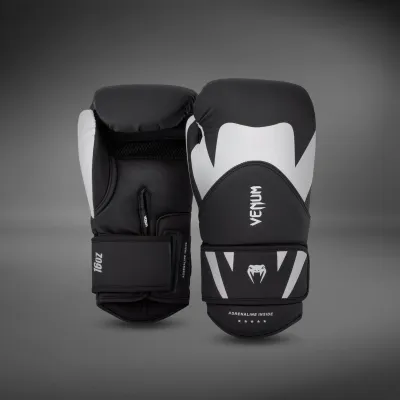
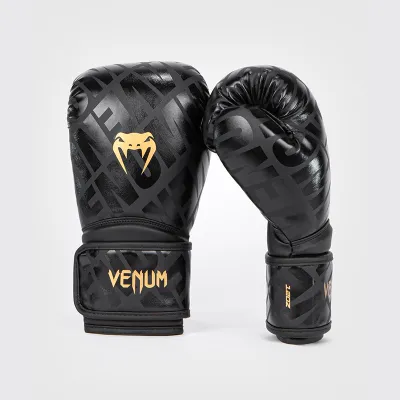
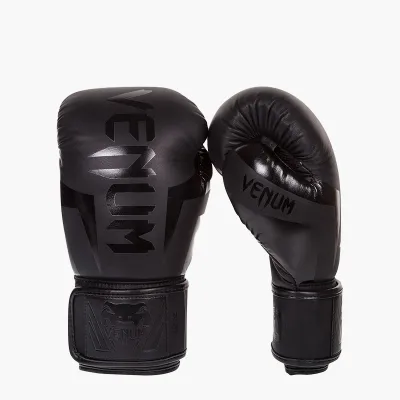
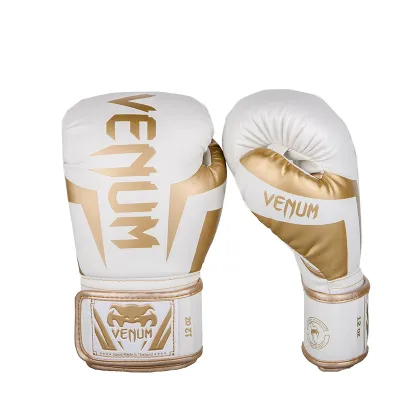
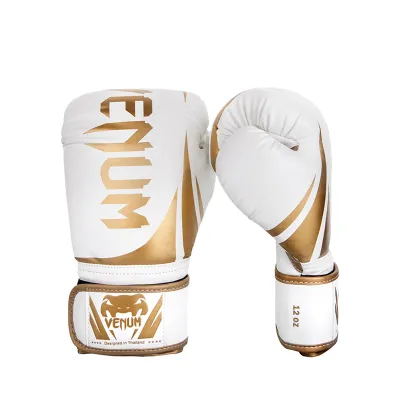
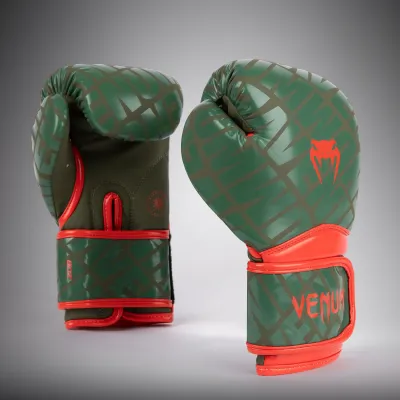
Prices are valid at publication and may change. Please refer to the product page for the latest price.
To measure your hand, use a flexible fabric measuring tape. Wrap the tape around the widest part of your palm, directly below the knuckles, excluding the thumb. Keep your hand flat and relaxed; do not clench your fist or splay your fingers. Note the measurement in inches or centimeters to use as your baseline reference.
Venum categorizes its glove compartments using standard lettering (S, M, L, XL), but these dimensions are not uniform across all product lines. For instance, the entry-level Venum Challenger series often features a slightly different internal mold compared to the premium, handmade Venum Elite or Giant series. Always cross-reference your palm measurement with the specific size chart provided on the product page for that exact model.
Never measure or test gloves on bare hands alone. Standard boxing hand wraps add approximately 0.5 to 1.5 centimeters of thickness around your knuckles and wrist, depending on the wrap length and wrapping style. If you plan to use thick, professional-style wraps or gel quick-wraps, you must account for this extra volume. A glove that feels perfectly snug on a bare hand will often pinch or restrict joint movement once wraps are applied.
When trying on your gloves with wraps, the fit should feel firm and supportive across the palm and wrist. Your fingertips should lightly brush the front end of the inner compartment without bending or feeling cramped. There should be no significant “dead space” at the fingertips or across the knuckles, as empty space allows the hand to shift upon impact, increasing the risk of sprains or joint damage.
Step 2: Match Glove Weight (oz) to Your Training Goals
The weight of a boxing glove, measured in ounces (oz), directly dictates the thickness and distribution of its protective foam padding. Selecting the correct weight is not merely a matter of personal comfort; it is a critical safety decision that affects your joint health and the safety of your training partners. Matching the ounce rating to your primary training activity ensures that the glove’s internal foam density behaves as intended under impact.

Heavy Bag Work and Pad Drills
For routine heavy bag training and focus mitt sessions, gloves weighing between 10oz and 12oz are generally the standard recommendation for most adult practitioners. These weights offer a balanced compromise between protection and performance, allowing you to develop proper striking mechanics without carrying excessive, fatiguing mass.
Using lighter gloves (10oz to 12oz) facilitates faster hand speed and sharper tactile feedback. This feedback is invaluable for technique correction, as it allows you and your coach to feel the precise angle of impact. Additionally, lighter gloves help build shoulder endurance during high-volume pad drills, simulating the speed requirements of competitive environments.
However, lighter weights mean thinner padding. You must verify that the specific glove’s knuckle protection is sufficient for the density of the bags you intend to strike. Heavy, water-filled bags or dense, traditional leather bags require robust shock absorption. If you experience knuckle soreness or wrist instability during bag work, you should consider stepping up to a 12oz or 14oz glove to increase the protective barrier.
Sparring and Partner Drills
When transitioning to live sparring or partner drills where contact is made with another person, the standard weight increases to 14oz or 16oz. In many reputable boxing and Muay Thai gyms worldwide, including those in Singapore, using 16oz gloves for sparring is a mandatory safety rule, regardless of the practitioner’s size.
The primary reason for this requirement lies in the construction and volume of the padding. Sparring gloves are engineered with thicker, softer, and more resilient foam layers designed specifically to disperse impact force over a wider surface area. This protects both the wearer’s delicate hand bones and the training partner’s head and body from severe trauma. Conversely, dedicated bag gloves utilize dense, highly compressed foam built to withstand repetitive friction against hard surfaces; this density makes them highly dangerous for sparring partners.
You must never use dedicated bag gloves for sparring. Doing so presents a severe risk of injury, including cuts, concussions, and facial trauma for your partner. Always verify that your sparring gloves are clearly designated for partner contact and maintain a soft, pliable padding texture. If the foam in your sparring gloves becomes compacted or hard over time, they must be retired from live contact immediately.
Step 3: Refine Your Choice by Body Weight and Hand Shape
While training goals provide a functional baseline, your physical build and hand anatomy must guide the final selection. A lightweight practitioner and a heavyweight practitioner require vastly different levels of shock absorption, even when performing the exact same drill.
Your body weight determines the kinetic energy generated behind each punch. Practitioners weighing under 60kg generate less force and can comfortably use 10oz to 12oz gloves for general bag work and pad drills. For sparring, a 14oz glove may offer sufficient protection if agreed upon by a coach, though 16oz remains the safest default.
Practitioners weighing between 60kg and 80kg should generally look at 12oz for bag work and a strict minimum of 14oz to 16oz for sparring. For heavier individuals weighing over 80kg, the immense kinetic force generated demands substantial joint protection. If you fall into this category, you should use 14oz or even 16oz gloves even for heavy bag work. The extra padding is vital for stabilizing your wrists and absorbing the heavy feedback from dense bags, preventing long-term repetitive strain injuries in your elbows and shoulders.
Hand shape and volume also vary widely; some athletes possess long, slender fingers, while others have short, wide palms. If you have wide palms or a high-volume hand structure, standard 10oz or 12oz Venum gloves may feel highly restrictive, even if your body weight suggests they are appropriate. In these scenarios, forcing your hand into a tight compartment will cause cramping and restrict blood flow.
If your hand measurements sit at the upper limit of a size category, or if you naturally have wide hands, it is advisable to size up. Alternatively, look for specific Venum models known for a wider, more forgiving hand pocket, such as the Venum Impact or Elite series, rather than the more streamlined, compact profiles of the Challenger series.
Finally, the choice between hook-and-loop (Velcro) straps and traditional lace-up closures significantly impacts the glove’s fit and usability. Velcro closure systems are highly practical for everyday gym use, allowing you to put on and take off your gloves independently without assistance. They provide quick, adjustable wrist support that can be tightened or loosened during a workout.
Lace-up gloves offer a superior, highly customized fit that conforms perfectly to the natural contours of your wrist and hand. They distribute tension evenly, eliminating any shifting during heavy impact. However, lace-up models require a trainer or training partner to tie them securely before every session, making them less practical for solo training on the heavy bag.
Quick Diagnostic Checklist: Finalizing Your Venum Setup
To streamline your decision-making process, use this diagnostic checklist to match your primary training goal, body weight, and recommended Venum glove specifications:
- Heavy Bag & Pads (<60kg): Select 10oz or 12oz | Size: S/M (Verify with specific model size chart)
- Heavy Bag & Pads (60kg – 80kg): Select 12oz | Size: M/L (Verify with specific model size chart)
- Heavy Bag & Pads (>80kg): Select 14oz or 16oz | Size: L/XL (Verify with specific model size chart)
- All Sparring & Partner Drills (Any Weight): Select 14oz (for lighter weights under 60kg) or 16oz (standard default) | Size: L/XL to accommodate hand wraps and softer padding.
Before finalizing your purchase, perform these final verification steps:
- Check Model Specialization: Verify if the chosen Venum model is optimized for your discipline. For example, Venum Muay Thai gloves (like the Giant or Elite lines) often feature a more flexible palm design and distributed padding along the side of the hand to facilitate clinching and catching kicks. Dedicated boxing models may feature a stiffer wrist profile and a more pronounced grip bar to optimize straight punching mechanics.
- Inspect Retailer Return Policies: Because hand shapes are highly individual, always verify the return and exchange policy of your local retailer or online marketplace before finalizing your purchase. Try the gloves on immediately upon delivery with your hand wraps on, keeping all tags intact, to confirm the fit is correct before engaging in any training.
Frequently Asked Questions (FAQ)
Do Venum boxing gloves run small or large?
Venum gloves do not have a single, universal fit across all collections. The entry-level synthetic leather lines, such as the Challenger series, tend to have a slightly tighter, more compact internal hand compartment that may feel small initially, especially when worn with thick hand wraps. In contrast, premium leather lines like the Elite or Giant series are constructed with a more anatomically accurate, slightly roomier mold that breaks in more naturally over time. Rather than assuming a generic brand fit, always measure your hand circumference and consult the specific sizing chart for the exact model you plan to purchase.
Can I use my 12oz bag gloves for light sparring?
No, you should never use 12oz bag gloves for sparring, regardless of how light or controlled you intend the session to be. Bag gloves are engineered with highly dense, firm foam designed specifically to protect your knuckles from hard, repetitive impacts against heavy bags. This dense foam does not compress easily, meaning it transfers almost the entirety of the impact force directly to your sparring partner, significantly increasing the risk of cuts, bruising, and head trauma. For sparring, you must use dedicated sparring gloves (typically 14oz or 16oz) constructed with softer, multi-layered shock-absorbing foam designed to protect both you and your partner.
Community discussion
Share your experience or ask a question. Comments are reviewed before publication.