
Finding a single air pump that can seamlessly transition from inflating high-pressure road bike tires to filling up high-volume pool floats or sports equipment requires understanding a few key mechanical trade-offs. In Singapore, where space-saving efficiency is paramount in high-density residential living, owning multiple single-purpose pumps is rarely practical. A versatile, multi-purpose pump can save valuable storage space in your home while ensuring you are always prepared for weekend cycling trips along the Park Connector Network or family outings to the pool. However, choosing the right brand and model requires looking beyond basic marketing claims to evaluate physical compatibility, mechanical design, and long-term durability under local environmental conditions.
Identify Your Primary Inflation Priorities
To select the most effective multi-purpose pump, you must first analyze the specific inflation requirements of your household gear. Bicycle tires and recreational inflatables operate on fundamentally opposing mechanical principles. High-performance road bikes, for instance, require low volumes of air delivered at exceptionally high pressures, often ranging from 80 to over 100 pounds per square inch (PSI). Conversely, large recreational items like inflatable kayaks, pool floats, and air mattresses require massive volumes of air delivered at very low pressures, typically under 5 PSI.
A standard pump mechanism is generally optimized for one of these two extremes. A pump designed with a narrow piston chamber easily compresses air to reach high pressures with minimal physical effort, but it moves very little air volume per stroke. If you attempt to inflate a large family pool float with a high-pressure bicycle pump, the process will require hundreds of strokes and an exhausting amount of time. On the other hand, a pump with a wide piston chamber moves large volumes of air quickly but becomes incredibly difficult to push down as the pressure rises, making it virtually impossible to reach the high PSI levels required for bicycle tires.
Products mentioned in this guide
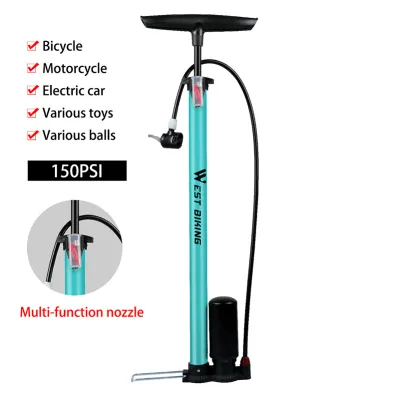
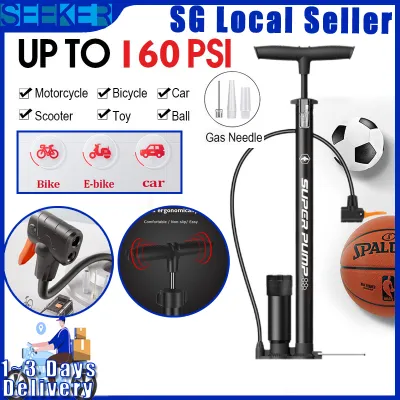
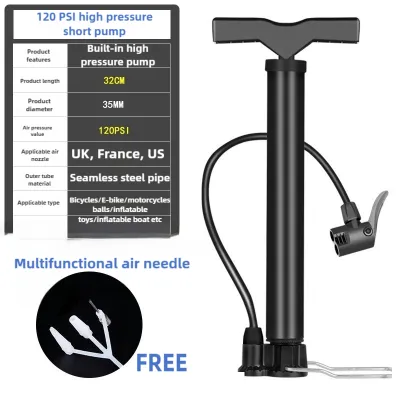
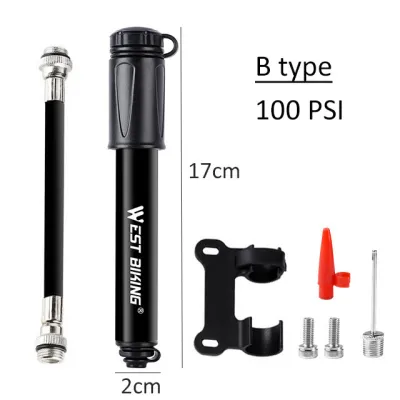
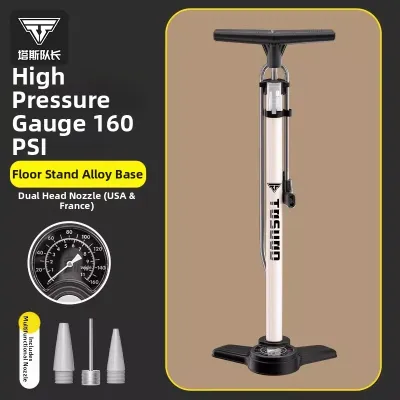
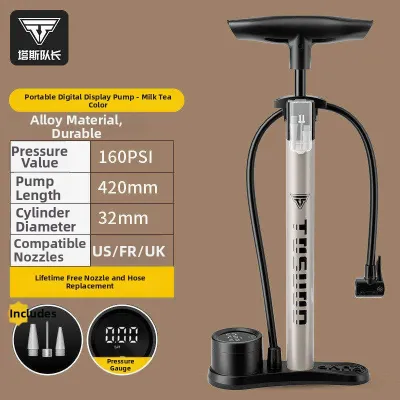
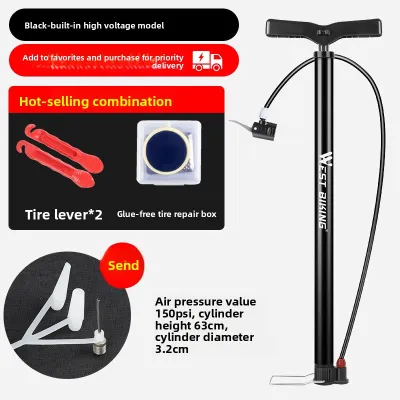
Prices are valid at publication and may change. Please refer to the product page for the latest price.
Determining your primary use case is the first step in narrowing down your options. If your household primarily rides bicycles and only occasionally needs to top up a basketball or a small swim ring, a high-pressure floor pump with integrated accessory adapters is your most logical choice. If your weekends are centered around water sports, camping, and large inflatables, with only casual, low-pressure city bikes to maintain, a high-volume manual or electric pump should take priority. Understanding this balance prevents the frustration of owning a tool that is poorly matched to your most frequent tasks.
Verify Valve and Nozzle Compatibility Across Devices
A multi-purpose pump is only as useful as its ability to connect securely to your gear. Bicycle tires in Singapore generally utilize one of three valve designs. Presta valves are slender, threaded valves commonly found on road, gravel, and high-end mountain bikes. Schrader valves are wider, identical to those found on car tires, and are standard on utility bikes, children’s bicycles, and many mountain bikes. Dunlop valves, also known as Woods valves, are occasionally found on traditional city utility bikes and imported models.

For recreational items, you will encounter entirely different connection standards. Sports balls require a thin, metallic inflating needle. Inflatable pool toys, beach balls, and air mattresses typically use soft plastic pinch valves or larger threaded Boston valves. To bridge the gap between these diverse interfaces, a truly versatile pump must feature a multi-valve head or include a robust set of adapters.
When evaluating different brands, pay close attention to how these adapters are stored and secured. Some manufacturers design their pumps with integrated storage compartments directly on the pump body or handle, keeping the ball needle and plastic cone nozzles safely housed and immediately accessible. Other brands supply these accessories in loose plastic bags, which are easily misplaced in a busy household or storage room. A pump with built-in storage ensures that you will not find yourself unable to inflate a football or pool float simply because a tiny plastic adapter has gone missing. Furthermore, look for pump heads with dual-nozzle designs or smart-heads that automatically adjust to fit both Presta and Schrader valves without requiring you to disassemble internal rubber grommets.
Match the Pump Mechanism to Your Usage Scenarios
The physical mechanism of the pump dictates where and how easily you can use it. Manual floor pumps, often referred to as track pumps, remain the gold standard for home maintenance. They feature a wide, stable base that you step on to keep the unit steady, allowing you to use your entire body weight to push down a long, comfortable handle. This design provides maximum leverage, making it easy to reach high pressures for bicycle tires while still offering enough volume to handle moderate recreational inflatables without excessive fatigue. However, their bulky size makes them entirely impractical to carry on a bicycle ride.
Hand pumps and mini pumps are highly compact, lightweight tools designed specifically for emergency roadside repairs. They are engineered to fit onto a bicycle frame or inside a jersey pocket. While they are indispensable for getting you home after a puncture on the road, their tiny air chambers make them highly inefficient for any other task. Attempting to inflate a single pool float or a large air mattress with a mini hand pump is an exercise in extreme frustration and physical exhaustion. They should never be relied upon as a primary multi-purpose household pump.
Battery-powered electric pumps have surged in popularity due to their hands-free convenience. These compact, rechargeable devices allow you to set a target pressure and let the motor do the work. They are highly efficient for inflating sports balls, bicycle tires, and smaller recreational items. However, they do have distinct limitations. Their internal lithium-ion batteries require regular charging, and their small electric motors can overheat if run continuously for long periods, such as when inflating multiple large air mattresses. Additionally, some compact electric models may struggle to reach the precise, high pressures required for specialized road bikes, and their digital gauges must be checked regularly for calibration accuracy.
| Pump Mechanism | Primary Use Case | Max Pressure Capability | Portability | Physical Effort | Best Suited For |
|---|---|---|---|---|---|
| Floor Pump | Home bicycle maintenance & general household inflation | High (up to 160 PSI / 11 Bar) | Low (bulky, heavy) | Moderate (uses body weight) | Dedicated cyclists, active families, home garages |
| Hand / Mini Pump | Emergency roadside bicycle tire repairs | Moderate to High (up to 100+ PSI) | High (fits in pocket or frame) | High (requires manual arm strength) | On-the-go cyclists, emergency backup only |
| Electric / Battery Pump | Hands-free inflation for tires, balls, and small floats | Moderate to High (typically up to 120 PSI) | High (compact, cordless) | Low (fully automated) | Tech-conscious users, multi-vehicle households, casual recreation |
Assess Brand Reliability and Long-Term Support
When shopping for an air pump, choosing a reputable brand that prioritizes durable construction and long-term serviceability is far more cost-effective than buying cheap, disposable alternatives. In Singapore’s warm and highly humid tropical climate, materials matter immensely. Cheap steel barrels can rust internally if moisture accumulates, while low-grade plastics can become brittle and crack over time. Look for brands that construct their pump barrels and bases from high-grade aluminum, steel, or reinforced composite materials. A heavy, stable base made of cast iron or thick steel ensures the pump will not tip over constantly during vigorous use.
The most common failure point in any air pump is not the metal barrel, but the internal rubber seals, O-rings, and flexible hoses. Over years of use, rubber naturally dries out, cracks, and loses its airtight seal. Premium pump brands design their products with serviceability in mind, offering easily replaceable internal parts, replacement hoses, and rebuild kits. Before purchasing, check if the brand has a reliable local distributor or presence in Singapore, making it easy to source spare parts or replacement valve heads without having to import them at high shipping costs.
Another critical component to evaluate is the pressure gauge. A reliable gauge is essential for preventing over-inflation, which can rupture bicycle tires or damage delicate sports equipment. High-quality pumps feature large, easy-to-read analog dials with clear markings in both PSI and bar. Look for gauges with robust internal mechanisms, such as brass connections, which resist corrosion far better than cheap plastic alternatives. Top-mounted gauges, positioned near the handle rather than at the base of the pump, are much easier to read without straining your eyes or bending down.
Complete Your Pre-Purchase Inspection Checklist
Before finalizing your purchase, whether you are browsing in a local bicycle shop or reviewing specifications on an online marketplace, use this practical checklist to ensure the pump meets your exact household needs:
- Verify Pressure Limits: Check the maximum pressure rating of the pump against the requirements printed on your bicycle tire sidewalls. Ensure the pump can comfortably exceed your highest required PSI by at least 10 to 20 percent to avoid straining the mechanism.
- Inspect Valve Head and Adapters: Confirm that the pump head natively supports both Presta and Schrader valves without requiring complex internal disassembly. Ensure the ball needle and plastic inflatable adapters are included and have a secure, integrated storage spot on the pump.
- Check Hose Length and Flexibility: A hose that is too short will force you to position the pump awkwardly close to the wheel or inflatable. Look for a long, flexible hose that can easily reach a bicycle tire valve even when the wheel is suspended on a repair stand or storage rack.
- Evaluate Base Stability: Stand on the pump's footplates to test its stability. The base should feel solid and flat on the ground, without flexing or wobbling when you apply downward pressure.
- Assess Gauge Readability: Ensure the pressure gauge is clear, well-spaced, and positioned where you can easily read the numbers from a standing position. If you often inflate tires in low-light conditions, consider a high-contrast dial or a backlit digital display.
Frequently Asked Questions (FAQ)
Can a standard bicycle floor pump inflate car tires?
Yes, a standard bicycle floor pump can physically inflate a car tire because car tires use standard Schrader valves and operate at relatively low pressures, typically between 30 and 35 PSI. However, the volume of air inside a car tire is immense compared to a bicycle tire. Inflating a car tire from flat using a manual bicycle floor pump requires an extraordinary amount of physical effort and hundreds of strokes, making it highly impractical for routine use. It can serve as an effective emergency backup, but a dedicated portable electric compressor is far more suitable for automotive needs.
How should I store and maintain the pump's rubber seals?
To maximize the lifespan of your pump’s internal rubber seals and O-rings, store the pump in a cool, dry indoor location away from direct sunlight, which can accelerate the degradation of rubber components. Periodically inspect the flexible hose for any signs of cracking or dry rot, especially in Singapore’s humid climate. If the pump handle begins to feel sticky or loses resistance, consult the manufacturer’s manual to see if you can apply a small amount of silicone-based grease to the internal piston O-ring. Avoid using petroleum-based lubricants, as they can actively break down and destroy rubber seals over time.
Community discussion
Share your experience or ask a question. Comments are reviewed before publication.