
To find a reliable taekwondo sparring helmet for regular training, you must look beyond brand names and focus on verifiable safety certifications, material construction, and a precise fit. While many brands market their headgear as highly protective, a truly reliable helmet must carry recognized athletic approvals—such as World Taekwondo (WT) certification—and feature high-density shock-absorbing foam that covers critical impact zones. Evaluating these technical specifications yourself is the most dependable way to ensure your gear can withstand the repetitive impacts of active sparring.
Selecting the right protective gear involves understanding how different manufacturers design their helmets for specific training environments. Whether you are preparing for light point-sparring or engaging in full-contact Olympic-style training, the helmet must match your physical needs and the intensity of your club’s sessions. By focusing on objective safety standards and physical inspection techniques, you can confidently choose a helmet that keeps you safe on the mats.
Essential Safety Certifications to Look For in Headgear Brands
When evaluating taekwondo sparring gear, the most critical indicator of quality is official certification. For taekwondo, the premier standard is World Taekwondo (WT) approval. Brands that produce WT-approved headgear have submitted their products to rigorous testing protocols to ensure they meet international safety and performance criteria. These tests typically evaluate shock absorption capacity, strap retention strength, and the overall durability of the materials under repeated stress. When shopping, look for the official WT logo printed directly on the back or side of the helmet, as well as on the product packaging and inner labels.
Products mentioned in this guide
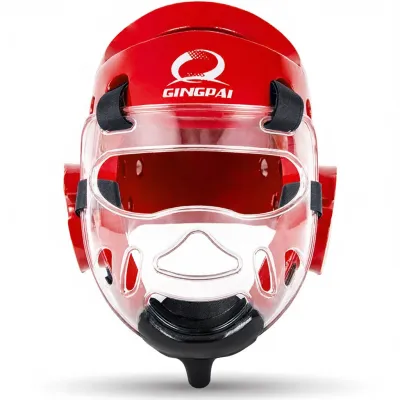
Prices are valid at publication and may change. Please refer to the product page for the latest price.
It is important to distinguish between competition-grade certifications and general training safety standards. Competition-grade helmets are designed to meet strict weight, thickness, and coverage rules set by governing bodies to ensure a level playing field and standardized protection during high-intensity matches. General training headgear, while often highly protective, might not carry these official stamps, meaning they cannot be worn in sanctioned tournaments. If you plan to compete in Singapore or internationally, investing in a WT-approved helmet is essential, whereas recreational practitioners might opt for non-certified gear that still meets high safety benchmarks.
Unfortunately, counterfeit safety labels can sometimes appear on low-quality gear sold through unverified online marketplaces. To protect yourself, always cross-check the certification claims made by a brand. You can do this by visiting the official World Taekwondo website, which maintains an updated registry of recognized and authorized sparring gear manufacturers. If a brand is not listed on the official database, or if the product packaging lacks verifiable batch numbers and manufacturer details, it is safest to assume the gear does not meet genuine safety standards.
Additionally, look for regional safety marks that indicate compliance with broader consumer protection laws. In many regions, protective sporting equipment must carry certifications such as the CE mark (Conformité Européenne) or compliance with local consumer goods safety regulations. These marks guarantee that the materials used in the helmet are non-toxic, flame-retardant, and structurally sound under normal training conditions.
Key Design Features That Ensure Reliable Head Protection
The physical construction of a taekwondo helmet determines how effectively it manages the energy of an incoming kick. Most modern sparring helmets utilize dipped foam or a combination of a hard plastic outer shell with an inner foam liner. Dipped foam helmets, which are highly common in taekwondo, feature a high-density polyurethane foam coated in a durable, waterproof vinyl skin. This seamless outer layer helps disperse the initial force of an impact across a wider surface area, reducing the localized pressure on any single part of the skull.

Beneath the outer surface, the inner foam density and thickness play the primary role in shock absorption. High-quality brands use multi-layered or variable-density foam configurations. The outer layers of foam are typically denser to absorb high-velocity impacts, while the inner layers are softer and more compliant to cushion the head comfortably and prevent minor concussive forces from transferring to the brain. When evaluating a helmet, gently press the foam; it should feel firm and resilient, immediately springing back to its original shape without leaving permanent indentations.
Coverage zones are another non-negotiable design feature when assessing headgear reliability. A proper taekwondo sparring helmet must provide comprehensive coverage of the frontal bone (forehead), parietal bones (top of the head), temporal regions (sides), and the occipital bone at the back of the skull. The occipital region is particularly vulnerable during falls or when a competitor’s head snaps back, making deep rear coverage a vital safety feature. Ensure that the helmet sits low enough at the back of the neck to shield this area without restricting your ability to look upward.
Furthermore, pay close attention to the ear and jawline protection. The helmet should feature dedicated ear guards with built-in ventilation holes or pressure-release channels. These openings prevent acoustic pressure build-up from direct side kicks, which could otherwise damage the eardrum. While some taekwondo helmets feature open-face designs, they should still extend downward sufficiently to shield the upper jawline and temple areas without obstructing your peripheral vision or hearing.
How to Match Helmet Specifications to Your Training Intensity
Your choice of helmet should align directly with the intensity of your sparring sessions. For light-contact point sparring, where the focus is on speed, technique, and controlled touches, a lightweight dipped foam helmet is often preferred. These helmets offer excellent mobility and sufficient protection for accidental or light impacts. Because the risk of heavy, continuous blows is lower in these settings, practitioners can prioritize comfort and agility without compromising basic safety.
Conversely, full-contact continuous sparring—typical of Olympic-style taekwondo training—demands a much higher level of protection. In these high-intensity environments, kicks are delivered with significant force, requiring helmets with thicker foam padding and reinforced forehead zones to maximize shock absorption. The priority here must always be maximum protection, even if it means wearing a slightly bulkier helmet.
A secure fit system is essential to ensure the helmet remains in place during rapid head movements and impacts. Most taekwondo helmets use an elastic chin strap secured with a hook-and-loop closure. When evaluating different brands, check the width and strength of the strap. A strap that is too thin can cut into the skin, while weak hook-and-loop fasteners may come undone mid-sparring. Some premium models offer adjustable rear straps or contoured interior shapes that grip the occipital bone, preventing the helmet from rotating or sliding down over your eyes when you receive a blow.
Balancing weight, ventilation, and protection is a common challenge for martial artists. A heavier helmet generally offers more padding but can fatigue your neck muscles during long training sessions, potentially slowing your reaction times. Ventilation is equally crucial, especially in warm, humid climates like Singapore. Look for helmets with strategic air vents on the top and sides to allow heat and moisture to escape, keeping you cool and focused while maintaining structural integrity in key impact zones.
Pre-Purchase Verification and Fitting Checklist
Before finalizing your purchase, performing a thorough physical inspection of the helmet is highly recommended. If you are buying from a local retail store in Singapore, examine the stitching around the chin strap attachment points and the edges of the vinyl coating. Any signs of peeling, fraying, or uneven seams can indicate poor quality control. Squeeze the helmet at various points to ensure the foam density is consistent throughout.
When trying on the helmet, follow a systematic fit-testing procedure to ensure it matches your head shape. Put the helmet on and fasten the chin strap securely but comfortably. Shake your head vigorously from side to side and nod up and down; the helmet should move with your head without sliding, rotating, or blocking your vision. There should be no painful pressure points, particularly around the temples or the forehead, as these will quickly become unbearable during an active workout.
Another useful test is to check the gap between your eyebrows and the rim of the helmet. The front edge should sit approximately one to two finger-widths above your eyebrows, protecting your forehead without sliding down to cover your eyes. Additionally, ensure your ears align perfectly with the ear cutouts to prevent pinching or exposure.
Finally, review the manufacturer’s documentation regarding warranties, return policies, and care instructions. Reliable brands typically offer a warranty against manufacturing defects, which gives you recourse if the foam splits or the straps fail prematurely. Pay close attention to the cleaning guidelines; using harsh chemical detergents or exposing the helmet to direct, intense sunlight can degrade the foam and vinyl, compromising its protective qualities.
Frequently Asked Questions (FAQ)
How often should a taekwondo sparring helmet be replaced?
A taekwondo sparring helmet should generally be replaced every two to three years of regular use, or immediately after experiencing a severe impact. Over time, the inner foam naturally degrades due to sweat absorption, temperature fluctuations, and repeated minor impacts, losing its ability to absorb shock effectively. Inspect your helmet regularly for visible signs of wear, such as permanent compression dents, deep cracks in the vinyl coating, or straps that no longer fasten securely. If you notice any structural compromises, or if the foam feels hard and brittle rather than resilient, it is time to replace the headgear to maintain optimal safety.
Can I use martial arts headgear from other disciplines for taekwondo?
It is highly discouraged to use headgear designed for other martial arts, such as boxing or Muay Thai, for taekwondo sparring. Taekwondo helmets are specifically engineered to protect against high-velocity kicks, which have different impact dynamics than punches. Boxing headgear often features thick cheek protectors that can severely limit peripheral vision, which is vital in taekwondo for spotting incoming high kicks from the side. Using discipline-specific gear ensures you have the correct balance of visibility, mobility, and targeted impact protection.
Community discussion
Share your experience or ask a question. Comments are reviewed before publication.