
Fitting home workout equipment into a Singapore Housing & Development Board (HDB) flat requires careful spatial planning. With modern HDB layouts prioritizing compact, efficient living zones, introducing a stair stepper can easily disrupt the flow of your home if you do not plan ahead. To keep your walkways clear and your living space functional, you must balance the physical size of the machine with the dynamic space you need while actively exercising.
Generally, a compact mini stepper requires a very small footprint of about 30 cm by 45 cm, making it highly suitable for tight corners or bedroom spaces. On the other hand, a full-sized stair stepper with integrated handlebars and a digital console can demand a footprint of 70 cm to 90 cm in width and up to 120 cm in depth. Determining which size fits your home depends on your specific layout, your fitness goals, and your willingness to move the equipment before and after each workout session.
Understanding Stair Stepper Footprints and Types
Stair steppers generally fall into two primary design categories, each presenting distinct spatial footprints and functional trade-offs. The most compact option is the mini stepper, which consists of two pedals attached to a small hydraulic base. Because these units lack handlebars or upright frames, they occupy minimal floor space and can easily be tucked away under a coffee table or inside a wardrobe when not in use.
Products mentioned in this guide
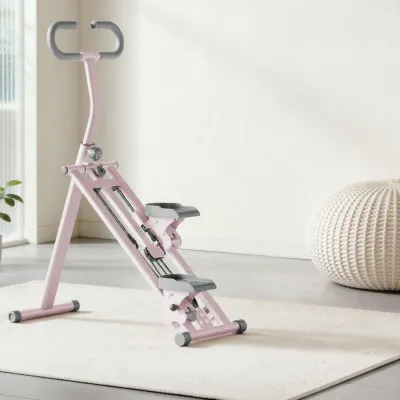
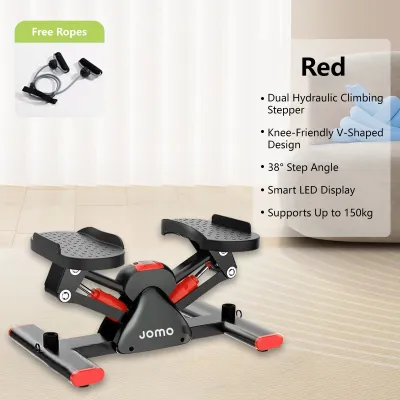
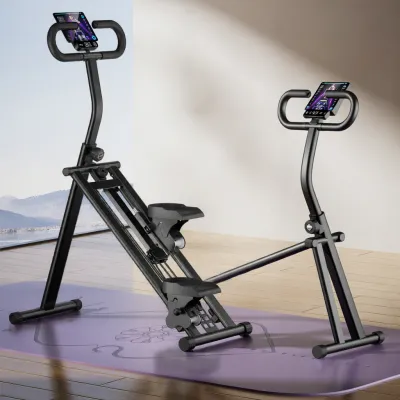
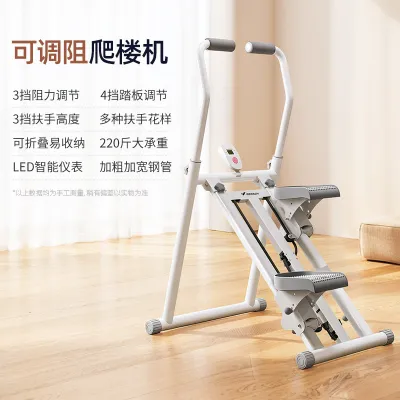
Prices are valid at publication and may change. Please refer to the product page for the latest price.
In contrast, full-size stair steppers feature robust frames, upright handlebars, and sometimes electronic consoles to track your workout metrics. While these machines offer excellent stability and support for intense cardio sessions, they require a permanent or semi-permanent spot in your home. Their wider bases and protruding handlebars mean they cannot be easily hidden away, making them more suited for larger living rooms or dedicated study rooms.
To find the exact space a specific model will occupy, always consult the manufacturer’s official specification sheet rather than relying on generic product descriptions. Manufacturers list the precise length, width, and height of the machine, as well as its maximum weight capacity. Checking these specifications ensures you do not purchase a machine that exceeds your floor limits or physical space.
Opting for a smaller footprint does come with functional compromises that you must weigh against your fitness goals. Mini steppers lack upper-body support, requiring you to maintain your own balance during workouts, which might be challenging for beginners or those with joint concerns. Additionally, smaller hydraulic systems can heat up during extended use, meaning they may not support long, high-intensity training sessions as effectively as larger, fan-cooled or magnetic-resistance models.
How to Measure Your Available Space and Walkways
Before purchasing any cardio equipment, you must accurately measure the physical space in your HDB flat. Start by identifying the exact zone where you plan to place the stepper, such as a corner of your living room, next to your television console, or in a spare bedroom. Use a physical tape measure to map out the static footprint of the machine on your floor, marking the corners with painter’s tape to visualize how much floor area will be occupied.

Measuring the static footprint is only the first step; you must also account for dynamic clearance. When you use a stair stepper, your body does not remain stationary. Your feet move up and down, your hips shift laterally, and your arms swing to maintain balance or hold onto resistance bands. You must simulate these movements in your chosen workout spot to ensure you will not hit nearby walls, shelves, or decorative items while exercising.
Vertical clearance is another critical factor that is often overlooked in HDB apartments. Because HDB flats typically have standard ceiling heights, and some may feature false ceilings or low-hanging ceiling fans, you must calculate your total height during use. Add the maximum pedal height of the stepper to your own height, and ensure there is a safe buffer of at least 30 cm between the top of your head and the ceiling or any light fixtures.
Finally, verify that the stepper does not obstruct the daily flow of your household. Walkways must remain completely clear to prevent tripping hazards, especially in households with children or elderly family members. Ensure the machine does not block door swings, wardrobe doors, access to your household shelter, or the path to utility boxes and emergency exits. A good rule of thumb is to maintain a clear walkway of at least 60 cm to 90 cm around the active workout zone.
Evaluating Clearance, Safety, and Flooring Conditions
Operating a stair stepper safely requires establishing a dedicated safety buffer zone around the equipment. Manufacturers typically recommend leaving at least 50 cm to 1 meter of open space on all sides of the machine. This buffer ensures that if you lose your balance or need to dismount quickly, you can do so safely without colliding with sharp furniture edges, glass doors, or concrete walls.
The type of flooring in your HDB flat also plays a major role in determining how you set up your equipment. Modern HDB flats commonly feature ceramic tiles, luxury vinyl tiles, or laminate flooring. Heavy stepping motions generate significant downward force and friction, which can cause the machine to slide on smooth ceramic tiles or leave permanent scuffs and scratches on vinyl and laminate surfaces.
To protect your flooring and ensure your safety, evaluate the weight and base stability of the stair stepper. A machine that shifts or rocks during a workout is highly dangerous and can damage both the equipment and your floor. Check the product specifications for non-slip rubber feet or stabilizers on the base of the machine. If the manufacturer recommends using a protective equipment mat, ensure you place a high-density rubber or PVC mat under the stepper to distribute the weight evenly and prevent sliding.
Planning for Storage and Multi-Use Spaces
If you live in a highly space-constrained HDB flat, you will likely need to integrate your stair stepper into a multi-use room. Look for design features that facilitate easy storage when the machine is not in active use. Many modern compact steppers feature folding handlebars that lay flat, built-in transport wheels for easy rolling, or lightweight frames that allow you to slide the unit under a bed or sofa.
Consider the practicality of moving your equipment before and after every workout. While a lightweight mini stepper is easy to pick up and store in a closet, a heavier full-sized stepper can weigh over 30 kg, making daily setup and teardown physically exhausting. If moving the machine is too difficult, you are less likely to use it regularly. In such cases, finding a permanent, dedicated corner that does not block walkways is a much more sustainable solution for your fitness routine.
When storing your stair stepper, be careful not to block essential home systems. Avoid placing the machine directly in front of air conditioning units, standing fans, or ventilation grilles, as this can disrupt airflow and cause your living space to feel stuffy. Additionally, ensure the stored equipment does not block natural light pathways from windows, which can make your HDB flat feel smaller and darker. Keep the machine tucked neatly against solid walls or inside designated storage closets to maintain an open, airy home environment.
Frequently Asked Questions (FAQ)
Will a stair stepper cause noise complaints from downstairs HDB neighbors?
The repetitive downward impact of stepping can transmit low-frequency vibrations through the concrete floor slabs of HDB blocks, potentially disturbing your downstairs neighbors. To prevent noise complaints, look for stair steppers equipped with quiet hydraulic cylinders or magnetic resistance systems rather than noisy chains. Additionally, always place a thick, high-density rubber shock-absorbing mat directly beneath the machine to dampen vibrations and absorb the impact sound before it travels through the floor.
Can I use a stair stepper on HDB vinyl or tile flooring without a mat?
Using a stair stepper directly on HDB vinyl or tile flooring without a protective mat is not recommended. The intense friction and pressure from stepping can easily scratch ceramic tiles, scuff vinyl planks, or cause the machine to slide dangerously during use. Placing a dedicated, non-slip equipment mat under the stepper provides the necessary grip to keep the machine stable while protecting your home’s flooring from permanent wear and tear.
Community discussion
Share your experience or ask a question. Comments are reviewed before publication.