
Retrieving and consuming energy gels from a tubular flip belt mid-run without stopping is a critical skill for marathoners, trail runners, and endurance athletes. When you are pushing your limits on long-distance routes, maintaining a consistent running cadence and breathing rhythm is essential for performance. Fumbling with your gear or stopping completely to fuel can disrupt your momentum, spike your heart rate, and cost you valuable seconds on race day.
To execute this process seamlessly, you must master a blind, one-handed retrieval technique while keeping your upper body relaxed and your stride stable. By understanding how to properly pack your waist belt, coordinate your hand movements, and practice specific muscle-memory drills, you can transform mid-run fueling from a stressful chore into an automatic, second-nature habit. This guide breaks down the exact physical mechanics and preparation strategies required to access your nutrition on the move without breaking stride.
Preparing Your Flip Belt for Easy Mid-Run Access
To ensure smooth retrieval while running, you must first understand how a tubular flip belt functions. These belts are constructed from a continuous loop of highly stretchable, moisture-wicking synthetic fabric, typically a polyester-elastane blend. Unlike traditional zippered running pouches, a flip belt relies on uniform compression and tension against your hips or waist to hold items securely. When gear is inserted through the open slits, the fabric stretches around the items, anchoring them flat against your body to eliminate bouncing. Understanding this tension is key to packing the belt in a way that allows for easy extraction.
Products mentioned in this guide
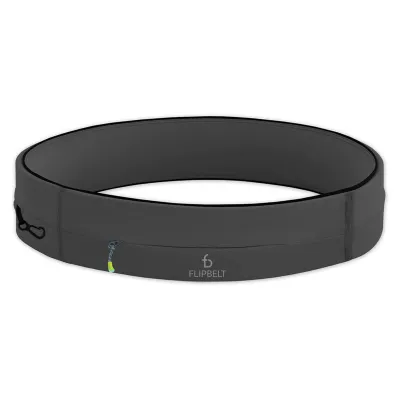
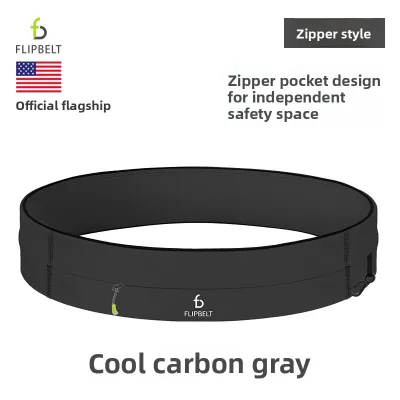
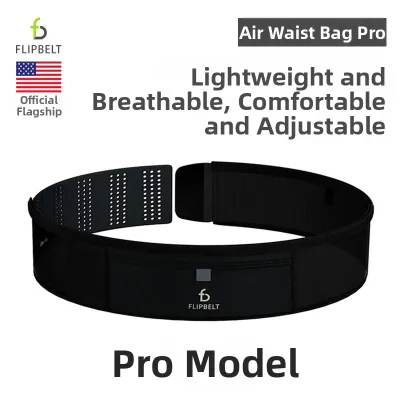
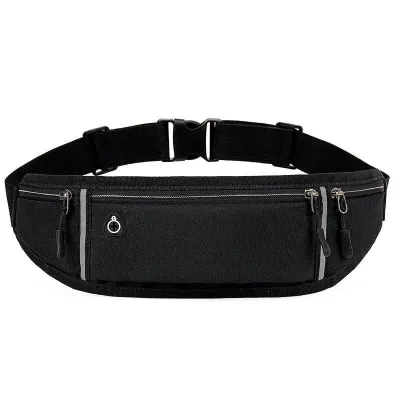
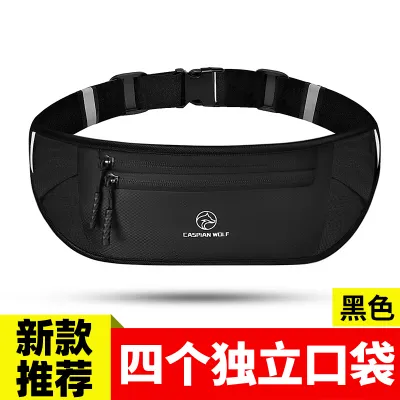
Prices are valid at publication and may change. Please refer to the product page for the latest price.
Strategic placement of your energy gels within the belt is crucial for quick, one-handed access. The most accessible zones are the front-center (across your lower abdomen) and the side-hips. Reaching for items in these areas requires minimal arm movement and keeps your hands within their natural running swing path. Avoid placing your primary energy gels in the lower-back section of the belt. Retrieving items from behind your back forces you to twist your torso, which temporarily misaligns your hips, disrupts your stride, and can lead to a sudden loss of balance or muscle strain.
When loading your gels into the belt, pay close attention to their orientation. Slide each gel packet into the fabric slots horizontally or slightly diagonally, ensuring that the tear-tab or top edge points upward and slightly outward toward the pocket opening. If you push the gel too deep or position it vertically with the tab buried at the bottom, you will have to dig and claw at the fabric mid-run. Leaving the textured tear-tab exposed or resting right at the lip of the opening allows your fingers to instantly hook the packet for a clean, single-motion pull.
Proper weight distribution across the belt is also essential for comfort and stability. If you pack all your heavy items, such as a smartphone, keys, or a soft water flask, on one side and your gels on the other, the belt will pull unevenly. This imbalance causes the belt to ride up toward your narrow waist, bounce excessively, or rub against your skin, resulting in painful chafing. Balance the load by placing your heaviest item, like a phone, in the rear-center pocket, and distribute your gels and hydration flasks evenly across the front and side pockets. A balanced belt stays anchored low on your hips, providing a stable platform from which to retrieve your nutrition.
Step-by-Step Technique for Retrieving Gels on the Move
Extracting and consuming a gel while running requires precise coordination to prevent fumbles and maintain your pace. Breaking the process down into discrete physical steps allows you to execute the movement smoothly and safely.

Positioning Your Hands and Maintaining Rhythm
Before reaching for your belt, evaluate your immediate running environment. Do not attempt to retrieve a gel while navigating a technical trail descent, negotiating a sharp turn, or running through a crowded race pack. Instead, wait for a predictable, flat stretch of road or a gentle, even downhill where you can safely focus a small amount of attention on fueling.
To begin the retrieval, bring both hands into play to manage the belt’s tension. Use your non-dominant hand to lightly press down on the lower hem of the belt directly beneath the target pocket. This action anchors the fabric and creates a slight gap at the pocket opening. Simultaneously, bring your dominant hand down to the pocket, keeping your shoulders relaxed and your gaze focused straight ahead. Avoid looking down at your waist, as dropping your head restricts your airway, disrupts your posture, and makes it harder to spot obstacles on the path.
The Pinch, Pull, and Consume Motion
With your non-dominant hand stabilizing the belt, use your dominant hand to execute a precise “pinch and pull” motion. Form a pincer grasp with your thumb and index finger, firmly clamping onto the exposed tear-tab of the gel packet. Pull the belt fabric slightly outward with your stabilizing hand to release the compression, and slide the gel packet upward and out of the pocket in a smooth, continuous motion.
Once the gel is free, bring it directly to your mouth. Use your front teeth to grip the pre-notched tear-tab firmly, and pull the packet downward with your hand to rip the top off. Keep your eyes on the road ahead throughout this motion. Squeeze the gel into your mouth gradually, consuming it in two or three small swallows rather than gulping it all at once, which can trigger a gag reflex or cause choking at high heart rates. Immediately follow the gel with several sips of water from a handheld bottle or an upcoming aid station to dilute the concentrated sugars, which aids digestion and prevents stomach cramps.
Managing the Empty Pouch Without Stopping
Never discard your empty gel wrappers on the road or trail. Maintaining a clean environment is a fundamental responsibility for every runner, especially when training on scenic routes like Singapore’s Green Corridor or East Coast Park. Managing a sticky, empty packet without stopping requires a quick folding technique.
As soon as you finish the gel, fold the empty packet inward on itself, starting from the torn top. This action traps the sticky residue inside the folded plastic, preventing it from leaking onto your fingers or the inside of your gear. Use your non-dominant hand to pull open the belt slit once more, and slide the folded wrapper into a designated “trash” section of the belt. Keep this pocket separate from your unused gels to avoid transferring sticky residue to your remaining nutrition.
Pro Tips to Prevent Fumbles and Dropped Gels
Even with good technique, real-world running conditions can introduce challenges like sweat, fatigue, and digestive issues. Implementing a few preventative strategies can help you avoid common fueling mishaps.
- Manage Sweaty Hands: In hot, humid tropical climates, heavy sweating can make plastic gel packets incredibly slick and difficult to grip. Before reaching for your belt, wipe your dominant hand firmly against your running shorts or shirt to dry your palm. For added security during pre-race prep, apply a small strip of textured grip tape or athletic tape to the tear-tab of each gel packet. This simple modification provides a non-slip surface that is easy to pinch, even with wet fingers.
- Use the "Pre-Push" Method: If you anticipate a challenging section of your run where you will need quick energy, use the pre-push method. A few minutes before your scheduled fueling time, while running on an easy stretch, gently nudge the top of the next gel upward from the bottom of the belt so the tab protrudes prominently. When the time comes to fuel, you can grab the packet instantly without having to slide your fingers inside the belt pocket.
- Prevent "Gel Belly" with Proper Hydration: Consuming highly concentrated carbohydrates without sufficient water can lead to a condition known as "gel belly." Because the stomach requires water to dilute and absorb concentrated sugars, taking a gel without fluids forces your body to draw water from your bloodstream into your gastrointestinal tract. This process can cause severe cramping, bloating, and nausea. Always coordinate your gel intake with your hydration plan, aiming to drink approximately 150ml to 200ml of plain water with every gel packet consumed.
- Follow the Dropped Gel Protocol: If a gel slips from your fingers and falls to the ground, prioritize your physical safety over the lost nutrition. Do not make a sudden, erratic lunge to catch the falling packet, and do not stop abruptly in your tracks. Doing so can cause immediate hamstring or groin strains, and poses a serious collision risk to runners directly behind you. If you carry backup nutrition, let the dropped gel go and continue your stride. If you must retrieve it, gradually decelerate, check over your shoulder, step safely to the side of the path, and walk back to pick up the packet.
Practice Drills to Build Muscle Memory Before Race Day
Mastering mid-run fueling requires deliberate practice. By incorporating structured drills into your training schedule, you can build the muscle memory needed to make the entire process automatic under race-day conditions.
Begin your training with progressive practice drills. Start by practicing the entire retrieval, opening, and re-stowing sequence while walking around your home or on a treadmill. This low-intensity environment allows you to focus purely on your hand placement and coordination. Once you can execute the sequence cleanly without looking down, transition to practicing during an easy recovery jog. Finally, test the technique during a tempo run or a structured interval session, simulating the high heart rate and fast leg turnover of your target race pace.
To ensure your fueling technique remains reliable when you are exhausted, perform “fatigue simulation” drills. Schedule your gel retrieval practice during the final third of your weekly long runs. Physical and mental fatigue naturally degrade your fine motor skills and hand-eye coordination. Practicing when your muscles are tired forces you to rely on established muscle memory, ensuring that you can still execute the pinch-and-pull motion cleanly during the grueling final kilometers of a marathon.
Use a simple verification check to track your progress. During your training runs, monitor how many times you successfully retrieve and consume a gel without looking down or fumbling. If you find yourself looking at your waist, dropping packets, or breaking your running stride, treat this as a signal to adjust your setup. Experiment with moving the gels to a different pocket, changing the angle of the packets, or adjusting the tightness of your belt. Continue refining and testing your system until you can execute the entire fueling sequence with complete confidence and zero visual distraction.
Frequently Asked Questions (FAQ)
Can I pre-open my energy gels before putting them in the flip belt?
Fully pre-opening your energy gels before a run is not recommended. The highly concentrated, sticky liquid inside the packets will inevitably leak out due to the constant movement and compression of the belt fabric. This creates a sticky mess on your skin, ruins your gear, and can attract ants and other insects during outdoor runs.
If you struggle to tear open packets with your teeth, use a partial-tear compromise instead. During your pre-run preparation, use a pair of scissors to make a tiny, two-millimeter cut along the pre-notched tear line of the gel packet. This small incision weakens the plastic seal slightly, making it much easier to rip open with your teeth mid-run, while keeping the airtight packaging fully intact to prevent leaks.
What if my flip belt is too tight to pull the gel out easily?
If your belt is too tight, the fabric compression will lock your gear in place, making it extremely difficult to slide items out with one hand. First, verify that you are wearing the correct belt size based on the manufacturer’s sizing chart, and ensure you are wearing it on your hips or natural waist rather than pulled up too high where your body is wider.
To reduce excessive tension, load your energy gels and other gear into the belt while it is off your body, then step into the belt and slide it up to your hips. This method allows the fabric to stretch evenly around the items. You can also manually stretch the pocket openings by gently pulling the fabric in opposite directions before your run to slightly loosen the elastic tension around the access slits.
How do I clean sticky gel residue from my flip belt?
To clean sticky gel residue and maintain the elasticity of your belt, always wash it promptly after a messy run. Turn the belt completely inside out to expose the internal pockets and hand-wash it in cold or lukewarm water using a mild, non-abrasive liquid detergent. Gently rub the fabric together in areas with stubborn, dried gel spots to dissolve the residue.
Avoid using hot water, bleach, fabric softeners, or harsh chemical cleaners, as these substances degrade the synthetic elastane fibers and ruin the belt’s elasticity over time. Never place your flip belt in a tumble dryer, as high heat will warp the synthetic fabric and cause the belt to sag. Instead, hang the belt to air dry in a well-ventilated area away from direct, intense sunlight.
Community discussion
Share your experience or ask a question. Comments are reviewed before publication.