
Finding the correct tennis grip size is one of the most critical steps you can take before purchasing a new racket. Playing with a handle that does not fit your hand can severely limit your control on the court and lead to chronic physical discomfort. Fortunately, you can easily determine your ideal size at home using two reliable methods: the Ruler Test, which provides a precise physical measurement of your hand, and the Index Finger Test, which allows you to verify the physical feel of a racket handle. By taking these measurements beforehand, you can confidently select a racket that supports your technique and protects your joints.
Choosing the right grip size is not just about immediate comfort; it directly influences how you swing and how much energy is transferred through your arm. Whether you are a beginner purchasing your first racket or an experienced player looking to upgrade, understanding how to measure your hand ensures you get the most out of your equipment. Below, we break down why grip size matters, how to perform both tests step-by-step, and how to navigate brand-specific sizing variations.
Why Grip Size Impacts Your Comfort and Performance
Using a tennis grip that is too small forces your hand and forearm muscles to work significantly harder than necessary. When the handle circumference is too narrow, your fingers wrap too far around the grip, often overlapping. To keep the racket from twisting in your hand during off-center hits, you must squeeze the handle with excessive force. This chronic over-squeezing quickly leads to muscle fatigue, forearm tension, and increased vibration transfer, which can eventually contribute to painful overuse injuries like tennis elbow or wrist tendonitis.
Products mentioned in this guide
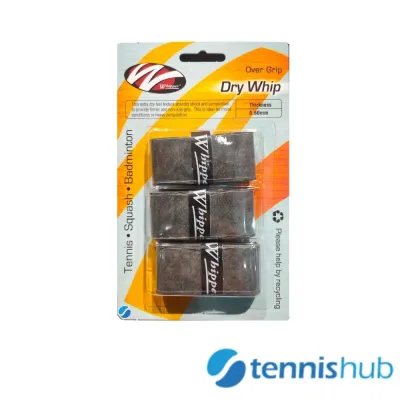
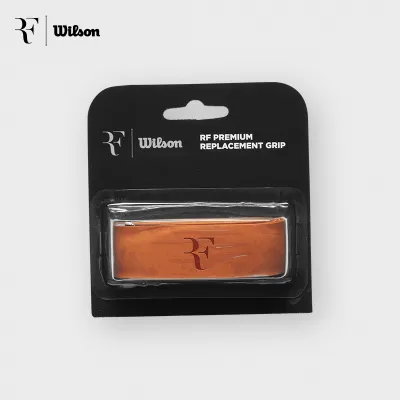
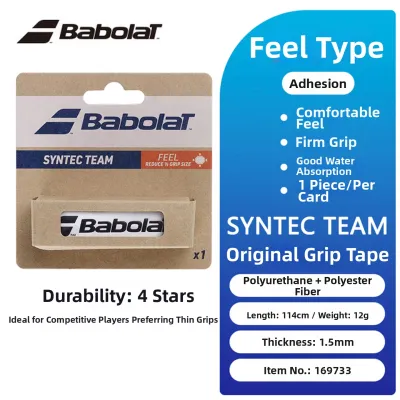
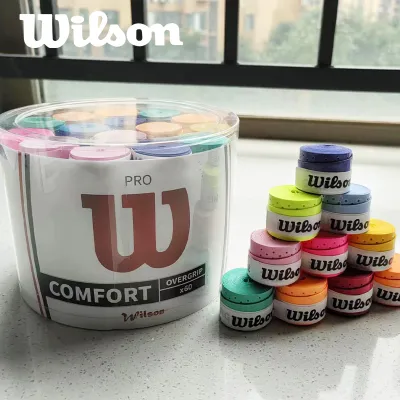
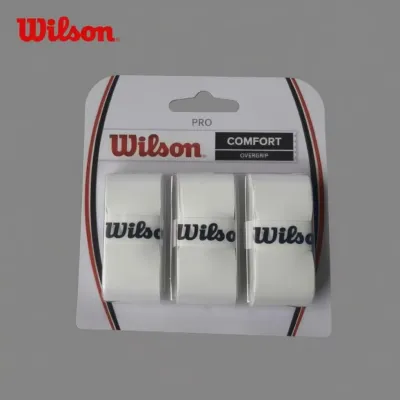
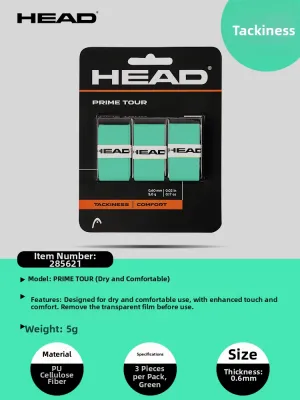
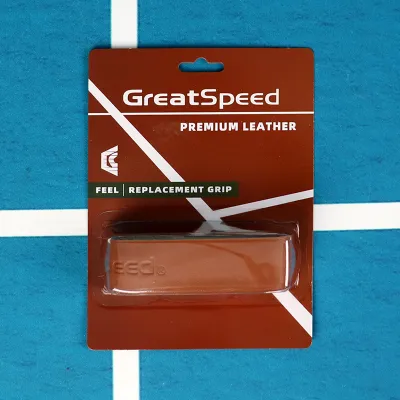
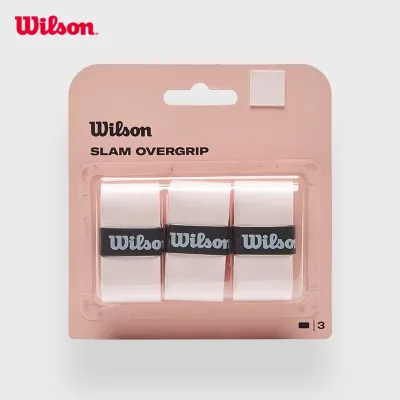
Prices are valid at publication and may change. Please refer to the product page for the latest price.
Conversely, a grip that is too large introduces a different set of performance challenges. A bulky handle restricts your wrist’s natural range of motion, making it difficult to execute a clean wrist snap during serves or to generate rapid topspin on your groundstrokes. Because your hand cannot fully close around the handle, you lose a degree of fine racket head control, and the racket may feel unstable or prone to slipping out of your hand during high-velocity swings. This lack of security often causes players to tense up, neutralizing the fluid mechanics needed for clean shots.
Achieving the correct grip size establishes a vital balance between comfort, maneuverability, and long-term joint safety. When the handle fits your hand properly, you can maintain a relaxed, secure hold on the racket. This relaxation allows for smoother swing mechanics, better shock absorption upon ball impact, and more efficient power transfer. Ultimately, a well-fitted grip lets you focus entirely on your court strategy and technique rather than fighting against your equipment.
How to Perform the Ruler Test for an Exact Measurement
The Ruler Test is the most reliable method for determining your grip size when you do not have a physical racket on hand. To perform this test accurately, you will need a standard ruler or a measuring tape that displays inches or millimeters. It is helpful to have a flat surface to rest your hand on to ensure your fingers remain steady and flat throughout the process.

Start by positioning your dominant hand correctly. Keep your fingers pressed close together and extend your hand completely flat, ensuring your palm is facing directly upward. Avoid cupping your hand, curving your fingers, or stretching your palm unnaturally, as any tension in the hand can distort the final measurement. Resting the back of your hand flat against a table can help maintain a neutral, relaxed position.
Next, identify the starting point for your measurement on your palm. Look closely at the lines on your open hand. You will see two major horizontal creases running across your palm. Locate the lower lateral crease, which is the line that starts on the edge of your palm between your thumb and index finger and sweeps across the middle-to-lower section of your hand. This crease represents the pivot point where your fingers bend away from your palm.
Place the zero mark of your ruler precisely on this lower lateral crease. Align the ruler vertically so that it runs straight up your hand, parallel to your ring finger. Ensure the ruler remains perfectly straight and does not angle toward your middle finger or pinky.
Measure straight up to the very tip of your ring finger. Note the measurement at the highest point of the finger’s flesh, excluding any fingernail length. Record this distance carefully; most tennis grip sizes are categorized by eighths of an inch, so note the exact fraction or the millimeter equivalent to match against manufacturer size charts.
How to Use the Index Finger Test to Verify Your Fit
If you are shopping in a physical store or already have access to a tennis racket, the Index Finger Test is an excellent, practical way to verify the fit in real time. This method evaluates the physical relationship between your hand and the racket handle under simulated playing conditions, helping you feel how the grip behaves when wrapped in your palm.
To begin, hold the racket handle using a standard Eastern forehand grip. You can find this grip easily by placing your dominant palm flat against the strings of the racket face and sliding your hand straight down the shaft until it wraps completely around the handle. Your fingers should wrap around the grip at a slight diagonal angle, and the heel of your hand should rest comfortably near the bottom of the handle without sliding off the butt cap.
Once you have established a comfortable, secure grip, take the index finger of your non-dominant hand. Attempt to slide this finger into the gap created between the tips of your gripping fingers and the base of your palm. This gap represents the clearance space available when your hand is closed around the handle.
Evaluate how your index finger fits into this space. In a properly sized grip, your non-dominant index finger should slide into the gap snugly, touching both your fingertips and your palm with minimal friction. If the gap is too narrow to insert your index finger without forcing it, or if your fingertips are pressing directly into your palm, the grip is too small. If there is substantial extra space around your index finger, or if your finger can wiggle freely within the gap, the grip is too large.
Keep in mind that this test has physical limitations. If you are testing a demo racket in a shop, the base grip may be heavily compressed, worn down, or missing an overgrip entirely. A worn-out grip will feel smaller than a fresh, cushioned grip of the exact same nominal size. Always inspect the condition of the handle material before relying solely on the index finger test.
Understanding Grip Size Labels and Brand Variations
Once you have your hand measurement, you must translate it into the standard retail labels used by tennis manufacturers. Grip sizes are typically labeled using two different systems: the US system, which measures the handle circumference in inches, and the European or international system, which uses a simple numbering scale from 0 to 5.
To help you match your physical measurement to these retail labels, refer to the standard conversion guide below:
- Grip Size 0 (US 4 inches): Suitable for juniors or players with very small hands.
- Grip Size 1 (US 4 1/8 inches): Common for juniors transitioning to adult rackets or adults with smaller hands.
- Grip Size 2 (US 4 1/4 inches): A highly popular size for many female players and male players with medium-small hands.
- Grip Size 3 (US 4 3/8 inches): The standard average size for most male players and female players with larger hands.
- Grip Size 4 (US 4 1/2 inches): Designed for players with larger hands.
- Grip Size 5 (US 4 5/8 inches): Reserved for players with exceptionally large hands.
While these conversions are standard across the industry, you should always check the specific manufacturer’s size chart before making a purchase. Different brands use slightly different handle geometries; for instance, some brands design their handles with a more rectangular octagonal shape, while others utilize a rounder, more symmetrical profile. These structural differences mean that a Size 3 grip from one brand can feel slightly different in the hand than a Size 3 from another.
To locate the grip size on a physical racket, look at the butt cap on the very bottom of the handle. Manufacturers almost always stamp or print the size number (such as “3” or “4 3/8”) directly onto this plastic cap. On some modern rackets, you may also find this information printed on the lower portion of the shaft just above the grip tape.
How to Choose When You Fall Between Two Sizes
It is incredibly common for a hand measurement to fall directly between two standard grip sizes, such as between a Size 2 (4 1/4 inches) and a Size 3 (4 3/8 inches). When faced with this situation, the general rule of thumb is to always select the smaller of the two sizes.
Choosing the smaller size gives you the flexibility to customize the handle to your exact preference. You can easily increase the circumference of a small grip by wrapping a standard overgrip over the existing base grip. A typical overgrip adds approximately 1/16 of an inch (about 1.5 mm) to the handle, which is often the exact amount needed to bridge the gap between half-sizes. Overgrips are highly affordable, costing around S$3 to S$5, and can be replaced easily when they wear out.
In contrast, reducing the size of a handle that is too large is a difficult, costly, and often irreversible process. While you can replace the standard base grip with an ultra-thin replacement grip to shave off a fraction of a millimeter, the reduction is minimal. Truly shrinking a handle requires shaving down the plastic or composite handle pallet, which risks ruining the racket’s structural integrity and altering the distinct bevels that allow you to feel your grip alignment.
If you find that standard adjustments do not resolve your fit issues, or if you have unique hand proportions, stop and seek professional advice. A qualified racket technician or professional stringer can install custom heat-shrink sleeves to increase your grip size precisely by half or full steps, or replace the handle pallets entirely on compatible racket models to ensure a perfect, ergonomic fit.
Frequently Asked Questions (FAQ)
Can I change my grip size after buying the racket?
Yes, you can modify your grip size after purchase, though it is much easier to increase the size than to decrease it. To safely increase the handle circumference, you can wrap a standard overgrip over your existing base grip, which adds about 1/16 of an inch. For a more permanent and substantial increase, a racket technician can apply a heat-shrink sleeve directly to the bare handle pallet, which adds a full or half grip size while preserving the handle’s bevels. Decreasing the size is limited; your best option is to replace the stock base grip with an ultra-thin replacement grip, which only reduces the circumference by a very small margin.
Does the grip size affect the overall weight and balance of the racket?
Modifying your grip size does introduce minor changes to the physical properties of your racket, though the impact is usually minimal. Adding a single overgrip typically adds about 4 to 8 grams of weight to the handle. Because this weight is added at the very bottom of the racket, it shifts the balance point slightly toward your hand, making the racket feel a fraction more head-light and maneuverable. While these adjustments can enhance comfort and hand speed, they are primarily ergonomic modifications and should not be used as a substitute for professional racket customization using lead tape.
How often should I replace my overgrip to maintain the correct feel?
Your overgrip should be replaced as soon as it loses its tackiness, begins to slip, or shows visible signs of wear such as fraying, tearing, or discoloration. In tropical climates like Singapore, high humidity and heavy sweat can accelerate the degradation of grip materials, causing them to lose their cushioning and slip-resistant properties quickly. As a general guideline, recreational players should replace their overgrip every 6 to 10 hours of play, or at least once a month, to maintain a secure hold and prevent the handle from feeling artificially thin or slick.
Community discussion
Share your experience or ask a question. Comments are reviewed before publication.