
Setting the correct golf tee height is one of the simplest yet most overlooked ways to improve ball striking, optimize launch conditions, and maximize distance. The height of the tee determines exactly where the clubface makes contact with the golf ball, directly influencing the launch angle, spin rate, and overall energy transfer. By understanding how to adjust your tee height for different clubs, you can eliminate inconsistent strikes and establish a highly repeatable pre-shot routine.
Why Golf Tee Height Matters for Your Swing
Your tee height dictates how your clubface interacts with the ball’s equator and the club’s sweet spot. For a shot to achieve maximum efficiency, the center of the clubface must make clean contact with the ball. When the ball is teed too high or too low, you are forced to make subconscious, compensatory swing adjustments during your downswing to avoid missing the ball entirely. These compensations lead to inconsistent ball striking, poor distance control, and erratic shot shapes.
To understand the physics of tee height, you must contrast the swing mechanics required for drivers versus irons. A driver is designed to strike the golf ball on an upward angle of attack. Hitting up on the ball minimizes backspin and maximizes launch angle, which is the ideal formula for carrying the ball long distances. Conversely, irons and wedges require a downward angle of attack. To hit a clean iron shot, the clubface must strike the ball first and then compress it against the turf, creating backspin and giving you precise control over your distance and trajectory.
Products mentioned in this guide
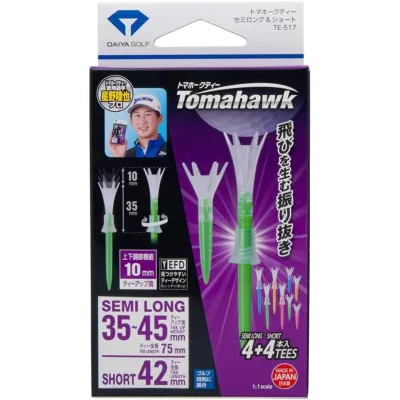
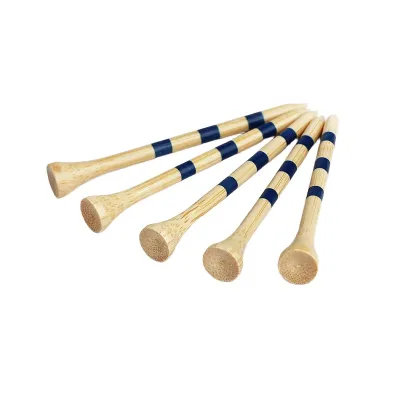
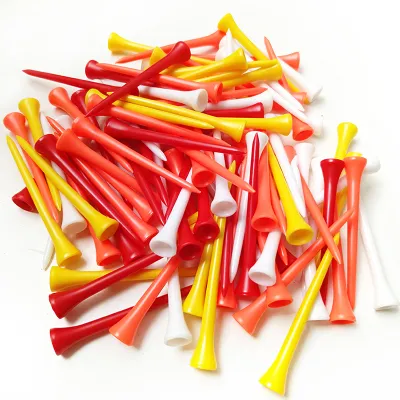
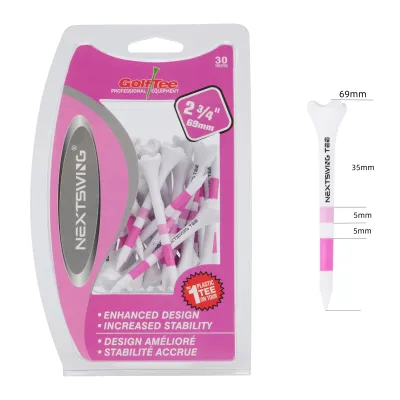
Prices are valid at publication and may change. Please refer to the product page for the latest price.
When a beginner sets the tee at an incorrect height, it disrupts this natural club design. For example, if you tee a driver too low, you will instinctively swing downward to make contact, resulting in a high-spin, low-launch shot that robs you of distance. If you tee an iron too high, you will sweep or scoop the ball, missing the grooves on the clubface and losing control over where the ball lands. Mastering baseline tee heights ensures your swing mechanics align perfectly with the engineering of your golf clubs.
Choosing the Right Golf Tee Length and Material
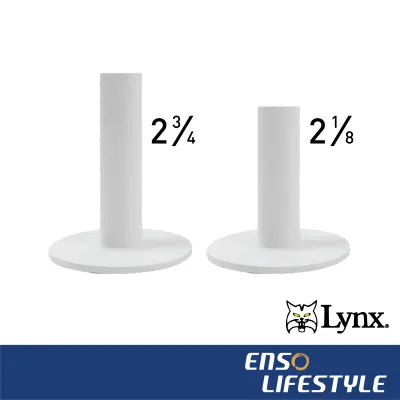
Before you can set the perfect tee height on the course, you need to select the appropriate equipment. Golf tees come in various lengths, typically ranging from 1.5 inches (38 mm) to 3.25 inches (83 mm) or even longer. Standard tees, which measure around 2.125 inches, are highly versatile and work well for fairway woods, hybrids, and irons. Extra-long tees, measuring 2.75 to 3.25 inches, are essential for modern, large-volume 460cc drivers, as they allow you to elevate the ball sufficiently above the tall clubhead crown.

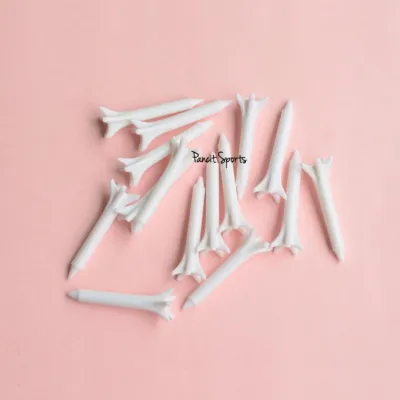
Material choices also play a significant role in durability, friction, and environmental impact. Classic wooden tees, usually made of birch or maple, are inexpensive and biodegradable, though they snap easily on impact. Bamboo tees are an increasingly popular, eco-friendly alternative; they are highly durable, biodegradable, and offer excellent shear strength, meaning they last longer than traditional hardwood. Plastic tees are incredibly durable and can often last multiple rounds, but they pose environmental hazards if left on the course and can damage lawnmower blades during course maintenance.
To ensure you are fully prepared for any shot on the course, you should carry a mixed pack of tees in your golf bag. Having a selection of both long and short tees allows you to accommodate the varying depth requirements of your clubs without having to guess how deep to push a long tee into firm turf.
Step-by-Step Guide to Tee Height by Club Type
Achieving the optimal launch condition requires a specific setup for each category of club in your bag. By using clear visual checkpoints, you can ensure your ball is positioned perfectly every time you step up to the tee box.
Driver: Maximizing Distance and Launch
To set the tee height for your driver, sole the club flat on the ground directly behind the ball. The visual checkpoint you want to look for is having exactly half of the golf ball sitting above the top edge, or crown, of the driver head. If the entire ball is below the crown, the tee is too low; if the entire ball is above the crown, it is too high. This half-ball relationship ensures that when you swing, the sweet spot of your driver aligns perfectly with the ball’s equator.
This specific height allows you to catch the ball on the upswing. Striking the ball as the clubhead is moving upward reduces the amount of backspin generated at impact. High backspin causes a drive to balloon into the air and stall, whereas low backspin combined with a high launch angle allows the ball to pierce through the air and roll out significantly upon landing.
To fully take advantage of this setup, align the ball with the inside of your lead heel (the left heel for right-handed golfers) in your stance. This forward ball position gives the driver head enough time to pass the lowest point of its swing arc and begin its upward path before making contact with the ball.
Fairway Woods and Hybrids: Balancing Sweep and Contact
Fairway woods and hybrids have a much shallower clubface and a lower center of gravity than a driver. Therefore, they require a much lower tee height. The visual checkpoint for these clubs is to leave just enough of the tee above the ground to elevate the ball slightly off the grass blades, which translates to roughly a quarter-inch to a half-inch (6 mm to 13 mm) of clearance.
If you tee a fairway wood or hybrid too high, you run a high risk of swinging completely under the ball or hitting it high on the clubface, which leads to weak, popping shots. Conversely, teeing it too low can make it difficult to get clean contact if the grass on the tee box is thick or uneven. Elevating the ball just slightly gives you a perfect lie while keeping the ball low enough to match the club’s sweet spot.
When swinging a fairway wood or hybrid off a tee, focus on a sweeping motion. Unlike an iron, you do not want to hit down steeply on the ball; instead, let the flat sole of the club glide just over the surface of the turf, sweeping the ball cleanly off the low tee.
Irons and Wedges: Prioritizing Clean Ball-First Contact
When you are playing a par-3 hole, you are permitted to use a tee for your iron and wedge shots. You should always take advantage of this rule, as it provides a perfect lie and eliminates the unpredictability of uneven turf, hidden roots, or sand patches. However, the tee height must be set incredibly low. The visual checkpoint is to push the tee into the ground until the cup of the tee is almost flush with the soil, leaving the ball resting just barely above the tips of the grass blades.
This low setup is crucial because irons are designed to strike the ball with a descending blow. To generate maximum backspin, control your distance, and achieve a penetrating flight, the clubface must make contact with the ball first, compress it, and then strike the turf to create a divot in front of where the tee was placed.
If you tee an iron too high, the clubhead will pass underneath the ball’s equator, striking the ball high on the face where there is very little mass. This results in a highly inconsistent, short, and vertical shot that will fall well short of your target. Keeping the tee flush with the ground mimics a perfect fairway lie while giving you a tiny margin of safety.
Common Beginner Mistakes and How to Fix Them
Identifying and correcting tee height errors early can prevent bad habits from becoming permanent fixtures in your swing mechanics.
Mistake 1: Teeing the driver too low. Many beginners tee their driver too low out of a fear of swinging completely underneath the ball. This mistake forces a steep, downward angle of attack, which results in low-launching drives with excessive backspin. It also frequently leads to “sky marks”—ugly scratches on the top crown of your driver where the ball made contact with the painted metal rather than the clubface. The Fix: Switch to a longer 3.25-inch tee. When setting up, check that half of the ball is visible above the crown of the club. Tilt your spine slightly away from the target at address to help promote an upward swing path.
Mistake 2: Teeing irons too high. It is common to see beginners tee up their irons as if they were hitting a fairway wood, believing that a higher ball is easier to hit. However, this prevents the descending strike required for irons, leading to thin shots, topped balls, or a severe loss of distance due to a scooping motion. The Fix: Push the tee down until only the very top rim of the cup is visible. If the ball looks like it is floating in the air, it is too high; it should look as though it is sitting on a perfectly manicured patch of fairway grass.
Mistake 3: Inconsistent tee depths. In the rush to play, many golfers push their tees into the ground to random depths on every hole without looking. This inconsistency prevents your brain from calibrating a reliable swing plane, leading to a mix of topped shots and fat shots throughout your round. The Fix: Incorporate a strict visual check into your pre-shot routine. Step back and look at the ball relative to the clubface before taking your stance. You can also purchase striped tees, which feature printed lines along the shaft to act as visual depth gauges, ensuring you insert the tee to the exact same depth on every hole.
Adjusting Tee Height for Wind and Swing Tendencies
Once you have mastered the standard baseline tee heights, you can begin making minor adjustments to account for environmental factors and your individual swing characteristics.
Wind Adjustments When playing on open or coastal courses where wind is a major factor, adjusting your tee height can help you control your ball flight. In strong headwinds, tee your driver slightly lower (about a quarter-inch lower than your standard setup). This minor change lowers your launch angle and reduces backspin, keeping the ball on a lower, more penetrating trajectory that cuts through the wind. Conversely, when playing with a strong tailwind, tee the ball slightly higher to encourage a higher launch, allowing the wind to catch the ball and carry it further down the fairway.
Swing Tendencies Your natural swing path may also benefit from slight tee height modifications. If you have a naturally steep angle of attack and tend to hit down on your driver, teeing the ball slightly higher can give you the physical space needed to tilt back and strike upward. If you have a very flat, sweeping swing and tend to thin your driver shots, lowering the tee slightly can help you find the center of the clubface.
A Word of Caution These adjustments should be marginal—never change your tee height by more than a quarter-inch from your baseline. Always prioritize mastering the standard baseline heights first, as manipulating your setup to fix a temporary swing flaw can introduce new inconsistencies to your game.
Frequently Asked Questions (FAQ)
Does tee height affect driving distance?
Yes, tee height directly impacts driving distance by altering your launch angle and spin rate. Setting the tee at the correct height allows you to strike the ball on an upward angle of attack, which maximizes the launch angle while minimizing backspin. This combination produces the optimal high-launch, low-spin trajectory required for maximum carry and roll. If the ball is teed too low, you will likely hit down on it, generating excessive backspin that causes the ball to balloon and lose distance upon landing.
Can I use the same tee length for all my clubs?
While you can physically push a long driver tee deep into the ground to use for an iron or hybrid, it is not practical or durable. Pushing a long tee deep into firm turf can cause it to bend, break, or become difficult to insert. Additionally, the extra length below the ground makes the tee more prone to snapping upon impact. Carrying a mixed pack of tees—typically long 3.25-inch tees for your driver and shorter 1.5-inch or 2.125-inch tees for your woods, hybrids, and irons—is the most practical and cost-effective approach for a full round of golf.
Community discussion
Share your experience or ask a question. Comments are reviewed before publication.