
To spot a fake FIFA World Cup match ball, you must inspect the official FIFA Quality Pro certification stamp, verify the seamless thermal bonding of the panels, check for a distinct micro-textured surface, and validate the unique serial number or digital tag through the manufacturer’s official channels. Genuine match balls are precision-engineered sports equipment, and counterfeiters often struggle to replicate their advanced materials, seamless construction, and high-quality packaging. By systematically examining these physical and digital details before you buy, you can protect your investment and ensure you are playing with a genuine product.
Why Counterfeit Match Balls Are a Risk for Players
Using a counterfeit match ball goes far beyond simply owning an imitation product; it directly impacts your performance and safety on the pitch. Genuine match balls undergo rigorous testing to ensure a predictable trajectory, consistent bounce, and accurate weight distribution. A counterfeit ball, constructed without these strict quality controls, often suffers from uneven weight distribution, leading to erratic flight paths and unpredictable behavior when kicked or headed.
The materials used in fake footballs are typically substandard, leading to rapid degradation. Under the humid and wet conditions often experienced during outdoor matches in Singapore, a poorly constructed ball can quickly absorb water through its seams, becoming heavy and waterlogged. This extra weight ruins the playing experience and increases the risk of foot or ankle injuries during high-impact plays.
Products mentioned in this guide
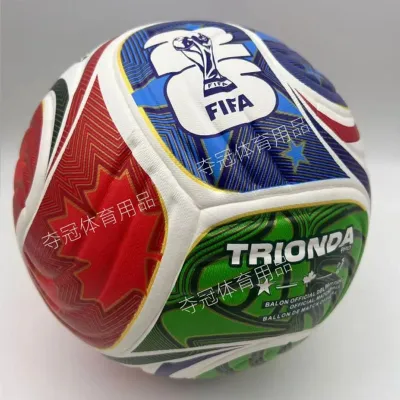
Prices are valid at publication and may change. Please refer to the product page for the latest price.
Furthermore, official match balls are designed to meet specific safety standards regarding material composition. Counterfeit manufacturers operate without regulatory oversight, meaning their products may contain hazardous chemicals, industrial adhesives, or low-grade plastics that can cause skin irritation upon contact. Distinguishing between an official match ball, a licensed training replica, and an unauthorized fake is essential to ensuring you get the performance and safety you pay for.
Key Visual and Physical Checks for Authenticity
Identifying a counterfeit ball requires a close, hands-on inspection under bright, natural light. Before making a purchase, compare the physical ball in front of you with high-resolution reference images from the manufacturer’s official website to spot discrepancies in graphics, alignment, and texture.

Inspecting Official Markings and Logos
The first line of defense is verifying the official certification stamps printed on the ball’s surface. Genuine match balls used in professional tournaments carry the “FIFA Quality Pro” or “FIFA Basic” certification mark. Check the font, spacing, and alignment of this stamp carefully, as counterfeiters often use slightly altered typefaces or misaligned letters that look off-center.
Next, examine the official tournament branding and the manufacturer’s logo. On an authentic ball, these graphics are printed with absolute precision, featuring sharp edges, vibrant colors, and perfect alignment across the panel seams. Counterfeit balls frequently display blurry printing, color bleeding, or logos that are slightly rotated or placed on the wrong panels.
Always cross-reference the specific colorways and graphic patterns of the ball with the official product catalog. Manufacturers release specific designs for different tournaments, and counterfeiters sometimes produce fantasy colorways that were never officially manufactured or distributed.
Evaluating Panel Construction and Surface Texture
Modern FIFA World Cup match balls utilize advanced thermal bonding technology rather than traditional hand or machine stitching. This seamless construction minimizes water absorption and provides a perfectly spherical shape. Inspect the seams closely; they should be completely smooth, uniform, and free of any visible glue residue, gaps, or loose threads. If you see stitching on a model that is supposed to be thermally bonded, it is a definitive sign of a counterfeit.
The surface texture of a genuine match ball is another critical indicator of authenticity. Official balls feature a sophisticated, engineered micro-texture—often consisting of tiny dimples, ridges, or grip patterns—designed to improve aerodynamics and boot-to-ball friction. Counterfeit balls usually have a completely smooth, glossy, or cheap plastic feel because replicating these complex textures requires expensive manufacturing machinery.
Finally, examine the valve area where the ball is inflated. On an authentic match ball, the valve is integrated seamlessly and sits flush with the surface of the ball, often surrounded by specific printed instructions regarding the recommended air pressure. A counterfeit ball often features a protruding, misaligned, or roughly cut valve that may leak air or make inflation difficult.
Packaging and Documentation Red Flags
The packaging of a premium match ball is designed to reflect its high-end status, and analyzing the box can reveal a counterfeit before you even touch the ball. Genuine match balls are typically sold in high-quality, sturdy cardboard presentation boxes featuring crisp, high-resolution graphics, official tournament branding, and accurate holographic security stickers. Counterfeit packaging often uses thin, flimsy cardboard that easily dents, with blurry printing, washed-out colors, or generic designs.
Inside the packaging, authentic balls are accompanied by official documentation, which may include multi-language instruction leaflets, inflation guides, and warranty information printed on high-quality paper. If these documents are missing, printed with grammatical errors, or feature poor translations, the product is highly likely to be a fake.
Additionally, check the exterior of the box for a scannable barcode and a specific SKU (Stock Keeping Unit) number. You can search this SKU online to verify if it matches the exact model, year, and colorway of the ball you are purchasing. Counterfeiters often reuse the same generic barcode or print incorrect SKU numbers on their packaging.
How to Verify Through Official Channels
Many modern match balls feature digital authentication methods to help buyers verify their purchase. Look for unique serial numbers, QR codes, or embedded Near Field Communication (NFC) chips on the ball or its packaging. These digital markers are designed to connect directly to the manufacturer’s official verification system.
To use these features, scan the QR code or tap the NFC-enabled area of the ball using your smartphone, which should direct you to a secure, official manufacturer website or app. If the link directs you to an unfamiliar, third-party domain or a page filled with intrusive advertisements, do not trust the verification result.
Keep in mind that highly sophisticated counterfeiters may attempt to clone genuine serial numbers or QR codes. If a digital check indicates that the code has already been scanned multiple times or registered by another user, this is a major red flag that the tag has been copied and applied to a counterfeit product.
Choosing Reliable Purchasing Channels
The most effective way to avoid counterfeit match balls is to buy exclusively from reputable sources. Prioritize official brand stores, authorized sporting goods retailers, and the manufacturer’s direct online store. These channels guarantee authenticity and provide reliable customer support if you encounter any issues.
When shopping on third-party e-commerce platforms or online marketplaces, exercise extreme caution. Check the seller’s rating, read verified buyer reviews, and look for platforms that offer robust buyer protection and return policies. Be skeptical of sellers who use stock photos instead of actual product images or those who cannot provide proof of purchase from an authorized distributor.
Price is another major indicator of authenticity. Official FIFA World Cup match balls are premium products that typically retail for around S$200 to S$250. If you find a listing offering a brand-new match ball at an unrealistic discount—such as S$50 or S$60—it is almost certainly a counterfeit, as genuine match balls are rarely discounted so heavily.
What to Do If You Suspect a Counterfeit
If you suspect that you have purchased a counterfeit match ball, act quickly to document the evidence. Take clear, high-resolution photographs of the discrepancies, including the blurry logos, poor seam bonding, incorrect packaging details, and any serial numbers or barcodes.
Contact the seller or the e-commerce platform immediately to initiate a return and request a full refund, citing authenticity concerns as the reason. Most reputable online marketplaces have strict policies against the sale of counterfeit goods and will intervene to protect buyers if the seller refuses to cooperate.
Finally, consider reporting the suspicious listing or seller to the platform’s trust and safety team, or directly to the manufacturer’s anti-counterfeiting department. Reporting these listings helps protect other players in the community from falling victim to the same scams.
Frequently Asked Questions (FAQ)
Can a fake FIFA World Cup ball be used for casual training?
While it might be tempting to use a cheaper counterfeit ball for casual training, it is not recommended. Counterfeit balls lack the structural integrity of genuine products, meaning they lose air pressure quickly, deform easily, and wear out after only a few sessions. Additionally, because these balls are made without regulatory oversight, they may contain substandard materials or harsh chemical adhesives that could pose health or safety risks during handling.
Do all authentic match balls come with a pump and accessories?
No, official match balls are typically sold as standalone items and do not include pumps, inflation needles, or other accessories. They are usually packaged deflated or inflated in a premium presentation box depending on the specific model and retailer. If a listing promises a bundle with cheap pumps and accessories at a very low price, you should inspect the ball’s authenticity markers very closely before purchasing.
Community discussion
Share your experience or ask a question. Comments are reviewed before publication.