
Using a balancing board is one of the most effective ways to challenge your deep core stabilizers, improve spatial awareness, and build lower-body joint resilience. By forcing your body to constantly adjust to an unstable surface, this tool recruits minor stabilizing muscles that are often neglected during traditional, static floor exercises. However, because training on an unstable platform carries an inherent risk of slips and falls, success depends entirely on systematic preparation, correct posture, and knowing your physical limits. Equipment cannot replace personal judgment, and mastering the basics is essential before attempting advanced movements.
Preparing Your Environment and Equipment
Before stepping onto a balancing board, you must establish a safe training zone. In typical home environments, such as a compact apartment with tiled or polished timber flooring, the board can easily slip or slide out from under you. Always place your board on a high-traction, non-slip surface like a firm yoga mat, a low-pile carpet, or a dedicated rubber gym tile. Ensure there is a clear safety zone of at least one to two meters in every direction, free of sharp furniture corners, glass tables, or wall obstructions, so that you can safely step off or fall without impact injuries.
Your choice of footwear directly impacts how your brain processes balance signals from your feet. Training barefoot or in ultra-thin minimalist socks is highly recommended because it maximizes sensory feedback from the soles of your feet, allowing your ankles to make micro-adjustments instantly. If you prefer shoes, opt for flat-soled athletic shoes with minimal cushioning, such as skate shoes or cross-trainers. Avoid thick-cushioned running shoes, as their soft midsoles compress unevenly, masking the board’s movement and making ankle stabilization significantly harder.
Products mentioned in this guide
![🇸🇬 [READY STOCK] Wooden Wobble Balance BoardCore Strength Exercise Fitness Accessory Workout Stability Equipment Standing Desk Use](https://img.lazcdn.com/g/p/67819e1d16b1b0f8849b0c1cbd5480ca.jpg_400x400q80.jpg_.webp)
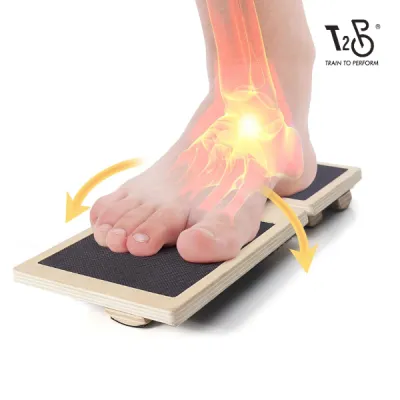
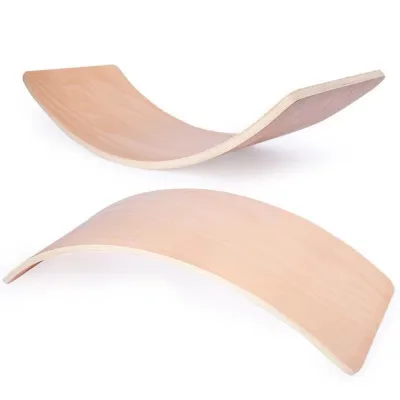
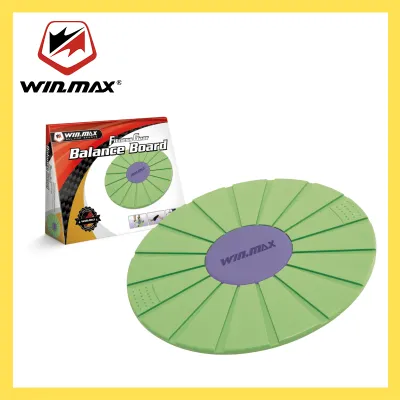

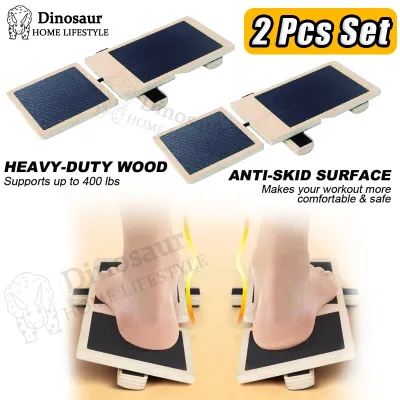
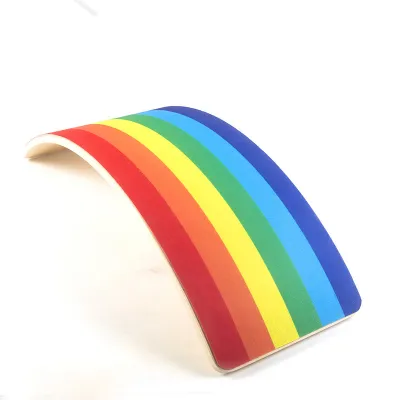
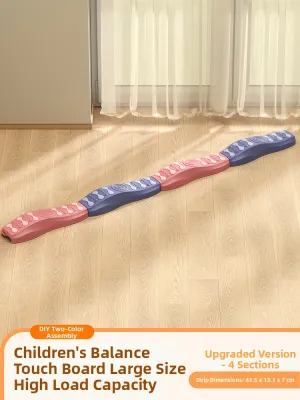
Prices are valid at publication and may change. Please refer to the product page for the latest price.
Equipment integrity is your first line of defense against sudden failure. Before every session, inspect your balancing board, roller, or inflatable dome base for structural issues. Look for hairline cracks in wooden decks, peeling grip tape, or warping in plastic components. If you are using a roller-style board, ensure the roller is free of dust, hair, or grit that could cause it to catch or slide unpredictably. Always verify the manufacturer’s specified weight limit and ensure the board is compatible with your floor type to prevent unexpected slips.
Mastering the Foundational Stance and Safe Mounting
Mounting an unstable board requires a deliberate, controlled sequence to prevent the board from shooting out from under your feet. Start by placing the board on its roller or base so that one end is resting firmly on the floor. Place your non-dominant foot on the lowered end of the board, keeping your weight centered over this grounded leg. Next, place your dominant foot on the elevated end of the board, ensuring your feet are spaced roughly shoulder-width apart. Slowly and smoothly shift your center of gravity toward the middle of the board, pressing down with your dominant foot until the board lifts off the floor and levels out.

Once you are upright, establishing a neutral, active posture is critical for maintaining control without overworking your joints. Keep your knees soft and slightly bent; locking your knees transfers all the unstable forces directly into your joint capsules and lower back, which can lead to strain. Engage your core by pulling your belly button slightly toward your spine, and keep your chest upright with your shoulders relaxed. Crucially, fix your gaze on a stationary point on the wall directly ahead of you. Looking down at your feet shifts your head forward, which alters your center of gravity and disrupts your vestibular balance system.
Recognizing and correcting common form breaks early will prevent chronic strain and sudden falls. A frequent mistake is holding your breath, which increases intra-abdominal pressure in an uncontrolled way and causes muscle tension that hinders fluid balance adjustments. Another common error is leaning excessively backward from the hips, which shifts your center of mass outside the board’s base of support and causes the board to slide forward. If you feel yourself losing control, do not try to fight the fall; instead, bend your knees deeper and step off the board backward or forward onto the solid floor.
Core-Strengthening Exercises on the Balancing Board
Static Holds and Micro-Movements
Once you can comfortably stand on the board, you can begin targeting your deep core muscles through isometric holds and controlled micro-movements. The basic balance hold is the foundation of all board training. Challenge yourself to keep the board perfectly level and parallel to the floor for thirty seconds at a time. During this hold, focus on maintaining a quiet upper body, allowing your ankles, hips, and deep abdominal muscles to do the subtle work of keeping you centered.
After mastering the static hold, transition to edge-to-edge tilts to build active control through a full range of motion. Slowly and deliberately shift your weight to one side until the edge of the board gently touches the floor, then use your core and lower body to pull the board back to a level position before tilting to the opposite side. This movement should be slow and rhythmic, avoiding any sudden, jerky motions that could cause you to lose traction.
For advanced users who have demonstrated flawless control over extended periods, sensory progression can further challenge the nervous system. Attempting basic balance holds with your eyes closed removes visual feedback, forcing your brain to rely entirely on proprioception and vestibular inputs. This progression should only be attempted in a highly controlled, padded environment, preferably with a spotter or a sturdy wall within arm’s reach to prevent falls.
Dynamic Core Integrations
Integrating dynamic movements increases the anti-rotation and anti-extension demands on your core, transforming simple balance into functional strength. Board squats are an excellent starting point. As you descend into a squat, focus on keeping your torso upright and preventing the board from tilting side to side. The unstable surface forces your glutes, hamstrings, and deep core stabilizers to work in unison to keep your hips aligned throughout the movement.
You can also use the balancing board to intensify upper-body and core exercises like planks and push-ups. Placing your hands on the outer edges of the board while keeping your feet on the floor challenges your shoulder girdle and forces your rectus abdominis to work harder to keep your spine neutral. For an even greater challenge, reverse the position by placing your feet on the board and your hands on the floor, which increases the leverage demands on your lower core and hip stabilizers.
To build rotational core strength, introduce upper-body rotations while maintaining a level board. Hold a light resistance band anchored to a wall, or simply clasp your hands in front of your chest, and perform slow, controlled torso twists. The key is to isolate the movement to your upper body, resisting the urge to twist your hips or tilt the board. This anti-rotation challenge forces your obliques and transverse abdominis to fire continuously to keep your lower body completely stable.
Progressing Your Stability Training Safely
Progression in stability training should always prioritize movement quality over intensity. You can increase the difficulty of your workouts by extending the duration of your holds, introducing multi-planar movements, or adding light external loads like a medicine ball. However, you should only progress to a harder variation when you can perform the current exercise with absolute control and zero shaking. Adding weight or complexity to an unstable foundation significantly increases the risk of acute joint strain.
Managing fatigue is critical because stabilizing muscles tire much faster than prime movers like the quadriceps or chest muscles. Pay close attention to compensatory movements that signal your core is fatiguing, such as an arching lower back, shrugged shoulders, or excessive joint shaking. When these signs appear, your body is relying on passive joint structures rather than active muscle tension to stay upright, which increases the risk of injury. Treat these signs as an immediate cue to rest.
Knowing when to stop is the most important safety rule of balancing board training. Immediately cease your session if you experience sharp joint pain, dizziness, or a complete loss of postural control. Pushing through joint discomfort on an unstable surface is highly counterproductive and can lead to ligament sprains or tendonitis. Always remember that stability training is about precision and neural adaptation, not muscular exhaustion.
Frequently Asked Questions (FAQ)
How long should a beginner balance on the board per session?
Beginners should focus on short, high-quality intervals rather than long, continuous efforts. Start with sets of ten to thirty seconds of active balancing, repeating this for five to ten minutes per session. Stop the set immediately when your form begins to degrade or if your legs start shaking uncontrollably. Prioritizing brief, focused efforts ensures your nervous system learns correct movement patterns without the risk of fatigue-induced falls.
Can I use a balancing board if I have previous ankle or knee injuries?
Balancing boards place significant shear and stabilizing demands on your ankles, knees, and surrounding ligaments. If you have a history of joint injuries, you must consult a physical therapist or qualified medical professional before incorporating a balancing board into your routine. If you receive approval to use one, start with the most stable board variations, keep your sessions brief, and stop immediately if you feel any joint discomfort, pinching, or instability.
Community discussion
Share your experience or ask a question. Comments are reviewed before publication.