
Using a Pilates magic circle—also known as a Pilates ring—is an excellent way for beginners to introduce gentle, targeted resistance to their home workouts. This lightweight, flexible ring features two padded handles on opposite sides, allowing you to perform both squeezing (isometric) and pulling exercises that engage the deep stabilizing muscles of your core, upper body, and lower body. To use it effectively, you must focus on controlled, deliberate movements rather than brute force, ensuring your body remains in proper alignment throughout each exercise. By mastering a few foundational movements and prioritizing form over high resistance, you can safely build strength, improve your posture, and enhance your body awareness from the comfort of your living room.
What to Check Before Your First Session
Before you begin your first workout, it is essential to inspect your equipment and prepare your exercise environment to ensure a safe and effective session. Start by performing a thorough visual and physical check of your Pilates magic circle. Look closely at the ring’s core structure for any signs of hairline cracks, deep scratches, or structural fatigue, particularly where the flexible ring meets the padded handles. Press the ring inward slightly to verify that it retains its spring-like tension and returns to its original circular shape without making any cracking or creaking noises. If you notice loose padding, exposed metal or fiberglass, or any warping in the frame, do not use the ring, as structural damage could cause the equipment to snap or lose tension suddenly during an exercise.
Next, prepare your physical workout space. You will need enough clear floor space to lie down fully with your arms and legs extended in all directions without hitting furniture, walls, or other obstacles. Always perform these exercises on a high-quality, non-slip yoga mat or exercise mat. A proper mat provides the necessary cushioning for your spine, hips, and tailbone while preventing your feet, hands, or the ring itself from slipping during movement.
Products mentioned in this guide
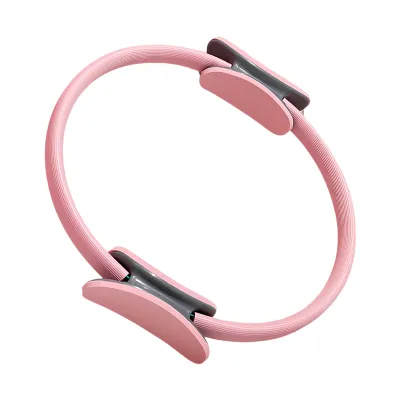
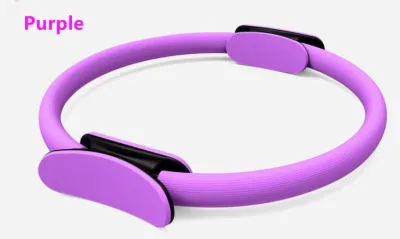
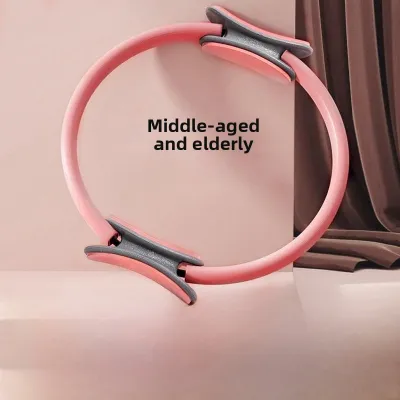
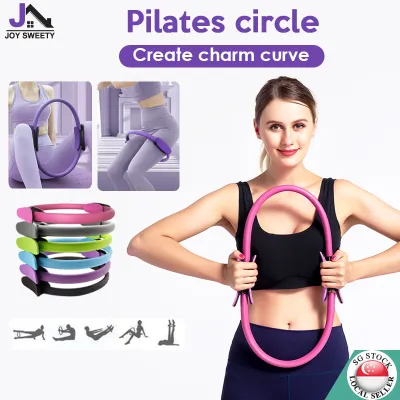
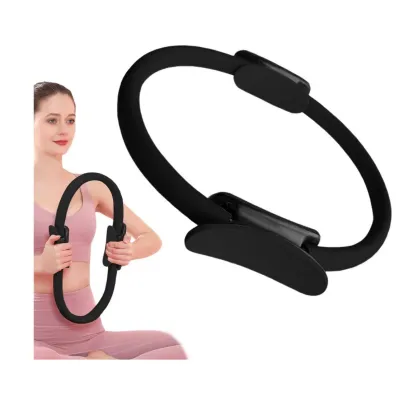

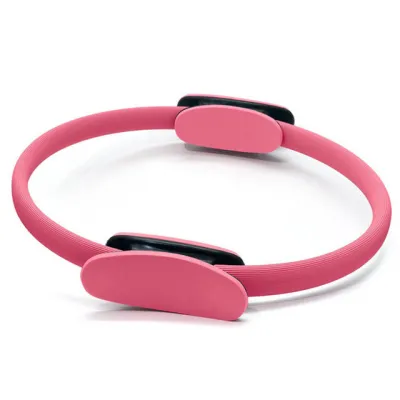
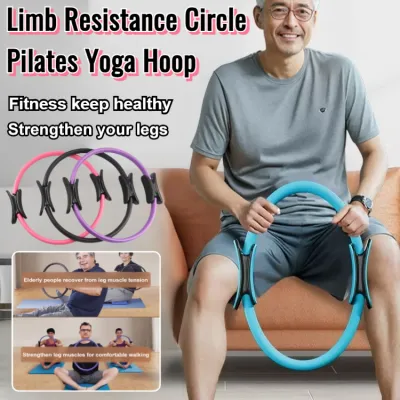
Prices are valid at publication and may change. Please refer to the product page for the latest price.
Finally, pay attention to your attire. Wear comfortable, form-fitting athletic clothing rather than loose, baggy garments. Form-fitting apparel allows you to easily monitor your joint alignment, pelvic tilt, and muscle engagement in a mirror, helping you maintain correct posture. It also prevents loose fabric from getting caught under the pads of the magic circle, which can disrupt your grip and compromise your stability during precise movements.
How to Hold and Position the Magic Circle
Understanding how to hold and position the magic circle is the foundation of safe resistance training. The ring is designed to be compressed or pulled, and how you interact with the padded handles directly affects which muscles are targeted and how much strain is placed on your joints.

For upper-body exercises, the standard two-handed grip requires careful hand placement. Instead of gripping the pads tightly with your fingers, place your palms flat against the outer pads with your fingers extended straight and relaxed. This open-palm position helps isolate the chest, shoulders, and upper back muscles while preventing you from overworking your forearms and wrists. If an exercise requires you to hold the inside of the ring, place your hands flat against the inner pads, keeping your wrists straight and aligned with your forearms. Avoid wrapping your fingers tightly around the edges of the pads unless a specific exercise manual instructs you to do so, as excessive gripping can lead to wrist fatigue and joint strain.
For lower-body exercises, the magic circle is typically positioned between your knees or ankles. When placing the ring between your knees, position the outer pads just above the knee joints on the lower portion of your inner thighs. Never place the pads directly on the bony prominence of your knee joints, as the compression can cause discomfort or joint misalignment. When placing the ring between your ankles, position the pads just above your ankle bones. Ensure the ring is aligned parallel to the floor or your body’s natural axis to prevent it from slipping out of place mid-movement.
Before applying any inward or outward pressure to the ring, establish your foundational posture. Lie or stand with a neutral spine, meaning your lower back retains its natural, slight curve without being excessively arched or completely flattened against the floor. Engage your deep core muscles by gently drawing your belly button toward your spine, and relax your shoulders down away from your ears. Only when this stable base is established should you begin to apply controlled pressure to the magic circle.
Essential Beginner Exercises to Try at Home
Introducing the magic circle into your home routine allows you to target major muscle groups, including your inner thighs, chest, shoulders, and upper back. The following beginner-friendly exercises are designed to build foundational strength and improve your overall posture. As you perform these movements, remember that Pilates prioritizes the quality of each repetition over the quantity of resistance. Focus on slow, deliberate actions, and coordinate your breathing with each movement to maximize muscle engagement and maintain control.
Inner Thigh Squeeze
The inner thigh squeeze is a classic lower-body Pilates movement that targets the adductor muscles and helps activate the pelvic floor. To set up, lie flat on your back on your exercise mat with your knees bent and your feet flat on the floor, positioned hip-width apart. Place the magic circle between your thighs, positioning the padded handles just above your knees. Ensure your feet are securely planted on the mat to provide a stable foundation, and rest your arms flat by your sides with your palms facing down.
To execute the movement, take a deep breath in to prepare. As you exhale slowly through your mouth, gently squeeze your knees together, compressing the ring with a smooth, controlled motion. Focus on initiating the squeeze from your inner thighs and deep pelvic floor rather than forcing the movement with your knees. Hold the compression for a brief second at the peak of your exertion. As you inhale, slowly release the tension, returning the ring to its starting shape with control. Avoid letting the ring snap back quickly, as resisting the outward spring is an essential part of the exercise.
Stop performing this exercise immediately if you experience sharp pain in your knee joints, if your lower back begins to arch excessively off the mat, or if you feel tension building in your neck and shoulders. These signs indicate that your form has broken down or that the resistance is too high for your current strength level.
Standing Chest Press
The standing chest press is an excellent exercise for strengthening the pectoral muscles, front shoulders, and core stabilizers while promoting upright posture. To set up, stand tall with your feet hip-width apart and your knees slightly soft, not locked. Hold the magic circle in front of your chest with both hands, placing your palms flat against the outer pads. Extend your arms forward at chest height, keeping a slight bend in your elbows to protect the joints.
To execute the exercise, inhale deeply to set your posture, lengthening your spine toward the ceiling. As you exhale, press your palms inward against the pads, compressing the ring. As you squeeze, actively focus on keeping your shoulders sliding down your back, away from your ears, and engage your abdominal muscles to keep your torso completely still. Hold the squeeze for a moment, then inhale as you slowly release the pressure with complete control, resisting the ring’s natural urge to pop back open.
Stop the exercise if you feel any pinching or impingement in your shoulder joints, sharp pain in your wrists, or if you find yourself leaning forward or backward to force the squeeze. Maintaining a vertical, stable spine is crucial for isolating the target muscles safely.
Seated Posture Row
The seated posture row helps strengthen the muscles of the upper back, including the rhomboids and middle trapezius, which are vital for countering the forward-slumping posture associated with desk work. To set up, sit tall on your mat with your legs extended straight in front of you, keeping a slight bend in your knees if your hamstrings feel tight. Hold the magic circle in front of your torso at chest level, with your palms resting on the outer pads and your elbows flared slightly outward.
To execute the movement, inhale to lift your chest and lengthen your spine. As you exhale, gently press inward on the pads while simultaneously pulling your shoulder blades back and together, a movement known as scapular retraction. Imagine trying to pinch a small object between your shoulder blades while keeping your collarbones wide. Hold this active contraction for a second, then inhale as you slowly release the squeeze and return your shoulder blades to their neutral position.
Stop the exercise immediately if you feel your lower back rounding, if you experience strain in your neck or upper shoulders, or if your hips begin to slip on the mat. If sitting directly on the floor makes it difficult to maintain a straight spine, you can sit on a folded blanket or a low yoga block to elevate your hips and relieve tension.
Common Form Mistakes and How to Fix Them
When learning how to use a Pilates magic circle, avoiding common form errors is essential for preventing injury and ensuring that the correct muscle groups are being targeted. One of the most frequent mistakes beginners make is using momentum or bouncing to compress the ring. Snapping the ring shut and letting it pop back open rapidly bypasses the deep stabilizing muscles and relies on joint momentum instead. To fix this, perform every repetition to a slow count of three seconds on the squeeze and three seconds on the release, maintaining constant, active control over the ring’s resistance.
Another common error is holding your breath during the exertion phase of the exercise. Holding your breath increases intra-abdominal pressure and can spike your blood pressure, while also causing your muscles to tense up unnecessarily. Always coordinate your breath with the movement: exhale during the compression or pulling phase when the effort is greatest, and inhale as you return to the starting position. This breathing pattern supports core engagement and keeps your nervous system calm.
Finally, many beginners attempt to squeeze the ring too hard and too fast, believing that maximum compression equals maximum benefit. Squeezing the ring beyond your comfortable control can lead to muscle cramping, joint strain, and a breakdown in overall body alignment. To correct this, start by compressing the ring only about halfway. Focus on maintaining perfect posture and feeling the target muscles contract, rather than trying to flatten the circle completely. As your strength and control improve, you can gradually increase the depth of the squeeze.
Building Your First Magic Circle Routine
To build a safe and repeatable weekly practice, you should structure your magic circle sessions with a clear beginning, middle, and end. Always start with a five-minute dynamic warm-up to prepare your muscles and joints. This can include gentle shoulder rolls, cat-cow stretches on your hands and knees, and pelvic tilts to activate your core. Warming up increases blood flow and joint lubrication, reducing the risk of strains during resistance work.
For the main portion of your routine, perform each of the three beginner exercises described above. Start with one to two sets of 8 to 12 controlled repetitions per exercise. Take a 30-second rest between sets to allow your muscles to recover. As you progress over several weeks, you can gradually increase to three sets of 15 repetitions, provided you can maintain perfect form throughout every single movement. Finish your session with a five-minute cool-down consisting of gentle static stretches for your chest, upper back, and inner thighs.
Always listen to your body during your routine. You can easily adjust the resistance of the magic circle by slightly altering your grip width, changing the placement of the pads, or reducing the depth of your squeeze. If you experience any persistent, sharp, or radiating pain during or after your workout, stop using the equipment immediately and consult a qualified healthcare professional or physical therapist before resuming your practice.
Frequently Asked Questions (FAQ)
Can I use a Pilates magic circle if I have joint issues?
If you have pre-existing joint issues, chronic pain, or are recovering from an injury, you must consult a physical therapist or a doctor before starting any new resistance routine. A healthcare professional can provide personalized guidance based on your specific medical history. If cleared to exercise, you can modify your magic circle workout to protect your joints. Reduce the intensity of your squeezes to a mild, comfortable pressure, and avoid extreme joint angles. For example, if placing the ring between your knees causes discomfort, try placing it higher up on your thighs or lower down near your calves, or reduce the range of motion significantly to keep the exercise pain-free.
How do I clean and store the ring after use?
Proper maintenance of your Pilates magic circle ensures hygiene and prolongs the lifespan of the materials. After each workout, wipe down the padded handles and the flexible ring with a soft cloth dampened with warm water and a small amount of mild, non-abrasive soap. Avoid using harsh chemical cleaners, bleach, or alcohol-based sanitizers, as these substances can degrade the foam padding, adhesive, and outer coating of the ring over time. Once cleaned, allow the ring to air dry completely in a well-ventilated space. Store the magic circle flat on a shelf or upright in a closet, away from direct sunlight, extreme temperatures, and moisture, which can cause the internal spring material to warp or lose its elasticity.
Community discussion
Share your experience or ask a question. Comments are reviewed before publication.