
Using a slant board is one of the most effective ways to overcome ankle mobility limitations and achieve a deeper, more upright squat. By elevating the heels, this simple tool alters the biomechanics of your lower body, reducing the angle of ankle dorsiflexion required to reach depth. Whether you are a strength athlete looking to target your quadriceps or someone struggling with tight calf muscles from long hours at a desk, incorporating this tool into your routine can significantly improve your movement patterns.
For stretching, the angled surface of the board provides a stable, adjustable platform to target the lower leg muscles. Unlike flat-ground stretches, which often fail to provide enough leverage, an incline allows you to systematically stretch the tight tissues of the calves and Achilles tendons. This dual functionality makes the board a highly versatile accessory for both lower-body training and daily mobility work.
To get the most out of this tool without risking injury, it is essential to understand the underlying mechanics, set up your equipment correctly, and follow precise execution steps. Transitioning too quickly or using improper form can place unnecessary stress on your joints, particularly your knees and Achilles tendons.
Products mentioned in this guide
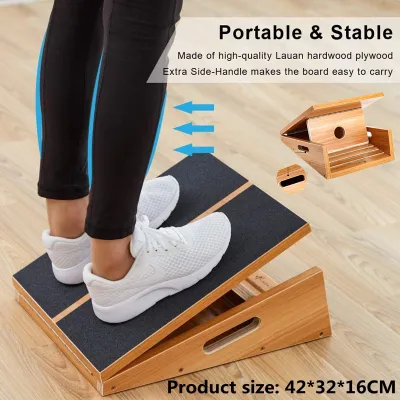
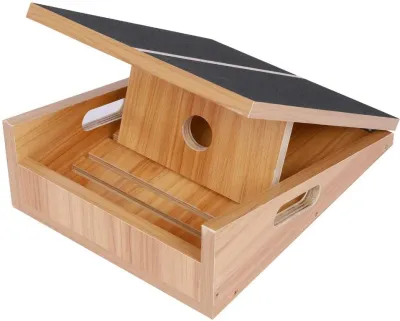
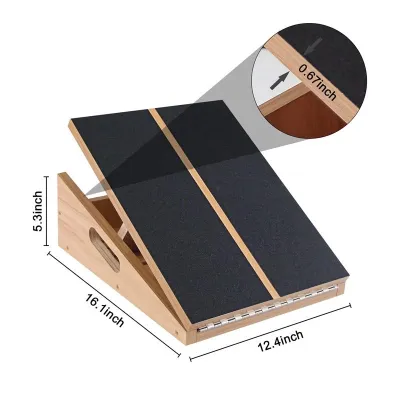
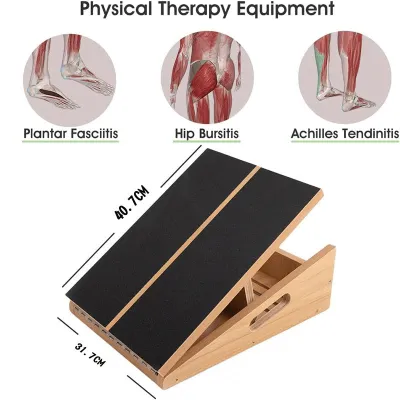
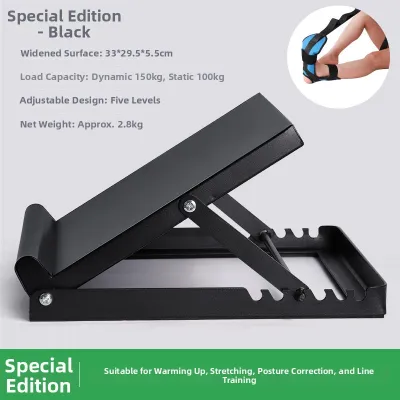

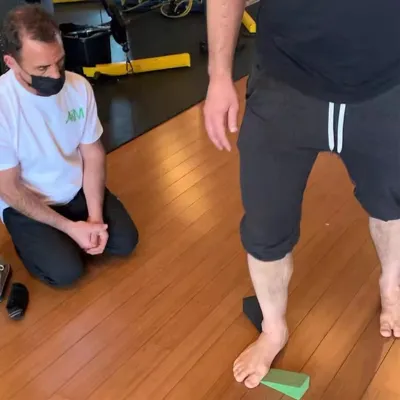
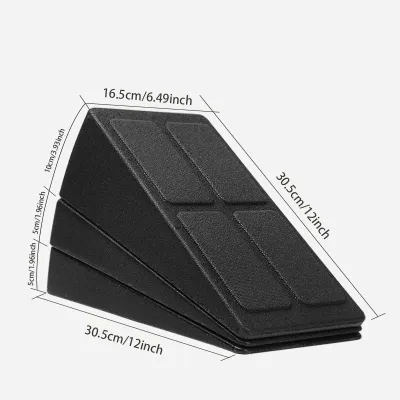
Prices are valid at publication and may change. Please refer to the product page for the latest price.
Why Elevate Your Heels? The Benefits of a Slant Board
Elevating your heels during a squat fundamentally changes how your joints distribute load. In a standard squat, your shins must tilt forward to keep your center of gravity over your midfoot. If your ankles are stiff, your body will compensate by lifting the heels off the floor, rounding the lower back, or leaning the torso excessively forward. Elevating the heels on an incline artificially creates a forward shin angle, allowing your knees to travel forward over your toes while keeping your chest upright.
This upright posture reduces the shear force on your lumbar spine and shifts the mechanical load directly onto your quadriceps. It allows lifters with structural or mobility limitations to safely squat below parallel, promoting better muscle recruitment and joint health. If you struggle with the deep squat position, heel elevation provides an immediate, reliable solution to practice the movement pattern through a full range of motion.
While some lifters improvise by placing weight plates under their heels, this method has significant limitations. Weight plates offer a narrow, unstable surface that does not support the entire foot, which can cause foot fatigue, cramping, or slipping. A dedicated slant board supports your entire foot from heel to toe, ensuring a stable base of support and allowing you to focus entirely on your squat mechanics. Furthermore, the adjustable incline of a board makes it highly effective for targeted calf stretching, a benefit that flat weight plates cannot replicate.
Setting Up Your Slant Board Safely
Before stepping onto your slant board, you must prepare your training environment to prevent slips, falls, and equipment failure. Always place the board on a flat, stable, and high-friction surface. In humid climates like Singapore, moisture can make certain floor types slick, so using a rubber gym mat or a high-grip exercise surface is highly recommended. Avoid placing the board on smooth tiles, polished wood, or loose carpets that could slide under your weight.

If you are using an adjustable board, always begin at the lowest incline setting, typically around 15 degrees. This allows you to assess your baseline ankle flexibility, joint comfort, and balance before progressing to steeper angles. Jumping directly to a high incline can strain your joints and compromise your stability, especially when performing loaded exercises.
Your choice of footwear also plays a critical role in safety and performance. Flat-soled lifting shoes or minimalist trainers with high-traction rubber outsoles provide the best grip on the board’s surface. If you prefer barefoot training to strengthen the intrinsic muscles of your feet, ensure your slant board is equipped with heavy-duty grip tape or a non-slip textured surface. Never use the board in smooth socks or worn-out shoes that lack sufficient traction.
Finally, always perform a quick equipment check before your session. Verify the manufacturer’s weight capacity limits, particularly if you plan to use external weights like barbells or dumbbells. Ensure that all locking pins, adjustable slots, or support pegs are fully engaged and secure. If you notice any signs of wear, cracks, or loose hardware, do not use the board until it is properly repaired.
How to Perform Slant Board Squats for Maximum Depth
To execute a slant board squat with proper technique, start by standing on the board with your feet positioned roughly shoulder-width apart. Point your toes slightly outward, between 5 and 15 degrees, to match your natural hip anatomy. Ensure your entire foot is in firm contact with the board, with your heels fully supported and not hanging off the back edge. Distribute your weight evenly across your heels, midfoot, and the balls of your feet.
Before initiating the descent, brace your core by inhaling deeply into your abdomen and tightening your midsection. This creates intra-abdominal pressure that stabilizes your spine. Begin the movement by bending your knees and hinging slightly at your hips, allowing your knees to track forward in a straight line over your toes. Focus on keeping your chest up and your shoulders stacked over your hips as you lower your body.
As you descend, utilize the heel elevation to drop your hips smoothly. Aim to lower your hip crease below the top of your knees, achieving a deep squat position. Because the board reduces ankle restriction, you should be able to maintain a neutral spine and an upright torso at the bottom of the movement, avoiding the common error of lower back rounding or “butt wink”.
To begin the ascent, drive upward by pushing forcefully through your midfoot and heels. Keep your knees pushing outward in line with your toes, preventing them from caving inward. Maintain your core brace until you reach the top of the movement, then exhale as you return to a fully upright standing position. Ensure your heels remain glued to the board’s surface throughout the entire lift.
When performing these squats, focus on a controlled tempo. A slow, three-second descent helps you maintain balance and monitor your joint alignment, while a powerful, controlled ascent builds strength and stability. Avoid bouncing out of the bottom position, as this can place excessive stress on your patellar tendons.
How to Use a Slant Board for Deep Calf Stretching
Static stretching on an incline is a highly effective way to improve lower-leg flexibility, but it must be done with control. When stretching your calves on a slant board, avoid bouncing or using ballistic movements, which can trigger the stretch reflex and cause the muscle to tighten. Instead, ease into each stretch slowly, hold the position for 30 to 60 seconds, and breathe deeply to encourage the muscles to relax.
Stretching the Gastrocnemius (Straight-Leg)
To target the gastrocnemius—the large, upper calf muscle that crosses both the knee and ankle joints—place your slant board facing a wall or a sturdy squat rack. Step onto the board with both feet, or use a single-leg stance for a more intense stretch. Keep your stretching leg completely straight with the knee locked. Keep your heel firmly planted on the board’s surface, and slowly lean your torso forward toward the wall or rack. You should feel a deep, comfortable stretch in the upper portion of your calf, just below the back of the knee. To step off safely, shift your weight to your opposite foot and step backward off the board.
Stretching the Soleus (Bent-Knee)
To target the soleus—the deeper calf muscle that lies beneath the gastrocnemius—you must bend your knee, which slackens the upper calf and isolates the lower muscle and Achilles tendon. Set up in the same position facing a wall or rack. Place your foot on the board, but instead of keeping your leg straight, bend your knee forward over your toes. Ensure your heel remains firmly glued to the board. Shift your weight forward and down, focusing the stretch sensation lower down your leg, closer to your ankle. Hold this position, ensuring your heel does not lift even slightly, which would release the tension on the soleus.
Common Slant Board Mistakes and Injury Prevention
While the slant board is an excellent tool, improper use can lead to joint strain or injury. One of the most common mistakes is allowing your weight to shift forward, causing your heels to lift off the board during squats. This places excessive shear force on your knees and strains the plantar fascia under your feet. Always focus on keeping your heels firmly planted and driving through your midfoot.
Another frequent error is progressing to steep angles too quickly. A steep incline increases the stretch on your Achilles tendon and calves, and jumping to these settings before your tissues are adapted can cause strains or tendonitis. Increase the board’s angle gradually over several weeks, ensuring your joints are completely comfortable at lower settings first.
Knee valgus, or the inward caving of the knees during a squat, is another critical mistake to avoid. This alignment error puts significant stress on the ligaments of the knee joint. Always ensure your knees track in a straight line over your toes during both the descent and ascent. If you find your knees caving, reduce your squat depth or lower the board’s incline until you can maintain proper alignment.
Always listen to your body and establish clear stop conditions. If you experience sharp, pinching, or sudden pain in your knees, Achilles tendons, or lower back, stop the exercise immediately. Muscular stretching should feel intense but comfortable; joint or tendon pain is a signal of strain. If any discomfort or pain persists after resting, consult a qualified physiotherapist or medical professional before resuming training.
Progressing Your Slant Board Routine
Once you have mastered bodyweight movements with perfect form, you can safely progress your routine to continue building strength and flexibility. To add external load, start by holding a single dumbbell or kettlebell at your chest in a goblet position. This front-loaded squat variation naturally complements the upright torso position of the slant board, keeping the focus on your quadriceps while challenging your core stability.
To address left-to-right strength and mobility imbalances, incorporate unilateral exercises into your training. Perform slant board split squats or reverse lunges by placing your front foot on the board. This variation intensely targets the quadriceps of your lead leg while providing a deep stretch to the hip flexors of your trailing leg.
For advanced flexibility training, you can gently deepen your calf stretches by introducing a light external weight. Hold a light dumbbell in your hand on the side of the leg being stretched to add gentle, controlled load to the movement. Always ensure you have a solid foundation of flexibility and balance before attempting weighted stretches, and never push into a range of motion that causes joint discomfort.
Frequently Asked Questions (FAQ)
Is using a slant board bad for your knees?
No, using a slant board is not inherently bad for healthy knees when used correctly with appropriate loads. Elevating your heels does increase knee flexion and allows your knees to travel further forward over your toes, which temporarily increases the mechanical load on the quadriceps and the patellar tendon. However, when loaded progressively, this movement actually strengthens the connective tissues around the knee joint, improving long-term joint resilience. If you have pre-existing patellar tendonitis, knee osteoarthritis, or other joint injuries, always consult a medical professional or physiotherapist before incorporating a slant board into your routine.
Can I just use weight plates instead of a slant board?
While weight plates can be used to elevate your heels during squats, they are not a complete substitute for a dedicated slant board. Weight plates provide a narrow, flat, and often slippery surface that only supports the rear of your foot, leaving your arches and toes unsupported, which can lead to foot fatigue and instability. Additionally, weight plates cannot be used safely or effectively for calf stretching, as they lack the continuous, angled surface required to stretch the muscles through a full, controlled range of motion. A dedicated slant board is a much safer, more versatile, and more effective investment for both strength and mobility training.
Community discussion
Share your experience or ask a question. Comments are reviewed before publication.