
A climbing carabiner is a highly specialized piece of safety equipment designed to support human life under extreme dynamic forces. Before using any caribiner hook for climbing, you must verify that it meets recognized international safety standards, displays clear and legible load ratings, and passes a thorough physical inspection. If a carabiner fails to meet even one of these criteria, it must not be used for any climbing or life-support application.
Climbing is an inherently high-risk sport where gear failure can have catastrophic, life-threatening consequences. It is vital to understand that high-quality equipment cannot replace proper technical training, sound risk assessment, and experienced personal judgment. Before heading out to climb, you must be fully trained in the correct application of your gear and understand its limitations.
Never use general-purpose utility hooks, hardware store connectors, or unmarked hardware for climbing, rigging, or fall-arrest. While a hardware store caribiner hook might look similar to a climbing-rated model, it is manufactured from inferior materials and lacks the engineering standards required to withstand the high impact forces of a climbing fall. Using non-rated hardware in a climbing system is extremely dangerous and can lead to immediate failure under load.
Products mentioned in this guide
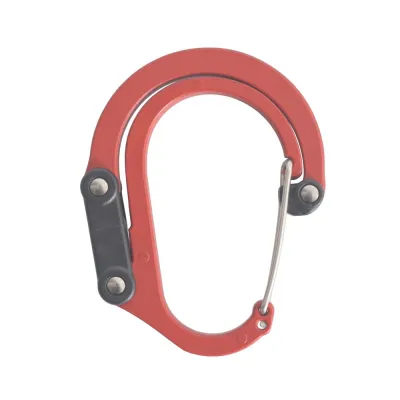
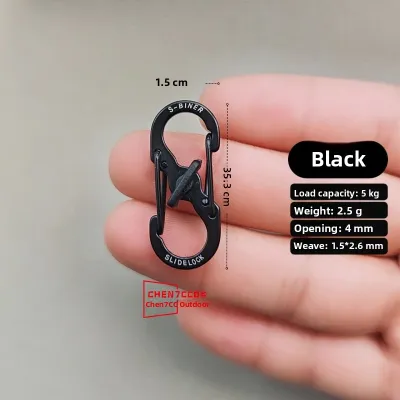
Prices are valid at publication and may change. Please refer to the product page for the latest price.
How to Verify Climbing Certifications for Your Caribiner Hook
To guarantee that your caribiner hook is capable of arresting a fall, you must look for specific manufacturing certifications stamped onto its body. Legitimate climbing gear is subjected to rigorous destructive testing and quality control processes before it can be sold to the public. These standards are established by international bodies to ensure that every piece of climbing equipment meets a uniform baseline of safety.
The primary certification standard for climbing carabiners is the European standard EN 12275 (Mountaineering equipment – Connectors). When inspecting a carabiner, look for the CE mark (Conformité Européenne) stamped on the spine, followed by a four-digit number. This four-digit code identifies the independent, accredited laboratory that oversees the manufacturer’s quality assurance system. Without this CE mark and its accompanying code, the carabiner cannot be verified as compliant with European safety laws.
In addition to the CE mark, look for the safety label of the UIAA (International Climbing and Mountaineering Federation). The UIAA standard is often even stricter than European standards, requiring additional testing for durability and safety under realistic climbing conditions. The presence of both the CE and UIAA logos is the gold standard for climbing safety, giving you confidence that the gear is engineered specifically for mountaineering and rock climbing.
On authentic carabiners, these certification marks are typically laser-etched or deeply stamped along the spine of the frame. The markings should be crisp, clear, and perfectly legible. If the text is blurry, unevenly spaced, or contains spelling mistakes, this is a strong indication that the gear is a dangerous counterfeit.
Counterfeit climbing gear has become increasingly prevalent on global ecommerce platforms. To protect yourself and your climbing partners, purchase your gear exclusively from reputable, authorized outdoor retailers or established climbing gyms. Avoid buying climbing hardware from unverified third-party sellers on general online marketplaces, as these platforms often lack strict quality control over safety-critical equipment.
If you ever encounter a carabiner with missing, faded, or completely illegible certification marks, treat it as unsafe. Even if you believe the gear is from a reputable brand, the inability to verify its certifications means it must be retired from climbing use immediately.
Decoding Load Ratings and Minimum Breaking Strength
Every certified climbing carabiner is stamped with its minimum breaking strength (MBS) ratings, which are measured in kilonewtons (kN). One kilonewton represents approximately 100 kilograms of force, meaning a carabiner rated at 20 kN can withstand a static force of roughly 2,000 kilograms before failing. These ratings represent the minimum force at which the carabiner is guaranteed not to break, rather than a recommended working load limit.

Always check the specific manufacturer’s markings on your gear, as different shapes and models have unique strength ratings. A standard climbing carabiner will display three distinct ratings on its spine: the major axis rating, the minor axis rating, and the open-gate rating.
The major axis rating represents the carabiner’s strength when the load is applied along its longest dimension, parallel to the spine, with the gate fully closed and locked. For most modern climbing carabiners, the major axis rating is at least 20 kN, and often ranges up to 24 kN or higher. This is the optimal orientation for holding a fall.
The minor axis rating, also known as the cross-load rating, represents the strength when force is applied perpendicular to the spine, pushing directly against the gate. Carabiners are not designed to be loaded this way, and their strength drops dramatically in this orientation. A typical cross-load rating is only 7 kN to 10 kN, which is significantly weaker and increases the risk of failure during a dynamic fall.
The open-gate rating indicates the strength of the carabiner if a fall occurs while the gate is open. This can happen due to rope movement, vibration, or “gate flutter” during a sudden impact. Like the minor axis rating, the open-gate strength is severely reduced, usually ranging between 7 kN and 9 kN.
To avoid dangerous cross-loading or open-gate scenarios, you must pay close attention to how your gear is oriented during use. Ensure that ropes and slings sit correctly in the basket and basket-end of the carabiner, and always use locking carabiners for critical connections, such as your belay device or anchor points.
Carabiner shape plays a major role in how force is distributed. D-shaped and offset-D carabiners are engineered to naturally guide the rope or sling toward the spine, maximizing the use of the major axis. Oval carabiners distribute weight evenly across both sides, making them ideal for aid climbing or pulley systems, but they are inherently weaker than D-shaped models. Always select the appropriate shape for your specific climbing activity and verify its ratings beforehand.
Step-by-Step Physical Inspection Before Every Climb
A thorough physical inspection of your climbing gear must be integrated into your pre-climb routine. This is especially critical in tropical environments like Singapore, where high humidity, intense heat, and salt-laden air from coastal climbing areas or outdoor artificial walls can accelerate corrosion and affect mechanical components.
Begin your inspection with a comprehensive visual check of the entire carabiner body. Look closely at the spine, the basket, and the gate area under bright, clear lighting. Search for any signs of hairline cracks, deep pitting from corrosion, severe deformation, or sharp edges that could cut a climbing rope or sling.
Next, test the gate action. Manually open the gate fully and release it. The gate must snap shut instantly, smoothly, and completely without any hesitation, sticking, or grinding. If the gate remains partially open or feels sluggish, the internal spring may be damaged or dirty, making the carabiner unsafe to use.
For locking carabiners, test the locking mechanism. Screw-gate sleeves should spin freely and lock securely without binding. Auto-locking gates (such as twist-lock or magnetic lock systems) must automatically snap into the fully locked position when released. Check for excessive side-to-side play in the gate hinge; a loose gate can misalign with the nose under load, preventing it from closing properly.
Examine the nose of the carabiner and the gate notch. This area is prone to accumulating dirt, sand, and aluminum dust, which can prevent the gate from latching securely. Inspect the metal for sharp burrs or grooves that could snag on bolts, hangers, or slings during a climb, which can cause dangerous open-gate loading.
Distinguish carefully between normal cosmetic wear and dangerous structural damage. Superficial scratches and worn anodizing (the colored coating on the aluminum) are normal results of regular use and do not affect the strength of the metal. However, deep grooves worn into the basket by rope friction—especially on belay carabiners or top-rope anchors—are highly dangerous. If a groove is deep enough to feel a distinct lip with your fingernail, or if it has worn away more than 10% of the metal’s original thickness, the carabiner must be retired.
If the gate mechanism is sticky or dirty, you can clean and lubricate it to restore smooth operation. Rinse the carabiner in warm, clean water to flush out salt, sand, and grime. Dry it thoroughly with a clean cloth. Apply a small drop of a dry, wax-based lubricant or a manufacturer-approved light oil directly to the gate hinge and spring mechanism. Wipe away any excess lubricant immediately to prevent it from attracting more dirt or contaminating your climbing ropes.
Always check the manufacturer’s care and maintenance instructions before cleaning your gear. If the manufacturer’s specific instructions conflict with general maintenance advice, you must follow the manufacturer’s guidelines. If a carabiner’s gate remains sticky, slow, or fails to close perfectly after cleaning and lubrication, do not use it; retire it immediately.
When to Retire Your Carabiner: Critical Warning Signs
Knowing when to permanently remove a carabiner from service is a critical safety skill that every climber must master. Aluminum climbing gear does not last forever, and continuing to use compromised hardware can lead to catastrophic failure.
There are several absolute retirement triggers that require immediate action. You must permanently retire any carabiner that shows visible cracks, deep corrosion, significant physical deformation (such as a warped frame or bent gate), or a gate mechanism that fails to close and lock properly even after thorough cleaning.
Exposure to extreme heat, open flames, or harsh chemicals is another critical trigger. Aluminum alloys can lose their heat-treatment strength when exposed to high temperatures, such as in a car trunk parked in direct tropical sunlight or near a campfire. Similarly, exposure to corrosive chemicals like battery acid, strong solvents, or household bleach can cause rapid, invisible structural degradation. If your gear is exposed to these conditions, retire it immediately.
The “dropped gear” dilemma is a common source of concern. While modern aluminum carabiners are highly durable, a severe drop from a significant height onto a hard surface (such as concrete or rock) can cause internal micro-fractures. While some minor drops may only cause cosmetic damage, a high-impact fall can compromise the structural integrity of the metal in ways that cannot be detected by a visual inspection.
Always consult the specific manufacturer’s guidelines regarding dropped equipment. If you cannot verify the history of a carabiner—such as when buying second-hand gear—or if you have any doubt about its safety after a drop, err on the side of caution and retire it. Your life is worth far more than the cost of replacing a single carabiner.
To ensure that retired gear is never accidentally used for climbing again, you must decommission it safely. Do not simply throw it in the trash where someone else might find and use it. Use a permanent marker to write “RETIRED” or “DO NOT USE” on the frame, or use a hacksaw to cut the spine or bend the gate completely out of shape before disposal.
Frequently Asked Questions (FAQ)
Can I use a hardware store carabiner hook for climbing?
No, you must never use a hardware store carabiner hook for climbing or any life-support application. Hardware store connectors are designed for low-load utility tasks, such as securing tools or hanging keys, and are not manufactured to the strict engineering standards required for mountaineering. They lack the necessary safety certifications (such as CE and UIAA) and do not have the minimum breaking strength ratings required to withstand the high dynamic forces generated during a climbing fall. Using non-rated hardware in a climbing system can result in immediate, catastrophic failure.
Does a scratched carabiner mean it is unsafe?
A scratched carabiner is not necessarily unsafe. Superficial scratches and wear on the anodized color coating are normal cosmetic results of regular climbing and rope friction. However, if the scratches are deep enough to form sharp edges, or if rope friction has worn a deep, distinct groove into the metal (exceeding 10% of the original thickness), the carabiner’s structural integrity is compromised. Sharp edges can also damage your climbing rope. Inspect the depth of any wear and retire the gear if the metal is significantly gouged.
How long does a climbing carabiner last if never used?
Unlike soft goods like ropes and harnesses, which have a strict lifespan even when unused, metal climbing gear like carabiners has an indefinite shelf life if stored correctly. However, you must store them in a cool, dry place away from UV light, high humidity, salt air, and corrosive chemicals. Before putting any older, unused carabiner into service, always check the manufacturer’s recommendations for aging gear and perform a rigorous physical inspection to ensure the gate mechanism functions perfectly and no oxidation has occurred.
Community discussion
Share your experience or ask a question. Comments are reviewed before publication.