
Verifying an RSL official shuttlecock requires a systematic approach that combines packaging inspection, physical quality checks, and the use of official digital verification tools. Because counterfeit manufacturing techniques constantly evolve, no single visual cue can guarantee authenticity on its own. Players must evaluate the structural integrity of the shuttlecock alongside the manufacturer’s security features to ensure they are getting genuine gear. This guide outlines the stable evaluation criteria and purchasing strategies you need to confidently identify genuine products and avoid fakes.
Badminton is a sport where equipment consistency directly impacts performance. A slight variation in feather weight, glue distribution, or cork density can alter the trajectory of a smash or the control of a net shot. For players who rely on the predictable flight of RSL shuttlecocks, ensuring authenticity is not just about getting what you paid for—it is about maintaining the integrity of your game. By learning how to spot the subtle differences between genuine and counterfeit products, you can protect your budget and your time on the court.
The Risks of Buying Counterfeit Badminton Shuttlecocks
Using counterfeit shuttlecocks quickly disrupts your training sessions and matches. Fake shuttlecocks often suffer from inconsistent flight paths and unpredictable speeds, making it difficult to gauge your shots accurately. A shuttlecock that wobbles mid-air or drops faster than expected prevents players from developing proper timing and muscle memory, leading to frustration during recreational play and competitive matches alike.
Products mentioned in this guide
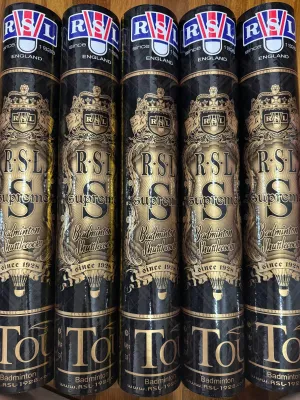
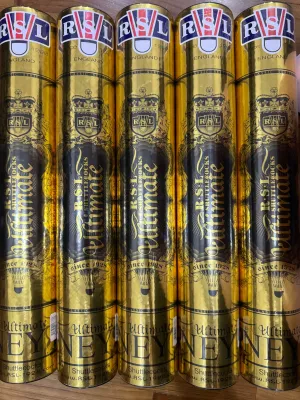
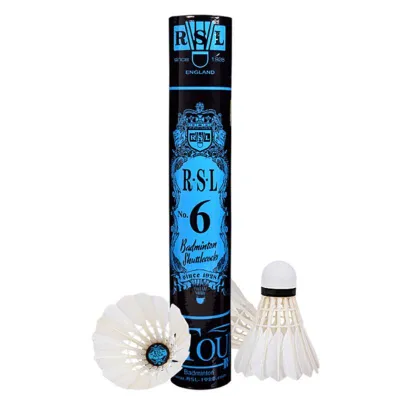
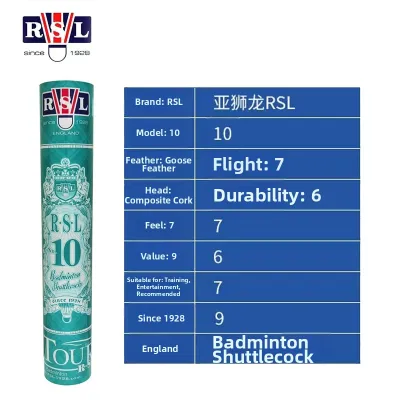
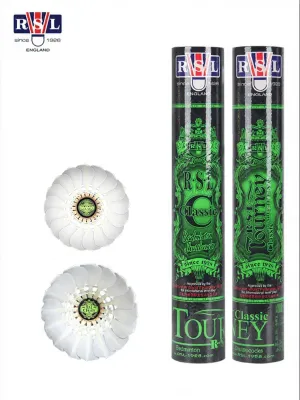
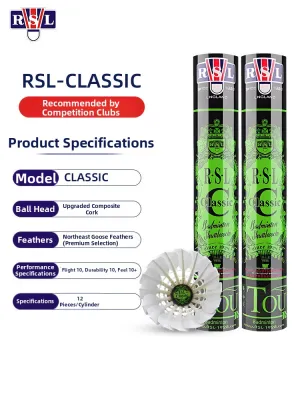
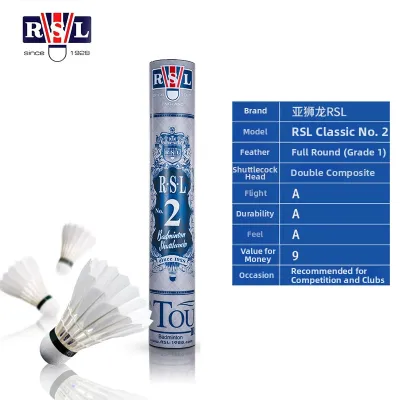
Prices are valid at publication and may change. Please refer to the product page for the latest price.
Durability is another major issue with counterfeit products. Genuine RSL official shuttlecocks undergo rigorous manufacturing processes to ensure the feathers can withstand high-impact smashes. Counterfeits, however, often use brittle, improperly treated feathers that can shatter after just a few rallies. This poor construction creates potential safety hazards, as sharp feather fragments can fly off at high speeds, posing a risk to players’ eyes in fast-paced games.
From a financial perspective, buying fakes leads to rapid budget depletion. While counterfeit shuttlecocks are often sold at a discount, their short lifespan means you will go through tubes much faster than you would with genuine products. Instead of saving money, players end up spending more over time to constantly replace broken shuttlecocks, turning a seemingly cheap purchase into an expensive habit.
Physical and Visual Checks for Authenticity
Evaluating the tube and packaging quality is your first line of defense. Genuine RSL tubes are constructed from thick, rigid cardboard designed to protect the shuttlecocks from humidity and physical damage during transit. Examine the print quality on the tube carefully; genuine packaging features crisp, high-resolution text, accurate brand colors, and perfectly aligned logos. Counterfeit tubes often show blurry printing, slight color variations, or misaligned text blocks that indicate low-quality printing equipment.

Next, perform a detailed feather inspection. Genuine RSL official shuttlecocks are crafted using uniform, high-grade goose or duck feathers. Look closely at the feather blades; they should have a natural, consistent texture and be arranged with precise overlapping. The feather stems, or ribs, should be strong, straight, and of equal thickness. Counterfeit shuttlecocks frequently use lower-grade feathers that appear uneven, have visible blemishes, or show inconsistent spacing around the cork base.
The cork base itself provides critical clues about authenticity. A genuine shuttlecock features a high-quality natural cork or composite cork base covered in a clean, securely bonded leather or synthetic wrap. Feel the density of the cork by gently squeezing it; it should feel firm and spring back immediately. On counterfeit items, the cork may feel overly soft or excessively hard, and the outer wrap is often poorly glued, showing visible wrinkles, gaps, or loose edges.
Finally, examine the glue and threading that hold the shuttlecock together. Genuine manufacturing utilizes automated processes to apply a precise, uniform layer of strong adhesive to the binding threads and the feather roots. This ensures structural stability without adding unnecessary weight. Counterfeit shuttlecocks are often assembled manually or with substandard machinery, resulting in messy glue blobs, uneven thread tension, or double-stitching errors that compromise the shuttlecock’s balance.
Using Official Verification Features
To combat counterfeiting, manufacturers implement specific security labels, holograms, and tamper-evident seals on their packaging. These labels are typically placed over the caps of the tube to ensure the contents cannot be swapped out. Inspect these seals closely for any signs of peeling, reprinting, or misalignment. A genuine seal should look professionally applied and be difficult to remove without tearing or leaving a distinct pattern behind.
Many modern RSL tubes feature a scratch-off panel that reveals a unique security code or a QR code. You can use your smartphone to scan these codes or enter the verification strings directly on the manufacturer’s designated website or official application. This digital check provides an immediate layer of reassurance, as the system can verify whether the code is valid and registered in the brand’s database.
However, it is important to understand that counterfeiters sometimes clone static codes from genuine tubes and print them on hundreds of fake packages. When you scan a cloned code, the verification system may warn you that the code has already been queried multiple times. A high query count is a major red flag indicating that the packaging is likely a replica. Always look for dynamic, one-time-use verification systems that track scan history.
Because anti-counterfeiting technologies are constantly updated to stay ahead of illicit manufacturers, static visual guides can quickly become outdated. Always consult the brand’s official website for the most current security features and verification guidelines. This ensures you are checking for the correct holographic patterns, label layouts, and digital verification steps applicable to the specific batch of shuttlecocks you purchased.
Choosing Authorized and Reliable Purchasing Channels
The most effective way to avoid counterfeit shuttlecocks is to buy from authorized and reliable channels. Prioritize official brand stores, authorized physical sports retailers, and verified flagship stores on major e-commerce platforms. Established local sports shops in Singapore maintain direct supply chains with official distributors, ensuring that the products on their shelves are genuine and stored under appropriate temperature and humidity conditions.
When shopping on third-party online marketplaces, take time to evaluate the seller’s profile. Look for sellers with a long history of positive reviews specifically for badminton equipment, and read through customer feedback to see if other buyers have successfully verified the security codes. Avoid sellers who use generic stock photos instead of actual product images, or those who refuse to provide clear photos of the packaging and security labels upon request.
Be highly skeptical of red flags such as unusually low prices. If a tube of RSL shuttlecocks is priced significantly below the standard market average of S$30 to S$45, it is highly likely to be a counterfeit. Genuine shuttlecocks have stable production costs due to the raw materials and quality control involved, meaning legitimate retailers rarely offer extreme discounts. Additionally, avoid bulk wholesale offers from unverified accounts or products shipped without their original factory tubes.
Steps to Take If You Receive a Suspected Counterfeit
If you suspect you have received a counterfeit product, document the evidence immediately. Take clear, well-lit photos and videos of the entire tube, focusing on the security labels, the scratch-off area, and any physical defects on the shuttlecocks themselves. Capture close-up shots of messy gluing, uneven feathers, or misaligned printing on the packaging to build a strong case for your dispute.
Contact the seller or the e-commerce platform to initiate a return or refund dispute before using any of the shuttlecocks. Most major online marketplaces have buyer protection policies that cover counterfeit goods, but these policies often require you to keep the product in its original, unused condition. Playing with the shuttlecocks, even for a single rally, can complicate the return process and make it harder to secure a full refund.
If the platform requires formal proof of counterfeiting to process your refund, reach out to the brand’s official customer service for assistance. Provide them with the high-resolution photos you took, along with the serial numbers and security codes from the tube. While they may not be able to intervene directly in your transaction, their official confirmation can serve as decisive evidence to present to the e-commerce platform’s dispute resolution team.
Frequently Asked Questions (FAQ)
Can I rely solely on the price to identify a fake RSL shuttlecock?
No, you should not rely solely on price to determine authenticity. While an unusually low price is a strong indicator of a counterfeit, some sophisticated counterfeiters price their fake products close to standard market rates (around S$30 to S$45) to make them appear legitimate. To protect yourself, always combine price checks with a thorough physical inspection of the shuttlecock and a digital verification of the security code on the tube.
Do all genuine RSL shuttlecocks have a hologram on the tube?
Not necessarily, as security features can vary depending on the product line, manufacturing date, and the region where they are distributed. Manufacturers frequently update their packaging designs, holographic patterns, and digital verification methods to stay ahead of counterfeiters. Rather than relying on a single historical feature like a specific hologram, always refer to the brand’s official website for the most up-to-date security guidelines.
Community discussion
Share your experience or ask a question. Comments are reviewed before publication.