
A boxing wrap is not merely a barrier between your skin and your glove; it is a structural component that directly dictates how your hand interacts with the glove’s internal compartment. The thickness, length, and wrapping technique you choose determine whether your glove fits like a protective second skin or a restrictive, painful clamp. Proper wrapping fills the negative space inside the glove, stabilizing the wrist and aligning the knuckles, while improper wrapping can compromise the glove’s built-in safety features. Understanding this relationship is essential for preventing injuries and ensuring your gear performs as intended.
How Wrap Dimensions Alter the Internal Space of Boxing Gloves
Every boxing glove is engineered with a specific internal compartment volume. When you introduce a boxing wrap, you alter this volume. Wrap length is the primary factor in how much space is consumed. A standard 120-inch wrap provides basic coverage, but an extra-long 180-inch wrap adds cumulative layers of fabric around your knuckles and wrist. Each additional pass of the wrap reduces the available room inside the glove, which can quickly lead to an overly tight fit if your gloves are not sized to accommodate the extra bulk.
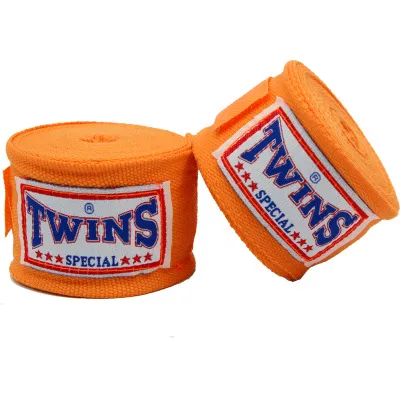
The material composition of the wrap also plays a critical role in final hand volume. Semi-elastic wraps, often referred to as Mexican-style wraps, offer a degree of stretch that allows the fabric to conform closely to the contours of your hand under tension. This elasticity helps compress the wrap, minimizing unnecessary bulk while maintaining a secure fit. In contrast, traditional non-stretch cotton wraps do not compress easily. If applied with too many overlapping layers, non-stretch cotton can create thick, unyielding blocks of fabric that force your fingers into an unnatural, semi-open position. This compromises the glove’s ergonomic shape, making it difficult to form a natural fist and increasing hand fatigue during training. Ultimately, the physical dimensions, material stretch, and wrapping tension dictate the fit, while the brand or color of the wrap has no functional impact.
Products mentioned in this guide
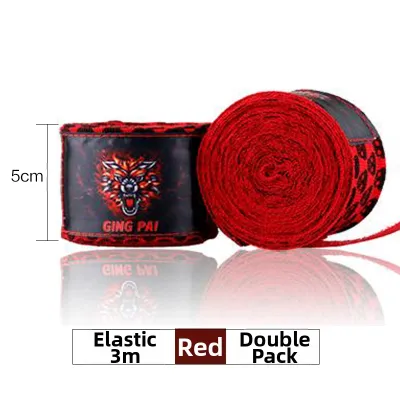
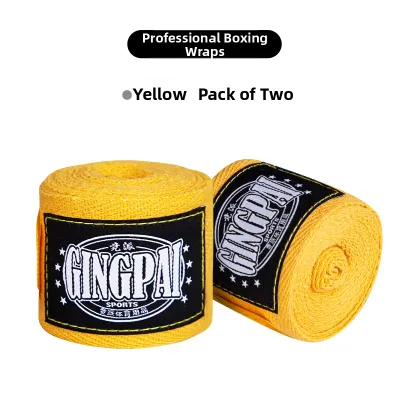
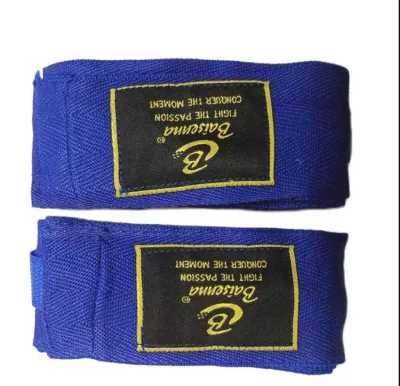
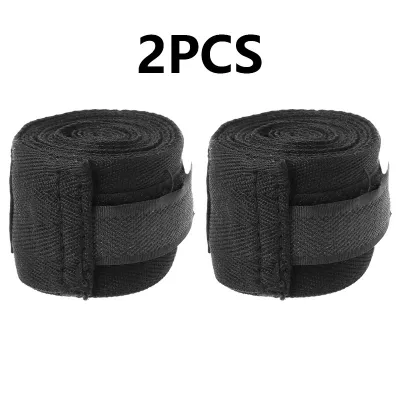
Prices are valid at publication and may change. Please refer to the product page for the latest price.
Matching Wrap Bulk to Glove Weight and Training Intent
Selecting the right combination of wrap bulk and glove weight depends heavily on your training activity and hand size. Lighter gloves, typically ranging from 8oz to 10oz, are designed for speed and precision during pad work or competitive bouts. These gloves feature smaller internal compartments. To maintain tactile feedback and prevent your hands from feeling cramped, you must adjust your wrapping technique. Opting for a shorter wrap or reducing the number of layers around the knuckles ensures your hand can still move dynamically without sacrificing basic wrist support.

Conversely, heavier gloves, such as 14oz or 16oz models used for sparring, have larger internal compartments and thicker protective foam. While it is tempting to build up a thick pad of wrap over your knuckles for sparring, overstuffing the glove can be counterproductive. Excessive wrap bulk can pre-compress the glove’s built-in safety foam before you even land a punch, reducing the foam’s ability to absorb impact. Your wrap should supplement, not replace, the structural padding and wrist support engineered into the glove itself.
Your personal hand size is the final piece of the puzzle. If you have larger hands and prefer a highly protective, multi-layered wrapping style, you will likely need to size up your gloves to a 16oz or larger model to ensure a comfortable fit. If you have smaller hands, a standard wrap length may fill the glove compartment perfectly without requiring a change in glove size. Always match your gear setup to your physical dimensions and training goals rather than relying on a one-size-fits-all approach.
The Fit Test: Verifying Comfort, Circulation, and Wrist Support
Because boxing is a high-impact sport, proper gear fit is a critical safety requirement. However, even the best equipment cannot replace proper punching technique and structured training. Before you begin hitting a bag or entering the ring, you must perform a physical fit test to verify that your wrapped hand is secure and healthy inside the glove.
Start by putting on your wraps and gloves, then make a tight fist and hold it for several seconds. Pay close attention to the sensations in your fingers. If you experience any numbness, tingling, or a cold sensation, your wraps are too tight and are restricting blood flow. You must undo them immediately to prevent nerve compression or circulatory issues.
Next, test your wrist stability. Bend your wrist slightly in different directions; the wrap should provide firm resistance and keep the joint aligned with your forearm, but it should not bunch up painfully inside the glove’s cuff. Your fingers should retain slight mobility, allowing you to open your hand slightly inside the glove without feeling painfully compressed against the lining or squeezed against each other. Finally, check the glove closure. Whether you use Velcro or laces, the closure must secure fully over your wrapped wrist without leaving gaps or requiring you to pull the strap so tight that it cuts off circulation.
Troubleshooting Common Wrap and Glove Fit Issues
If you experience discomfort during training, do not ignore it. If your hand feels cold, numb, or overly restricted, stop training immediately. The most common fix is to loosen the wrapping tension, particularly around the wrist and palm, or to reduce the number of knuckle folds you have created.
If you find that your fist feels loose inside the glove or your knuckles lack adequate padding, you can adjust your technique to add targeted knuckle layers. Alternatively, ensure the thumb loop is properly secured to prevent the wrap from shifting and bunching during movement. If the wrap continues to slip or bunch up, try a different wrap length or a semi-elastic material that conforms better to your hand shape.
When adjustments fail to resolve the discomfort, stop and consult a coach or trainer. Persistent pain or restricted movement is a sign that your current glove size is fundamentally incompatible with your preferred wrapping technique or hand size. In such cases, upgrading to a larger glove size or switching to a thinner wrap is necessary to protect your hands from chronic strain.
Frequently Asked Questions (FAQ)
Do I need longer wraps for heavier boxing gloves?
Not necessarily. While heavier gloves (like 14oz or 16oz sparring gloves) often feature larger internal compartments that can accommodate longer wraps, your hand size and personal comfort are the deciding factors. A larger hand will require a longer wrap (such as 180 inches) to secure the knuckles and wrist regardless of glove weight, whereas a smaller hand might find a shorter wrap sufficient even in a heavier glove.
Can I use the same wrapping technique for bag work and sparring?
Yes, the fundamental wrapping mechanics and fit checks remain the same to ensure wrist alignment and knuckle protection. However, you may choose to adjust the distribution of the wrap; for example, adding slightly more knuckle padding for heavy bag work to absorb repetitive impacts, or focusing more on wrist stability during sparring. Always verify that your glove fits comfortably over whichever variation you choose.
Community discussion
Share your experience or ask a question. Comments are reviewed before publication.