
Selecting the correct basketball requires analyzing where you play, how often you play, and what physical feedback you expect from the ball. Molten, as a prominent brand in global basketball, designs its balls with distinct material compositions tailored for specific surfaces. Choosing between an indoor and outdoor Molten basketball is not merely a matter of price; it is a technical decision that directly impacts your grip, shooting consistency, and the lifespan of your investment. By matching the ball’s cover material to your primary playing environment, you ensure optimal performance and avoid premature wear.
Court Surfaces and Materials: The Foundation of Your Choice
The physical interaction between a basketball and the playing court determines how long the ball retains its grip and structural integrity. Indoor courts, such as those found in sports halls or school gymnasiums across Singapore, typically feature smooth hardwood or polished synthetic polyurethane surfaces. These environments are highly controlled, free from abrasive debris, and designed to maximize traction. In contrast, outdoor courts—ranging from concrete neighborhood spaces to rough asphalt surfaces—are exposed to the elements, accumulating dust, grit, and moisture that act as abrasives against the ball’s cover.
To withstand these different environments, basketballs are constructed from three primary material categories: genuine leather, composite (synthetic) leather, and rubber. Genuine leather is highly porous and soft, designed to absorb moisture and provide an organic grip on clean indoor courts. Composite leather, made from polyurethane (PU) or polyvinyl chloride (PVC), mimics the feel of genuine leather but can be engineered with varying levels of density and weather resistance. Rubber is the most rugged material, utilizing dense, vulcanized compounds that resist punctures and severe abrasion from rough ground.
Products mentioned in this guide
Prices are valid at publication and may change. Please refer to the product page for the latest price.
When a ball strikes a surface, the friction generated wears down the outer texture. On a rough outdoor court, the microscopic peaks of concrete act like sandpaper, quickly grinding down soft leather fibers or thin synthetic skins. Furthermore, outdoor dust settles into the grooves of the ball, acting as a dry lubricant that compromises your grip. Understanding this interaction forms the core of your decision framework: you must prioritize soft, moisture-absorbing materials for smooth indoor floors, and dense, abrasion-resistant materials for rough outdoor surfaces.
Indoor Courts: Prioritizing Grip, Touch, and Moisture Control
Indoor basketball requires a high degree of ball control, quick directional changes, and precise shooting mechanics. On smooth, dust-free hardwood, players rely heavily on the ball’s ability to absorb sweat and maintain a consistent friction coefficient. This is where premium materials perform best. Genuine leather, utilized in Molten’s top-tier competition models like the FIBA-approved BG5000, represents the pinnacle of indoor performance. Natural leather is highly porous, meaning it actively absorbs moisture from players’ hands during intense games, preventing the ball from becoming slippery. However, genuine leather requires a dedicated break-in period; out of the box, it feels stiff and slick, requiring several weeks of regular play to develop its signature soft, grippy texture.

For players who want immediate, high-level performance without a break-in phase, high-quality composite leather is the ideal alternative. Models such as the Molten BG4500 or BG4000 utilize advanced polyurethane covers that offer a soft touch and excellent tackiness straight from the retail shelf. These synthetic materials replicate the feel of leather while maintaining a highly consistent bounce and shape over time. They are highly favored for regular indoor recreational leagues and training sessions.
When selecting an indoor ball, it is critical to verify the manufacturer’s specifications. Many premium composite models are strictly labeled “indoor use only.” Using these balls on outdoor courts, even briefly, will ruin the delicate synthetic fibers, causing the outer skin to peel away from the inner carcass. Additionally, pay close attention to Molten’s signature 12-panel Giugiaro design. This design increases the number of seams compared to traditional 8-panel balls, providing more finger-tip contact points. On clean indoor courts, these deeper channels and consistent pebble patterns allow for superior backspin and control during release.
Outdoor Courts: Maximizing Durability on Rough Asphalt
Outdoor play in Singapore presents unique challenges, including high humidity, sudden rain showers, and highly abrasive concrete or asphalt surfaces. To survive these conditions, a basketball must prioritize structural durability and wear resistance over delicate tactile feel. For rough public outdoor courts, heavy-duty rubber basketballs, such as the Molten BG2000 series, are the most practical choice. Vulcanized rubber is highly resistant to the grinding action of concrete, ensuring that the ball retains its shape and pebble texture far longer than synthetic alternatives. Furthermore, rubber models are highly budget-friendly, typically costing between S$25 and S$40, making them easily replaceable.
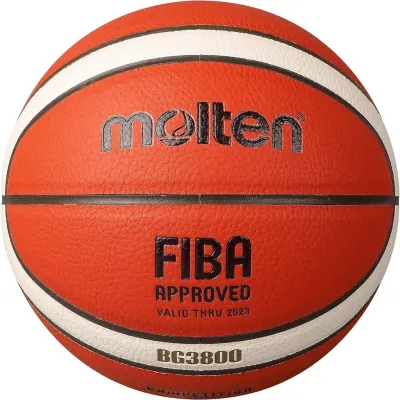
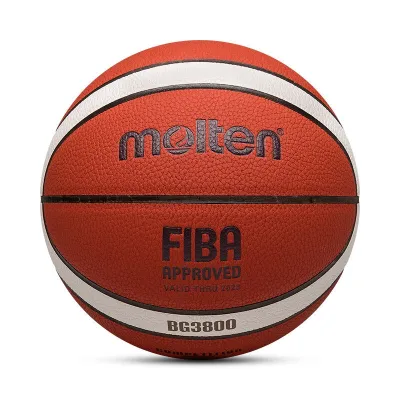
If you prefer a softer feel than rubber but still play primarily outdoors, look for durable composite leather models specifically engineered for outdoor use, such as the Molten BG3800. These outdoor-specific composites feature a tougher, thicker polyurethane skin designed to resist scuffs, scrapes, and UV degradation from constant sun exposure. While they do not offer the ultra-soft feel of indoor-only composites, they provide a comfortable middle ground, offering better grip and cushioning than standard rubber without wearing down immediately on asphalt.
Using an indoor-only genuine leather or soft composite ball on outdoor surfaces is a costly mistake. The rough asphalt will rapidly grind down the pebble texture, leaving bald spots within a few sessions. Once the outer skin is compromised, the ball loses its grip, bounces unpredictably, and becomes highly susceptible to moisture penetration, which rots the inner carcass. When browsing outdoor-specific models at sports retailers, physically evaluate the pebble texture and carcass thickness. Outdoor models feature more pronounced, deeper pebbles and firmer carcasses to maintain grip even when the court is covered in a fine layer of dust or sand.
The Crossover Option: Using One Ball for Both Environments
For many players, investing in multiple basketballs is impractical, especially if their weekly schedule splits time between indoor sports halls and outdoor community courts. In this scenario, “indoor/outdoor” composite leather basketballs serve as a versatile crossover option. These balls are engineered with a balanced synthetic leather cover that attempts to bridge the gap between indoor playability and outdoor durability.
However, choosing a crossover ball involves clear performance trade-offs. While an indoor/outdoor composite ball offers significantly better durability on asphalt than a pure indoor ball, it cannot match the premium, moisture-absorbing tactile feedback of genuine leather. Conversely, while it feels softer and more responsive than a standard rubber ball indoors, it will still wear out faster on rough concrete than a dedicated rubber model.
To decide whether to purchase a single crossover ball or two specialized balls, consider your playing frequency, skill level, and budget:
- Dedicated Two-Ball Strategy: If you play more than twice a week and split your time evenly between indoor leagues and outdoor pickup games, invest in two separate balls. Use a premium composite or leather ball (such as the Molten BG4000 or BG4500) strictly indoors, and a durable rubber or outdoor composite ball (such as the Molten BG2000 or BG3800) outdoors. This preserves your indoor investment while ensuring you have a rugged ball for concrete.
- Single Crossover Strategy: If you play occasionally, have a limited budget (under S$80), or primarily play outdoors with only occasional indoor sessions, a single indoor/outdoor composite ball is the most economical choice. It provides a respectable grip during your indoor games without requiring you to carry multiple pieces of gear.
Care and Maintenance to Extend Your Ball's Lifespan
Proper maintenance is essential to preserve your basketball’s playability and extend its lifespan, regardless of the material. Outdoor courts accumulate a mixture of dust, sweat, and environmental grime that settles into the ball’s pebbles and channels. After playing outdoors, wipe the ball down with a clean, damp cloth using lukewarm water. Avoid harsh chemical solvents, dish soaps, or abrasive brushes, as these can strip the protective coatings from composite leather and weaken the adhesives holding the panels together.
A fundamental rule of basketball care is to strictly segregate your gear. Never use a dedicated indoor leather or premium composite ball on outdoor courts, even for a brief shoot-around or warm-up. The abrasive surface will instantly cause micro-tears in the material, initiating a rapid decline in grip and structural integrity.
Air pressure management is also critical for maintaining consistent bounce and preventing bladder damage. Use a standard ball pump equipped with a reliable pressure gauge to check the inflation level. Most Molten basketballs specify an optimal inflation pressure of 7.25 to 8.70 psi (0.5 to 0.6 bar) near the valve. In Singapore’s tropical climate, temperature and humidity fluctuations can cause air pressure to shift. Moving a ball from an air-conditioned indoor hall to the humid outdoor heat causes the air inside to expand, while storing it in a cold room can cause it to deflate slightly. Always adjust the pressure before play to match the manufacturer’s guidelines.
Finally, store your basketball in a cool, dry place away from direct sunlight. Leaving a ball in direct sunlight, or locked inside a hot car boot, can warp the synthetic materials, dry out the leather, and cause the panels to separate at the seams. Proper storage ensures the bladder retains its spherical shape and the outer cover remains pliable.
Frequently Asked Questions (FAQ)
How can I verify if a Molten basketball is officially approved for competitions?
To verify if a Molten basketball is officially approved for competition, inspect the surface of the ball for the official FIBA (International Basketball Federation) logo, which is physically printed on all approved models. Additionally, cross-reference the specific model number (such as BG5000 or BG4500) on Molten’s official website or through authorized brand distributors. Avoid relying solely on third-party online marketplace listings or packaging graphics, as counterfeit products often mimic these visual details.
What are the visual and physical signs that my outdoor basketball needs replacing?
An outdoor basketball requires replacement when it exhibits clear structural or surface degradation. Visual signs include bald spots where the pebble texture has completely worn smooth, deep cracks or peeling along the panel seams, and exposed underlying threads. Physically, if the ball develops an inconsistent, lopsided bounce that cannot be corrected by adjusting the air pressure, or if it fails to hold pressure over a 24-hour period, the internal bladder or carcass has warped, indicating it is time for a replacement.
Community discussion
Share your experience or ask a question. Comments are reviewed before publication.