
Using 2mm paracord for any life-safety climbing application is extremely dangerous and can lead to catastrophic gear failure. Whether you are considering it for an anchor, a rappel backup, a safety lanyard, or a primary climbing rope, this thin utility cord is physically incapable of supporting human weight under the dynamic forces of a fall. Climbing safety relies on specialized equipment designed to stretch and absorb energy, whereas 2mm utility cord is engineered solely for light, static auxiliary tasks. Understanding the physical limits of your gear is a fundamental part of climbing safety; relying on uncertified cordage in high-consequence environments is a risk that no climber should take.
Equipment cannot replace proper training, experience, and sound judgment at the crag. Before heading out, climbers must recognize the limits of their physical ability and the technical boundaries of their gear. If you are ever unsure about the safety or certification of a piece of cord, the only safe action is to stop and consult the manufacturer’s instructions or a certified guiding professional.
Why 2mm Paracord Fails as Primary Climbing Gear
When a climber falls, they do not exert a simple static weight. Instead, gravity accelerates the body, creating dynamic kinetic energy that must be safely dissipated. Certified dynamic climbing ropes are designed to stretch significantly to absorb this energy over time, reducing the peak force felt by the climber and the anchor. In contrast, 2mm paracord has very little elasticity. Because it cannot stretch to absorb shock, even a short fall of a few inches by a human climber can generate an instantaneous impact force that far exceeds the cord’s static breaking strength, causing it to snap instantly.
Products mentioned in this guide
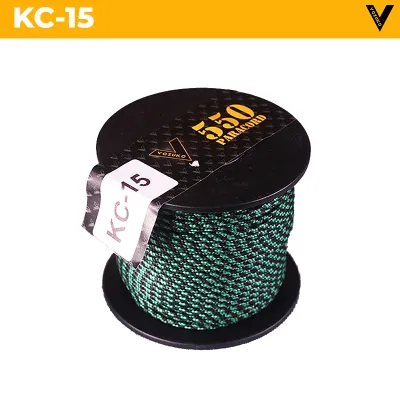
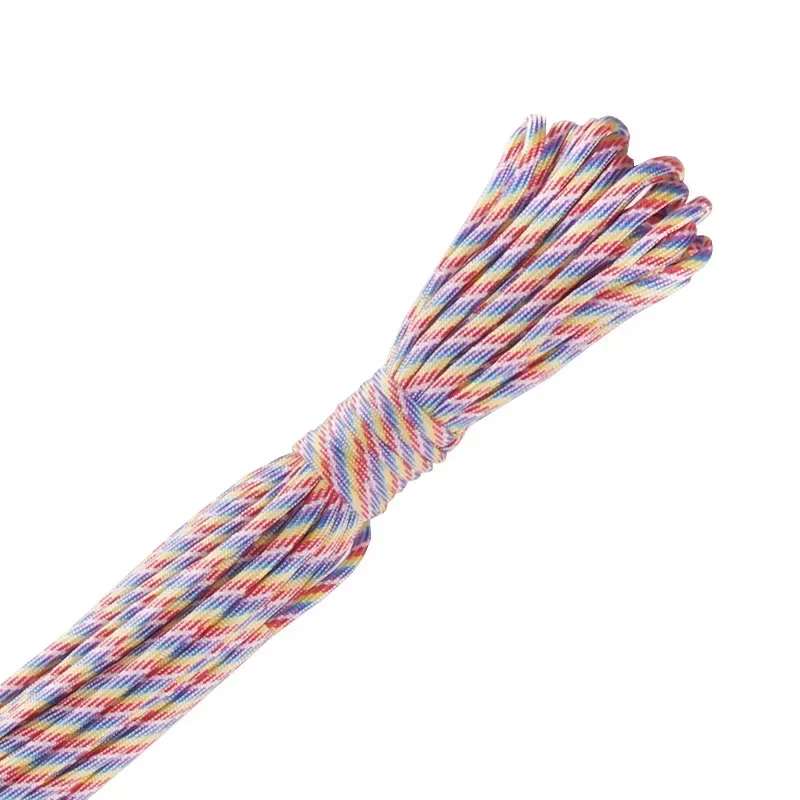
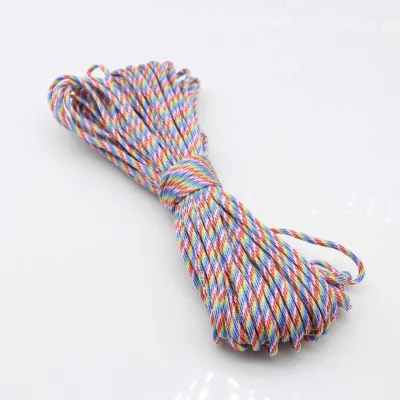
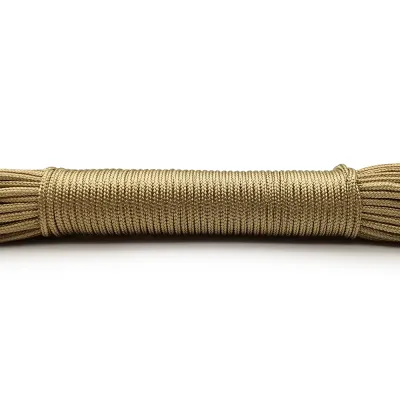
Prices are valid at publication and may change. Please refer to the product page for the latest price.
Standard dynamic climbing ropes utilize a highly engineered kernmantle construction. The core consists of twisted nylon strands that provide elasticity and strength, while the sheath protects the core from abrasion. Standard 2mm utility paracord, often sold as micro cord or accessory cord, has a vastly simplified structure. It typically features a thin woven sheath over a minimal core of a few polyester or nylon strands. This construction is optimized for flexibility and low cost, not energy absorption. It lacks the structural redundancy and material volume required to handle high-tension loads or friction.
If a 2mm cord is subjected to sudden tension, several failure modes can occur. First, the outer sheath can easily slip or bunch up when passing through a carabiner or over a rock edge, exposing the delicate core to immediate failure. Second, because the cord is so thin, it has virtually no resistance to shearing forces; a sharp rock edge or a metal edge on a hanger can cut through 2mm cord under body weight almost instantly. Finally, if the cord does snap under tension, it can undergo violent snap-back, where the severed ends recoil with enough force to cause severe facial or eye injuries to anyone nearby.
How to Check Load Limits and Safety Certifications
Before using any cord in an outdoor environment, you must verify its technical specifications. Reliable manufacturers print these details on the product packaging, spool labels, or official technical datasheets. Key metrics to look for include the tensile strength (the maximum static force the cord can withstand before breaking) and the material composition (such as nylon, polyester, or high-modulus polyethylene).

It is critical to distinguish between breaking strength and working load limit. The breaking strength is a laboratory measurement of the force required to rupture a brand-new, straight piece of cord under ideal conditions. The Working Load Limit (WLL) is the maximum load that should ever be applied to the cord during daily use. The WLL is typically calculated by dividing the breaking strength by a safety factor, often between 5 and 10. For example, if a utility cord has a static breaking strength of 100 kg, its safe working load limit for static hanging is only 10 to 20 kg. Furthermore, tying knots in a cord can reduce its strength by 30% to 50%, as the tight bends create localized stress points.
For any life-safety application, equipment must carry recognized certifications. Look for the UIAA (International Climbing and Mountaineering Federation) logo or CE (Conformité Européenne) marks, specifically referencing standards like EN 892 for dynamic ropes or EN 564 for accessory cords. Under the EN 564 standard, accessory cords must have a minimum diameter (typically starting at 4mm to 8mm) and meet strict minimum breaking strength requirements to be certified for auxiliary climbing tasks. A 2mm cord cannot meet these standards and will never carry a UIAA or EN 564 certification for climbing. Any generic paracord or utility cord lacking these specific marks must be treated as strictly non-load-bearing.
Investing in a certified 5mm or 6mm accessory cord typically costs under S$15, which is a small price to pay for life-safety equipment. If a cord does not explicitly state that it meets climbing standards, do not use it for any task where a failure could result in injury or property damage.
Safe Utility Uses for 2mm Cord in Climbing
While 2mm paracord must never support your body weight, it is an incredibly useful tool for organization and gear management. You can use short lengths of cord to rig gear slings for storing cams, nuts, and hexes in your gear closet or at the base of a route. It is also excellent for bundling ropes neatly when they are not in use, keeping them from tangling in your gear duffel. You can also use it to group matching quickdraws together on your harness during transport.
Climbers often need to keep small, non-essential items close at hand without risking dropping them down a multi-pitch route. A loop of 2mm cord is perfect for tethering a chalk bag brush to your chalk bag, securing a lightweight water bottle to your backpack frame, or attaching a headlamp to your helmet. Because these items weigh very little, the cord is under virtually no stress, and if it does snag and break, it does not compromise your safety.
Beyond the rock face, 2mm utility cord shines in campsite setup and gear maintenance. It is ideal for rigging guy lines on lightweight tarps or tents, hanging laundry to dry after a rainy day, or fashioning a temporary pull-tab for a broken zipper on your backpack or jacket. You can also use it to hang a lightweight food bag or trash bag from a tree branch to keep small critters away, provided the total weight remains well within the cord’s safe working load limit.
How to Inspect and Retire Damaged Utility Cords
Even when used only for utility tasks, a damaged cord can fail unexpectedly, leading to lost gear or campsite inconveniences. Perform regular inspections by running the entire length of the cord slowly through your bare hands. Feel for any flat spots, sudden changes in diameter, stiff sections, or soft, hollow lumps, which indicate internal core damage. Visually inspect the sheath for fuzzy areas, cut fibers, or exposed core strands.
Look for signs of UV degradation, which often manifests as color fading, a stiff or brittle texture, or a powdery residue when rubbed. Nylon and polyester cords are also highly susceptible to chemical damage from battery acid, household cleaners, or fuel. If a cord has come into contact with any chemicals, or if it shows glazed, melted spots from friction heat, its structural integrity is compromised.
If a utility cord fails any part of your visual or tactile inspection, retire it immediately. To prevent yourself or someone else from accidentally using a compromised cord for a critical task in the future, destroy it completely. Use a sharp knife or shears to cut the damaged cord into short, unusable segments before throwing it in the bin. Never leave damaged cordage in your gear bag where it might be grabbed in an emergency.
Frequently Asked Questions (FAQ)
Can I use 2mm paracord to make a Prusik knot for climbing?
No, you should never use 2mm paracord to tie a Prusik or any other friction hitch for climbing. A Prusik loop relies on friction to grip the climbing rope, which generates significant heat during movement. Because 2mm cord is extremely thin, it has a very small surface area to dissipate this heat, meaning it can quickly melt or glaze under friction, leading to sudden failure. Additionally, a friction hitch must be made from certified accessory cord (typically 5mm to 6mm in diameter) to ensure it has the tensile strength to hold a climber’s weight and the correct diameter ratio to bite onto a standard 9mm to 11mm climbing rope. A 2mm cord is too thin to bite reliably and lacks the strength to act as a safety backup.
Is 2mm paracord strong enough to hang a bear bag or haul a light pack?
Yes, but only under strict weight limits and with careful management. While a high-quality 2mm utility cord may have a static breaking strength of around 70 to 100 kg, tying knots in the cord can reduce this strength by up to half. Furthermore, hauling a pack or hanging a bear bag introduces dynamic forces if the bag drops slightly or snags on a branch. If you use 2mm cord for these tasks, limit the total weight of the bag to a fraction of the breaking strength (ideally under 10 kg) and ensure the cord does not rub against sharp bark or rock edges. For heavy haul bags or in areas with active bear populations where a secure hang is critical, upgrading to a thicker, high-strength utility cord is highly recommended to prevent gear loss.
Community discussion
Share your experience or ask a question. Comments are reviewed before publication.