
Quick Answer: Who Benefits Most from a 1kg Dumbbell?
A 1kg dumbbell is an excellent starting point if your primary focus is injury rehabilitation, joint mobility, or high-repetition aerobic conditioning. It provides a gentle introduction to resistance training without overloading sensitive joints or compromising your form. Starting with a lighter weight also helps build a consistent daily exercise habit without the intimidation of heavy gym equipment.
However, if your goal is to build noticeable muscle size or increase overall physical strength, a 1kg weight will quickly prove insufficient. Major muscle groups require greater mechanical tension to stimulate growth and adaptation.
To decide quickly, choose a 1kg dumbbell if you are recovering from an injury, performing physical therapy exercises, or adding light resistance to shadow boxing. If you can already lift common household items easily, you should consider starting with a heavier option or an adjustable set.
Products mentioned in this guide
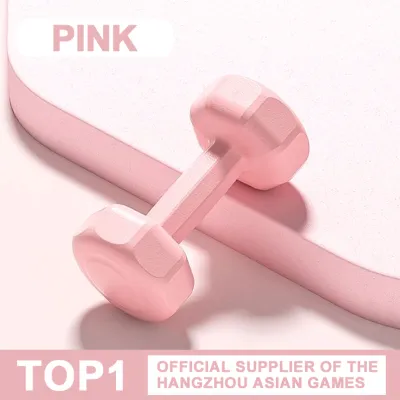
![[SG in Stock]Dumbbell for Weight Strength Training Neoprene Dumbell Set 1kg 2kg 3kg Suitable For Home And Gym Exercise](https://img.lazcdn.com/g/p/46546286cec6d36a3ef083b2e9c920f8.jpg_400x400q80.jpg_.webp)
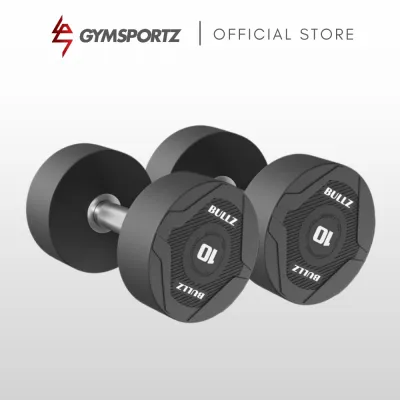
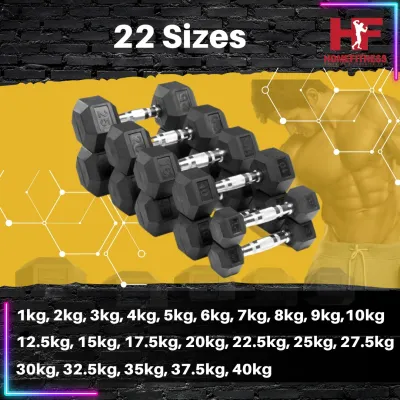
Prices are valid at publication and may change. Please refer to the product page for the latest price.
Assess Your Current Fitness Level and Training Goals
Before purchasing any home workout equipment, it is essential to align your gear with your physical objectives. Muscular endurance and joint mobility require different stimulus levels than muscle hypertrophy or explosive strength. Understanding this distinction prevents you from buying equipment that you might outgrow in a matter of days.

You can perform a simple baseline test at home using a standard, filled 1-litre water bottle, which weighs approximately 1kg. Hold the bottle and perform a lateral raise, lifting your arm out to the side until it is parallel to the floor. Keep your arm straight and your shoulders relaxed.
If you can complete 15 to 20 repetitions with perfect form and feel absolutely no muscular fatigue, a 1kg dumbbell is too light to stimulate strength gains in your shoulders. Your body requires a load that challenges the muscles within your target repetition range to trigger physical adaptation.
For lower body exercises, a 1kg load is virtually unnoticeable for major muscle groups like the glutes and quadriceps. If your goals involve toning your legs or building lower body stability, you will need to look past ultra-light weights to find an effective stimulus.
Conversely, if you experience joint discomfort, muscle tremors, or struggle to maintain proper alignment during the water bottle test, starting with 1kg is a safe and practical choice. It allows you to build foundational movement patterns and joint stability before progressing to heavier loads.
Matching the 1kg Dumbbell to Specific Exercises
The effectiveness of a 1kg dumbbell depends entirely on the mechanics of the exercise you choose. Small, isolated muscle groups respond well to light resistance, especially when you are focusing on motor control and rehabilitation.
Exercises like lateral raises, front raises, and rotator cuff rotations are highly effective with a 1kg load. These movements target smaller muscles that are easily strained when overloaded too quickly, making light weights a safer choice for building shoulder health.
Shadow boxing and cardio-sculpt routines also benefit from light weights. Holding a 1kg dumbbell while performing controlled punches increases the cardiovascular demand of your workout without putting excessive centrifugal force on your elbow and shoulder joints.
On the other hand, compound movements like goblet squats, lunges, and deadlifts are highly ineffective with a 1kg dumbbell. Your legs and back are designed to carry your entire body weight; adding a single kilogram does not provide enough stimulus to trigger physical adaptation.
When performing any movement, use the weight to establish a strong mind-muscle connection. If you find yourself swinging the dumbbell using momentum rather than controlled muscular contraction, the weight may actually be too heavy, or your form requires adjustment.
Space and Lifestyle Considerations for Compact Homes
Living in high-density housing, such as a typical Singapore HDB flat, requires smart space management. Large, bulky gym equipment can quickly clutter shared living areas and disrupt the aesthetic of your home.
A pair of 1kg dumbbells takes up minimal space and can be easily stored in a shoe cabinet, under a sofa, or inside a small storage basket. Their compact size makes them highly portable, allowing you to move your workout from the living room to a bedroom easily.
In humid tropical climates, equipment material matters. Neoprene or rubber-coated dumbbells are highly resistant to sweat and moisture, preventing the rust and corrosion that often affect bare iron weights stored in home environments.
Noise control is another critical factor when exercising in close proximity to neighbors. Dropping heavy iron weights can cause loud vibrations that travel through concrete floors, potentially causing friction with those living below you.
Lightweight dumbbells, especially those coated in neoprene or rubber, offer excellent floor safety. They are quiet to set down and are highly unlikely to dent or scratch vinyl, laminate, or tiled flooring common in modern apartments.
This convenience makes it easier to integrate short, high-repetition exercise sessions into a busy daily routine. You can easily grab them for a quick ten-minute movement break between remote work meetings without setting up a dedicated workout zone.
When to Upgrade: Signs You Need Heavier Weights
As your body adapts to regular exercise, the initial resistance will begin to feel lighter. To continue making progress, you must understand when you have outgrown your 1kg dumbbells.
A reliable method to gauge this is the Repetitions in Reserve (RIR) concept. If you complete a set of 20 repetitions and feel as though you could easily perform another 10 or more before reaching failure, the weight is no longer challenging enough to drive physical adaptation.
Keep a simple workout log to track your repetitions and how you feel after each session. If you notice a complete lack of muscle fatigue or find that your heart rate barely rises during your usual routine, it is time to progress.
When transitioning to heavier weights, you do not need to buy multiple pairs of fixed dumbbells. For compact home setups, space-saving alternatives like adjustable dumbbell sets, resistance bands, or a single light kettlebell can offer a wider range of resistance.
These progressive options allow you to gradually increase the load for different exercises, ensuring you can challenge both small and large muscle groups effectively without cluttering your living space.
Frequently Asked Questions (FAQ)
Can you build muscle with just a 1kg dumbbell?
Building significant muscle mass, known as hypertrophy, requires progressive overload and high levels of mechanical tension. While you can stimulate some muscle growth with a 1kg dumbbell by training to absolute muscular failure, this method is highly inefficient for larger muscle groups. For most individuals, a 1kg weight is best suited for muscular endurance, rehabilitation, and active recovery rather than building muscle size.
Are 1kg dumbbells suitable for cardio or HIIT workouts?
Yes, adding 1kg dumbbells to cardio or high-intensity interval training (HIIT) is an effective way to increase your heart rate and calorie expenditure. However, safety must remain your priority. Ensure you maintain strict shoulder stability and avoid rapid, jerky movements that can strain your wrists or rotator cuffs. If you feel your form slipping or experience joint discomfort, drop the weights immediately and continue the movement using only your body weight.
Community discussion
Share your experience or ask a question. Comments are reviewed before publication.