
Quick Answer: Is a 25cm Yoga Ball Right for Your Routine?
A 25cm yoga ball, often referred to as a mini exercise ball or Pilates ball, is designed specifically for targeted muscle activation, physical therapy, and localized core work. If your primary fitness goals include strengthening your pelvic floor, adding resistance to Pilates routines, or performing targeted rehabilitation movements, this compact size is a suitable option. Its small diameter allows you to place it easily between your knees, ankles, or hands to isolate specific muscle groups.
However, this mini ball is not a substitute for a standard stability ball. It cannot support your full body weight for seated desk work, nor is it suitable for large-scale balance training. Understanding these functional boundaries ensures you select the correct equipment for your specific training environment and physical needs.
When a 25cm Yoga Ball is the Right Choice for Your Goals
Desk and Office Mobility
For office workers seeking quick mobility breaks, a 25cm yoga ball serves as a convenient, low-profile tool. Placing the semi-inflated ball behind your lower back while sitting in your office chair provides gentle lumbar support and encourages active posture adjustments throughout the day. You can also place the ball on the floor under your desk to perform gentle foot rolls, which help stimulate lower-limb circulation and relieve stiffness during long periods of sedentary work.
Products mentioned in this guide
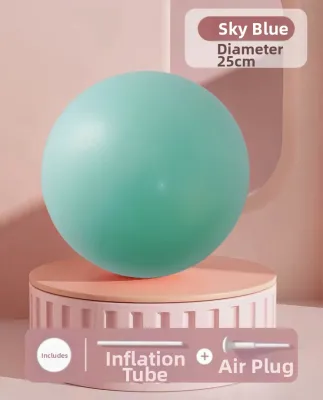

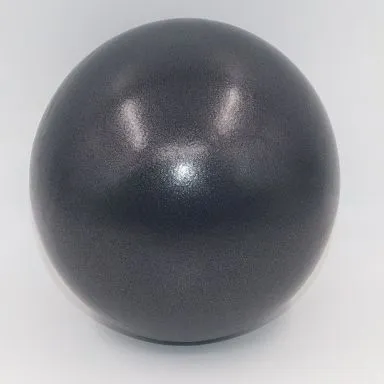
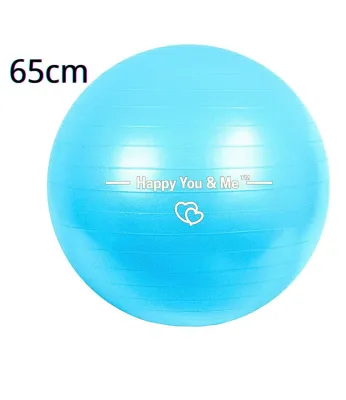
Prices are valid at publication and may change. Please refer to the product page for the latest price.

Targeted Pilates and Core Work
In Pilates and core conditioning, the 25cm ball is a classic accessory used to introduce localized instability and resistance. Placing the ball between your inner thighs during bridges or squats forces the adductor muscles to engage, which helps stabilize the pelvis. Holding the ball between your hands during abdominal curls adds an upper-body engagement component, ensuring your entire kinetic chain remains active during floor exercises.
Physical Therapy and Rehab
In physical therapy settings, practitioners frequently utilize the 25cm ball for low-impact joint mobilization and muscle re-education. For individuals recovering from knee or hip injuries, placing the ball under the knee joint allows for gentle, controlled quadriceps contractions without putting excessive stress on the joint structure. Because the firmness of the ball can be easily adjusted by releasing air, it offers a customizable level of support for sensitive or recovering tissues.
Portability and Travel
The compact nature of a 25cm ball makes it a practical option for home workouts in small apartments or for maintaining a routine while traveling. Unlike standard stability balls that require a high-volume foot pump, a mini ball can be quickly inflated using a simple plastic straw and sealed with a small plug. When deflated, it folds down to the size of a small notebook, fitting effortlessly into a gym bag or carry-on luggage.
When to Skip the 25cm Size and Choose a Standard Ball
Sitting as a Desk Chair
You should avoid using a 25cm ball as a replacement for an office chair. Proper ergonomic seating requires your hips to be positioned slightly higher than your knees, with your feet resting flat on the floor to distribute your body weight evenly. A 25cm ball is far too small to achieve this alignment, and attempting to sit on it at a standard desk will force your spine into flexion, leading to lower back strain and muscle fatigue.
Full-Body Stability and Balance
If your workout routine includes exercises like ball squats against a wall, prone planks with your forearms on the ball, or hamstring curls with your heels resting on top, a standard stability ball is required. Standard balls, which typically range from 45cm to 75cm in diameter, provide the necessary surface area and volume to support your torso or limbs safely. A 25cm ball does not offer enough clearance or stability for these full-body movements.
General Yoga Support
For passive yoga poses, deep chest openers, and full spinal extensions, a larger diameter is essential to support the natural curve of your back. A standard-sized ball allows you to drape your torso over its surface safely, keeping your head and hips supported. Attempting to perform these deep backbends over a 25cm ball can lead to overextension of the lumbar spine and an increased risk of tipping over.
25cm vs. Standard Yoga Balls: A Quick Comparison
When deciding between a mini ball and a standard stability ball, comparing their physical properties and intended functions can help clarify your choice. The table below outlines how these two sizes differ across key training dimensions.
| Feature | 25cm Yoga Ball (Mini Ball) | Standard Yoga Ball (45cm – 75cm) |
|---|---|---|
| Primary Use Cases | Pilates, targeted core activation, physical therapy, foot rolls | Active sitting, full-body balance, core stability, deep stretching |
| Stability Level | Low surface area; used to create localized instability | High surface area; supports full-body weight and balance |
| Portability | High; easily deflated, lightweight, and travel-friendly | Low; bulky when inflated, requires a dedicated pump |
| Storage Space | Minimal; fits easily in a drawer or small gym bag | Moderate to high; requires dedicated floor space when inflated |
Please note that exact weight-bearing capacities, material thicknesses, and anti-burst ratings vary significantly depending on the manufacturer. Always verify these specifications directly on the product packaging or the manufacturer’s official product sheet before use. The primary trade-off lies between the high portability of the 25cm ball and the comprehensive physical support of larger sizes.
How to Select and Use Your 25cm Yoga Ball Safely
Inspecting Product Labels
Before purchasing a 25cm yoga ball, carefully review the manufacturer’s specifications on the packaging. Look for balls made from slip-resistant PVC materials that are labeled as anti-burst. A matte or slightly textured surface is recommended, as it provides the necessary grip against your clothing or a yoga mat, preventing the ball from slipping away during high-effort movements.
Inflation Guidelines
Proper inflation directly impacts both the safety and effectiveness of your exercises. Follow the manufacturer’s instructions closely, inflating the ball to its designated 25cm diameter without over-stretching the material. If you prefer a softer ball for inner-thigh squeezes or lower-back support, you can slightly under-inflate it; however, avoid under-inflating it to the point where your joints press completely through the ball to the floor.
Safety Boundaries and Stopping Conditions
Always perform your exercises on a flat, non-slip surface, preferably on a non-slip yoga mat to ensure adequate traction. Inspect the floor area beforehand to clear away any sharp objects that could puncture the ball. Stop using the ball immediately if you experience sharp joint pain, muscle spasms, or dizziness, and consult a qualified physiotherapist before incorporating the ball into any injury rehabilitation program.
Frequently Asked Questions (FAQ)
Can I use a 25cm yoga ball as a chair for my office desk?
No, a 25cm yoga ball is entirely unsuitable for use as a desk chair due to its small size. Sitting on a ball of this diameter will force your hips and knees into an unnatural, cramped position, placing stress on your lower back and joints. For active seating at a desk, choose a standard stability ball that is properly sized to your height, or invest in an ergonomic office chair designed for prolonged support.
How firm should a 25cm Pilates ball be when inflated?
The ideal firmness depends on the specific exercise you are performing. For movements where you need to squeeze the ball between your knees or hands, a slightly softer inflation allows for better grip and comfortable muscle engagement. For exercises where the ball supports your body weight, such as under your lower back or feet, inflate it to its full recommended capacity to ensure adequate stability and support.
Community discussion
Share your experience or ask a question. Comments are reviewed before publication.