
A 45cm gym ball is typically the correct size for individuals with a shorter stature, generally those measuring under 150 centimeters (approximately 5 feet) in height. However, determining whether a 45cm gym ball is the perfect fit for your specific body requires looking beyond a basic height chart. Your individual limb length, torso proportions, and the specific exercises you plan to perform all play a critical role in finding the right match. Before purchasing fitness equipment for your home gym in Singapore, understanding how to physically verify the fit of a stability ball is essential for preventing injury and ensuring your workouts are both safe and effective.
Gym balls, also known as Swiss balls or stability balls, are highly versatile tools used for core strengthening, balance training, physical therapy, and even active sitting. Because the ball is inherently unstable, your body must constantly engage deep stabilizing muscles to keep you upright. This active engagement is highly beneficial, but it also means that any mismatch between your body size and the ball’s diameter can quickly lead to poor posture, muscle strain, or loss of balance. Taking the time to assess the fit ensures you reap the full benefits of this dynamic training tool.
Why Proper Gym Ball Sizing Matters for Your Workouts
Using a gym ball that does not match your physical dimensions can severely compromise your exercise form and increase your risk of injury. When you sit on a stability ball, your pelvis and spine should rest in a neutral position. If the ball is too small, such as a taller individual attempting to use a 45cm gym ball, your hips will drop significantly below your knees. This deep, unnatural flexion forces your pelvis to tilt backward, rounding your lumbar spine and placing excessive, uneven pressure on your lower back discs. Over time, performing exercises in this compressed posture can lead to chronic lower back pain and muscle fatigue.
Products mentioned in this guide
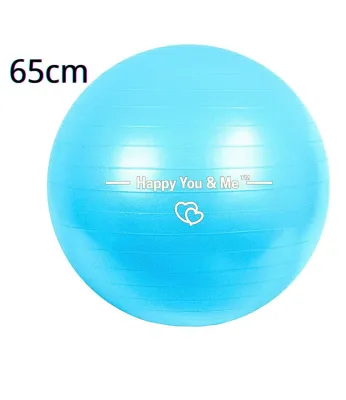
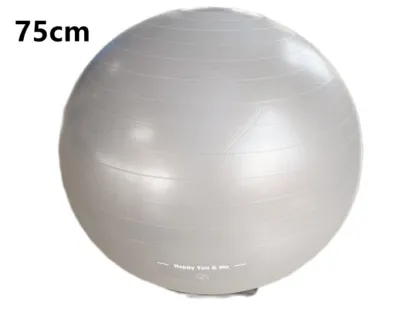
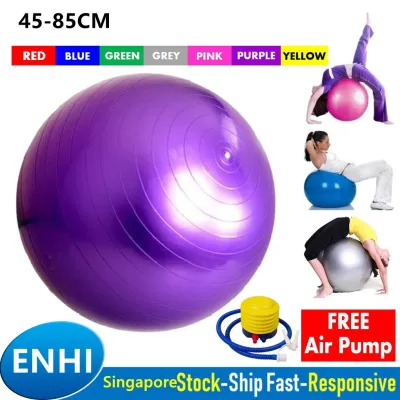
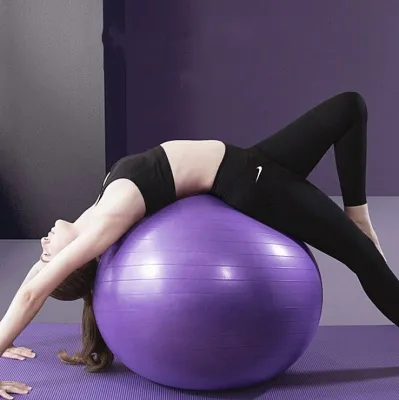
![🔵[SG Ready Stock] 45-85cm Thickened Fitness Gym Ball Exercise Ball Burst Resistance Inflatable Yoga Ball Bola Yoga Fitness Ball](https://img.lazcdn.com/g/p/92c6a5203ea40c0721040064a710bc6d.jpg_400x400q80.jpg_.webp)
![⭐[Sg Seller] 45cm55CM 65CM 75CM 85CM Burst Resistance Yoga Ball Gym Fitness Iron Shake Weight](https://img.lazcdn.com/g/p/e23e6d3db4b1f7e42ef3d0a86e2e6e3f.jpg_400x400q80.jpg_.webp)
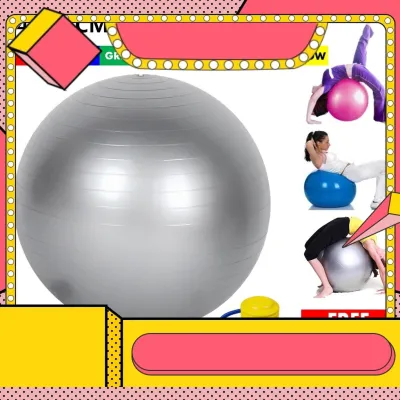
Prices are valid at publication and may change. Please refer to the product page for the latest price.
Conversely, using an oversized ball presents its own set of physical challenges. If the ball is too large, your feet will struggle to remain flat on the floor, forcing you to balance on your toes. This unstable foundation shifts your center of gravity upward, making it much harder to control your movements and significantly increasing the risk of tipping over. Furthermore, an oversized ball prevents you from achieving the proper leverage needed for core exercises, shifting the workload away from your target muscles and onto your hip flexors and neck.
When your gym ball is correctly sized, it maximizes core engagement by allowing you to maintain optimal joint alignment. Your nervous system can focus on coordinating movement and stabilizing your trunk rather than fighting to keep you from falling off. Whether you are performing seated overhead presses, core rotations, or using the ball as a support for back extensions, correct sizing ensures that your muscles work in harmony, protecting your joints and enhancing your overall athletic performance.
How to Test if a 45cm Gym Ball Fits Your Height
To perform a reliable fit test, you must first ensure the ball is inflated to its correct, manufacturer-specified diameter. Place the ball on a flat, non-slip surface, such as a high-grip yoga mat, in an area free of sharp objects or nearby furniture. If you are testing the ball at home, make sure you have ample clearance on all sides so you can safely step away or dismount if you lose your balance. Equipment cannot replace personal judgment and core stability, so always begin slowly.

Sit squarely on the center of the inflated ball with your feet planted flat on the floor, spaced approximately shoulder-width apart. It is best to wear the athletic shoes you normally use during your workouts, as thick soles can alter your seated height by a centimeter or two. Let your arms hang relaxed at your sides and look straight ahead, allowing your spine to settle into its natural alignment.
Next, observe the angle of your hips and knees, ideally by looking in a full-length mirror or having a training partner check your profile. In a proper fit, your thighs should be parallel to the floor, or sloping very slightly downward from your hips to your knees. This means your hip joints should be level with, or slightly higher than, your knee joints, creating an angle of approximately 90 to 100 degrees. Your knees should be bent at a clean right angle, with your ankles positioned directly beneath your knees.
While maintaining this seated position, pay close attention to your spinal posture. Your lower back should maintain its natural, gentle inward curve without requiring conscious effort to avoid slouching. If you feel your lower back rounding or find yourself constantly tensing your hip flexors to stay upright, the ball is likely too small. If you feel secure, balanced, and aligned, the 45cm size is appropriate for your body frame.
Verifying Manufacturer Specifications and Limits
While physical testing is the gold standard for fit, you must always validate your observations against the manufacturer’s official specifications and safety guidelines. These details are typically located on the product packaging, in the user manual, or printed directly on the safety warning label near the inflation valve. Different brands utilize varying formulations of polyvinyl chloride (PVC) and other synthetic materials, which can result in slight differences in elasticity, firmness, and actual inflated diameter.
When reviewing the product documentation, look for the recommended user height range associated with the 45cm diameter. While general industry guidelines suggest 45cm for individuals under 150 centimeters, some manufacturers may specify a slightly different range based on their unique design. Additionally, check the maximum weight capacity and the anti-burst rating of the ball. The weight capacity must safely accommodate your total body weight plus any external resistance, such as hand weights or resistance bands, that you plan to incorporate into your training sessions.
It is also important to consider how environmental conditions can affect the ball’s material properties. In warm, humid climates, the air inside the gym ball can expand, making the ball feel firmer and slightly larger. Conversely, in air-conditioned indoor spaces, the air may contract, causing the ball to soften and lose some of its height. Regularly checking the inflation level with a measuring tape to ensure the ball remains at a true 45cm diameter is a crucial maintenance step for both safety and performance.
What to Do If the 45cm Ball Is Not the Right Fit
If your physical test or a review of the manufacturer’s specifications indicates that the 45cm gym ball is not the correct size, you must take immediate steps to adjust your setup. If your hips sit lower than your knees, or if you feel cramped and unstable, you need to transition to a larger diameter, such as a 55cm ball. Attempting to push through workouts on an undersized ball will only lead to poor movement patterns and potential joint strain.
If you find that the 45cm ball is slightly too large—which can happen for exceptionally petite individuals or children—you might feel unstable because your feet cannot rest flat on the floor. Because 45cm is generally the smallest standard size available for adult fitness, you may need to search for specialized youth-sized stability balls or explore alternative core training tools, such as balance discs or half-ball trainers, which offer similar instability benefits without the height requirements.
While it can be tempting to adjust the height of the ball by adding or releasing air, you must only do so within the manufacturer’s safe inflation limits. Never over-inflate a 45cm ball to make it taller, as this thins the material, compromises the anti-burst technology, and increases the risk of a sudden, dangerous rupture. If minor adjustments to the air pressure within the approved limits do not achieve the correct 90-degree knee-to-hip angle, the best course of action is to return or exchange the ball for a size that naturally matches your body’s proportions.
Frequently Asked Questions (FAQ)
Can I adjust the fit by under-inflating or over-inflating the ball?
Attempting to alter the physical height of a gym ball by over-inflating or under-inflating it poses serious safety risks and compromises your workout quality. Over-inflating stretches the synthetic material beyond its engineered limits, which can cause the ball to burst suddenly under pressure, potentially leading to falls and severe injuries. Under-inflating the ball makes the surface excessively soft and mushy, which reduces the instability benefits, makes your movements sluggish, and can void the manufacturer’s warranty. Always inflate the ball strictly to its designated 45cm diameter using the provided measuring template.
Does my weight affect which gym ball size I should choose?
Your body weight does not dictate the physical diameter of the gym ball you need; size selection is determined entirely by your height and limb length to ensure proper joint alignment. However, your weight is the primary factor when choosing the material strength and weight capacity of the ball. When shopping for a gym ball, you must check the product’s maximum weight limit and anti-burst rating to ensure it can safely support your body weight along with any additional fitness equipment, such as dumbbells, that you use during your exercises.
Community discussion
Share your experience or ask a question. Comments are reviewed before publication.