
Quick Answer: Is 5kg the Right Starting Weight for You?
A 5kg dumbbell is a highly versatile starting weight, but its suitability depends entirely on your current fitness level and the specific exercises you plan to perform. For beginners focusing on upper-body isolation movements, such as bicep curls, shoulder presses, and tricep extensions, a 5kg weight often provides an ideal level of resistance. It is also highly suitable for individuals undergoing physical rehabilitation or those transitioning from bodyweight-only routines to resistance training.
However, a fixed 5kg dumbbell has clear limitations. For lower-body compound movements like squats and lunges, this weight will quickly feel too light to stimulate muscle growth or strength gains. Conversely, for delicate shoulder movements like lateral raises, absolute beginners may find 5kg too heavy to maintain proper form. If you fall into these categories, starting with a lighter pair of 2kg to 3kg weights, or investing in an adjustable dumbbell set, is a more practical approach.
Self-Assessment: Testing Your Baseline Strength
Before purchasing any home workout equipment, it is essential to assess your current physical capabilities. This step ensures you select a weight that is both safe and effective, preventing injury while maximizing your investment. You can easily test your baseline strength at home using simple bodyweight benchmarks.
Products mentioned in this guide
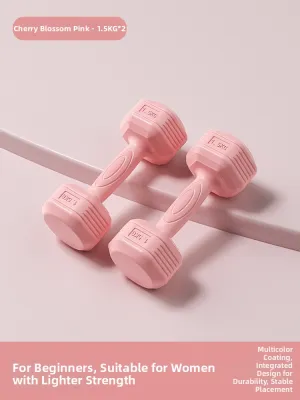
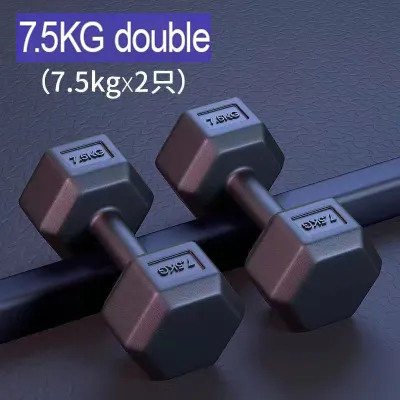
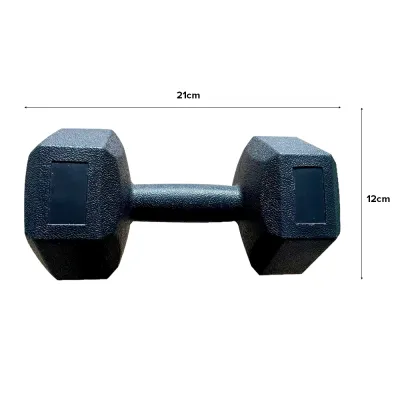
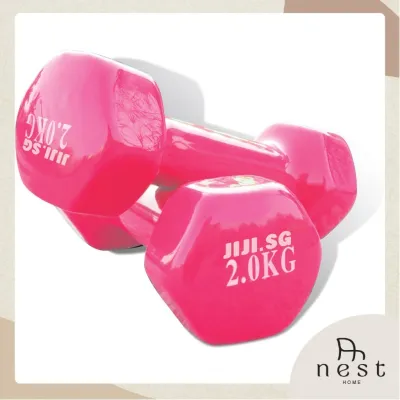
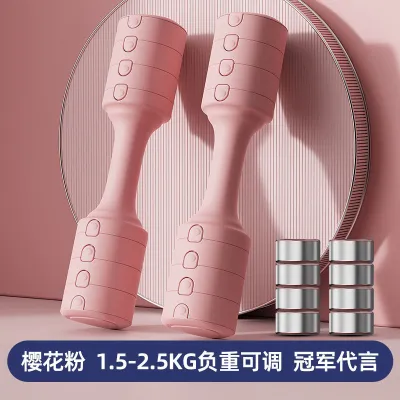
Prices are valid at publication and may change. Please refer to the product page for the latest price.

To evaluate your upper-body readiness, attempt to perform standard push-ups or knee push-ups. If you can comfortably complete eight to twelve controlled repetitions with proper form, your chest, shoulders, and triceps are likely ready to handle a 5kg external load. For the lower body, perform a set of twenty air squats. If you can complete this set with your thighs parallel to the floor and your heels firmly planted, your legs can easily manage a 5kg dumbbell, and you will likely need a heavier load for lower-body exercises very soon.
To gauge your tolerance for a specific weight without risking injury, utilize the “reps in reserve” (RIR) concept. When performing an exercise, choose a weight that allows you to complete your target repetitions while feeling as though you could perform two to three more reps with perfect form before reaching failure. If you must swing your torso, arch your lower back, or strain your neck to complete a movement, the weight is too heavy. Stop the exercise immediately if you experience sharp joint pain, as equipment cannot replace proper training and physical judgment.
Exercise Selection: Where a 5kg Dumbbell Works Best
The suitability of a 5kg dumbbell changes dramatically depending on the muscle groups you target and the mechanical leverage of the exercise. Small muscle groups and isolation movements are where this weight shines. Exercises like lateral raises, rear delt flies, and tricep kickbacks place the weight far from your body’s center of gravity, creating a long lever arm.
This mechanical disadvantage makes a relatively light weight feel significantly heavier. For these movements, a 5kg dumbbell is often an ideal target weight for intermediate lifters, while beginners may need to scale down to avoid straining their shoulder joints.
Conversely, large muscle groups and compound movements require much more resistance to stimulate physical adaptation. When performing exercises like goblet squats, lunges, or Romanian deadlifts, you are utilizing some of the largest and strongest muscles in your body, including your glutes, quadriceps, and hamstrings. For these movements, a single 5kg dumbbell—or even a pair totaling 10kg—will quickly become insufficient. Your legs carry your entire body weight daily, so they require a much heavier stimulus to trigger physical adaptation. If you rely solely on a fixed 5kg weight for lower-body training, you will likely find yourself performing excessively high repetitions without achieving the necessary muscular fatigue.
Home Gym Practicalities: Space, Storage, and Progression
Setting up a workout space in a compact home, such as a Singapore HDB flat, requires careful consideration of space, noise, and floor protection. Fixed dumbbells can accumulate quickly, taking up valuable floor space and creating clutter. If you choose fixed 5kg dumbbells, look for hex-shaped designs with a thick rubber or neoprene coating. The hexagonal shape prevents the weights from rolling across the floor, while the rubber coating helps protect your tiles or vinyl flooring from scratches and dampens the sound when placing them down, which is essential for maintaining good relations with your downstairs neighbors.
For those with limited storage space, adjustable dumbbells are often a highly efficient alternative to buying multiple pairs of fixed weights. While the initial cost of an adjustable set may be higher than a single pair of 5kg dumbbells, it eliminates the need to purchase separate 2kg, 7.5kg, or 10kg weights as your strength progresses. This adaptability is crucial for long-term progression. The principle of progressive overload dictates that to build strength and muscle, you must gradually increase the stress placed on your body over time. A fixed 5kg dumbbell limits your ability to apply this principle, as you cannot easily adjust the resistance once your body adapts to the load.
Signs You Need a Different Weight or Equipment Setup
As you consistently train at home, you must remain attentive to the physical feedback your body provides. There are clear, observable signals that indicate your 5kg dumbbell is no longer serving your fitness goals. The most obvious sign is the repetition threshold. If you can easily perform more than twenty to twenty-five repetitions of an exercise with perfect form without feeling significant muscular fatigue or a “burn” in the target muscle, the weight has become too light to promote further strength or muscle growth.
Another indicator is the complete absence of perceived exertion during and after your workouts. While you do not need to experience severe muscle soreness after every session, you should feel a sense of physical effort during the final reps of each set. If your workouts feel effortless and your heart rate barely elevates during compound movements, it is time to increase the resistance. Conversely, if you experience persistent joint discomfort, lower back strain, or find yourself compromising your form to complete a lift, the weight is too heavy or your technique needs adjustment. In these cases, switching to a lighter weight or focusing on bodyweight variations is the safest course of action.
Frequently Asked Questions (FAQ)
Can I build muscle using only 5kg dumbbells?
Yes, you can build muscle initially using only 5kg dumbbells, but you will eventually encounter a plateau. Muscle growth, or hypertrophy, requires mechanical tension and metabolic stress. In the beginning, performing higher repetition ranges (such as 15 to 25 reps) with a 5kg weight can create enough metabolic stress to stimulate muscle growth, especially for smaller upper-body muscles. However, as your body adapts, you will eventually reach a ceiling where the weight is no longer heavy enough to recruit high-threshold motor units. To continue building muscle over the long term, you will need to increase the resistance to maintain progressive overload.
Should I buy one 5kg dumbbell or a pair?
For a comprehensive and balanced home workout routine, purchasing a pair of 5kg dumbbells is highly recommended. While a single dumbbell can be useful for unilateral exercises like single-arm rows or overhead tricep extensions, a pair allows you to perform bilateral movements such as chest presses, shoulder presses, and bent-over rows. Training with a pair ensures balanced muscle development on both sides of your body and saves time by allowing you to work both limbs simultaneously. It also opens up more exercise variations, making your home workouts more engaging and effective.
What if 5kg is too heavy for my upper body but too light for my legs?
This is a very common challenge for home lifters, as lower-body muscles are naturally much stronger than upper-body muscles. To bridge this gap without buying a full rack of weights, you can combine your 5kg dumbbell with other training modalities. For your upper body, you can perform unilateral movements, use resistance bands to assist or modify the exercises, or focus on bodyweight movements like push-ups and planks. For your lower body, you can increase the difficulty of the 5kg weight by performing single-leg variations, such as Bulgarian split squats or single-leg Romanian deadlifts, which double the relative load on the working leg.
Community discussion
Share your experience or ask a question. Comments are reviewed before publication.