
Choosing the right fitness equipment is essential for preventing injury and maximizing the effectiveness of your home workouts. A 65cm gym ball is one of the most common sizes available, but determining if it is the correct fit for your body requires looking at both your physical height and your specific training objectives. Generally, a 65cm diameter is designed to accommodate individuals within a specific height range, but factors like torso length, leg length, and the type of exercises you perform can shift your ideal size. Before purchasing, it is crucial to understand how to measure this equipment against your body and how to verify its suitability through simple physical checks.
How to Know If a 65cm Gym Ball Fits Your Height
When selecting a gym ball, your overall body height serves as the primary baseline. Most fitness equipment manufacturers provide a height-to-size chart on the product packaging or official website, which typically pairs a 65cm gym ball with individuals standing between 170 cm and 185 cm tall. However, because individual body proportions vary—such as having longer legs or a shorter torso—you should always treat these charts as a starting guideline rather than an absolute rule.
To confirm the fit of a 65cm gym ball in person, you can perform a quick and reliable “sit test.” Inflate the ball fully according to the manufacturer’s instructions, then sit upright on the center of the ball with your feet resting flat on the floor. Observe the angle of your hips and knees; they should ideally form a 90-degree angle, with your thighs parallel to the ground. If your knees point upward toward your chest, the ball is too small or under-inflated, which can place unnecessary strain on your lower joints. Conversely, if your heels lift off the ground or you must stretch your legs to maintain balance, the ball is too large.
Products mentioned in this guide
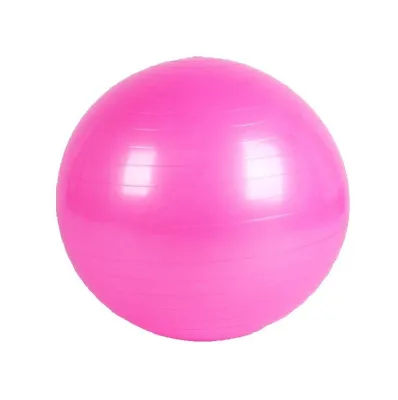
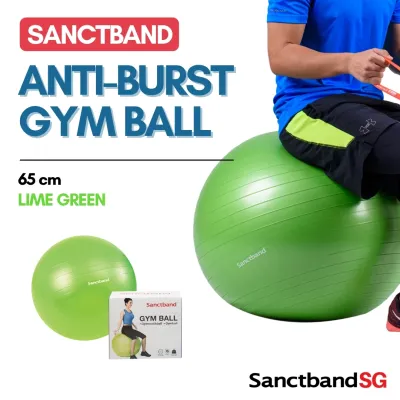
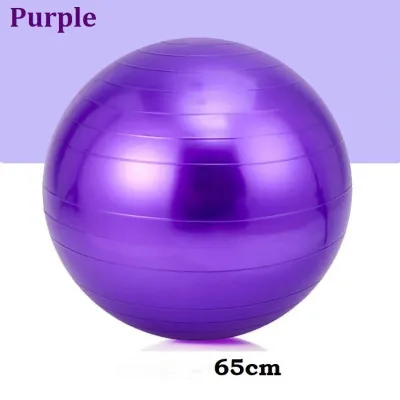
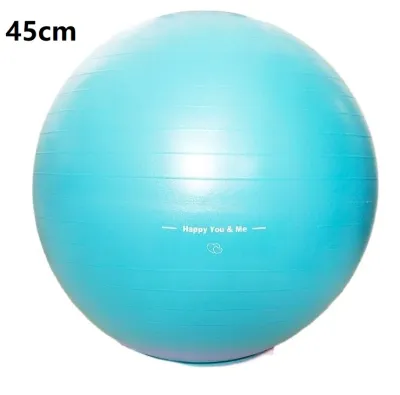
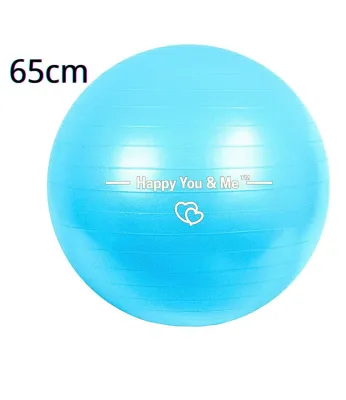
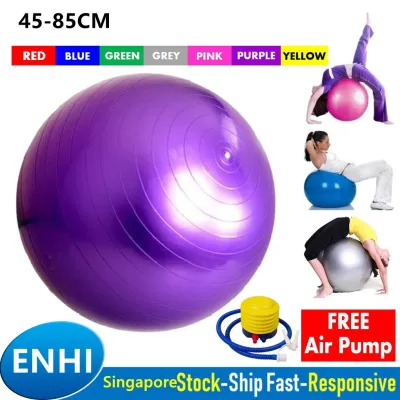
![[Sg Seller] 65CM Burst Resistance Yoga Ball Gym Fitness Iron Shake Weight - Includes Hand-Pump](https://img.lazcdn.com/g/p/eece8ef5906056d23ee6b72bbf4df830.jpg_400x400q80.jpg_.webp)
![⭐[Sg Seller] 45cm55CM 65CM 75CM 85CM Burst Resistance Yoga Ball Gym Fitness Iron Shake Weight](https://img.lazcdn.com/g/p/e23e6d3db4b1f7e42ef3d0a86e2e6e3f.jpg_400x400q80.jpg_.webp)
Prices are valid at publication and may change. Please refer to the product page for the latest price.
For those who fall on the borderline of height recommendations—such as individuals around 168 cm or 186 cm—adjusting the ball’s inflation can help bridge the gap. You can slightly under-inflate a larger ball or over-inflate a smaller one to achieve the correct seated posture, but this must only be done within the manufacturer’s safe limits. Never exceed the maximum rated diameter printed on the ball, as over-inflation compromises the material integrity and increases the risk of sudden deflation. If you are on the shorter end of the borderline, opting for a 55cm ball might offer better control, while taller users near 188 cm should consider stepping up to a 75cm model.
Matching the 65cm Ball to Your Workout Goals
Your fitness routine and training goals play a significant role in determining whether a 65cm gym ball is the right tool for your workouts. For core stability exercises, yoga, and Pilates, this size is highly versatile because it provides a moderate surface area that challenges your balance without making basic movements excessively difficult. The instability of the ball forces your deep core muscles, such as the transverse abdominis, to engage continuously to keep you upright during planks, bridges, and seated rotations.

If your goals involve heavy strength training, such as using dumbbells or barbells while lying on the ball, you must exercise extreme caution. Standard gym balls are not designed to support heavy external loads. Before attempting any weighted exercises, verify the maximum weight capacity and anti-burst rating on the product label to ensure it can safely support your body weight plus the weight of your lifting equipment. For high-load strength training, a specialized heavy-duty utility bench is generally safer, as gym balls can shift unpredictably under heavy loads.
The ball’s contact area with the floor also affects your stability during dynamic movements. A fully inflated 65cm ball has a moderate contact patch, offering a balanced level of resistance and movement. If you are using the ball primarily for stretching, spinal decompression, or mobility work, the 65cm size is often ideal because it provides sufficient height and curvature to support your back comfortably. When draping your back over the ball for a chest stretch, your head and hips should feel supported without your spine feeling excessively arched or strained.
Signs You Need a Different Size
Using an incorrectly sized gym ball can lead to poor form, reduced exercise efficiency, and physical discomfort. One of the most immediate posture red flags is slouching or rounding your lower back while seated on the ball. If you find it impossible to sit with a neutral spine while keeping your feet flat on the floor, the ball’s diameter is likely mismatched to your height. Your knees should never be positioned higher than your hips when sitting, as this shifts your center of gravity backward and strains the lumbar spine.
Another clear indicator that you need a different size is excessive wobbling or a complete loss of control during basic exercises. While gym balls are designed to introduce instability, you should still be able to maintain a controlled, steady posture during static holds. If you feel like you are constantly slipping off or if the ball rolls away with the slightest movement, it may be too large for your frame, preventing your core muscles from engaging effectively.
Physical discomfort during or after your workout is a critical warning sign that should not be ignored. If you experience joint pain in your knees, hips, or lower back after using the ball, check your alignment. Persistent discomfort often stems from the repetitive strain of compensating for a ball that is either too small—forcing your joints into deep, unsupported angles—or too large, which overextends your muscles. If adjusting the inflation pressure within safe limits does not resolve these alignment issues, it is time to transition to a 55cm or 75cm ball.
Safety Checks and Inflation Guidelines
To ensure your 65cm gym ball performs safely and lasts for years, proper preparation and maintenance are essential. Always begin by checking the manufacturer’s product label for the maximum weight capacity and the anti-burst rating. An anti-burst rating indicates that if the ball is punctured by a sharp object, it will deflate slowly and safely rather than popping suddenly, reducing the risk of a fall.
When inflating a new gym ball, follow a staged inflation process to allow the PVC material to stretch properly. Most manufacturers recommend inflating the ball to approximately 80% of its target size on the first day. Let the ball sit undisturbed for 24 hours at room temperature, allowing the material to expand and settle. On the following day, complete the inflation until the ball reaches its exact 65cm diameter. You can verify this by placing two boxes exactly 65cm apart on the floor and inflating the ball until it fits snugly between them.
Before starting any workout session, perform a quick visual inspection of the ball’s surface. Look for deep scratches, scuffs, small punctures, or areas where the material appears worn or discolored. Avoid using the ball near sharp objects, rough walls, or heated surfaces, and store it in a cool, dry place away from direct sunlight to prevent the material from losing its elasticity over time.
Frequently Asked Questions (FAQ)
Can I use a 65cm gym ball as an office chair?
A 65cm gym ball can be used for active sitting at a desk, provided your desk height allows you to maintain proper ergonomic alignment. Your feet must rest flat on the floor with your knees and hips at a 90-degree angle, and your wrists should rest comfortably on the desk without hunching your shoulders. To prevent the ball from rolling away when you stand up, consider using a stable base ring designed for stability balls. Because active sitting requires continuous muscle engagement, limit your time on the ball to 20 to 30 minutes initially to avoid lower back fatigue.
Does the color of the gym ball indicate its size or firmness?
No, the color of a gym ball is rarely a universal indicator of its size, weight capacity, or firmness. Different brands use various color schemes purely for aesthetic appeal or to distinguish their own product lines. To ensure you are using a 65cm ball with the correct specifications, always rely on the physical measurements, diameter markings, and weight ratings printed directly on the ball or its packaging rather than making assumptions based on color.
Community discussion
Share your experience or ask a question. Comments are reviewed before publication.