
A 65cm gym ball is generally the correct size if your height falls between 165cm and 180cm (approximately 5’5″ to 5’11”). This standard diameter serves as the baseline for a large portion of adult users, offering the necessary clearance and support for core workouts, stability training, and active stretching. However, relying solely on your overall height can sometimes lead to an incorrect fit, as individual body proportions and your specific training environment play critical roles in how the ball performs under your weight.
To determine if a 65cm ball is truly right for you, it is essential to look beyond general height charts and evaluate how your body interacts with the inflated surface. Factors such as leg length, torso ratio, and even the type of flooring in your home workout space can influence your stability and comfort. Understanding these variables ensures you select an accessory that supports proper posture and minimizes the risk of strain during exercise.
What the 65cm Specification Means for Your Height
When shopping for fitness equipment, understanding product specifications is key. The “65cm” label on a gym ball refers specifically to its maximum recommended diameter when fully inflated, measured in a straight line through the center. It does not refer to the circumference or the height of the ball when compressed under body weight.
Products mentioned in this guide
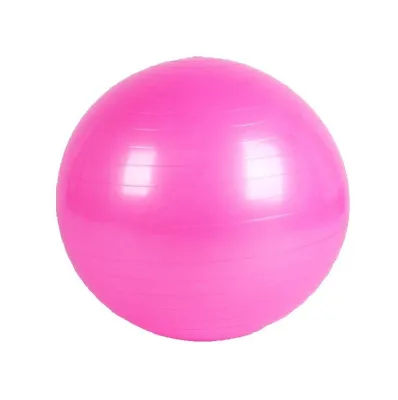
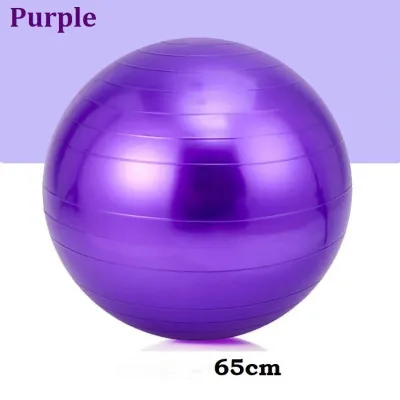
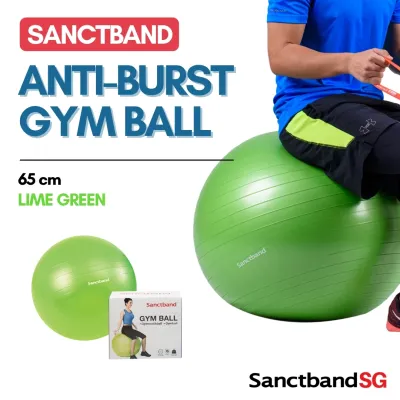
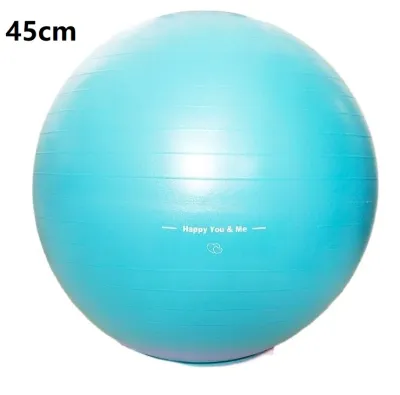
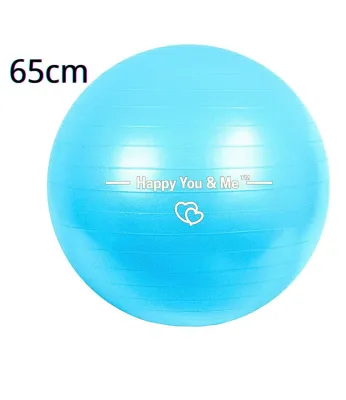
![[Sg Seller] 65CM Burst Resistance Yoga Ball Gym Fitness Iron Shake Weight - Includes Hand-Pump](https://img.lazcdn.com/g/p/eece8ef5906056d23ee6b72bbf4df830.jpg_400x400q80.jpg_.webp)
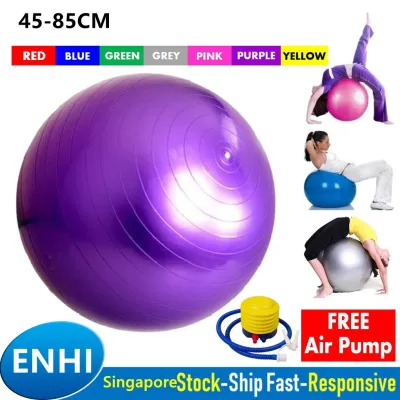
![⭐[Sg Seller] 45cm55CM 65CM 75CM 85CM Burst Resistance Yoga Ball Gym Fitness Iron Shake Weight](https://img.lazcdn.com/g/p/e23e6d3db4b1f7e42ef3d0a86e2e6e3f.jpg_400x400q80.jpg_.webp)
Prices are valid at publication and may change. Please refer to the product page for the latest price.
Industry standards typically align the 65cm diameter with individuals who stand between 165cm and 180cm tall. In Singapore, where home workout spaces in apartments require versatile and compact equipment, this size is highly common because it fits well within standard living areas. If you fall within this height bracket, a 65cm ball generally provides the correct volume of air to support your body weight without sinking too close to the floor.
However, static height charts cannot account for unique physical builds. A person with longer legs needs a higher seating platform to keep their joints aligned, meaning they might find a 65cm ball more comfortable than someone of the same height with shorter legs.
How to Verify the Fit With the 90-Degree Knee Test
The most reliable way to confirm whether a 65cm gym ball fits your body is to perform a physical seating test, often referred to as the 90-degree knee test. To do this, inflate the ball to its target diameter and sit directly on the center of the sphere. Place your feet flat on the floor, spaced about shoulder-width apart, and allow your weight to rest fully on the ball.

Observe the angle formed by your hips, knees, and ankles while seated. In a proper fit, your thighs should rest parallel to the floor, or with your hips positioned slightly higher than your knees, creating a clean 90-degree angle at the knee joint. If your knees are pushed up toward your chest, the ball is too small; if your feet cannot rest flat on the floor, the ball is too large.
Proper foot placement and core engagement are excellent indicators of correct sizing and stability. When the ball is the right size, you should be able to maintain an upright, neutral spine easily. Because material thickness and elasticity can vary, always cross-reference your physical test results with the specific size chart and inflation guidelines provided by the manufacturer.
When to Choose a 55cm or 75cm Alternative
If your height or physical proportions do not align with the 65cm standard, you will need to look at alternative sizes, most commonly 55cm or 75cm. A 55cm gym ball is generally recommended for individuals under 165cm (5’5″) tall, as it allows shorter users to plant their feet firmly on the ground. Conversely, a 75cm ball is designed for taller individuals, typically those standing over 180cm (5’11”), who require a larger volume to prevent their knees from bending at an acute, stressful angle.
Your intended activity also plays a significant role in determining whether you should deviate from the standard height guidelines. For instance, if you plan to use the gym ball primarily as an active sitting chair at a standard study desk, you may need to select a slightly larger size than you would for floor-based core exercises. The extra height helps compensate for the natural compression of the ball under prolonged sitting, keeping your forearms level with your desk surface.
Using an incorrectly sized ball carries both ergonomic and safety risks. A ball that is too small forces your joints into deep, repetitive flexion, which can lead to lower back discomfort and knee strain over time. On the other hand, a ball that is too large reduces your stability, making it difficult to maintain balance and increasing the likelihood of falls during dynamic movements.
Fine-Tuning the Size Through Inflation
Once you have selected a 65cm gym ball, you can fine-tune its actual size and firmness through proper inflation. Slight under-inflation reduces the air pressure inside, making the ball slightly smaller, softer, and more stable because it creates a larger contact patch with the floor. Over-inflation, however, makes the ball extremely firm and bouncy, which increases the difficulty of balance exercises but also raises the risk of the material bursting under sudden impact.
To achieve the correct size and material tension, follow a gradual inflation procedure. Start by inflating the ball to approximately 80% of its target 65cm diameter, then insert the plug and let the ball sit undisturbed for 24 hours. This waiting period allows the heavy-duty PVC material to stretch and adjust to the internal pressure. After 24 hours, remove the plug, add more air until the ball reaches its exact 65cm diameter, and secure the plug firmly.
To maintain the structural integrity of the ball, never exceed the maximum diameter specified by the manufacturer. Measuring the height of the ball against a wall during inflation is a practical way to ensure you do not over-inflate the product. Regularly check the inflation level over time, as temperature changes in your home can cause the air inside to expand or contract, slightly altering the ball’s firmness.
Frequently Asked Questions (FAQ)
Can I use a 65cm gym ball as an office chair?
Yes, a 65cm gym ball can be used for active sitting, but you must consider how its compressed height matches your desk. Standard office desks in Singapore typically stand around 70cm to 75cm high, which means a standard 65cm ball may compress too much under your weight, leaving you sitting too low. To use a 65cm ball at a desk, ensure it is fully inflated to its maximum limit, or consider sizing up to a 75cm ball if you find your hips sinking below your knees when seated.
What if my height falls exactly between two sizes?
If your height falls right on the boundary between two sizes, such as exactly 165cm, it is generally safer to choose the larger 65cm size rather than the smaller 55cm option. You can inflate the larger ball slightly below its maximum capacity to achieve the correct 90-degree knee angle while enjoying a more stable, forgiving surface. Always prioritize the physical 90-degree knee test and your comfort over the rigid height ranges printed on product packaging.
Community discussion
Share your experience or ask a question. Comments are reviewed before publication.