
A BOSU ball—the familiar dome-shaped fitness tool found in many commercial gyms—is a specialized accessory designed for instability training, rather than a mandatory addition to your home workout space. Whether this equipment deserves a place in your routine depends entirely on your specific fitness objectives, your current skill level, and whether you are training for joint stability, rehabilitation, or absolute strength. Before investing in one, it is essential to evaluate how an unstable surface affects your body and whether your training style will actually benefit from the unique challenges it introduces.
Signs Your Workout Routine Actually Needs a BOSU Ball
Integrating an unstable surface into your training makes sense when your current routine on flat ground no longer challenges your deep stabilizing muscles. If you have hit a plateau in your core stabilization or notice that your functional movement patterns lack coordination, introducing a mild balance challenge can increase neuromuscular demand. This forces your brain and muscles to communicate more efficiently to maintain equilibrium, which can translate to better overall body control.
Athletes who participate in sports requiring rapid changes of direction, uneven terrain, or constant balance adjustments often find value in this type of training. If you enjoy trail running along the nature reserves in Singapore, surfing, or playing court sports, dynamic balance and proprioception—your body’s awareness of its position in space—are critical. Training on a semi-unstable surface helps prepare your ankles, knees, and hips for the unpredictable forces you encounter during these outdoor activities.
Products mentioned in this guide
![🏅[58CM] Bosu Ball For Home Balance Training / Fitness Exercise Ball With Resistance Bands](https://img.lazcdn.com/g/p/b4d5fd7da1f48ad171f237bc297ff4f4.jpg_400x400q80.jpg_.webp)
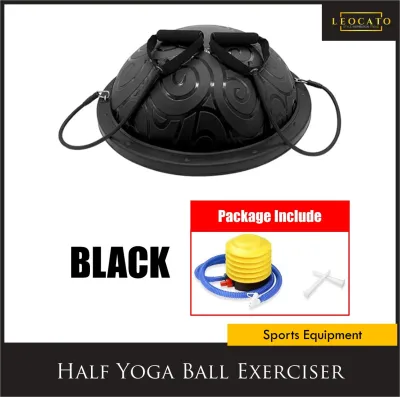
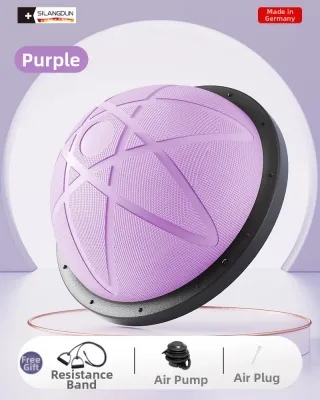
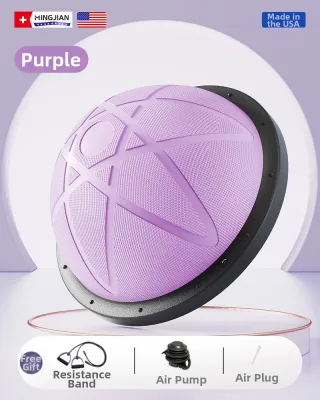

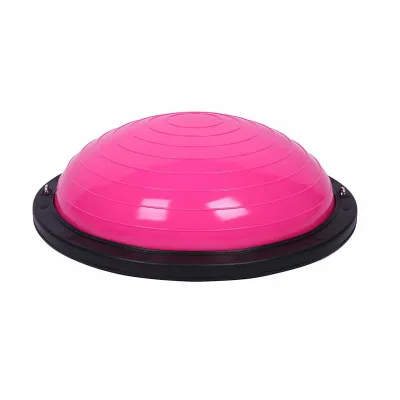
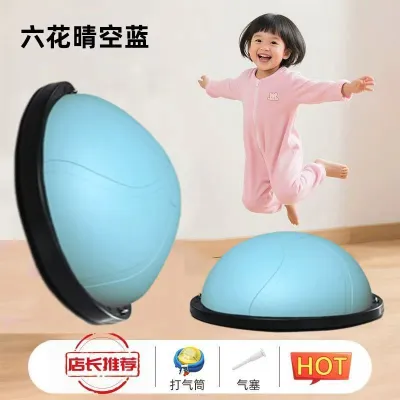
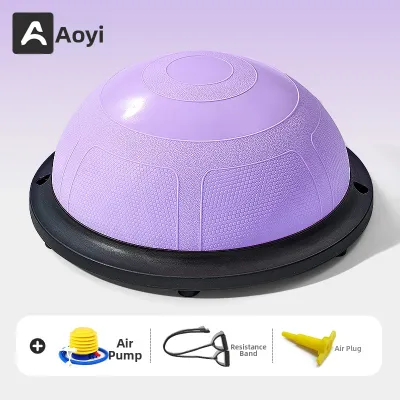
Prices are valid at publication and may change. Please refer to the product page for the latest price.
Additionally, if you are recovering from an injury or looking to reinforce weak joints, targeted stability work can be highly beneficial. However, this type of rehabilitation should always be performed under the strict guidance and approval of a qualified physical therapist or medical professional. They can prescribe specific, controlled movements to ensure you do not overload vulnerable tissues before they are ready to handle the stress.
When to Skip the BOSU Ball and Choose Alternatives
While instability training has its place, it is highly inefficient—and sometimes counterproductive—for certain fitness goals. If your primary objective is to build maximum strength or muscle hypertrophy through heavy compound lifts like squats, deadlifts, or overhead presses, you should skip the unstable dome. Generating maximum force requires a solid, stable foundation; standing on an unstable surface inherently limits the amount of weight you can safely lift, reducing the overall tension and stimulus delivered to your target muscles.

Beginners should also avoid jumping straight into balance training. If you are still mastering the foundational mechanics and motor patterns of basic movements—such as a standard bodyweight squat, hinge, or lunge—adding an unstable variable too early can compromise your form. It is far more productive to build a strong, consistent movement pattern on flat ground before attempting to challenge that pattern with instability.
Finally, anyone experiencing severe, undiagnosed joint pain, chronic vertigo, or acute injuries must steer clear of balance tools until they have consulted a healthcare provider. Attempting to balance while your body is actively managing pain or vestibular issues increases the risk of falls and can exacerbate underlying joint instability.
How to Test If Balance Training Fits Your Current Level
Before purchasing any balance equipment, you can perform a few simple, equipment-free self-assessments at home to determine if your body is ready for instability training. The first test is a single-leg stance evaluation. Stand barefoot on a flat, hard floor, lift one foot off the ground, and try to maintain your balance for 30 seconds with your eyes open, then repeat with your eyes closed. If you experience excessive postural sway, rapid loss of balance, or a complete lack of ankle control, your immediate focus should be on building basic static balance on solid ground first.
Next, assess your core endurance with a standard floor plank. Place your forearms on the floor, align your body in a straight line from head to heels, and hold the position. If you cannot maintain a neutral spine and proper alignment for at least 60 seconds without your hips sagging or your shoulders shaking excessively, your core stabilizers are not yet ready to support you on an unstable surface.
Lastly, perform a movement quality check using basic bodyweight exercises. Stand in front of a mirror and perform ten slow, controlled bodyweight squats. Observe whether your knees cave inward, your lower back rounds, or your weight shifts unevenly from side to side. If you cannot maintain proper joint tracking and a neutral spine on a stable floor, adding a balance accessory will only amplify these movement compensations and increase your risk of injury.
Comparing the BOSU Ball to Other Gym Accessories
If your self-assessments suggest that a half-dome balance trainer is not the right fit, several other gym accessories might better serve your specific training needs. For instance, a classic Swiss ball (or stability ball) offers a highly versatile alternative. It is excellent for broader core engagement, full-body stretching, and can even double as an active seating option at your desk to encourage subtle postural adjustments throughout the day.
For those focusing specifically on lower-impact ankle rehabilitation or subtle proprioceptive challenges, a balance pad or a wooden wobble board is often a more appropriate choice. A foam balance pad provides a much lower height profile and a gentler, more predictable level of instability than a large inflated dome, making it ideal for early-stage balance training. A wobble board, on the other hand, restricts movement to specific planes, allowing you to target ankle mobility and strength in a highly controlled manner.
If your goal is to intensify your core workouts and hamstring training without dealing with the bulk of a half-ball, consider a set of sliders or gliding discs. These small, portable discs allow you to perform smooth, continuous floor exercises that challenge your core and lower body through a full range of motion. They require minimal storage space and are highly effective for building functional strength on any smooth floor surface.
Safe Setup and Usage Boundaries If You Decide to Buy
If you decide that a balance trainer aligns with your fitness goals, establishing safe setup habits is crucial to prevent accidents. Always begin by verifying the manufacturer’s stated weight capacity, inflation guidelines, and surface care instructions. Over-inflating the dome can make the surface excessively rigid and round, while under-inflating it can cause your feet to sink completely to the hard base, both of which compromise the tool’s effectiveness and safety.
Before stepping onto the dome, ensure your workout area is completely clear of sharp objects, furniture, or other gym equipment that you could fall onto if you lose your balance. Position the non-slip base on a flat, dry, and level floor—ideally on a thin exercise mat to prevent the unit from sliding during dynamic movements. Avoid using the equipment on wet surfaces or highly polished floors where the base might lose traction.
Finally, establish clear personal boundaries for your training sessions. If you experience any joint pain, sudden dizziness, or a noticeable loss of form, stop the exercise immediately. Equipment cannot replace proper training or physical judgment; pushing through fatigue on an unstable surface is a common cause of acute sprains and strains. If discomfort persists, consult a qualified fitness or medical professional before attempting the movements again.
Frequently Asked Questions (FAQ)
How often should I include instability training in my weekly routine?
For most fitness enthusiasts, integrating instability training two to three times per week is sufficient to see improvements in balance and joint stability. You do not need to dedicate entire workouts to the balance trainer; instead, use it for 5 to 10 minutes as part of a dynamic warm-up to activate your core and lower-body stabilizers, or as a focused core finisher at the end of your main strength session.
Pay close attention to how your body responds during these short segments. Because stabilizer muscles are relatively small, they fatigue much faster than larger muscle groups like your quadriceps or gluteals. If you notice your ankles shaking uncontrollably, your knees wobbling, or your posture collapsing, these are clear, observable signs of stabilizer fatigue. When your form degrades, the risk of injury rises, indicating that it is time to step off the equipment and allow your body to rest before your next session.
Community discussion
Share your experience or ask a question. Comments are reviewed before publication.