
Deciding whether to bring a premium Merrithew reformer into your home as a beginner is a significant financial and lifestyle choice. While these commercial-grade machines offer unparalleled stability, smooth movement, and precise resistance, they are not a prerequisite for starting your Pilates journey. For a beginner, the decision to invest should depend on your long-term commitment, physical space, budget, and familiarity with reformer safety.
If you are already committed to a consistent practice and have the space to accommodate a heavy, professional-grade machine, a premium reformer can be a lifetime investment that grows with your skill level. However, if you are still testing the waters, starting with studio classes or high-quality mat work is often the wiser initial step. Understanding the construction, space demands, and safety requirements of these machines will help you make an informed decision.
Understanding the Build and Feel of a Premium Reformer
When evaluating high-end Pilates equipment, understanding what sets a premium reformer apart from entry-level home models clarifies the scale of the investment. Premium reformers are engineered to withstand the rigorous demands of commercial studios. This means they are built with heavy-duty materials—such as solid wood frames or reinforced aluminum rails—that prevent the machine from shifting, rocking, or squeaking during dynamic movements. For a beginner, this structural integrity provides an immediate sense of security, allowing you to focus entirely on your form rather than the stability of the machine.
Products mentioned in this guide
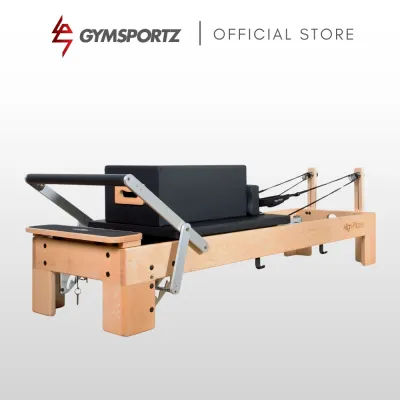
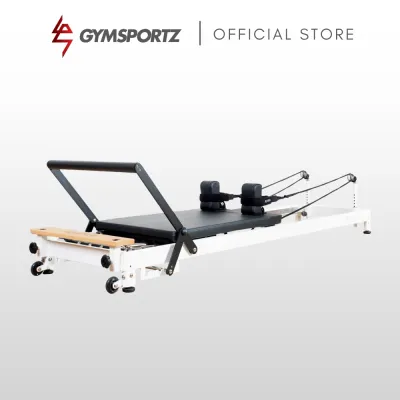
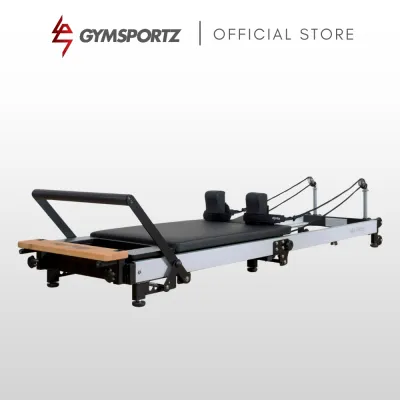
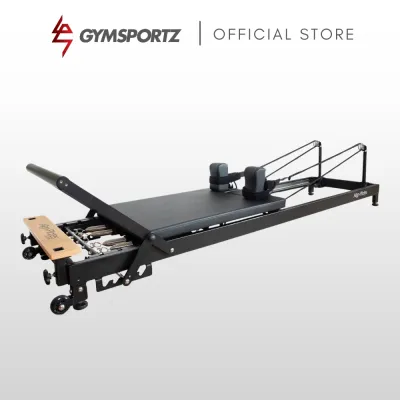
Prices are valid at publication and may change. Please refer to the product page for the latest price.
Another hallmark of high-end engineering is the carriage glide system. Premium models utilize precision-aligned tracking systems and high-quality wheels that deliver a virtually silent, friction-free ride. This smooth movement is crucial for maintaining the slow, controlled eccentric contractions that define Pilates.
Furthermore, the spring resistance systems on premium reformers are calibrated with extreme precision. Rather than relying on generic bungee cords or low-grade metal springs that degrade quickly, professional reformers use specialized, high-tensile springs that offer consistent, predictable tension across their entire range of motion. This level of build quality ensures that the machine remains a reliable partner in your fitness journey for decades, though it comes with a premium price tag and a permanent footprint.
Self-Assessment: Is a Premium Reformer Aligned With Your Routine?
Before committing to a substantial purchase, it is vital to conduct an honest self-assessment. A premium reformer is a highly specialized tool, and its value is unlocked only through consistent, correct use.

Evaluating Your Practice Frequency and Commitment
A common pitfall for beginners is purchasing high-end fitness equipment during an initial wave of enthusiasm, only to have it collect dust. To determine if a premium reformer aligns with your routine, evaluate your actual practice history rather than your future aspirations.
Have you maintained a consistent Pilates routine—whether on a mat or in a studio—at least two to three times a week for the past six months? If Pilates is already an integrated, non-negotiable part of your weekly wellness schedule, transitioning to a home reformer is a logical progression. If you are still in the trial phase, committing to a studio class pack first allows you to build the habit without the upfront financial burden of owning commercial-grade equipment.
Measuring Your Available Space and Setup Requirements
Unlike foldable, budget-friendly fitness gear, a professional reformer is a large, heavy piece of equipment that requires a dedicated environment. You must carefully measure your available floor space before purchasing. A standard commercial reformer typically requires a footprint of approximately 2.5 meters in length and 0.7 meters in width.
However, you cannot simply fit the machine into a tight corner; you must also calculate a safety clearance of at least 0.6 to 1 meter around all sides of the reformer to allow for leg circles, arm work, and safe mounting or dismounting.
Additionally, consider the environmental conditions of your home. The room should have adequate ventilation or air conditioning, especially in humid climates like Singapore, to protect the wood, upholstery, and metal components from moisture damage. Standard ceiling heights must accommodate exercises where you stand on the carriage or lift your legs high. Finally, because these machines can weigh between 50 and over 100 kilograms, you should verify that your flooring can support the concentrated weight. Placing a heavy-duty, non-slip protective mat under the reformer is highly recommended to prevent floor scuffs and dampen operational vibrations.
Matching Your Fitness Goals With Equipment Capabilities
Your specific fitness objectives should dictate whether a reformer is necessary or if other modalities would suffice. If your primary goals are general flexibility, basic core activation, and low-impact movement, a high-quality Pilates mat and a few inexpensive props can deliver excellent results.
However, if your goals involve targeted muscle conditioning, progressive resistance training, correcting muscle imbalances, or rehabilitating specific injuries under professional guidance, the reformer’s spring-loaded carriage becomes highly valuable. The adjustable resistance allows you to challenge your muscles through both concentric and eccentric phases of movement, offering a level of versatility and progressive overload that static mat work cannot replicate.
Navigating the Beginner Learning Curve and Safety Boundaries
While a premium reformer offers incredible versatility, it is also a powerful, spring-loaded machine that carries inherent safety risks if used incorrectly. Unlike a static weight machine, a reformer’s carriage moves dynamically, requiring constant core stability and joint alignment to prevent falls or strain. For beginners, safety must be the absolute priority, and equipment cannot replace professional instruction or personal physical awareness.
Before attempting unsupervised home workouts, you should master the foundational principles of Pilates. This includes understanding neutral pelvic alignment, lateral thoracic breathing, shoulder blade stabilization, and deep transversus abdominis engagement. Attempting to navigate the spring resistance without these foundations can lead to compensatory movements, putting undue stress on your lower back, neck, and joints.
To establish safe habits, strongly consider the following guidelines:
- Seek Professional Training First: Complete a minimum of 10 to 20 supervised studio sessions with a certified Pilates instructor. An instructor will teach you how to safely change springs, adjust the footbar, mount and dismount the moving carriage, and maintain proper form.
- Verify Equipment Settings: Always double-check that the springs are fully engaged in the gear bar and locked into place before sitting or lying on the carriage. Inspect the ropes, straps, and clips for any signs of wear or misalignment.
- Start with Conservative Resistance: More resistance is not always harder, and lighter resistance is not always easier on a reformer. For example, a lighter spring setting on abdominal exercises makes maintaining carriage control significantly more challenging. Always follow manufacturer guidelines or professional recommendations for spring configurations.
- Avoid Advanced Choreography: Do not attempt complex, standing, or inverted exercises at home without an instructor present. Focus on fundamental, closed-chain movements where your feet or hands remain securely on the footbar or in the straps.
- Check Weight and Load Limits: Ensure your body weight falls well within the manufacturer’s specified maximum load capacity for the carriage and frame to prevent structural failure or tipping.
Exploring Practical Alternatives Before You Buy
If your self-assessment reveals that purchasing a premium home reformer is not yet practical due to space, budget, or skill level, several highly effective alternatives can support your practice.
First, committing to a local Pilates studio membership or purchasing class packages is an excellent way to access premium reformers without the upfront cost or home maintenance. This path ensures you receive real-time feedback on your posture, form, and alignment from certified professionals, which is invaluable during your first year of practice.
Second, if you are determined to practice at home but have limited space, consider high-quality foldable or vertical-stacking reformers. While these models may not offer the exact heavy-duty feel or ultra-smooth glide of a commercial-grade wood or aluminum frame, they are designed to be stored upright or folded into a closet, making them highly practical for smaller apartments.
Third, do not underestimate the power of mat Pilates enhanced with props. You can replicate many reformer exercises using affordable accessories:
- Resistance Bands: These provide linear variable resistance similar to reformer springs, allowing you to perform arm presses and leg straps on a standard mat.
- Pilates Rings (Magic Circles): Excellent for targeting the inner thighs, chest, and deep core muscles through isometric resistance.
- Stability Balls and Foam Rollers: These introduce instability, forcing your deep stabilizing muscles to work harder to maintain balance, mimicking the challenge of a moving carriage.
Making Your Decision: When to Invest and When to Wait
To finalize your decision, categorize your current situation into one of two clear paths based on your space, commitment, and experience.
The “Ready to Invest” Pathway
You are ready to purchase a premium reformer if:
- You have a proven track record of practicing Pilates consistently for at least six months.
- You have a dedicated, well-ventilated space of at least 3.5 by 2 meters to safely accommodate the machine and its operational clearance.
- You have completed introductory studio training and feel confident adjusting springs, footbars, and ropes safely.
- Your budget comfortably accommodates a premium investment, typically starting around S$4,000 to S$8,000 in the Singapore market, depending on the model and accessories.
- Next Steps: Research authorized local distributors in Singapore to ensure you receive a genuine product. Carefully review the warranty terms—noting that manufacturers often offer different coverage periods for the steel frame, components, and upholstery—and verify if professional assembly and delivery services are available.
The “Wait and Reassess” Pathway
You should delay the purchase and reassess in six months if:
- You are new to Pilates or still building a consistent weekly routine.
- Your living space is limited, or you cannot guarantee the necessary clearance around the machine.
- You have not yet taken supervised studio classes to learn proper machine safety and body mechanics.
- You are unsure if your long-term fitness goals will continue to center around Pilates.
- Next Steps: Invest in a high-quality Pilates mat, a set of resistance bands, and a package of studio classes. Set a calendar reminder for six months from now to re-evaluate your commitment level, physical space, and budget.
Community discussion
Share your experience or ask a question. Comments are reviewed before publication.