
Deciding whether to add a rebound abdominal wheel to your home workout routine in a Singapore HDB flat comes down to balancing your fitness level against the realities of limited square footage. While this compact tool promises to sculpt your midsection and protect your lower back with its built-in spring assistance, it remains a highly specialized piece of equipment. For many residents, a rebound ab wheel is worth the investment if they specifically require assistance during the difficult return phase of an ab roll and have a dedicated two-meter strip of clear floor space. However, if your floor space is at a premium or you prefer versatile gear that targets multiple muscle groups, simpler alternatives may serve you better.
Assess Your Space and Storage Constraints
Before purchasing any fitness equipment for a modern HDB flat, you must evaluate your physical living environment. A rollout exercise requires a dynamic, linear path of travel. To perform a rollout safely, measure the forward clearance of your workout area. This path must accommodate your kneeling height, full arm extension, the wheel’s diameter, and a safety buffer of at least 30 centimeters to prevent colliding with walls. For an average adult, this translates to a clear floor strip of approximately 1.5 to 2 meters. In a compact HDB flat, finding this space often requires moving furniture before every workout.
Storage is another critical factor. Unlike traditional, minimalist ab rollers, rebound models are bulkier due to the internal steel coil spring and wide wheel profile. Check the physical dimensions to ensure it can fit under your bed frame—which often has a clearance of only 15 to 20 centimeters—or if it will clutter your household shelter.
Products mentioned in this guide
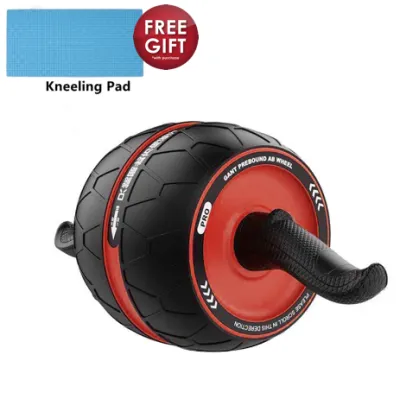
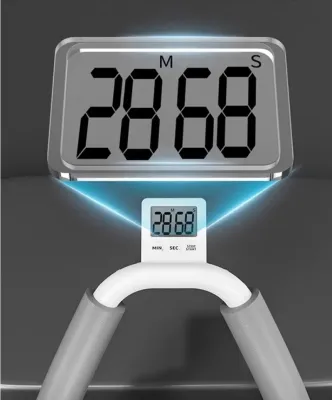
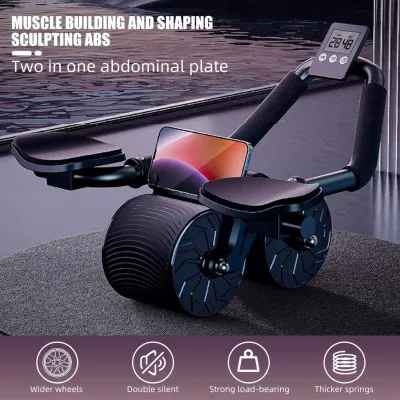
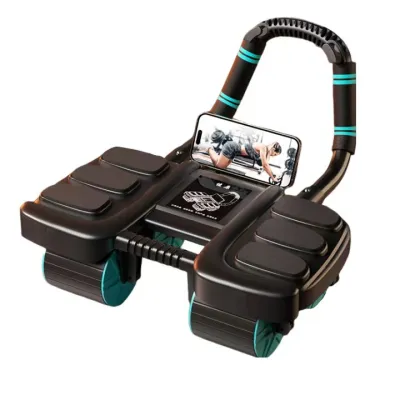
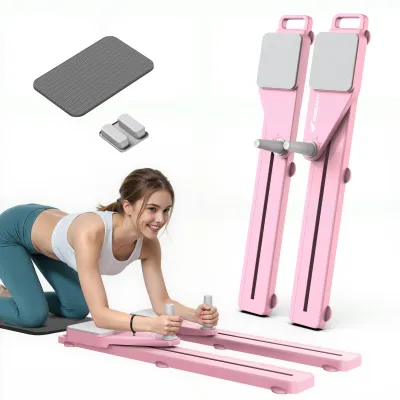
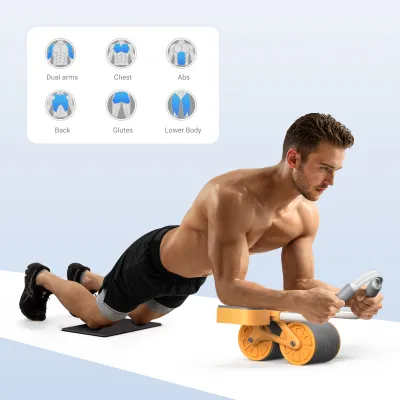
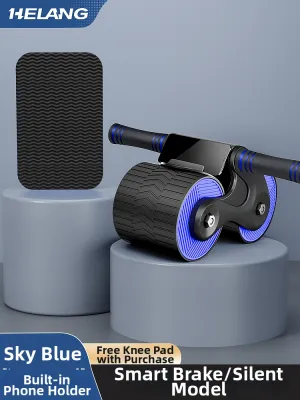
Prices are valid at publication and may change. Please refer to the product page for the latest price.
Furthermore, living in high-density public housing means sharing floors with neighbors. The repetitive rolling of a heavy wheel on hard floors can transmit low-frequency vibrations directly to the unit downstairs. This structural noise is highly noticeable on ceramic tiles or thin vinyl. To maintain neighborly harmony, you must use a dedicated, sound-dampening exercise mat to absorb these vibrations.
Evaluate Your Core Training Needs and Skill Level
The primary appeal of a rebound abdominal wheel lies in its internal kinetic engine. The built-in carbon steel spring coils tightly as you roll forward, storing potential energy during the eccentric (lowering) phase. As you begin the concentric (return) phase, the spring uncoils, providing an active mechanical assist that helps pull your torso back to the starting kneeling position. This assistance is highly valuable for beginners because it reduces the extreme shear stress placed on the lower back and hip flexors when transitioning from full extension.

However, this assistance is a double-edged sword for long-term athletic progression. The fixed tension of the internal spring means the level of assistance remains constant. For advanced users wanting to maximize strength, this built-in help limits progressive overload. Once your muscles adapt, you cannot easily increase the resistance of the return phase. To continue progressing, you would eventually need to transition to an unassisted ab wheel.
Before attempting any rolling core equipment, you must honestly assess your current core stability. A reliable benchmark is the static plank. If you cannot maintain a solid plank with a neutral spine and a posterior pelvic tilt for at least 45 to 60 seconds, your deep stabilizing muscles are not yet ready for the dynamic demands of an ab rollout. Attempting to roll out without this baseline strength will cause your lower back to sag, transferring the load onto your lumbar spine and increasing the risk of acute strain.
Compare Alternatives for Space-Constrained Homes
When space is your most valuable asset, every piece of home gym equipment must justify its footprint. A rebound abdominal wheel typically costs between S$20 and S$50 on local online marketplaces, but it is strictly a single-purpose tool. For the same price and a fraction of the storage space, you can invest in highly versatile alternatives. A set of resistance bands costs around S$15 to S$30, rolls up into a tiny pouch, and allows you to perform hundreds of exercises targeting your entire body.
Another excellent alternative for small spaces is a pair of sliding discs, which cost less than S$10. If you have smooth vinyl flooring, you can even use simple microfiber towels as a DIY substitute. Sliding core exercises, such as mountain climbers and body saws, mimic the dynamic instability of an ab wheel rollout but offer greater directional variety without requiring heavy mechanical parts.
It is also worth comparing home equipment against public fitness infrastructure. In Singapore, residents have access to public sports facilities, such as ActiveSG gyms, where entry fees are highly affordable at around S$2.50 per visit. These gyms feature professional-grade core training equipment, decline benches, and cable machines. If you only train your core twice a week, utilizing these public facilities or performing bodyweight exercises on a simple yoga mat at home may be far more practical than buying specialized gear.
Safety Checks and Proper Usage in Confined Areas
Operating a rebound ab wheel safely within a confined HDB environment requires strict adherence to proper form and setup. Your first step is to verify floor surface compatibility. Hard ceramic tiles can be slippery, especially if there is a fine layer of dust. If the wheel loses traction mid-roll, it can slip sideways, causing you to collapse. Always perform this exercise on a clean, non-slip, high-density exercise mat that is at least 6mm to 10mm thick to provide traction and cushion your knees against the hard concrete subfloor.
During the exercise, you must establish clear stop conditions to prevent acute injuries. The moment you feel a sharp pinch or dull ache in your lower back, shoulder joints, or neck, stop the set immediately. These sensations indicate that your primary core muscles have fatigued, causing your pelvis to tilt forward and your lower back to hyperextend. Never attempt to push through joint pain; instead, rest and shorten your rolling distance.
Finally, always consult the manufacturer’s weight limits and assembly instructions before your first workout. Rebound wheels rely on high-tension internal springs; if the handles are not locked securely or if you exceed the weight rating, the mechanism can fail under load. Regularly inspect the outer rubber tread for wear and ensure the internal spring operates smoothly.
Final Verdict: Should You Buy, Skip, or Substitute?
The rebound ab wheel is a highly suitable purchase for beginner-to-intermediate fitness enthusiasts who want a dedicated, low-impact tool to build core strength and have a clear, two-meter floor path in their HDB flat. The assisted return mechanism provides a valuable safety buffer that helps you master the rollout progression without straining your lower back.
However, you should skip this purchase if you live in a highly congested flat where moving furniture is a constant hassle, if you already possess advanced core strength, or if you have a history of chronic lower back or shoulder issues. In these cases, the wheel will likely become an underutilized obstacle in your home.
If you decide to buy, use a simple checklist to verify product quality on online marketplaces. Look for models featuring a wide, rubberized wheel profile (ideally 9 centimeters or wider) to ensure lateral stability. Confirm that the internal spring is made of high-tensile carbon steel rather than cheap plastic bands, and choose sellers that offer a clear return or exchange policy.
Frequently Asked Questions (FAQ)
Can a rebound ab wheel damage HDB flooring?
Yes, direct contact between a heavy, hard-wheeled ab roller and HDB flooring can cause issues. On ceramic tiles, dust can cause the wheel to slip, potentially scratching the glaze. On vinyl or laminate flooring, repeated heavy rolling along the same path can leave indentations or scuff marks over time. To protect your home’s interior and prevent slipping, always place a thick, non-slip fitness mat along the entire rolling path. This also dampens the rolling noise, preventing complaints from downstairs neighbors.
Is the rebound mechanism necessary for beginners?
While not strictly mandatory, the rebound mechanism is highly beneficial for beginners because it acts as a safety net. The internal spring stores energy as you roll out and assists you during the return phase, which is where most lower back injuries occur due to fatigue. However, this mechanical assistance should not replace foundational strength. Beginners must still be able to perform basic static core exercises, like planks, before introducing the dynamic movement of a rebound wheel.
Community discussion
Share your experience or ask a question. Comments are reviewed before publication.