
Choosing your first tennis racket is a critical step that directly shapes how quickly you develop clean stroke mechanics and enjoy your time on the court. The Babolat Pure Aero is one of the most recognizable rackets in the world, famous for its association with top-tier professional players and its reputation for generating massive spin and power. However, for a beginner tennis player, stepping onto the court with this specific frame can be a double-edged sword. While the allure of using a premium, tour-level racket is strong, the standard version of this frame is engineered for players who already possess established swing paths, consistent timing, and developed physical conditioning.
For most true beginners, the standard Babolat Pure Aero is not the most suitable starting point. Its weight, frame stiffness, and swing dynamics are optimized for intermediate to advanced players who can generate their own pace and control. When starting out on local outdoor courts in tropical humidity, where physical fatigue sets in quickly and ball control is essential for building confidence, a racket that is too demanding can hinder your progress. Instead of helping you improve, a high-performance frame may lead to technical compensations, early fatigue, and even physical discomfort. Understanding how the design characteristics of this racket align with your current physical and technical capabilities is essential before making an investment.
Understanding the Babolat Pure Aero's Design Profile
To evaluate whether this racket fits your current game, it is important to look closely at its design profile. You can easily find these details by checking the printed specifications on the inside of the racket’s throat or by visiting the manufacturer’s official website. The standard model in this line is characterized by a specific combination of weight, balance, and frame stiffness that sets it apart from typical entry-level equipment.
Products mentioned in this guide
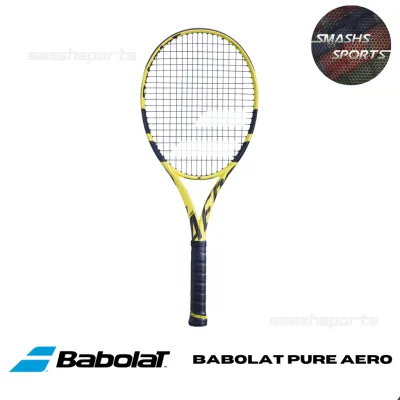


Prices are valid at publication and may change. Please refer to the product page for the latest price.
The core design philosophy of the Pure Aero line centers on maximizing spin and power. The frame features an aerodynamic throat design engineered to help players swing the racket faster through the air, which in turn generates more topspin. However, this aerodynamic benefit only truly activates when a player has already mastered a fast, low-to-high swing path. For a beginner whose swing is often slower, shorter, and flatter, this specialized frame shape does not offer immediate advantages and can make the racket feel unstable during contact.
Additionally, the frame stiffness is relatively high compared to comfort-oriented rackets. A stiffer frame returns more energy to the ball, providing excellent power for players who can control their depth. For a beginner still learning how to regulate swing speed and ball trajectory, this inherent power can cause shots to fly consistently past the baseline. Without a highly developed ability to brush the back of the ball and generate topspin, the ball is likely to sail out of bounds, leading to frustration during practice sessions.
Self-Assessment: Is Your Current Skill Level a Match?
A successful transition to a performance-oriented racket requires an honest self-assessment of your current playing level. True beginners require equipment that prioritizes forgiveness, a large sweet spot, and easy maneuverability. These features allow you to focus on the fundamentals of footwork, preparation, and clean ball contact without being punished severely for minor timing errors.

In contrast, advanced player rackets like the standard Pure Aero have a more demanding sweet spot. If you do not strike the ball cleanly in the center of the string bed, the racket can twist in your hand, resulting in a weak, short shot and transmitting harsh vibrations up your arm. You can determine if you are ready for this type of performance frame by observing your consistency during baseline rallies. If you can comfortably sustain a ten-shot rally with a partner at a moderate pace, maintain a consistent semi-western or eastern forehand grip, and execute a full swing path with a clear finish over your shoulder, your technique may be mature enough to handle this frame.
If you are still struggling to time the ball, frequently hit off-center, or find yourself using a shortened, tentative swing just to keep the ball in play, a high-performance racket will likely exaggerate these flaws. Beginners often develop bad habits, such as flicking the wrist or decelerating the swing, to compensate for a racket that feels too powerful or heavy. These technical compensations are difficult to unlearn and can severely limit your long-term development.
Physical Readiness: Checking Weight and Swing Dynamics
Beyond technical skill, physical readiness is a critical factor when choosing a tennis racket. The static weight of a racket—the weight you feel when simply holding it—and its swing weight—how heavy it feels when in motion—directly impact your stamina and joint health. Before purchasing any racket, it is highly recommended to visit a local pro shop to physically hold the frame, or better yet, rent a demo racket to test on court.
When testing a racket, pay close attention to how your arm and shoulder feel after thirty minutes of continuous play. In warm, humid climates, muscles fatigue more rapidly, making a heavy frame feel significantly more taxing as the session progresses. Physical warning signs of a mismatch include wrist fatigue, a dropping elbow during serves, delayed swing preparation, or a dull ache in your shoulder or elbow the day after playing. If you find yourself struggling to get the racket in position in time for fast-incoming balls, the swing weight is likely too high for your current strength level.
Matching the racket’s mass to your age, fitness level, and arm strength is essential for injury prevention. While the standard model is designed for adult players with established physical conditioning, the product family includes lighter variants designed to accommodate different physical profiles. Younger players, seniors, or those building up their arm strength should look toward these lighter options to maintain proper swing speed and avoid strain.
Alternative Paths: When to Look for a Different Racket
If your self-assessment suggests that the standard performance model is not yet a match, there are clear alternative paths to guide your equipment journey. When searching for a beginner-friendly alternative, look for specific specifications on the product labels. A suitable beginner racket typically features a lighter unstrung weight, a larger head size (often 100 square inches or larger) to provide a generous sweet spot, and a more flexible frame that absorbs shock and offers greater control.
The ideal progression is to start with a highly maneuverable, forgiving racket that allows you to focus entirely on developing proper stroke mechanics. As your swing becomes faster, your timing improves, and your muscles adapt to the specific demands of tennis, you can gradually transition to heavier, more stable performance models. This step-by-step approach ensures that your equipment supports your learning curve rather than forcing you to adapt your technique to a demanding frame.
If you remain unsure about which specifications align with your current swing, seek professional guidance. Consulting a certified tennis coach during a lesson or speaking with a professional racket technician at a local specialty shop can provide invaluable insights. A coach can analyze your swing speed, contact point, and physical mechanics to recommend a racket setup—including weight, balance, and string tension—tailored specifically to your developmental needs. Investing in a premium performance frame, which often costs upwards of S$300 in local specialty shops, is a significant decision that is best made when your technique can fully unlock its potential.
Frequently Asked Questions (FAQ)
Can a beginner use the Babolat Pure Aero Lite or Team versions?
Yes, the lighter versions within this product family are often much better suited for beginners and developing players. These variants feature a reduced static weight and a modified balance, making them significantly easier to swing and maneuver. This allows players with developing arm strength to maintain proper swing mechanics and prepare early for each shot. However, you should still check the specific specification sheet for these models to ensure the weight and stiffness align with your physical comfort and current skill level.
Will using a professional racket improve a beginner's game faster?
No, using a professional-grade racket does not accelerate skill acquisition. Real improvement in tennis comes from consistent practice, proper coaching, and developing muscle memory through repetitive, clean strokes. An advanced racket can actually slow down your progress by punishing off-center hits more severely and causing early physical fatigue, which leads to poor form. Starting with a forgiving, beginner-friendly racket is the most effective way to build a solid foundation.

Community discussion
Share your experience or ask a question. Comments are reviewed before publication.