
When you are first learning the game of tennis, every piece of equipment you choose plays a critical role in your development. It is common to assume that any tennis ball will do, or that choosing a premium option will automatically improve your play. However, head tour xt balls are not designed with the absolute beginner in mind. While they are exceptional, high-performance balls favored by advanced players and tournament organizers, their specific physical characteristics can actually hinder a novice’s progress.
For someone just stepping onto the court, the rapid pace, high bounce, and firm contact feel of a premium pressurized ball can make learning basic stroke mechanics incredibly challenging. Instead of helping you find your rhythm, these tournament-grade balls require a level of control and timing that most beginners have not yet developed. Understanding why these balls behave the way they do—and when you will finally be ready to transition to them—is key to building a solid foundation on the court.
Understanding the Head Tour XT: A Standard Tournament Ball
To understand why the head tour xt balls may not be the ideal starting point, it is helpful to look at how they are engineered and what playing conditions they are built to withstand. The Head Tour XT is a premium, pressurized tennis ball designed primarily for competitive tournament play and high-level training sessions. Unlike casual recreation balls, these are crafted with high-grade rubber cores and a specialized felt blend designed to deliver maximum consistency, touch, and durability under intense physical demands.
Products mentioned in this guide

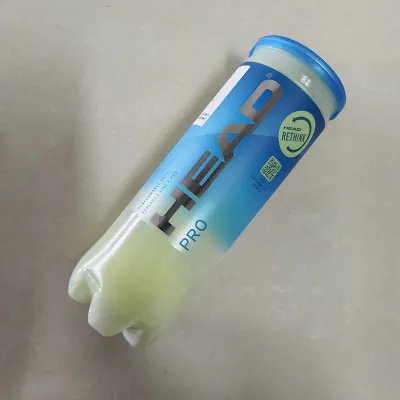
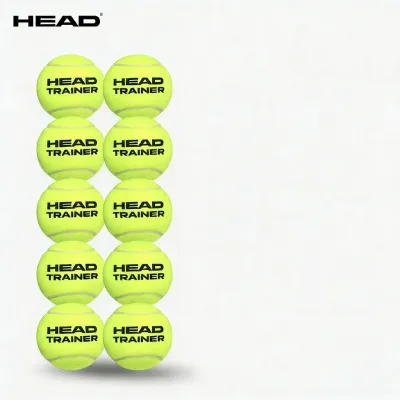
Prices are valid at publication and may change. Please refer to the product page for the latest price.
In Singapore, where the tropical climate brings high humidity and the vast majority of public and private courts are abrasive hard courts, the durability of a tennis ball is put to the test. The Tour XT features a highly resilient felt that resists fluffing and wearing down too quickly on these rough surfaces. This ensures that the ball maintains its intended aerodynamic properties and weight throughout multiple games. Additionally, because it is a pressurized ball, its bounce is generated by compressed air sealed inside the rubber core. When you open a fresh can, the sudden release of pressure delivers a highly energetic, lively bounce that allows advanced players to dictate play with speed and heavy spin.
However, this reliance on internal pressure means the ball travels through the air quickly and bounces high off the court surface. For an experienced player, this provides a satisfyingly crisp, firm feel upon impact and predictable flight paths. For a beginner, this level of responsiveness means the ball reacts instantly and aggressively to any contact, leaving very little margin for error during early practice sessions.
Signs the Head Tour XT Is Too Advanced for Your Current Level
Using a high-performance ball like the Head Tour XT too early in your tennis journey can lead to noticeable technical and physical challenges. The most immediate sign that a standard pressurized ball is too advanced for your current skill level is a persistent struggle with ball control. During your initial rallies, you may find that the ball frequently flies off your racket strings and sails far past the baseline, or that you are constantly framing the ball on the racket edge. Because these balls bounce so energetically, they arrive at your hitting zone much faster than your eyes and hands can coordinate, forcing rushed strokes and poor contact.

This lack of control often leads to a cycle of technical frustration. When the ball moves too quickly, beginners tend to shorten their swings, stopping their racket path abruptly or pushing at the ball rather than executing a clean, fluid stroke. This defensive style of play prevents you from developing the muscle memory needed for proper groundstrokes. Furthermore, trying to control a fast, lively ball with improper technique can place a significant physical toll on your body. The firm impact of a fresh Tour XT sends substantial vibrations up the racket shaft. Without clean timing and a relaxed grip, these repeated shocks can quickly cause arm fatigue, wrist strain, and joint discomfort, potentially leading to overuse injuries like tennis elbow.
There is also a significant psychological component to consider. Tennis is a game of repetition and rhythm; confidence is built when you can sustain a rally and feel the satisfaction of a clean hit. If your practice sessions consist of constantly chasing runaway balls or picking them out of the back fence, frustration can quickly set in. This can make the learning process feel like a chore rather than an enjoyable sport, discouraging you from putting in the hours needed to improve.
Are You Ready? Skills Needed to Handle Standard Tennis Balls
Before you transition to using head tour xt balls or any other premium tournament-grade pressurized balls, it is highly beneficial to assess your current technical and physical readiness. Moving to a standard ball should be treated as a milestone that you reach once you have established a reliable foundation of core tennis skills.
First, consider your rally consistency. A reliable indicator of readiness is the ability to sustain a controlled, cooperative baseline rally of at least eight to ten shots with a partner or coach at a moderate pace. If you can comfortably control the depth and direction of your shots without hitting them long or into the net, your timing is likely sharp enough for a pressurized ball. Additionally, you should have a basic understanding of how to generate topspin. Topspin is the physical mechanism that pulls a fast-moving ball down into the court; without it, the lively bounce of the Tour XT will continuously push your deep shots out of bounds.
Physical readiness and footwork are equally important. Standard pressurized balls bounce higher and slide faster off the court surface, especially on hard courts. To handle this, you need active, split-step-driven footwork that allows you to position your body correctly relative to the bouncing ball. If you find yourself consistently hitting the ball late or while falling backward, you still need to work on your spatial awareness and movement. Finally, your stroke mechanics must be clean enough to absorb the incoming pace of the ball. If you can swing fully, follow through over your shoulder, and make contact consistently in front of your body, your muscles and joints are ready to handle the impact of a premium tournament ball safely.
Better Tennis Ball Alternatives for Early-Stage Learners
If you realize that the Head Tour XT is currently too demanding for your level, there is no need to worry. The modern tennis training system features a highly effective, structured progression of transition balls designed specifically to help beginners develop their skills safely and rapidly. These low-compression balls are categorized by a standardized color-coded system: Red, Orange, and Green.
For absolute beginners, especially younger players or those with limited racket sport experience, Red and Orange transition balls are highly recommended. Red balls are larger, significantly lighter, and have about 75 percent less compression than a standard tennis ball, making them travel very slowly and bounce low. Orange balls are standard-sized but have 50 percent less compression, offering a slightly faster pace while still giving you ample time to prepare your swing.
For adult beginners who have grasped the basic swing path but still struggle with the speed of standard balls, the Green Dot ball is the ultimate training tool. Green Dot balls are the same size as standard balls but feature 25 percent less compression. This slight reduction in internal pressure makes a massive difference on the court: the ball bounces at a highly manageable height, travels through the air at a slightly slower pace, and feels much softer on the racket strings.
Using these transition balls allows you to focus entirely on your footwork, body positioning, and swing mechanics without being rushed by the ball. Because the ball stays in the hitting zone longer, you can practice brushing up the back of the ball to create topspin, building the exact technical habits you will need when you eventually upgrade to the Head Tour XT. This developmental approach builds confidence rapidly and ensures your transition to standard balls is smooth and injury-free.
How to Safely Transition to the Head Tour XT
Once you have built up your consistency and confidence using transition balls, you can begin introducing head tour xt balls into your practice sessions. The key to a successful transition is moderation; rather than switching entirely overnight, a gradual integration strategy will help your muscles and timing adjust to the increased speed and firmness without risking injury.
Start by using the Tour XT for specific, controlled drills where you have time to prepare. For example, practicing your serves with a premium pressurized ball is an excellent starting point, as you control the toss and the initiation of the stroke. You can also use them for static volley drills at the net, where the ball’s firm feel can help you learn to keep your racket face stable and block the ball back cleanly. Continue using your Green Dot or low-compression balls for high-intensity baseline rallies where rapid movement and quick reactions are required.
As you begin using these pressurized balls, it is also important to understand how to monitor their condition. Pressurized balls begin to lose their internal air pressure the moment the can is unsealed, regardless of whether they are being hit. Over a couple of weeks, the balls will naturally become “dead,” meaning they will bounce lower and feel heavier on your racket. Make it a habit to check the firmness of your balls before each session by giving them a squeeze; if they feel soft or fail to bounce to a reasonable height when dropped from shoulder level, replace them. Storing them in a cool, dry place away from direct sunlight will help preserve their remaining pressure for as long as possible.
Frequently Asked Questions (FAQ)
How Long Do Pressurized Tennis Balls Last Once Opened?
Once you break the airtight seal of a pressurized tennis ball can, the compressed nitrogen and air inside the ball immediately begin to seep out through the porous rubber shell. Even if the balls are left unused in your bag, they will lose a noticeable amount of pressure within two to three weeks. If you are playing active matches, a single high-intensity session of two to three hours on abrasive hard courts is often enough to deplete the optimal bounce and wear down the felt for competitive play. For recreational practice and drills, you can stretch their usability to about two to four sessions, but you will notice a gradual decline in bounce height and a heavier, more solid feel on impact as the pressure drops.
Can I Use the Head Tour XT for Practice with a Ball Machine?
Yes, you can use Head Tour XT balls in a ball machine, but it is generally not the most cost-effective or practical choice. Ball machines rely on rapidly spinning counter-rotating wheels to launch the ball, which subjects the outer felt to extreme friction and wear. A premium ball like the Tour XT will lose its high-quality felt nap and its internal pressure very quickly under these conditions, making them feel inconsistent after just one or two long machine sessions. For high-volume ball machine practice, it is much wiser to use pressureless practice balls, which retain their bounce indefinitely because they rely on a thicker rubber core rather than pressurized gas, saving your premium Tour XT cans for partner rallies and match play.
Community discussion
Share your experience or ask a question. Comments are reviewed before publication.