
Determining whether the JOMO foldable treadmill is suitable for your HDB flat requires balancing compact design with the physical realities of Singapore’s high-density housing. While foldable cardio equipment is engineered to save space, its practical integration depends on your specific flat layout, floor tolerance, and noise-mitigation strategies. Before purchasing, you must verify the machine’s exact dimensions, weight, and clearance requirements against your intended workout zone to ensure a safe and neighbor-friendly home gym setup.
Evaluating suitability is not just about finding an empty corner. It involves assessing how the equipment fits into your daily routine, whether it can be moved easily, and how its operation affects your living environment. By taking precise measurements and understanding the structural constraints of multi-story living, you can make an informed decision that protects both your home and your relationships with your neighbors.
Quick Assessment: Evaluating the JOMO Treadmill's Footprint
Before committing to a purchase, you must obtain the official specification sheet for the specific JOMO foldable treadmill model you are considering. Foldable treadmills vary significantly in size, and assuming a one-size-fits-all standard can lead to layout issues. Focus your initial assessment on three critical physical dimensions: the unfolded length and width, the folded footprint, and the height of the running deck from the floor.
Products mentioned in this guide
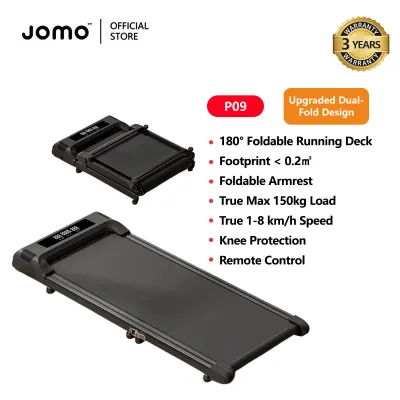
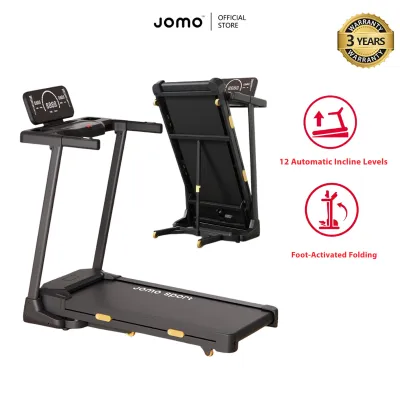
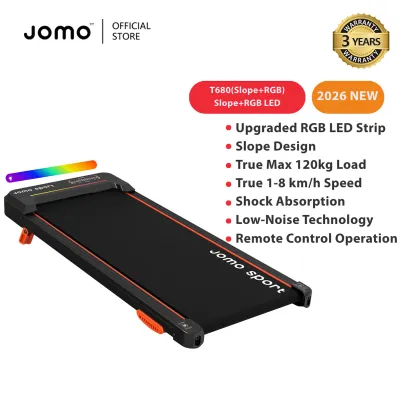
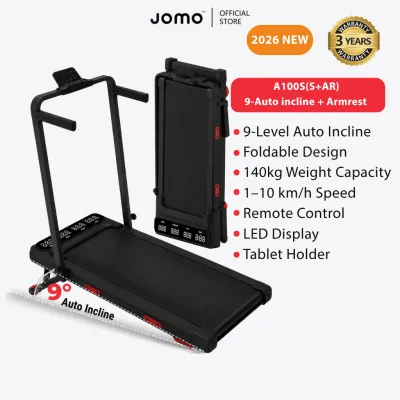
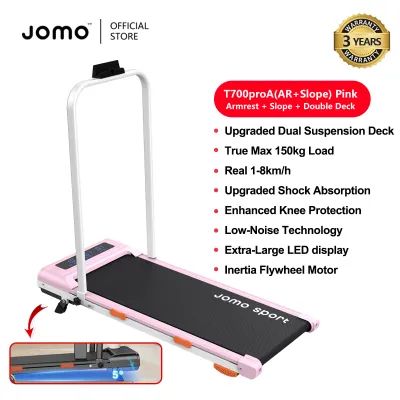
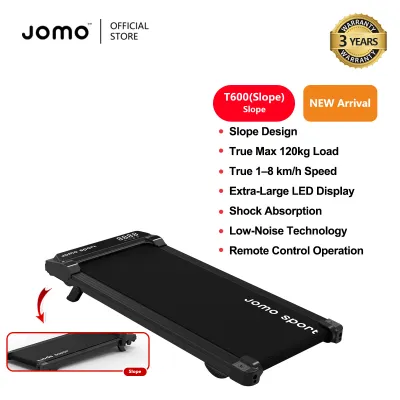
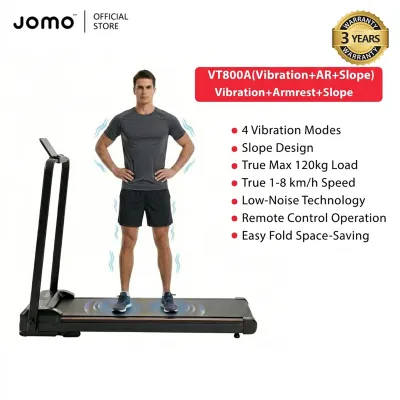
Prices are valid at publication and may change. Please refer to the product page for the latest price.
Operational clearance is just as important as the physical footprint of the machine itself. A treadmill requires open space around it to ensure safe operation and proper mechanical function. For safety, you must allow for adequate clearance behind the belt in case of slips or falls, as well as side clearance to step off the machine safely. Additionally, the motor housing at the front requires unobstructed airflow to prevent overheating during extended running sessions.
Rather than relying on general marketing claims about compact designs, use the manufacturer’s exact measurements to map out your room. A model that appears small in a spacious showroom or on an online marketplace can easily overwhelm a standard HDB bedroom or living room. Always prioritize verified specifications over generic product category assumptions.
Measuring Your HDB Room for Safe Treadmill Placement
To ensure a safe and functional workout environment, you should physically map out the designated zone in your HDB flat using a measuring tape. Do not rely on visual estimation or floor plans alone, as baseboards, furniture placement, and door swings can reduce your actual usable floor space. Mark the exact footprint of the unfolded treadmill on your floor using masking tape to visualize its impact on the room.

When planning the layout, safety margins are non-negotiable. Industry safety guidelines generally recommend maintaining a clear, unobstructed zone of at least 1.5 to 2 meters behind the rear of the treadmill. This space acts as a critical safety buffer if you lose your footing. Additionally, keep a clearance of at least 0.5 meters on both sides of the machine to allow for easy mounting, dismounting, and emergency stepping.
Key Logistics to Verify Before Delivery:
- Elevator Dimensions: Measure the height, width, and depth of your HDB lift to ensure the boxed treadmill package can fit inside during delivery.
- Doorway and Hallway Widths: Check all entryways, including your main gate, main door, and bedroom doors, to confirm the unit can pass through without damaging walls or the machine.
- Corner Turns: Assess tight turns in your hallways, especially if your flat has a narrow corridor leading to the bedrooms.
Ceiling height is another crucial factor that is often overlooked. Standard HDB ceilings typically range from 2.6 to 2.8 meters. To calculate your required vertical clearance, add your own height to the treadmill’s deck height, and then add an extra 15 to 20 centimeters to account for your vertical bounce while running. If you are tall or if the treadmill has an incline feature, verify that you will not risk head impact with light fixtures or the ceiling.
Assessing Foldability and Daily Storage Practicality
While the JOMO treadmill features a folding design, you must evaluate whether its folded dimensions align with your storage plans. If you intend to slide the unit under a bed or a sofa, measure the vertical clearance of your furniture frame beforehand. For upright storage in a corner or inside a household shelter, ensure the folded height does not block wall-mounted shelves, distribution boards, or ventilation grates.
The physical effort required to transition the treadmill between its folded and unfolded states can influence how often you actually use it. Check the product specifications for the total weight of the machine and the type of folding mechanism employed. Units equipped with hydraulic assist or gas struts reduce the lifting force required, making them more manageable for a single user, whereas manual folding designs require significant physical strength.
Stability in the folded position is a critical safety consideration in compact HDB flats. If the treadmill is stored vertically, it must have a reliable safety locking mechanism to prevent it from accidentally tipping over. This is especially important in high-traffic areas or in households with children and pets, where an unsecured heavy machine poses a serious safety hazard.
Managing Weight, Floor Loading, and Noise in HDB Flats
Although HDB flats are built to high structural standards, placing heavy fitness equipment on certain floor finishes requires care. Verify the total weight of the JOMO treadmill plus your own body weight against standard residential floor guidelines. To prevent permanent indentations, scratches, or cracking on vinyl, laminate, parquet, or polished tile floors, always place the machine on a high-density protective equipment mat.
Noise and structural vibration are the most common sources of friction between neighbors in multi-story HDB blocks. The impact of your feet striking the running deck creates low-frequency vibrations that travel easily through concrete floors and shared walls. This sound can be highly disruptive to the neighbors living directly below you, even if the treadmill’s motor itself runs quietly.
To minimize acoustic transfer, check the manufacturer’s recommendations for noise-reduction accessories. Using specialized shock-absorbing pads under the treadmill’s feet can significantly dampen vibrations. Additionally, consider placing the treadmill in a room with less shared wall contact, and establish a workout schedule that avoids early mornings or late nights to maintain good neighborly relations.
Common Space-Matching Mistakes to Avoid
One of the most frequent errors home gym buyers make is planning their room layout based solely on the treadmill’s folded dimensions. Remember that you cannot use the machine while it is folded. If you do not have the required operational clearance during a workout, you will be forced to constantly rearrange your furniture, which quickly becomes a barrier to consistent exercise.
Another mistake is blocking essential pathways or household features. Avoid placing the treadmill where it obstructs the doorway of your HDB household shelter, blocks access to built-in wardrobes, or interferes with the airflow of your air conditioning units. Keeping emergency exit routes completely clear is vital for household safety.
Finally, pay close attention to power outlet locations. Treadmills draw a substantial amount of electrical current and should be plugged directly into a wall outlet rather than a low-capacity extension cord or multi-way adapter. Running long extension cords across your floor creates a dangerous tripping hazard and increases the risk of electrical overloads. Plan your layout so the machine sits within safe reach of a dedicated power point.
Frequently Asked Questions (FAQ)
Do I need a special mat for a treadmill in an HDB flat?
Yes, using a high-density protective mat is highly recommended for any treadmill setup in an HDB flat. These mats serve a dual purpose: they protect your flooring from scratches, sweat, and permanent pressure marks, and they help absorb the impact vibrations that cause noise. Before purchasing, verify that the mat material is compatible with your specific floor type, such as polyurethane or natural rubber, to avoid discoloration on vinyl or wood finishes.
Can I keep the treadmill folded permanently and only unfold it to use?
While foldable treadmills are designed for regular folding, doing so daily does introduce mechanical wear on the hinges, locking pins, and gas struts over time. You should assess your personal routine to decide if this setup is sustainable. If the process of moving, unfolding, and plugging in the machine feels too tedious, you may find yourself using it less frequently. If space permits, leaving the treadmill unfolded in a dedicated spot is often the most practical solution for long-term consistency.
Community discussion
Share your experience or ask a question. Comments are reviewed before publication.