
To determine if the ncs max is the right badminton racket for your playing style, you must first evaluate how its weight, balance point, and shaft stiffness align with your physical conditioning and tactical role on the court. There is no single racket that excels in every scenario. Instead, the suitability of the ncs max hinges on whether you are looking for a rapid-fire doubles setup or a heavy-smashing singles frame.
In Singapore’s active badminton scene, players often compete in humid indoor sports halls where air resistance and sweat grip management can significantly affect performance. Before purchasing, you must understand that there is no single “perfect” racket; instead, there is only the right configuration of weight, balance, and stiffness for your specific body and tactical role.
Core Specifications to Verify Before You Buy
Before finalizing your purchase of the ncs max, you must verify its exact specifications. Manufacturers often produce the same racket model in multiple variations, and these subtle differences will drastically alter how the racket behaves during a fast-paced rally.
Products mentioned in this guide
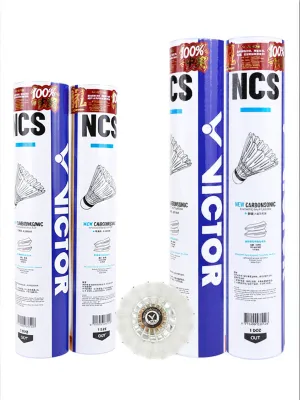
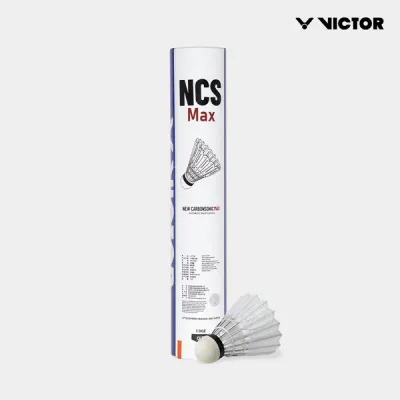
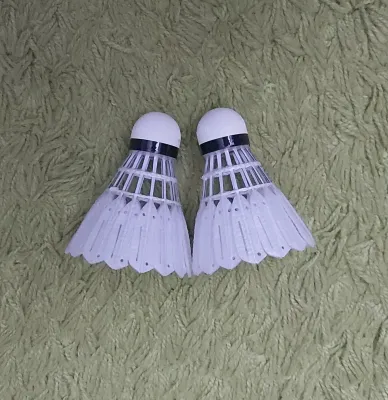
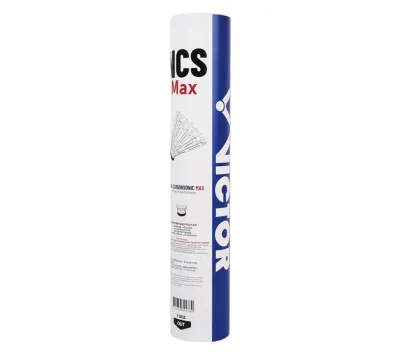

Prices are valid at publication and may change. Please refer to the product page for the latest price.
Weight (U-System) and Grip Size (G-System)
To check the weight and grip size of the specific unit you are considering, locate the laser-engraved or printed specifications on the shaft or cone of the racket. The weight is categorized using the “U” system, where a lower number indicates a heavier racket.
- 3U (85–89 grams): Offers higher momentum and mass, which translates to more powerful smashes, but demands greater shoulder and wrist strength to swing repeatedly.
- 4U (80–84 grams): The standard choice for most intermediate club players in Singapore, providing a balanced compromise between offensive power and defensive reaction speed.
- 5U (75–79 grams) or lighter: Designed for rapid net play and reflex-dominated defense, though it lacks the raw mass required for deep, effortless clears.
The grip size is designated by the “G” system, with G5 and G6 being the most common sizes in Asian markets. Because Singapore’s tropical climate leads to heavy perspiration during play, choosing a smaller grip size like G5 allows you to customize the handle with an absorbent overgrip or grip powder without making the handle too bulky for precise finger control.
Balance Point and Shaft Flexibility
You can verify the balance point of the racket by balancing the shaft on your index finger. If the racket tilts heavily toward the head, it is head-heavy; if it remains level, it is even-balanced; and if it tilts toward the handle, it is head-light.
Head-heavy rackets assist with high-momentum smashes by using the extra weight in the head to generate downward force. Conversely, head-light configurations offer rapid maneuverability, allowing you to react quickly to body smashes and fast drives.
Shaft flexibility is the next critical variable to check. A stiff shaft does not bend easily, requiring a highly advanced, explosive swing speed to generate power and control. A flexible shaft bends more during the swing, creating a whip-like effect that assists players with slower swing speeds in clearing the shuttlecock from baseline to baseline.
Frame Shape and Aerodynamics
Observe the cross-section of the racket frame to identify its aerodynamic profile. Rackets with a boxy frame shape offer superior structural stability and a solid, torsion-resistant feel upon impact, which improves control during precise drop shots and net tumbles.
In contrast, aerodynamic or sword-like frames feature a tapered edge designed to slice through the air with minimal drag. An aerodynamic frame increases your swing speed, which is a vital advantage during rapid flat drive exchanges where a fraction of a second determines who controls the net.
Matching the Racket Profile to Your On-Court Role
Once you have verified the specific weight, balance, and stiffness of the ncs max unit you are inspecting, you can map these characteristics to your tactical role on the court.

Attacking vs. Defensive Play
Your preferred style of play dictates which racket profile will enhance your strengths and protect your weaknesses. If you are an aggressive player who seeks every opportunity to smash from the rear court, you should look for a head-heavy, stiff variant of the racket. This combination ensures that your physical power is transferred directly into the shuttlecock with minimal energy loss, producing steep, piercing smashes.
If your game is built on defensive counter-attacks, tight net drops, and quick blocks, a head-light or even-balanced variant with a medium-flex shaft is far more suitable. This setup allows you to change the angle of your racket face instantly, enabling you to redirect powerful smashes into the open spaces of the opponent’s court with minimal physical strain.
Singles vs. Doubles Dynamics
Singles matches demand exceptional physical endurance, precise court coverage, and consistent length on your clears. A slightly head-heavy racket with a medium-flex shaft can assist you in maintaining depth on your clears even when you are pushed out of position and forced to hit from deep in your backhand corner.
Doubles play is characterized by high-speed, flat rallies where the team that attacks first usually wins the point. A lighter, aerodynamic frame (such as a 4U head-light setup) is highly advantageous here, as it allows for the rapid racket preparation required to intercept the shuttlecock at the net or defend against consecutive smashes.
Assessing Your Skill Level and Physical Readiness
Badminton involves highly repetitive, explosive overhead movements that place immense stress on the shoulder, elbow, and wrist joints. Using a racket that is too heavy or too stiff for your current physical conditioning can lead to chronic injuries such as lateral epicondylitis (tennis elbow) or rotator cuff strain. Equipment cannot replace proper training, footwork, and stroke mechanics.
Before committing to a demanding racket configuration, perform a quick self-assessment of your current abilities:
- Clear Test: Can you consistently clear the shuttle from your own baseline to the opponent's baseline using a relaxed, fluid forearm rotation rather than a stiff-armed shoulder push?
- Swing Speed: Do you possess the rapid wrist snap required to flex a stiff shaft, or do your shots feel hollow and short when you try to smash?
- Physical Conditioning: Do you play regularly enough to have developed the forearm strength needed to control a heavier 3U racket over a three-game match?
If you experience any joint discomfort, tightness, or pain during or after play, this is an immediate stop condition. You must halt play, rest, and consider switching to a lighter, more flexible racket that offers greater vibration dampening and a more forgiving sweet spot. Beginners should always prioritize lightweight (4U or lighter) and flexible shafts to develop correct hitting mechanics safely.
Next Steps: Testing, Stringing, and Final Verification
Do not purchase a racket based solely on online specifications or visual design. If possible, borrow a friend’s racket or use a demo program at a local sports shop to test how the frame feels in hand during actual play on the court.
When stringing your racket, select a tension that matches your current skill level. Lower tensions (20 to 23 lbs) create a “trampoline effect,” providing easier depth on clears and a larger sweet spot, which is ideal for beginners. Higher tensions (24 to 28+ lbs) offer precise control and rapid repulsion but require a highly accurate contact point and excellent wrist speed to avoid mis-hits.
Always check the manufacturer’s maximum recommended tension limits printed on the racket frame or cone. Exceeding these limits can cause structural failure, warping, or immediate frame cracking under load, which will void any manufacturer warranty. Additionally, because Singapore’s high humidity can cause strings to lose tension rapidly, store your racket in a thermal-lined bag to protect it from extreme temperature and moisture fluctuations.
Frequently Asked Questions (FAQ)
How do I know if my current racket is holding back my game?
Analyze your common errors on the court. If your clears consistently fall short in the mid-court despite using correct technique and full physical effort, your racket may be too stiff or too heavy for your swing speed. Conversely, if your fast drive exchanges feel sluggish and you are consistently late to meet the shuttle, your racket’s balance point may be too head-heavy, indicating a need for a lighter, more aerodynamic frame.
Should I choose a lighter or heavier weight class for doubles?
Most doubles players benefit from a lighter weight class, such as 4U, because it facilitates the rapid reflex saves and quick flat drives that dominate the doubles game. However, if you possess advanced wrist strength and primarily play an attacking role from the rear court, a heavier 3U racket can provide the extra momentum needed to pierce through your opponents’ defense.
Does the racket frame material affect my playing style?
While advanced materials like high-modulus graphite and specialized carbon weaves influence vibration dampening and structural durability, they do not replace the fundamental physics of the racket. When selecting a racket, focus on the measurable specifications—such as total weight, balance point, and shaft flexibility—rather than proprietary material names marketed by manufacturers.
Community discussion
Share your experience or ask a question. Comments are reviewed before publication.