
Living in a Housing & Development Board (HDB) flat requires a smart approach to spatial planning, especially when introducing home fitness equipment. If you are considering a Rock stepper to maintain your cardio routine, the short answer is yes—it is highly suitable for HDB apartments, but with a few critical caveats. Its compact footprint makes it an attractive alternative to bulky treadmills, yet its vertical motion and potential for floor vibrations require careful planning. To avoid neighbor disputes and ensure a safe workout, you must evaluate your ceiling clearance, floor type, and storage habits before making a purchase.
Measuring Space: Does the Rock Stepper Fit Your HDB Layout?
To determine if a Rock stepper fits your HDB flat, you must look beyond its static dimensions. Start by measuring the physical footprint of your intended workout area. Most compact steppers occupy a space of approximately 40 to 60 centimeters in width and length, but you must factor in an operational clearance zone. Ensure there is at least 50 centimeters of open space on all sides of the machine. This safety buffer prevents you from hitting nearby furniture, walls, or glass doors if you lose your balance during a high-intensity workout.
Ceiling height is the most critical and frequently overlooked measurement for vertical cardio equipment. Standard HDB flats typically feature a floor-to-ceiling height of about 2.6 meters, though some newer developments or top-floor units may vary. To calculate your required vertical clearance, add your own height to the maximum pedal height of the stepper at its highest point, then add an additional 15 to 20 centimeters of safety clearance. If you are tall or have false ceilings installed in your living room or bedroom, a high-stepping motion could bring your head uncomfortably close to ceiling fans or light fixtures. Always measure this vertical path before assembling the machine.
Products mentioned in this guide
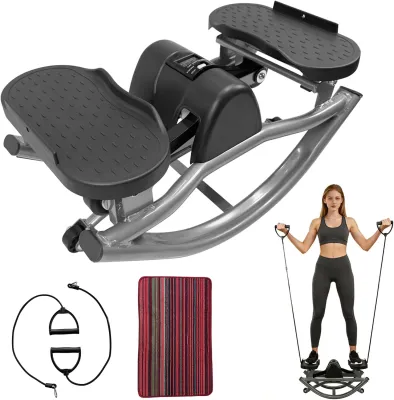
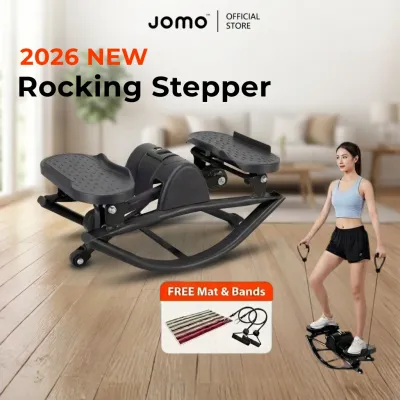
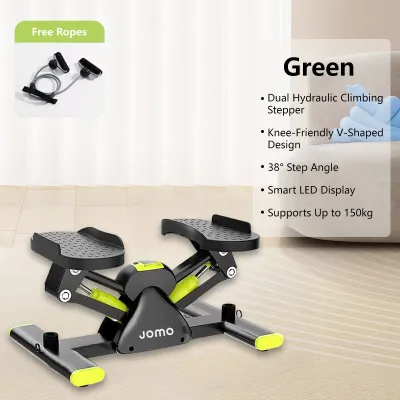
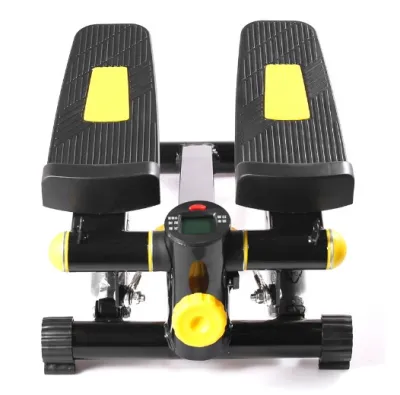
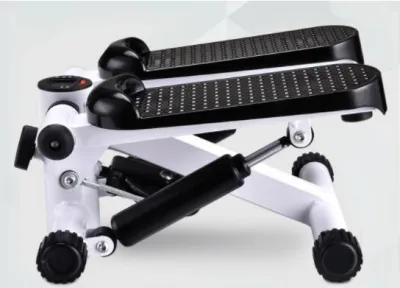
Prices are valid at publication and may change. Please refer to the product page for the latest price.
Next, consult the manufacturer’s official user manual or specification sheet to verify the exact footprint, weight capacity, and structural requirements of your specific model. Never assume a compact machine can support unlimited weight; most home-use steppers have maximum weight limits ranging from 100 to 120 kilograms. Placing a machine on a surface that cannot support its operational weight—or exceeding the weight limit—compromises safety and voids the warranty.
Integrating fitness equipment into a multi-purpose room like a living room or bedroom requires careful spatial planning. Consider how the stepper affects daily foot traffic, door swings, and access to built-in wardrobes. If you plan to store the stepper when it is not in use, verify the machine’s storage features. Check if your model has a folding frame, a collapsible handlebar, or integrated transport wheels. Heavy-duty steel frames can be difficult to lift; transport wheels allow you to roll the machine smoothly across vinyl or laminate flooring into a closet or behind a sofa without straining your back.
Managing Noise and Vibration in Close-Quarters Living
In the high-density environment of an HDB block, structural noise transmission can quickly lead to friction with your neighbors downstairs or next door. Understanding how a Rock stepper generates sound is key to preventing complaints. Stepper noise generally stems from two sources: mechanical resistance and impact vibration. Hydraulic resistance cylinders often produce a soft, rhythmic hissing or whirring sound as they heat up, while friction-based bands or magnetic systems have different acoustic profiles. However, the primary source of disturbance is the impact noise created when the pedals bottom out against the frame at the end of each stride.

HDB apartments are structurally prone to amplifying these sounds. Hard flooring materials, such as ceramic, homogenous, or marble tiles, act as acoustic reflectors, bouncing airborne noise around the room. More importantly, these hard surfaces directly transfer the kinetic impact of your stepping motion into the concrete floor slab. This structural vibration travels downward and outward through shared walls, turning a minor thud in your living room into a deep, repetitive drumming sound in the apartment below.
Before purchasing, research the operational decibel ratings of your preferred model. While manufacturers do not always publish exact decibel levels, you can look for product labels indicating quiet operation or analyze user reviews on major online marketplaces. Search specifically for feedback from apartment dwellers who mention using the machine on upper floors. If multiple reviews highlight a loud clunking noise when the pedals reach their lowest point, take this as a sign that the machine will require extra soundproofing measures.
Fortunately, you can mitigate noise transmission with a few practical strategies. First, never place the stepper directly on bare tiles or floorboards. Always position the machine on a high-density, shock-absorbing anti-vibration mat. These specialized mats, often made of dense rubber or closed-cell foam, absorb the kinetic energy of each step before it can penetrate the concrete slab. Second, place your workout zone away from shared structural walls, particularly those adjacent to your neighbor’s bedroom or living room. Finally, perform regular mechanical maintenance. Squeaking joints and dry cables amplify airborne noise; applying a manufacturer-approved lubricant to the pivot points and resistance mechanisms will keep the machine operating quietly.
Safe and Practical Setup Tips for Compact Rooms
Setting up your cardio equipment in a small HDB bedroom or study requires attention to ventilation and environmental comfort. Singapore’s tropical climate means that indoor spaces can quickly become hot and humid during exercise. When working out in a compact room, ensure there is adequate cross-ventilation. Position the stepper near an open window or directly in the path of a standing fan or air conditioning unit. Good airflow not only keeps you comfortable but also prevents sweat from dripping excessively onto the machine’s mechanical parts and electronic consoles, which can cause corrosion or electrical short circuits over time.
Stability is another crucial safety factor. Before stepping onto the machine, verify that your floor surface is perfectly level. Even a minor slope can cause the stepper to wobble or tip during vigorous workouts, risking injury or floor damage. If you are placing the machine on carpet or a thick rug, check that the base is stable and does not rock. Additionally, consult your building’s guidelines or home insurance policies if you plan to install exceptionally heavy commercial-grade fitness equipment, though standard home steppers fall well within typical HDB floor load capacities.
In multi-purpose rooms, cable management is vital for preventing accidents. If your Rock stepper requires an electrical outlet for its console or motorized resistance, route the power cable along walls or under cable protectors. Keep the immediate workout zone entirely clear of loose items, children’s toys, and pet accessories. A clear radius of at least one meter around the machine ensures you can step off safely in an emergency without tripping.
To maintain the safety and longevity of your stepper, establish a routine maintenance schedule. Over time, the vibrations from regular workouts can loosen bolts and structural joints. Once a month, use the tools provided by the manufacturer to inspect and tighten all structural connections, pedal attachments, and handlebar bolts. Inspect the pedal straps for signs of wear or tearing, and replace them immediately if they appear compromised. Keeping the joints lubricated according to the manufacturer’s care instructions prevents friction, reduces wear on moving parts, and ensures the machine remains safe and silent.
Space-Saving Alternatives if the Stepper Falls Short
If your spatial measurements or noise assessments reveal that a Rock stepper is not a viable option for your HDB flat, there are several excellent alternatives that offer a similar cardiovascular workout while respecting your space and neighbor constraints. A primary dealbreaker for a stepper is often vertical clearance—if your ceiling is low or you are tall, the vertical movement might simply be unsafe. Another common issue is persistent noise that cannot be dampened sufficiently with mats, particularly if you live in an older HDB flat with thinner floor slabs.
For those facing ceiling height limitations, an under-desk elliptical or a mini pedal exerciser is a highly effective alternative. These low-profile machines feature a horizontal, circular pedaling motion rather than a vertical stepping motion. Because your feet remain close to the floor throughout the entire movement, your head height does not change, completely eliminating ceiling clearance concerns. Furthermore, these devices are exceptionally quiet, often utilizing magnetic resistance that generates virtually zero vibration, making them ideal for late-night or early-morning workouts.
If floor space is your absolute premium, consider a high-quality resistance band setup or a compact, ultra-thin foldable treadmill. While treadmills generally have a larger footprint than steppers, modern under-bed models can fold completely flat to a height of less than 15 centimeters, allowing them to slide under a standard bed frame or stand upright in a narrow closet. When deciding on an alternative, use a clear framework: prioritize low-vibration magnetic resistance if noise is your main concern, choose flat-folding designs if you have limited storage, and select low-impact elliptical motions if you have joint sensitivities or ceiling height restrictions.
Frequently Asked Questions (FAQ)
Do I need an anti-vibration mat for tiled HDB floors?
Yes, using an anti-vibration mat is highly recommended for tiled HDB floors. Hard tiles do not absorb impact, meaning the kinetic energy from your stepping motion will travel directly into the floor slab and disturb neighbors below. A high-density rubber or foam mat acts as a buffer, dampening these low-frequency vibrations. Additionally, the mat protects your smooth ceramic or homogenous tiles from scratches, scuff marks, and cracks that can occur from the metal frame shifting during intense exercise.
Can I store the stepper in the HDB service yard or corridor?
You should avoid storing your stepper in the HDB service yard or outdoor corridor. Singapore’s climate is characterized by high humidity, ambient heat, and frequent rain, which can rapidly accelerate rust on metal frames and damage sensitive electronic consoles. Outdoor storage or exposure to moisture can void your manufacturer’s warranty. Furthermore, Town Council regulations strictly prohibit blocking common corridors with personal items due to fire safety and evacuation hazards. Always store your equipment in a dry, indoor area.
Community discussion
Share your experience or ask a question. Comments are reviewed before publication.