
Evaluating whether a Smiling Shark torchlight is suitable for beginner snorkelers requires looking past generic brand names and focusing on the specific engineering of the model in question. While the brand is widely known for producing budget-friendly, general-purpose outdoor lighting, only a select few of their models are specifically engineered to withstand the pressure and corrosive nature of saltwater environments. For a novice snorkeler, choosing the wrong model can lead to immediate equipment failure, which not only ruins the excursion but can also create safety hazards in low-visibility conditions.
Before taking any entry-level torchlight into the ocean, you must understand that water sports equipment requires a higher standard of manufacturing than standard camping gear. A reliable snorkeling light must prevent water ingress under pressure, resist the corrosive effects of salt, and remain easy to operate with wet hands. This guide outlines the essential technical specifications, verification steps, and safety protocols necessary to determine if a Smiling Shark torchlight is safe and effective for your next shallow-water adventure.
Key Features to Evaluate in a Beginner Snorkeling Torchlight
To determine if an entry-level torchlight is fit for snorkeling, you must first understand the unique environmental demands of shallow-water marine exploration. Unlike land-based activities, snorkeling exposes equipment to constant submersion, hydrostatic pressure, and highly corrosive saltwater.
Products mentioned in this guide
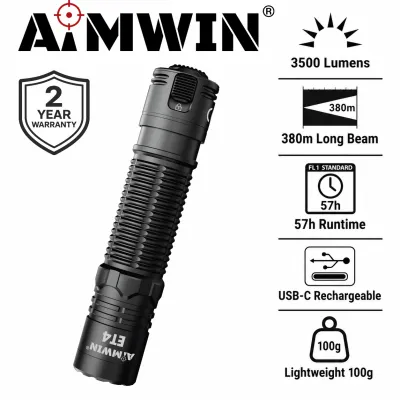
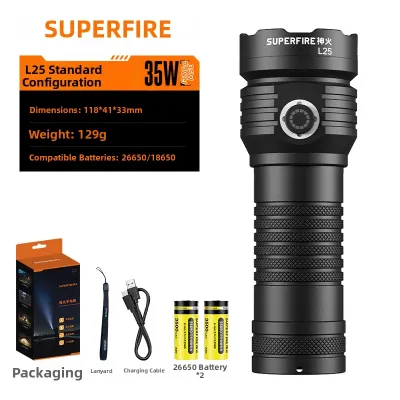
Prices are valid at publication and may change. Please refer to the product page for the latest price.
The first specification to evaluate is the light output, measured in lumens, and the beam angle. For shallow-water snorkeling, a light output between 300 and 1000 lumens is generally optimal. Anything lower may fail to illuminate crevices or cut through suspended particles, while excessively high lumens can drain the battery rapidly and create harsh glare off floating sediment. A wide beam angle of 60 to 120 degrees is preferred for general situational awareness, as it illuminates a broader field of view. However, a narrower spot beam of 10 to 20 degrees can be useful for peering into deep rock crevices or coral overhangs.
Waterproof ratings are the most critical safety factor. For snorkeling, a standard splash-proof or rain-proof rating is entirely insufficient. The torchlight must carry an IPX8 rating, which denotes continuous submersion in water under conditions specified by the manufacturer. Ideally, the manufacturer should explicitly state a depth rating, such as 10 meters or deeper. Even though snorkelers spend most of their time at the surface, diving down a few meters to inspect marine life subjects the torchlight to rapid pressure changes that can easily bypass weak seals.
Battery configuration and burn time directly impact your safety and convenience. Look for models that utilize rechargeable lithium-ion batteries, such as the standard 18650 or 26650 cells, which offer stable voltage and longer runtimes. A reliable snorkeling torchlight should provide at least 1.5 to 2 hours of continuous operation on its high-power setting. This ensures the light will not fail mid-swim, especially during late afternoon or overcast sessions when natural light fades quickly.
Ergonomics and handling are often overlooked by beginners but are vital in the water. The torchlight must feature a textured, non-slip grip that remains secure even when your hands are wet or covered by neoprene gloves. It should also include a robust lanyard attachment point to secure the light to your wrist, preventing it from sinking to the seabed if dropped. Single-hand operation is another non-negotiable feature; you should be able to easily toggle through light modes using a simple rotary switch or a magnetic slider without needing both hands.
How to Verify Smiling Shark Specifications for Snorkeling
Because many budget-friendly brands offer a wide range of products spanning from basic household flashlights to specialized diving gear, you must carefully verify the specifications of the exact Smiling Shark model you intend to purchase. Never assume that all lights from the same brand share the same waterproof capabilities.

Begin by locating the official product packaging, user manual, or the manufacturer’s official specifications list. Look specifically for the IPX8 certification. If the product description only uses vague terms like “waterproof,” “water-resistant,” or “weatherproof” without an explicit IPX8 rating or a designated depth limit in meters, the light is not suitable for submersion. In tropical waters like those around Singapore, where visibility can vary and currents can shift, relying on uncertified gear increases the risk of sudden failure.
Examine the construction materials of the torchlight body. Marine-grade anodized aluminum or high-impact, corrosion-resistant ABS plastic are the standard materials for underwater lighting. Avoid models made from cheap, untreated metals that will rust rapidly upon contact with saltwater. Check the threads of the battery compartment; they should be clean, deep, and free of metal shavings, ensuring a tight, uniform seal when screwed together.
The switch mechanism is a common point of failure for cheap waterproof lights. Standard mechanical push-buttons that penetrate the flashlight body are highly susceptible to leaking under pressure. For snorkeling, prioritize models that utilize magnetic switches, such as a magnetic rotary ring or a magnetic sliding switch. These designs allow the switch to operate through the solid wall of the flashlight body without requiring a physical opening, significantly reducing the risk of water ingress.
Finally, inspect the sealing system of the battery compartment. A true dive-rated torchlight should feature at least one, and preferably two, thick rubber O-rings. These O-rings must be seated perfectly in dedicated grooves. Before purchasing, verify whether the package includes spare O-rings and a small tube of silicone grease. If the manufacturer does not provide these or mention O-ring maintenance in the manual, it is a strong indicator that the light is not intended for prolonged underwater use.
Safety and Usage Limits for Entry-Level Dive Lights
While a properly verified, budget-friendly torchlight can enhance your snorkeling experience, you must recognize its operational boundaries. Entry-level equipment is designed for casual, shallow-water recreation and cannot replace professional-grade scuba diving gear or formal water safety training.
The primary limit of an entry-level snorkeling light is depth. These lights are typically rated for shallow depths and are not engineered to withstand the immense hydrostatic pressure of deep freediving or scuba diving. Exceeding the rated depth can compress the seals, crack the lens, or cause the casing to deform, leading to immediate flooding. Always keep your exploration within the shallow limits of surface snorkeling, typically no deeper than a few meters.
Before every single entry into the water, you must perform a rigorous pre-dive inspection. Unscrew the battery cap and inspect the O-rings for any signs of dirt, sand, hair, or cracking. Even a single grain of sand on an O-ring can create a micro-gap that allows water to flood the battery compartment under pressure. Apply a very thin layer of silicone grease to the O-rings to keep them supple and help them seal properly. Ensure the battery is fully charged, and tighten the cap firmly by hand—never use tools to overtighten, as this can pinch and damage the seals.
It is critical to treat your torchlight as a supplementary tool rather than a primary safety or navigation device. A beginner snorkeler should never rely on a budget light to navigate back to shore or a boat in the dark. Night snorkeling carries inherent risks and should only be conducted under professional supervision with certified, redundant primary and backup lighting systems. Your safety in the water depends on your swimming ability, ocean awareness, buddy system, and personal judgment—not on a budget flashlight.
You must also establish clear stop conditions before entering the water. If you notice the light flickering, dimming unexpectedly, or if you observe any condensation or water droplets forming inside the lens, you must treat this as an immediate equipment failure. Turn off the light if safe to do so, signal your snorkeling buddy, and return to the surface or the shore immediately. Flooded lithium-ion batteries can short-circuit, overheat, or release gas, posing a direct hazard if left unaddressed in a sealed compartment.
When to Consider Alternatives or Upgrades
As your skills develop and your snorkeling environments become more diverse, you may find that an entry-level torchlight no longer meets your needs. Recognizing when to transition to higher-end equipment is essential for maintaining safety and enjoyment in the water.
If you frequently snorkel in murky waters, estuaries, or areas with high sediment levels, a standard wide-beam entry-level light may prove ineffective. Suspended particles in the water reflect wide beams back into your eyes, a phenomenon known as backscatter, which severely reduces visibility. In these conditions, you need a highly focused, high-candela spot beam that can pierce through the turbidity. Professional-grade dive lights offer more sophisticated optical lenses designed specifically to minimize backscatter.
Another consideration is the choice between handheld torchlights and headlamps. While headlamps offer hands-free convenience, they are generally less practical for snorkeling. A headlamp moves whenever you turn your head, which can startle marine life and make it difficult to point the light precisely where you want to look. Furthermore, headlamps are more prone to snagging on surface debris or seaweed. A handheld torchlight secured with a wrist lanyard remains the most versatile and controllable option for beginners.
For those who only snorkel occasionally—perhaps during an annual holiday—purchasing even a budget torchlight may not be the most practical choice. In many coastal destinations, local dive shops and tour operators offer high-quality, professionally maintained dive lights for rent. Renting allows you to use premium, certified equipment without the upfront cost or the hassle of post-dive maintenance and travel packing.
If you decide to transition from surface snorkeling to deeper freediving or recreational scuba diving, you must upgrade to certified scuba-grade lighting. These advanced lights feature robust, double-sealed aluminum bodies, pressure-tested switches, and regulated circuitry that maintains constant brightness even as the battery drains. Investing in a recognized, professional dive brand ensures that your lighting system is backed by rigorous safety certifications and reliable customer support.
Frequently Asked Questions (FAQ)
Can I use a standard waterproof flashlight for snorkeling?
No, standard household waterproof flashlights are not designed for the pressure of underwater snorkeling. Most household lights carry an IPX7 rating, which only certifies protection against temporary immersion in shallow water (typically up to 1 meter for 30 minutes) under static conditions. Snorkeling subjects the light to dynamic pressure as you swim and dive. Without marine-specific double O-rings, a pressure-resistant lens, and a sealed switch mechanism, a standard flashlight will quickly leak, short-circuit, and fail when submerged.
How do I properly rinse and store my snorkeling torchlight after use?
Proper post-dive maintenance is essential to prevent saltwater corrosion and prolong the life of your torchlight. Immediately after exiting the water, soak the sealed torchlight in a tub of clean, fresh water for at least 10 to 15 minutes to dissolve salt crystals and remove sand. Never press the power switch or slide the magnetic switch while the light is submerged in the rinse tub, as this can draw water past the seals. After soaking, dry the exterior thoroughly with a clean towel. Once dry, open the battery compartment, remove the battery to prevent corrosion during storage, and inspect the O-rings. Store the light and battery separately in a cool, dry place away from direct sunlight.
Community discussion
Share your experience or ask a question. Comments are reviewed before publication.