
Selecting a tennis racket is a critical decision that directly impacts your technical development and physical comfort on the court. The wilson blade 98 is widely regarded as a benchmark frame for control and feel, but it is not a universal solution for every player. To determine if this racket matches your current skill level, you must evaluate your ability to generate clean contact, maintain high swing speeds, and physically handle a heavier, control-oriented frame. Generally, this racket is best suited for solid intermediate to advanced players who possess established, full swing mechanics and can generate their own pace.
The Core Profile: What the Wilson Blade 98 Demands from You
To understand who this racket is for, you must first examine its fundamental specifications and design philosophy. Unlike modern “power” rackets that feature thick, stiff beams and oversized heads, this frame is built with a highly flexible, thin-beam construction and a 98-square-inch head size. This configuration prioritizes precision and ball feedback over effortless depth, meaning the racket absorbs energy rather than catapulting the ball forward.
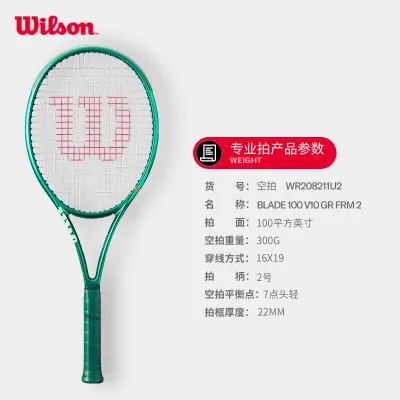
The physical profile of the frame demands a high level of physical preparation. With a typical unstrung weight of 305 grams (which climbs to over 320 grams once strung with overgrips and dampeners) and a head-light balance, it is engineered to provide exceptional stability when facing fast, heavy balls. However, moving this mass through the air consistently requires significant shoulder and forearm strength.
Products mentioned in this guide
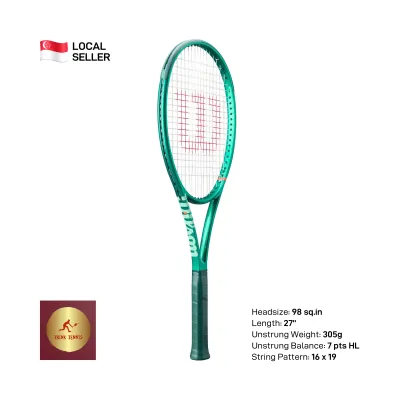
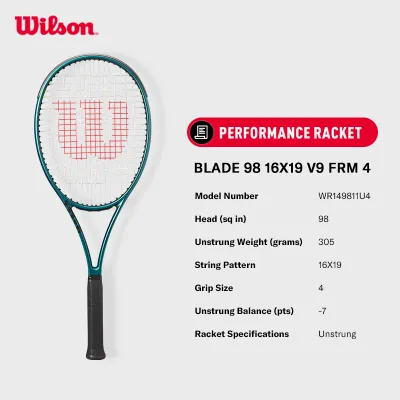
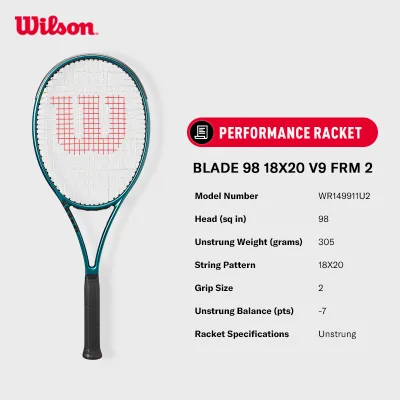
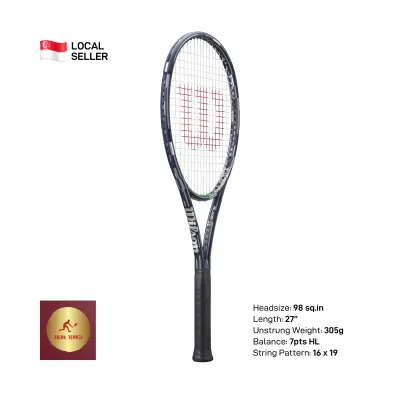
![[New] Wilson Us Open Blade 98 V9 Performance Tennis Racket (16x19) (Unstrung) - WR178211U](https://img.lazcdn.com/g/p/7a203cbdac86790882ea5d47218faf81.jpg_400x400q80.jpg_.webp)
Prices are valid at publication and may change. Please refer to the product page for the latest price.
This design creates a clear performance trade-off. When struck cleanly in the center of the string bed with a fast, complete swing, the racket offers an incredibly plush feel and pinpoint directional control. Conversely, if your swing is slow or your contact is off-center, the frame will punish you with short, weak balls that land shallow in your opponent’s court, while transmitting harsh vibrations to your arm.
Self-Assessment: Is Your Technique Ready for a Control Racket?
Transitioning to a player’s frame requires an honest look at your current on-court capabilities. Many club players mistake a desire for better control with the technical ability to utilize a control racket.

Swing Speed and Power Generation
Because of its low inherent stiffness, this frame does not assist you in pushing the ball deep. You must be the primary engine of kinetic energy, utilizing a full, fluid, and rapid swing path from low to high to generate both pace and depth. If your strokes are short, tentative, or rely heavily on wrist flicking rather than full shoulder rotation and leg drive, you will struggle to clear the net consistently.
Physical endurance is another critical variable, especially when playing in demanding environments. In hot, humid climates like Singapore, where outdoor hard-court sessions at local facilities can quickly sap your energy, swinging a 320-gram strung racket for a full two hours becomes a grueling physical challenge. As physical fatigue sets in, your swing speed naturally slows down; if your racket cannot compensate with free power, your shot quality will deteriorate rapidly, leaving you vulnerable to aggressive opponents.
You can assess your readiness by observing how you currently generate depth. If you rely on the trampoline effect of a stiff, thick-beamed frame to keep your balls deep, switching to a control-oriented frame will immediately shorten your shots. You must be comfortable brushing up on the ball and accelerating through contact to keep the ball deep without hitting long.
Consistency and Tactical Placement
The 98-square-inch head size offers a noticeably smaller sweet spot compared to standard 100-square-inch game-improvement rackets. To hit clean shots consistently, your footwork must be precise, allowing you to position your body perfectly relative to the bouncing ball. If your preparation is frequently late, or if you find yourself lunging and reaching for balls, you will repeatedly hit off-center, resulting in weak, unstable responses.
This frame is highly optimized for players who play with tactical intention, using heavy topspin and sharp angles to systematically wear down opponents rather than trying to blast flat winners from defensive positions. The flexible frame allows the ball to sit on the strings slightly longer—a characteristic known as dwell time—giving you the split-second feel needed to direct the ball into tight spaces.
Reflect on your current unforced error patterns during match play. If your errors primarily consist of hitting the frame or dumping balls into the bottom of the net due to poor positioning, a demanding control racket will amplify these technical flaws. However, if your main issue is that your clean, aggressive strokes are consistently flying just past the baseline, you are likely ready for the added control of this frame.
Deciding Factors: Signs the Wilson Blade 98 Is (or Isn't) Your Match
To help you make a definitive decision, look for these specific, observable indicators in your daily play.
- Signs it IS the right fit: You have a fully developed, repeatable swing path on both the forehand and backhand wings; your natural groundstrokes frequently sail long when using modern, stiff power rackets; you prefer a highly dampened, flexible feel that provides clear sensory feedback upon contact; you frequently play against hard-hitting opponents and need a stable, heavier frame that will not twist in your hand when blocking back fast serves or heavy groundstrokes; your skill level is rated as a strong intermediate to advanced player (typically a NTRP rating of 4.0 or higher).
- Signs it ISN'T the right fit: You experience lingering wrist, elbow, or shoulder fatigue during or after a standard hitting session; your groundstrokes consistently land short of the service line, forcing you to over-swing and break down your technique; you are still actively learning the fundamental mechanics of the game and require a forgiving sweet spot to keep rallies going; you prioritize quick, reactive net play and prefer a lightweight, highly maneuverable frame that allows for rapid reflex volleys.
Ultimately, upgrading to a control-oriented racket should be a natural progression in your development as a player. It is a tool designed to harness existing power and technique, not a shortcut to fix fundamental mechanical errors in your swing.
Choosing Your String Pattern: 16×19 vs. 18×20
If you have determined that your skill level is suited for this frame, your next step is choosing between the two primary string pattern configurations. This choice will significantly alter the launch angle, spin potential, and overall feel of the racket.
The 16×19 Pattern for Spin and Forgiveness
The 16×19 open string pattern is the most popular choice for the modern game. Because there are fewer intersecting strings, the mains have more freedom to slide and snap back during contact, which generates higher spin rates (RPMs). This open pattern also creates a slightly higher launch angle, helping you clear the net with ease and push your opponent back with heavy topspin. Additionally, the open bed offers a slightly softer, more forgiving feel on off-center hits.
The 18×20 Pattern for Precision and Directional Control
The 18×20 dense string pattern is favored by traditionalists and flat hitters who value ultimate directional precision. With more strings crossing the bed, the string face is stiffer and deforms less upon impact. This results in a lower, highly predictable launch angle and a firmer, more direct feel. While it demands exceptional consistency and physical effort to generate spin, it allows you to drive through the ball with complete confidence that it will not fly long.
When choosing, analyze your typical shot trajectory. If you rely on high-arcing topspin to control the court, the 16×19 pattern is highly recommended. If you strike the ball flat and prefer to hit linear, driving shots down the line, the 18×20 pattern will provide the surgical precision you need.
Better Alternatives If the Blade 98 Feels Too Demanding
If your self-assessment suggests that this frame might be too physically taxing or technically demanding for your current stage, there is no shame in looking at more forgiving alternatives. Premium player frames in Singapore typically retail in the S$300 to S$400 range, making it a significant financial investment that should match your actual playing style.
Consider exploring 100-square-inch “tweener” rackets, which bridge the gap between pure beginner frames and advanced player frames. Models like the Wilson Clash 100 offer a highly flexible, arm-friendly feel but with a larger sweet spot and more built-in power. Alternatively, the Wilson Ultra 100 provides excellent stability and easy depth for players who want to focus on clean ball striking without fighting the frame for pace.
These alternatives feature lighter static weights, typically ranging between 290 and 300 grams unstrung. This lighter weight makes them far easier to maneuver, allowing you to focus on proper footwork, body rotation, and clean contact. Building your confidence and consistency on a more forgiving frame is the fastest way to eventually transition to a dedicated control racket later in your tennis journey.
Frequently Asked Questions (FAQ)
Is the standard Wilson Blade 98 too heavy for junior players?
Yes, the standard unstrung weight of 305 grams is generally too heavy for most junior players who are still physically developing. Attempting to swing this weight can lead to late contact, compromised stroke mechanics, and a high risk of growth-plate or tendon injuries. Junior players should look for lighter variations within the same family, such as 98L or 100L models, which offer similar aesthetic appeal and feel but at a static weight that supports healthy physical development.
Can switching to a heavier control racket like the Blade 98 cause tennis elbow?
A heavier racket itself does not directly cause tennis elbow; in fact, the added mass can actually absorb more shock than a stiff, ultra-lightweight frame. However, if the racket is too heavy for your current physical strength, you may begin to compensate by flicking your wrist or gripping the handle too tightly, which directly strains the tendons in your elbow. To mitigate this risk, ensure you use a correct grip size, consider pairing the frame with a softer multifilament string rather than a stiff polyester, and always consult a certified tennis coach to verify your stroke mechanics.
Community discussion
Share your experience or ask a question. Comments are reviewed before publication.