
The Short Answer: Is the Wilson Blade Right for You?
The Wilson Blade is one of the most recognizable racket lines on the court, but for a beginner, the short answer is conditional: the standard, heavier models in this family are generally not recommended for those just starting out. The Blade lineup is traditionally engineered for intermediate to advanced players who already possess developed swing mechanics and can generate their own power. However, because this family includes several lighter and more forgiving variations, a beginner can successfully play with a Blade if they select a model specifically configured with a lighter weight and a larger head size.
To make the right choice, you must look past the cosmetic design and evaluate the specific engineering of the frame. A mismatch between your physical strength and the racket’s physical properties can hinder your development and lead to early fatigue. Suitability ultimately depends on selecting the correct head size and weight within the series, matched to your physical strength and athletic background.
Understanding the Wilson Blade Design Profile
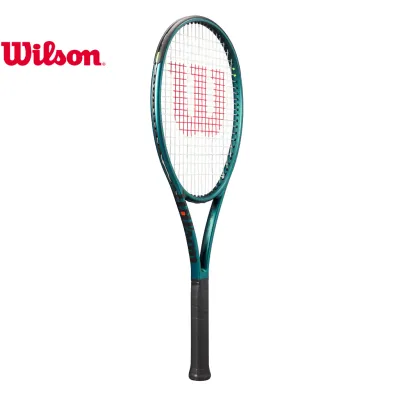
To understand why the Wilson Blade behaves the way it does, it helps to look at its core design philosophy. Unlike game-improvement rackets that feature thick, stiff frames designed to launch the ball with minimal effort, the Blade series focuses on control, feel, and precision. This is achieved through a thinner beam construction and a more flexible frame, which allows the racket to dwell slightly longer on the ball during impact, giving the player a highly connected sensation.
Products mentioned in this guide
![[New] Wilson Us Open Blade 98 V9 Performance Tennis Racket (16x19) (Unstrung) - WR178211U](https://img.lazcdn.com/g/p/7a203cbdac86790882ea5d47218faf81.jpg_400x400q80.jpg_.webp)
Prices are valid at publication and may change. Please refer to the product page for the latest price.

This control-oriented profile means the racket does not provide a massive amount of free power. If your swing is short, slow, or inconsistent, a control frame will often leave your shots landing short in the court. While advanced players value this predictability because it prevents them from hitting long, beginners often find themselves over-swinging to compensate for the lack of built-in depth.
It is also important to note that racket lineups evolve. Manufacturers regularly update their frame technologies, altering the layup of the graphite or adjusting the string pattern density. When evaluating a Blade, you must verify the exact specifications printed on the inside of the throat rather than relying solely on the general reputation of the product line.
Self-Diagnosis: Does Your Game Match a Control Racket?
Before committing to a control-oriented frame, you should conduct an honest self-assessment of your current physical baseline and technical goals. First, evaluate your natural arm strength and swing speed. If you have a background in other racket sports or possess excellent natural core strength, you may naturally generate a fast, long swing. If your swing is naturally slower or more tentative, a stiffer, power-focused racket will be far more forgiving as you learn the basics.
Next, consider your primary technical focus during your coaching sessions or practice games. If your immediate priority is simply learning how to make clean contact and consistently clear the net, a racket that demands precise timing and high swing speeds can slow down your progress. Conversely, if you are already working on refining your ball placement and find that your shots are constantly flying out of bounds despite controlled swings, a control-oriented frame might align with your development.
Finally, pay close attention to physical comfort during and after your play sessions. A control racket with a flexible frame absorbs a lot of energy, but a model that is too heavy for your current muscle development will force you to muscle the ball, leading to strain in your wrist, elbow, or shoulder. If you experience persistent fatigue or soreness after a short hitting session, it is a clear sign that the racket’s weight or balance does not match your current physical conditioning.
Specifications to Check for a Beginner-Friendly Setup
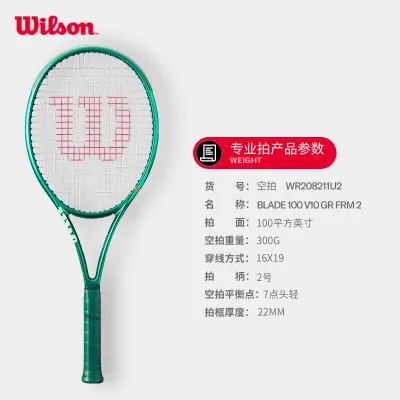
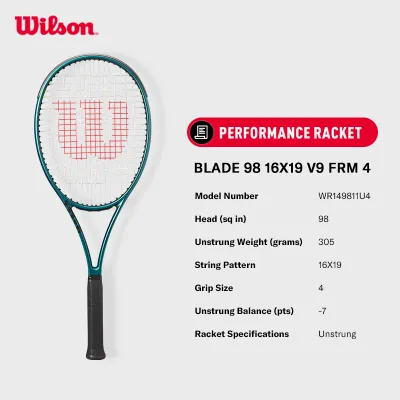
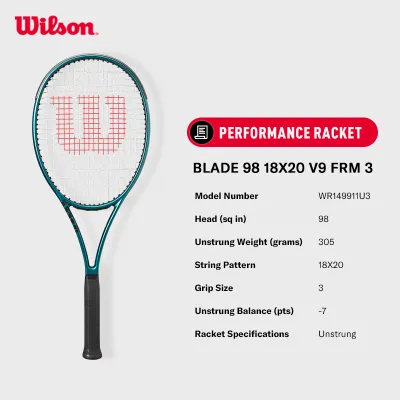
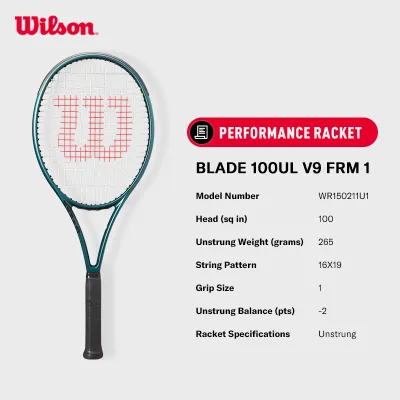
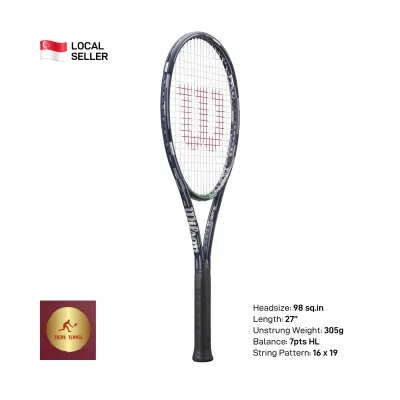
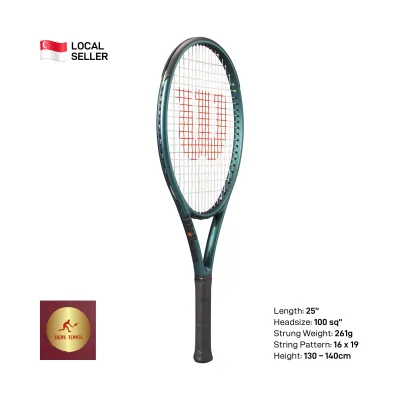
If you are set on choosing a model from the Blade family, you must learn to read the technical specifications to find a configuration that supports a developing game. The first specification to check is the head size. Standard player frames often feature a 98-square-inch head, which offers a relatively small sweet spot. For beginners, look for variations that offer a 100-square-inch head or larger, as this expanded surface area provides greater error tolerance on off-center hits.
The second critical metric is the unstrung weight of the frame. While advanced players often prefer rackets weighing 305 grams or more for stability against heavy incoming balls, a beginner should look for lighter versions, typically ranging between 265 and 285 grams. A lighter frame reduces the physical load on your shoulder and wrist, allowing you to maintain proper swing mechanics even during long practice sessions in Singapore’s humid climate, where fatigue sets in quickly.
Additionally, examine the beam width and balance of the racket. A thicker beam (measured in millimeters) generally indicates a stiffer frame that transfers more energy back to the ball, which is highly beneficial for beginners. You should also verify the balance point; a head-light balance makes the racket feel easier to maneuver at the net, while a slightly head-heavy balance in a very light racket can help maintain stability when you block back fast shots.
Decision Paths: Choosing the Blade or Exploring Alternatives
Based on your self-diagnosis, you can proceed down one of three distinct equipment paths to ensure you do not compromise your development or physical health.
Path A: Proceed with a Modified Blade Setup If you are determined to play with a Blade and have the physical capability to swing a mid-weight frame, select one of the lighter, larger-head models in the lineup. To maximize comfort and power, pair the frame with a soft multifilament string strung at the lower end of the manufacturer’s recommended tension range. This setup increases the elasticity of the string bed, providing extra depth and reducing the shock transmitted to your arm.
Path B: Reconsider and Explore Power-Oriented Alternatives If you struggle to generate depth, find yourself hitting off-center frequently, or feel immediate arm fatigue, look outside the control category. Explore rackets designed specifically for game improvement, which feature wider beams, stiffer frames, and larger sweet spots. These frames do the heavy lifting for you, allowing you to focus on clean footwork and smooth swing paths without worrying about the ball falling short.
Path C: Test and Verify via a Demo Program Never purchase a racket based on aesthetics or professional endorsements alone. Visit a local specialty tennis shop in Singapore and ask to participate in their demo program. Spend at least two separate sessions hitting with your shortlisted models on a local hard court. Pay attention to how the racket feels during the final fifteen minutes of your session, as this is when muscle fatigue will reveal whether a frame is truly suitable for your current physical limits.
Frequently Asked Questions (FAQ)
Do I need to restring a new Wilson Blade before playing?
Yes, it is highly recommended to check and potentially replace the strings on a new racket. Many premium frames are sold unstrung, while those sold pre-strung often use basic, high-tension synthetic gut strings that may feel stiff and unforgiving. For a beginner, having a local stringer install a soft multifilament string at a moderate tension (such as 50 to 53 pounds) will significantly improve arm comfort, shock absorption, and depth control. This service typically costs around S$30 to S$50 including labor at local pro shops.
Will a control-oriented racket like the Blade cause arm discomfort?
A control-oriented racket itself does not cause injury, but using one that is too heavy or stiff for your current physical strength and technique can lead to issues like tennis elbow. If you use improper mechanics to force power from a low-powered frame, your joints absorb the excess stress. If you experience any persistent pain or joint discomfort during play, stop immediately and consult a medical professional or a certified tennis coach to evaluate your technique and equipment setup.
Community discussion
Share your experience or ask a question. Comments are reviewed before publication.