
Choosing your first serious tennis racket is a pivotal step in your development on the court. The Yonex EZONE 100 is a highly popular frame, but determining whether it suits a beginner requires looking past the marketing and analyzing how its design matches your physical capabilities. While it offers a forgiving head shape and accessible power, it may not be the automatic starting point for every new player.
For many beginners, the standard version of this racket can feel slightly heavy or demanding during long practice sessions. However, if you have an athletic background or choose one of the lighter weight variations within the same product family, this frame profile can serve as an excellent tool that you will not quickly outgrow. The key is understanding how its specific design elements align with your current swing mechanics and physical strength.
Understanding the EZONE 100 Design Profile
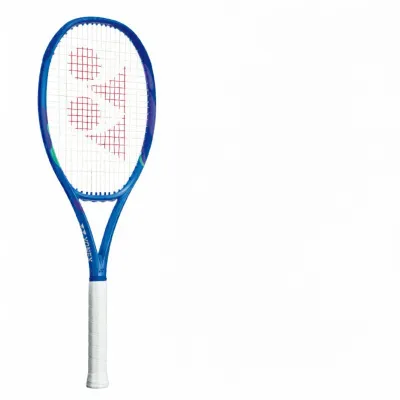
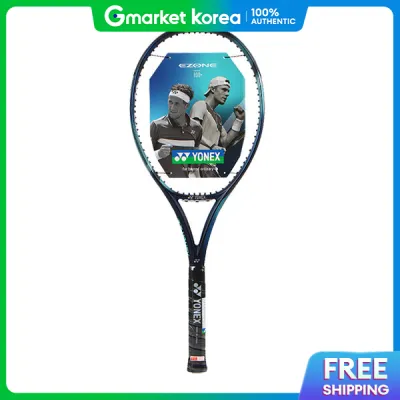
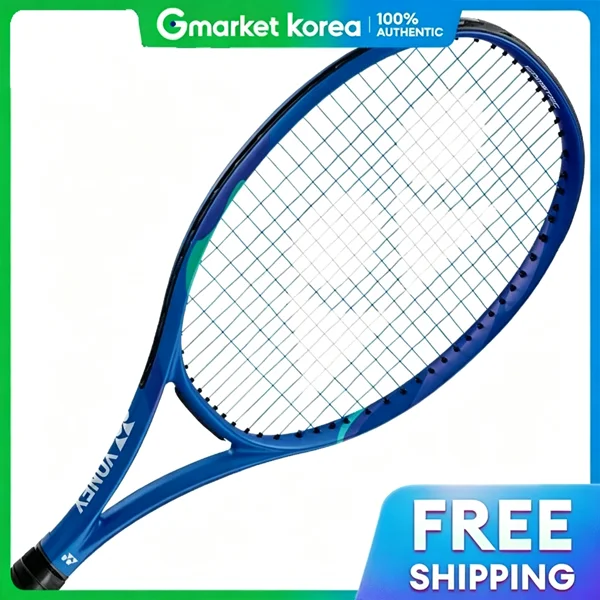
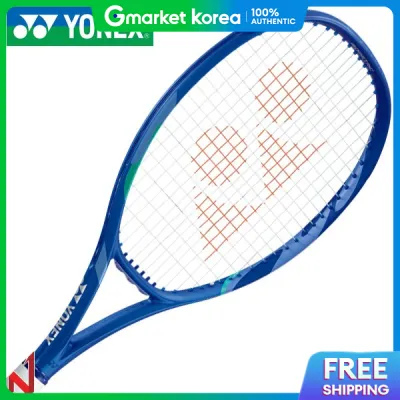
The foundation of this racket’s playability lies in its 100-square-inch head size. This head size is widely considered the industry standard for balancing power and control, offering a generous hitting area that provides a reasonable margin for error. When you are still learning to consistently strike the ball in the center of the strings, this larger surface area helps keep off-center hits in play rather than resulting in immediate errors.
Products mentioned in this guide
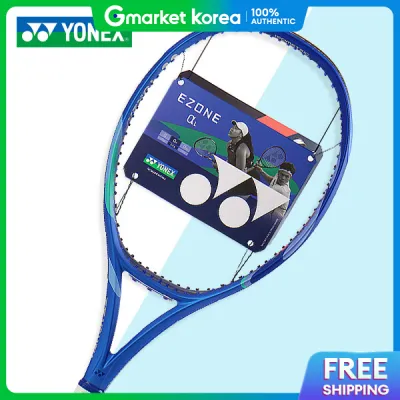
Prices are valid at publication and may change. Please refer to the product page for the latest price.
A defining characteristic of Yonex frames is the isometric, or square-shaped, head design. Unlike traditional oval frames, this modified shape aims to equalize the length of the main and cross strings across a wider portion of the string bed. In practice, this design expands the sweet spot, particularly toward the upper hoop of the racket. For a developing player, this means you can expect more consistent ball depth and fewer harsh vibrations when your contact is less than perfect.
In terms of performance dynamics, this frame profile is engineered to offer a blend of free power and stability. The frame’s throat and shaft are designed to resist twisting during impact, which helps maintain directional control even when your swing path is still developing. This structural stiffness provides a lively feel, allowing you to generate depth on your shots without needing a massive, high-speed swing. However, this stiffness also means you must rely on proper technique to avoid transferring excess shock to your arm.
Self-Diagnosis: Does Your Playstyle Match the EZONE 100?
Before investing in this racket profile, you should evaluate your natural swing speed and physical habits. If you tend to take short, compact swings and struggle to get the ball past the service line, a frame that offers built-in power can assist your depth. The EZONE 100 profile is highly responsive, meaning it rewards moderate swings with clean depth. Conversely, if you naturally swing with high speed and aggressive force, you might find that this frame’s inherent power makes it difficult to keep the ball inside the baseline until you learn to apply topspin.

Your physical strength and wrist stability are critical factors when assessing this frame. The standard version of this racket sits in a weight class that requires a baseline level of forearm and shoulder strength to maneuver comfortably over a long practice session. If you experience muscle fatigue quickly or find your wrist snapping backward during contact, the standard weight may hinder your ability to learn clean stroke mechanics. Beginners should pay close attention to how their arm feels during continuous play, as a racket that is too heavy can lead to hitching in the swing path.
Finally, consider your primary learning goals on the court. If your focus is on developing consistent, repeatable strokes and keeping rallies going, the forgiving nature of a 100-square-inch isometric frame supports this objective. It allows you to focus on footwork and body rotation without being punished excessively for minor timing errors. However, if your immediate goal is simply to get the ball over the net with minimal physical effort, you might require a different category of racket altogether.
Key Specifications to Verify Before Purchase
When shopping for this model, you must carefully check the product specifications printed on the frame or the manufacturer’s label, as several variations share the same name. The unstrung weight is the most critical metric to verify. While the standard model is typically around 300 grams, you will also find lighter versions, such as the EZONE 100L (often around 285 grams) or the EZONE 100SL (often around 270 grams). Selecting the weight that matches your physical build ensures you can maintain swing speed without straining your muscles.
You should also verify the balance point and swing weight of the specific frame you are considering. A racket’s balance is typically measured in points head-light or head-heavy. For beginners, a slightly head-light balance is generally preferred because it makes the racket feel more maneuverable at the net and easier to swing through the air. Avoid frames that feel excessively head-heavy, as they can drag your wrist down and delay your contact point, leading to late hits and poor directional control.
Lastly, review the manufacturer’s recommended string tension range, which is usually printed on the inside of the racket throat. For a beginner, the choice of string type and tension is just as important as the frame itself. It is highly recommended to verify these guidelines and instruct your stringer to target the lower end of the recommended range. This setup increases the trampoline effect of the string bed, providing easier depth and a softer feel that cushions your arm against harsh vibrations.
Decision Paths: When to Commit and When to Look Elsewhere
The EZONE 100 profile is an excellent commitment if you are an athletic beginner or an intermediate player looking for a long-term companion. If you have played other sports, possess decent natural hand-eye coordination, and plan to play multiple times a week, this frame offers a perfect runway. It provides enough forgiveness to support your early mistakes while offering the stability and power potential you will need as your swing speeds increase and you begin playing more competitive matches.
However, you should look elsewhere if you are an absolute beginner with limited physical strength or if you prefer a highly leisurely pace of play. In these scenarios, a standard 100-square-inch frame can feel demanding and unforgiving. You may be better served by looking at oversized rackets with a head size of 105 square inches or larger. These oversized frames offer a much larger hitting area and are often designed with lighter overall weights and head-heavy balances, making it easier to clear the net with minimal physical exertion.
On the other end of the spectrum, if you are transitioning from sports like squash or badminton, you might already possess highly developed wrist snap and rapid swing speeds. In this case, the free power of the EZONE 100 might cause your shots to fly long. You might want to consider a more control-oriented frame, perhaps one with a thinner beam or a slightly smaller head size, which rewards precise, fast swings with greater placement control rather than raw ball speed.
Frequently Asked Questions (FAQ)
Should a beginner string the EZONE 100 at the maximum recommended tension?
No, beginners should generally avoid stringing this racket at the maximum recommended tension. Higher string tensions restrict the movement of the strings, resulting in a stiffer string bed that offers more control but significantly less power and shock absorption. For a developing player, this can make the racket feel stiff and demanding, potentially leading to arm fatigue.
Instead, it is best to start at the lower end or the exact middle of the manufacturer’s recommended tension range. A lower tension allows the strings to deflect more upon impact, creating a softer feel and providing free depth on your shots. This setup maximizes the forgiving nature of the isometric head design and helps protect your arm as you refine your contact point.
How does the EZONE 100 compare to oversized rackets for absolute beginners?
Oversized rackets, which typically feature head sizes of 105 to 115 square inches, offer a larger sweet spot and more built-in power than the EZONE 100. They are highly maneuverable at slow swing speeds and are very forgiving on off-center hits, making them ideal for players who want immediate success with minimal physical effort. However, they also carry more wind resistance and can feel clumsy as your swing speed increases.
The EZONE 100 serves as a bridge to modern tennis mechanics. While it requires slightly better timing and physical preparation than an oversized frame, it offers superior control and maneuverability as your skills progress. Starting with a 100-square-inch frame prevents you from having to adjust to a completely different racket size and weight distribution later on, making it a better investment for players committed to long-term improvement.
Community discussion
Share your experience or ask a question. Comments are reviewed before publication.