
The Yonex EZONE 100 can be a highly suitable tennis racket for beginner players, but this suitability depends heavily on your physical athletic baseline, commitment to learning proper swing mechanics, and how you configure the racket’s strings. While it is technically classified as a player’s racket designed to offer a balance of power and control, its user-friendly design features make it far more accessible to novices than traditional, heavy control frames. However, because it sits at a heavier weight class than typical entry-level recreational rackets, beginners must carefully evaluate their physical capabilities and verify specific product labels before making a purchase.
Choosing a racket is one of the most critical decisions you will make as a new player. Investing several hundred S$ in a premium frame like this one can be a smart long-term decision, as it prevents you from quickly outgrowing your equipment as your skills improve. By understanding the design philosophy behind this frame and matching it to your personal physical profile, you can determine whether it will support your development on the court or hinder your progress.
Understanding the Yonex EZONE 100 Design Intent
To determine if this racket fits your needs, you must first understand what the manufacturer set out to achieve with its design. The EZONE line is engineered primarily to deliver controllable power and a plush feel. Unlike traditional rackets that feature a round hoop, this model utilizes a signature square-ish head shape. This design is engineered to equalize the length of the main and cross strings, which expands the sweet spot. For a beginner, a larger sweet spot means that off-center hits are less punishing, helping you maintain ball depth and reducing harsh vibrations traveling up your arm.
Products mentioned in this guide
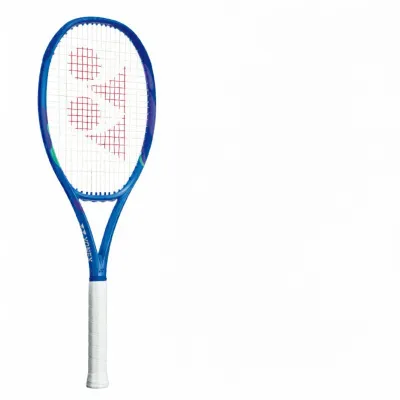
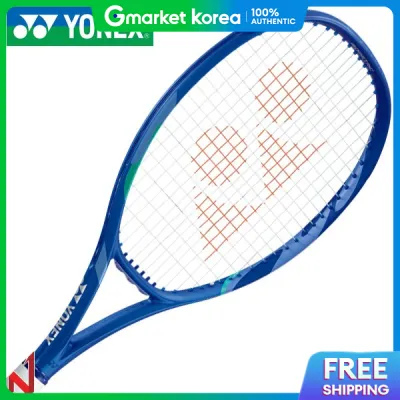
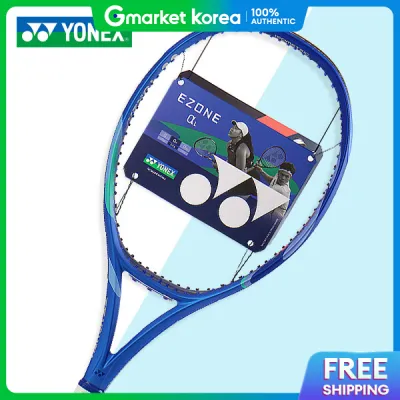
Prices are valid at publication and may change. Please refer to the product page for the latest price.
Another key aspect of this frame is its 100-square-inch head size. In modern tennis, a 100-square-inch head is widely considered the standard balance point for players of all levels. It offers a generous hitting area to help you make clean contact with the ball while remaining aerodynamic enough to swing quickly. This head size provides a predictable launch angle, allowing you to focus on developing a consistent swing path without worrying about the ball flying erratically off the string bed.
While the general design philosophy of this line remains consistent, subtle modifications are introduced with different model years. Manufacturers frequently adjust the frame’s stiffness, material composition, and grommet design to fine-tune the feel. Before purchasing, you should always check the manufacturer’s official description for the specific model year you are considering to understand its exact stiffness rating and intended player profile.
Self-Assessment: Matching Your Physical and Skill Profile
Before committing to a performance-oriented frame, you must conduct an honest self-assessment of your physical strength and athletic background. The standard version of this racket is heavier than typical beginner-specific frames. Maneuvering this weight requires a baseline level of wrist, forearm, and shoulder strength. If you are new to racket sports, swinging a heavier frame during a long session under hot, humid conditions can quickly lead to fatigue, which often causes your stroke mechanics to break down.

Your swing speed and consistency also play a major role in how well you can utilize this frame. Stiffer, player-oriented rackets require you to generate a portion of the ball’s depth through your own body rotation and racket head speed. If your swing is currently very short, slow, or tentative, you may struggle to push the ball deep into the opponent’s court. If you have an athletic background in sports like badminton, squash, or baseball, you may transition to this frame’s weight and swing requirements much faster than a complete sporting novice.
Finally, clarify your long-term learning goals. If your primary objective is to play casual, low-intensity tennis once a month, a highly forgiving, oversized, and lightweight recreational racket may offer more immediate satisfaction. However, if you are taking regular lessons with a coach and intend to develop full, modern strokes with topspin, starting with a standard-weight frame provides the precise physical feedback you need to refine your contact point and timing.
Critical Specifications to Verify on the Product Label
When viewing this racket online or at a local pro shop, you must inspect the physical specifications printed directly on the frame’s throat. The most critical metric to check is the unstrung weight. The standard version typically weighs around 300 grams unstrung. For many beginners, this weight can feel demanding. If you suspect this is too heavy, look for the lighter variations in the same family, such as the “L” version (typically around 285 grams) or the “SL” version (typically around 270 grams), which offer the same head shape in a much more maneuverable package.
Selecting the correct grip size is equally paramount for comfort and injury prevention. In warm, humid climates, an incorrect grip size leads to excessive racket twisting in your hand, forcing you to squeeze the handle too tightly. Over time, this extra tension can contribute to chronic elbow strain. To verify your grip size, hold the racket handle in an Eastern grip (like shaking hands with the racket); you should be able to fit the index finger of your opposite hand comfortably in the space between your ring finger and palm. Common sizes range from Grip 1 (4 1/8 inches) for smaller hands to Grip 3 or 4 for larger hands.
Additionally, pay attention to the balance and swing weight indicators. A head-light balance means more of the racket’s physical weight is concentrated in the handle, making it easier to maneuver at the net and swing quickly. Conversely, a head-heavy balance assists with power generation but can place more leverage and strain on your wrist. Reviewing these specifications on the product label ensures you do not accidentally purchase a variant that is poorly suited to your physical frame.
Decision Path: Commit, Adjust, or Look for Alternatives
If you are an athletic beginner who is committed to regular practice and coaching, committing to the standard EZONE 100 is a highly viable long-term investment. It is a frame that will support your transition from a beginner to an intermediate player without requiring an upgrade in a year or two. Its inherent stability will help you handle faster incoming balls as your opponents improve.
If you already own this frame or are set on purchasing it, but find it slightly too stiff or demanding, you can easily adjust its playing characteristics through your string setup. Avoid stiff polyester strings, which are designed for advanced players who swing with maximum speed. Instead, have a local stringer install a soft multifilament or synthetic gut string. Requesting a lower string tension—near the bottom of the recommended range printed on the frame—will significantly increase the racket’s comfort, expand its sweet spot, and provide easier depth with less physical effort.
On the other hand, you should pivot to a different model if you experience immediate wrist or elbow discomfort during a demo session, or if you find yourself consistently hitting the ball short because you cannot swing the racket fast enough. In this scenario, look for dedicated game-improvement rackets with larger head sizes (such as 105 square inches or larger) and lighter unstrung weights. These alternatives will provide the effortless depth and maneuverability you need to keep rallies going while you build up your tennis-specific muscle groups.
Frequently Asked Questions (FAQ)
Do I need to buy the latest version of the Yonex EZONE 100?
You do not need to purchase the absolute newest model year to enjoy the benefits of this racket line. Previous generations of this model offer nearly identical core geometry, head shapes, and weight distributions, often at a significantly lower price point. For a beginner, the subtle technological updates introduced in the latest version—such as minor changes in dampening materials—are rarely noticeable on the court. Opting for a previous-generation model is a highly practical way to save money while still acquiring a top-tier, high-performance frame.
Can I restring the Yonex EZONE 100 to make it more forgiving?
Yes, you can dramatically alter how forgiving this racket feels by changing your string type and tension. Beginners should avoid stiff polyester strings, which can feel harsh on the arm and offer very little power at slower swing speeds. Instead, ask your local pro shop to string the racket with a soft multifilament string. Additionally, keeping the tension relatively low—between 48 and 52 pounds—will increase the trampoline effect of the string bed, reducing the amount of shock transmitted to your arm and making off-center hits feel much softer.
Community discussion
Share your experience or ask a question. Comments are reviewed before publication.