
Whether the Yonex Subaxia is the right badminton racket for you depends entirely on how its weight, balance, and shaft stiffness align with your physical conditioning and tactical goals. There is no single racket that excels in every scenario or suits every player. In Singapore’s active badminton community, where games are frequently played in humid indoor sports halls, selecting a racket that matches your personal profile is essential. Choosing a model that is too heavy or too stiff can quickly lead to fatigue, poor shot execution, and physical strain.
To make an informed decision, you must look beyond brand reputation and analyze how a racket interacts with your physical capabilities. By evaluating your current skill level, understanding how to read the physical specifications on the racket, and matching those metrics to your on-court tactics, you can determine if the Subaxia will elevate your game or hold you back.
Assess Your Current Skill Level and Physical Conditioning
Evaluating your abilities objectively is the first step in finding the right equipment. Playing with a racket designed for a different skill level can severely hinder your development.
Products mentioned in this guide
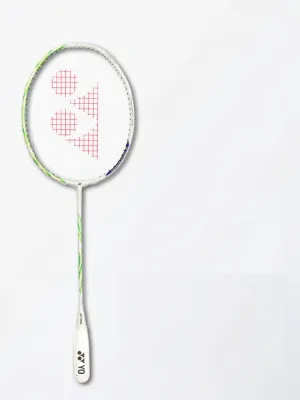
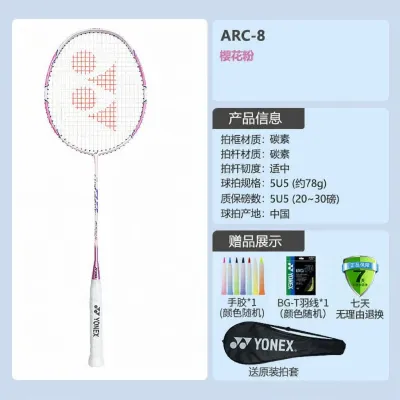
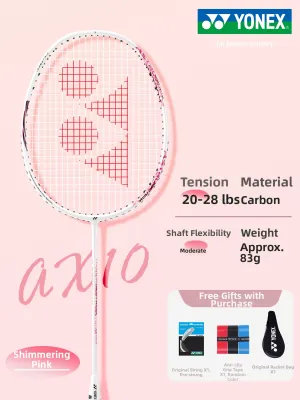
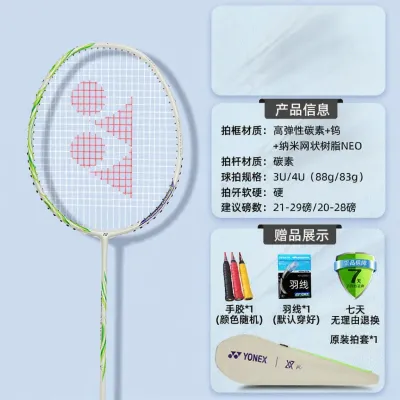
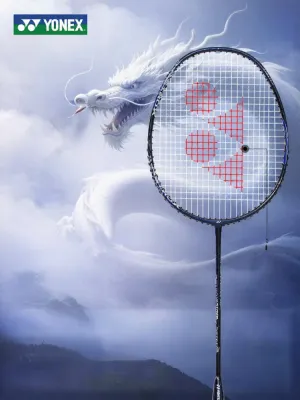
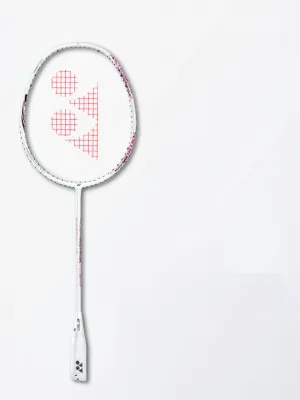
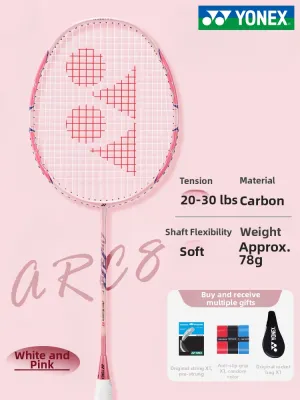
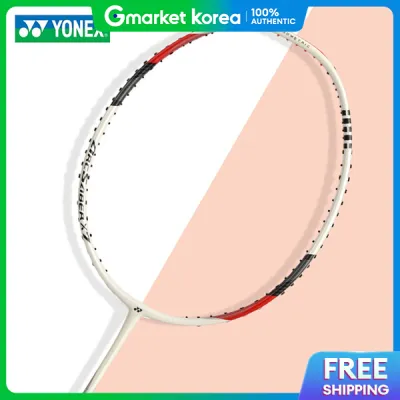
Prices are valid at publication and may change. Please refer to the product page for the latest price.
You can assess your current standing by using this simple skill-level checklist:
- Beginners: Focus on clean contact and consistent swing mechanics. Since wrist strength is still developing, a forgiving racket is required to help generate depth on clears.
- Intermediate players: Hit consistent baseline clears and basic drop shots. They have steady footwork and are starting to experiment with tactical placement and faster drive exchanges.
- Advanced players: Possess rapid swing speeds, precise wrist control, and highly consistent technique. They can manipulate the shuttle from difficult defensive positions and require an instant response.
Your court role also dictates your equipment needs. Backcourt power hitters require momentum for heavy smashes, while front-court net players need a fast-reacting frame to intercept shots. All-round baseline defenders rely on quick recovery speeds to transition smoothly from defense to offense.
Physical conditioning is also critical. A standard one-hour session in a warm, humid environment puts significant stress on your forearm, wrist, and shoulder joints. Humid air increases air resistance and can make the shuttlecock feel slightly heavier. If your arm fatigues or your wrist aches after thirty minutes of play, your racket is likely too heavy or too stiff for your current physical conditioning.
Decode the Yonex Subaxia Specifications on the Label
To determine if the Yonex Subaxia matches your profile, you must learn to read the actual specifications printed on the racket itself instead of relying on generalized marketing claims.

Locate the weight and grip size indicators on the racket’s cone or lower shaft. Weight is represented by a “U” rating:
- 3U (85–89 grams): This heavier class provides more built-in mass for powerful smashes and deep clears, but it demands greater arm strength.
- 4U (80–84 grams): This lighter class reduces shoulder fatigue and allows for faster reaction times, making it highly suitable for long rallies.
Grip size is indicated by a “G” rating, such as G4 or G5 (smaller). Choosing the correct grip size is essential; a grip that is too small causes your hand to clench too tightly, while a grip that is too large limits wrist mobility.
To test the balance point, place your index finger under the shaft of the unstrung racket and slide it until it balances horizontally. Measure the distance from the bottom of the handle cap to this balance point:
- Head-Light (under 285 mm): Weight is concentrated toward the handle, making the racket maneuverable and fast for defensive play.
- Even-Balanced (285 mm to 295 mm): Weight is distributed evenly, offering a versatile blend of speed and power.
- Head-Heavy (above 295 mm): Weight is concentrated toward the head, utilizing centrifugal force to add momentum to overhead smashes.
Assess shaft stiffness by holding the handle and the top of the frame, then gently applying pressure to flex the shaft. A flexible shaft bends easily, acting like a spring to assist slower swing speeds. A stiff shaft resists bending, demanding a fast swing to generate power but offering superior control. Always cross-reference these physical observations with official product specifications from authorized retailers to ensure your specific Subaxia variant matches your expectations.
Match the Racket Profile to Your On-Court Tactics
Once you have verified the physical specifications of your Yonex Subaxia, you can match its profile against your tactical approach on the court. Different game formats and playing styles place distinct demands on your equipment.
Singles vs. Doubles: Pacing and Coverage Demands
Singles and doubles play present entirely different movement patterns and tactical scenarios. In singles, you must cover the entire court on your own, which involves long, high clears and precise drops to move your opponent. If your physical checks reveal that your Subaxia is a heavier 3U model or has a head-heavy balance, this configuration can assist you in maintaining deep baseline coverage and driving the shuttle deep with less effort, provided you have the physical stamina to swing it consistently across multiple sets.
Doubles play is significantly faster and relies heavily on quick drive exchanges, flat pushes, and rapid net interceptions. In this format, a lighter 4U racket or a head-light balance is highly advantageous. It allows you to raise your racket quickly to defend fast body smashes and transition instantly to net play without feeling a lag in your reaction time.
To evaluate this compatibility, ask yourself a critical diagnostic question: Does the Subaxia’s verified weight and balance allow you to recover your racket position quickly enough to defend consecutive fast shots, or does it leave you struggling to prepare for the next rally? If your hand feels sluggish during rapid defensive exchanges, a lighter or more head-light setup is necessary.
Offensive Power vs. Defensive Control
Your tactical preference for aggressive offense or controlled defense should dictate how you match the racket’s shaft stiffness and balance point to your swing.
An offensive strategy relies on steep, powerful smashes to end rallies. If your Subaxia features a stiff shaft and a head-heavy balance, it will efficiently transfer the energy of your swing directly into the shuttlecock. However, executing an effective smash with a stiff racket requires excellent technique, utilizing a coordinated kinetic chain of shoulder rotation, forearm twist, and wrist snap. Attempting to force power using only your wrist on a stiff shaft can lead to joint strain and poor shot depth.
A defensive or control-oriented strategy prioritizes quick blocks, accurate lifts, and deceptive drops. A racket with a medium or flexible shaft and an even or head-light balance is highly beneficial here. The flexible shaft bends slightly during defensive blocks, absorbing the shock of an incoming smash and allowing you to redirect the shuttle safely over the net with minimal physical effort.
To verify if the racket matches your natural swing speed, perform an on-court check. Pay close attention to how the racket responds when you transition from a deep offensive clear to a quick defensive block. If your clears consistently fall short or your defensive blocks pop up too high for your opponents to attack, the shaft stiffness or balance point is likely mismatched with your natural timing.
Signs the Subaxia Is Not the Right Fit and When to Switch
Recognizing when a racket is mismatched with your body and playing style is crucial for preventing injuries and improving your performance. Continued use of an unsuitable racket can lead to chronic physical issues.
The most critical physical red flags are persistent pain or discomfort. If you experience dull aches or sharp pain in your wrist, elbow, or shoulder after a playing session, stop using the racket immediately. This discomfort is a clear sign that the racket’s weight is too heavy for your current strength, or the shaft is too stiff, causing high-impact vibrations to travel directly into your joints instead of being absorbed by the frame.
You should also monitor performance-based red flags during your games. If your clears and lifts consistently sail out of bounds, the shaft may be too flexible or “whippy” for your high swing speed, resulting in a delayed recovery that compromises your control. Conversely, if your smashes feel hollow and you struggle to generate depth despite a full, aggressive swing, the shaft is likely too stiff for your current technique.
Before replacing your racket entirely, you can try making minor, reversible adjustments. If the racket feels slightly too stiff or lacks power, lowering your string tension by 1 to 2 lbs (for example, from 26 lbs down to 24 lbs) can enlarge the sweet spot and create a more forgiving feel. If you struggle with control or comfort, applying a thicker polyurethane overgrip or a soft towel grip can improve shock absorption and handle stability.
If these adjustments do not resolve the issues, it is time to switch to a different Yonex series that matches your diagnosed needs:
- Astrox: Choose this series if you want to transition to a head-heavy profile designed specifically for steep, aggressive attacking play.
- Nanoflare: Opt for this series if you require a highly maneuverable, head-light frame optimized for rapid defense and lightning-fast net play.
- Arcsaber: Select this series if you prefer an even-balanced racket that prioritizes precise control, accurate placement, and a balanced feel.
Frequently Asked Questions (FAQ)
How do I know if my Yonex Subaxia is authentic?
To verify the authenticity of your Yonex Subaxia, start by inspecting the gold Yonex hologram sticker located on the cone; genuine stickers are highly secure and display a clear, multi-layered color shift when tilted under light. Next, check the laser-engraved serial number on the shaft and the corresponding country code on the cone. The engraving must be clean, sharp, and physically cut into the material, rather than simply printed or painted on the surface. To guarantee authenticity and protect your warranty coverage, always purchase your equipment from authorized Yonex dealers or official brand outlets in Singapore, avoiding unverified listings on online marketplaces.
Can changing the string tension fix a racket that feels too stiff or too flexible?
Adjusting your string tension can significantly modify how a racket feels during play, but it cannot alter its physical structure. Lowering your string tension (to around 20–23 lbs) creates a softer string bed with a larger sweet spot, which provides a helpful trampoline effect that makes a stiff racket feel more forgiving. Conversely, raising your string tension (to 26 lbs or higher) tightens the string bed, offering advanced players more precise control and a faster shuttle release, which can help stabilize a flexible racket. However, while these adjustments alter the feel of impact, they cannot change the inherent weight, balance point, or structural frame stiffness of your Subaxia.
Community discussion
Share your experience or ask a question. Comments are reviewed before publication.