
Choosing the right jogging pouch requires balancing your personal sweat rate, the duration of your runs, and the weight of the items you need to carry. There is no single brand or design that suits every runner perfectly, as breathability and bounce control exist on a sliding scale. In hot and humid conditions, the physical construction of the pouch’s back panel and strap system is far more critical for preventing sweat buildup than the brand logo on the front.
Ultra-lightweight, open-mesh tubular belts offer maximum ventilation but are limited in carrying capacity and can sag under heavy loads. Conversely, structured neoprene or nylon pouches provide excellent stability and water resistance for electronics but tend to trap heat against your skin unless they feature dedicated back-panel engineering. Understanding how these different design philosophies manage heat and moisture will help you select a pouch that keeps you comfortable and chafe-free throughout your training.
Key Dimensions for Evaluating Pouch Breathability and Comfort
Material Composition and Moisture Management
When evaluating a jogging pouch, the fabric composition determines how well the accessory handles moisture. Most modern running belts utilize synthetic blends of polyester, nylon, and elastane (Spandex) because these fibers are hydrophobic, meaning they resist absorbing water and instead push moisture to the outer surface where it can evaporate.
Products mentioned in this guide
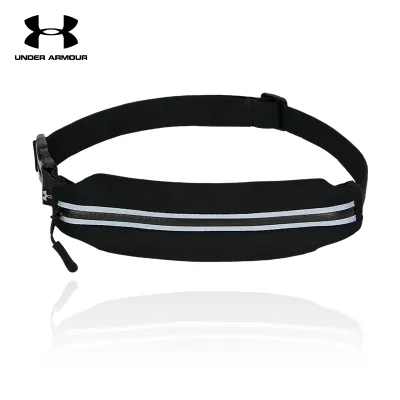
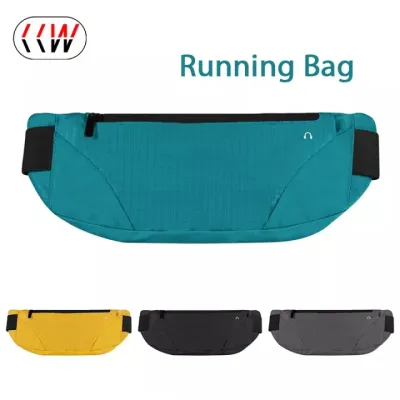
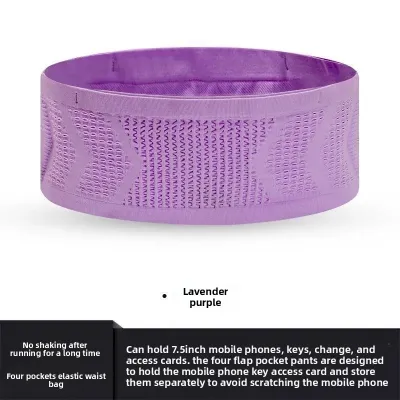
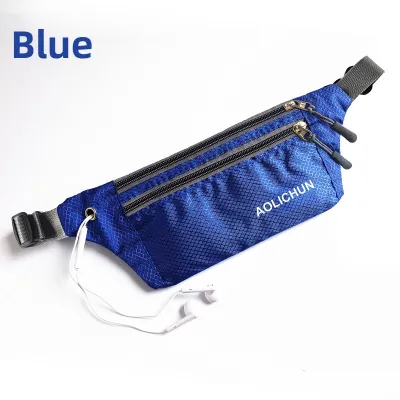
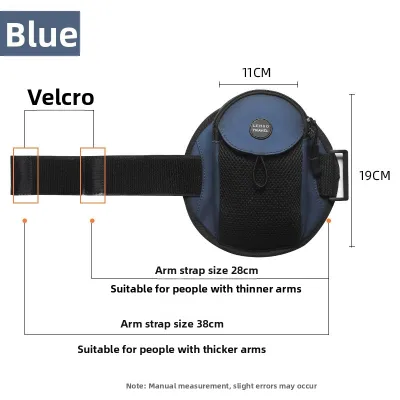
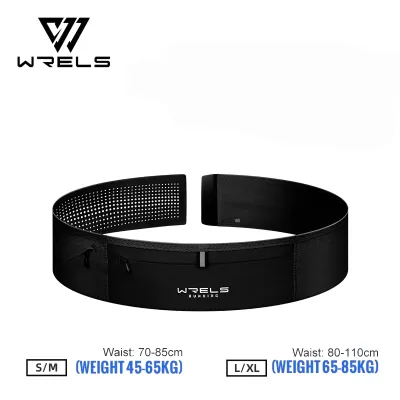
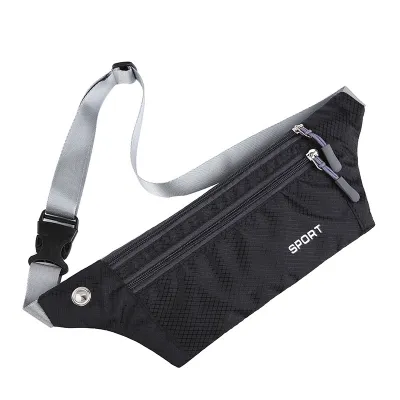
Prices are valid at publication and may change. Please refer to the product page for the latest price.
Standard neoprene is highly effective at protecting your phone from sweat because of its closed-cell structure, but this same characteristic makes it an excellent thermal insulator. When worn against the body, solid neoprene traps body heat and sweat, creating a warm, damp microclimate. Perforated air-mesh and lightweight knit fabrics, by contrast, feature open weaves that allow air to pass directly through the material, facilitating rapid drying and heat dissipation.
Back-Panel Construction and Airflow Channels
The interface between the pouch pocket and your skin is the primary site of heat accumulation. High-performance jogging pouches address this by incorporating 3D spacer mesh or molded foam panels on the rear of the pocket.
3D spacer mesh is a knitted fabric with a middle layer of monofilament yarns that physically spaces the pocket away from your body, creating a continuous air gap. Molded foam back panels often feature molded ridges or channels. These physical channels allow air to circulate horizontally and vertically behind the pouch, helping to break up the boundary layer of hot, stagnant air that typically forms during prolonged physical exertion.
Fit, Stability, and Friction Management
Comfort is directly tied to how securely a jogging pouch sits on your body. When you run, every step creates vertical displacement, which translates into kinetic energy that can cause a loose pouch to bounce.
If a pouch bounces against skin that is already damp with sweat, the resulting friction can quickly cause painful chafing. Damp skin has a higher coefficient of friction than dry skin, making it highly vulnerable to micro-tears. A secure, snug fit that eliminates bounce is therefore just as important for overall comfort as the breathability of the fabric itself.
Strap and Buckle Design
The suspension system of a jogging pouch distributes the weight of your gear across your hips or waist. Wide, elasticized tension bands are highly effective because they distribute pressure over a larger surface area, reducing localized squeezing.
Narrow straps or thin drawcords concentrate the load, which can cause the belt to dig into your soft tissues or restrict deep diaphragmatic breathing during high-intensity efforts. Additionally, the closure mechanism—whether it is a low-profile plastic buckle, a hook-and-loop fastener, or a step-in continuous loop—should lie flat against your body to prevent localized pressure points.
Comparing Popular Jogging Pouch Designs for Hot Weather
Ultra-Minimalist Mesh and Tubular Belts
Tubular belts are designed as a continuous band of elasticized fabric that slides up over your hips and sits flush against your waist. These belts typically feature multiple pocket openings around the circumference, allowing you to slide items inside and secure them against your body using the belt’s natural tension.

- Pros: Because they lack heavy hardware, buckles, or thick foam padding, tubular belts offer exceptional airflow and a very low physical profile. The highly porous mesh fabrics used in these designs allow sweat to evaporate quickly, minimizing sweat pooling around your midsection. Weight is distributed evenly around your entire waist, reducing localized pressure.
- Cons: These minimalist systems rely entirely on fabric tension for stability. If you carry a heavy, modern smartphone (often weighing over 200 grams) along with a bunch of keys, the fabric can stretch and bounce during high-impact running. They are best suited for shorter, high-intensity workouts where you only need to carry bare essentials.
Structured Neoprene and Nylon Pouches
Classic zippered pouches feature a distinct, semi-rigid pocket attached to an adjustable waist strap. These designs prioritize storage capacity and protection, often utilizing weather-resistant materials to keep rain and sweat away from sensitive electronics.
- Pros: These pouches offer excellent load stabilization. Because the pocket structure does not stretch, heavy items remain locked in place, minimizing bounce even during fast descents or sprint intervals. They frequently include separate compartments to keep keys from scratching your phone screen, along with external loops for energy gels.
- Cons: The solid, weather-resistant fabrics—such as neoprene or TPU-coated nylon—create an impermeable barrier to airflow. If the back panel is flat and unventilated, it will trap substantial heat against your lower back or abdomen. To maintain comfort, you must verify that the manufacturer has integrated a raised mesh backing or ventilation channels to keep the pocket off your skin.
Hybrid Air-Mesh and Elastic Band Systems
Hybrid designs attempt to bridge the gap between minimalist belts and structured pouches. They typically feature a structured, water-resistant pocket on the front or back, paired with a wide, breathable 3D air-mesh harness and a highly adjustable elastic strap.
- Pros: This category provides the most versatile balance of utility and climate comfort. The 3D spacer mesh backing keeps the non-breathable pocket structure elevated off your skin, while the wide elastic band distributes the weight comfortably across your hips. This setup allows you to carry moderate loads, such as a phone, keys, and a soft water flask, without experiencing excessive bounce or heat buildup.
- Cons: Hybrid systems are inherently bulkier than simple tubular belts. The multi-layered construction of spacer mesh and elastic webbing can feel more substantial around your waist, which some runners may find distracting during hot-weather workouts.
Optimizing Comfort and Sweat Management in Singapore's Climate
Running in Singapore presents unique physiological challenges due to the persistent tropical climate, where temperatures hover around 30°C and relative humidity levels regularly exceed 80%. Under these conditions, the body’s primary mechanism for cooling—the evaporation of sweat from the skin—is severely compromised because the surrounding air is already saturated with moisture.
Standard moisture-wicking fabrics designed for cooler, drier climates often saturate quickly in Singapore and remain wet, as there is insufficient dry air to facilitate evaporation. Therefore, when choosing a jogging pouch for local conditions, you should prioritize designs that emphasize convective cooling through physical air gaps. Pouches featuring thick 3D spacer mesh or deep molded ventilation channels are highly effective because they maintain a physical space between the saturated fabric of the pocket and your skin, allowing whatever ambient breeze is available along coastal routes like East Coast Park to circulate.
To manage the heightened risk of chafing caused by salt buildup and constant moisture, pay close attention to the construction of the pouch’s edges and seams. Look for belts with flat-lock stitching, seamless edge bindings, or soft, brushed fabric trims that will not abrade damp skin. Wearing your jogging pouch over a technical, moisture-wicking running shirt—rather than directly against your skin—can also provide an extra protective barrier against friction.
Your placement strategy can also influence thermal comfort and arm swing mechanics. While wearing a pouch on your lower back is highly stable because it sits over your center of gravity, the lower back is also a primary sweat zone. If you find your lower back becoming excessively hot, try rotating the pouch to the front of your waist. This positioning exposes the pocket to the oncoming air as you move forward, enhancing convective cooling. Alternatively, positioning a small pouch over your side hip can reduce the total surface area of fabric in contact with your spine, though you must verify that this placement does not interfere with your natural arm swing.
Decision Framework: Which Jogging Pouch Fits Your Running Style?
To help you identify the most suitable jogging pouch design for your specific training needs, consider the following targeted recommendations:
- Choose an Ultra-Minimalist Mesh Belt if: Your typical workouts consist of short to medium-distance road runs (5km to 12km) or high-intensity track sessions. You only need to carry a slim smartphone and a single house key, and you prioritize maximum breathability and a lightweight, unencumbered feel over large storage capacity.
- Choose a Structured Neoprene/Nylon Pouch if: You are training for long-distance events where you must carry multiple energy gels, car keys, and a large, heavy smartphone. You prioritize absolute load stability and weather protection for your electronics, and you are willing to accept a slightly warmer fit in exchange for zero bounce. Always verify that the model you choose features a raised mesh back panel to mitigate heat retention.
- Choose a Hybrid Air-Mesh System if: You are an everyday road runner looking for a versatile, all-rounder accessory. You want to carry a phone, keys, and perhaps a small soft hydration flask for runs lasting over an hour in humid conditions, and you require a balanced combination of bounce control and active back-panel ventilation.
Before purchasing any jogging pouch, perform a few simple verification checks to ensure long-term comfort. First, inspect the inner seams and edges for any rough stitching or stiff plastic heat-seals that could cause chafing. Second, test the physical fit of the pouch by placing your actual phone and keys inside it at home. Strap the belt on and perform a few high-knees or light jumps in place; if the belt shifts, slides upward, or bounces excessively against your hips, you may need to adjust the tension or opt for a different size or design architecture to match your body geometry.
Frequently Asked Questions (FAQ)
How do I wash a jogging pouch to remove sweat buildup and odors?
To preserve the elastic fibers and technical coatings of your jogging pouch, hand-washing is the highly recommended method. Submerge the pouch in cool water mixed with a small amount of mild liquid sports detergent, gently agitate it by hand, and rinse thoroughly with clean water. Avoid using fabric softeners, as they leave a chemical residue that coats the synthetic fibers, clogging the moisture-wicking pores and trapping odor-causing bacteria. Always hang the pouch to air-dry completely in a well-ventilated space away from direct, intense sunlight, which can degrade elastic components over time.
Can I use anti-chafe balms with my jogging pouch?
Yes, applying an anti-chafe balm or stick directly to your skin where the belt’s straps or edges rest can significantly reduce friction and prevent chafing during long, sweaty runs. However, be aware that heavy petroleum-based balms (such as petroleum jelly) can degrade synthetic elastomers like elastane and damage polyurethane water-resistant coatings over time. For the longevity of your running gear, opt for silicone-based or natural wax-based anti-chafe formulas, and always check your pouch manufacturer’s care instructions for specific material compatibility.
Community discussion
Share your experience or ask a question. Comments are reviewed before publication.