
Yes, a JOMO walking pad can be used in an HDB flat without disturbing your neighbours, but success depends heavily on managing structure-borne vibration rather than just motor noise. While the motor itself operates at a relatively low hum, the physical impact of your feet striking the deck can easily travel through the floor. By understanding how sound travels in high-density housing and taking proactive steps to dampen the impact, you can maintain a peaceful relationship with those living directly below you.
Motor Hum vs. Footstep Vibration: What You Actually Hear
When evaluating the noise of a walking pad, it is essential to distinguish between two distinct types of sound: airborne noise and structure-borne vibration. Airborne noise is the continuous, mechanical hum generated by the electric motor and the friction of the running belt sliding over the deck. This sound typically increases in volume as you increase the speed of the machine or as the motor works harder to support a heavier user weight. For most people inside the same room, this hum is comparable to a household fan, which rarely penetrates thick concrete walls.
In contrast, structure-borne vibration is the physical thudding sound created every time your feet strike the walking deck. This impact energy does not just travel through the air; it transfers directly into the frame of the walking pad and down into the floor. Your walking style plays a massive role here. A heavy heel-strike will generate a much sharper, louder vibration than a soft, rolling midfoot landing. As your speed increases, the frequency and force of these impacts rise dynamically, turning what seems like a quiet indoor walk into a rhythmic, low-frequency vibration for anyone living directly beneath your floor.
Products mentioned in this guide

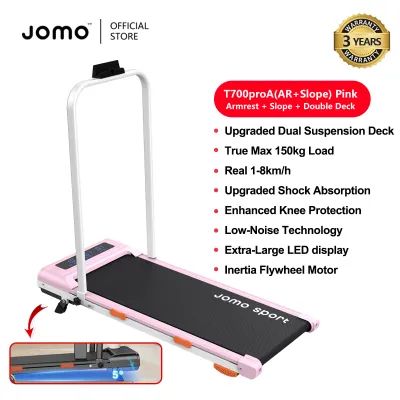
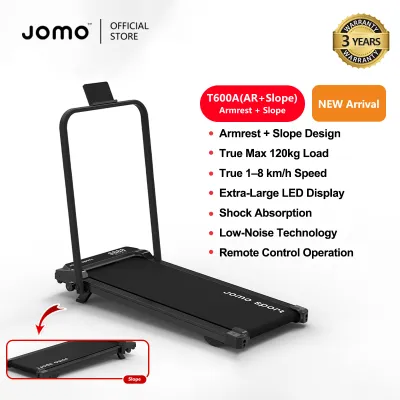

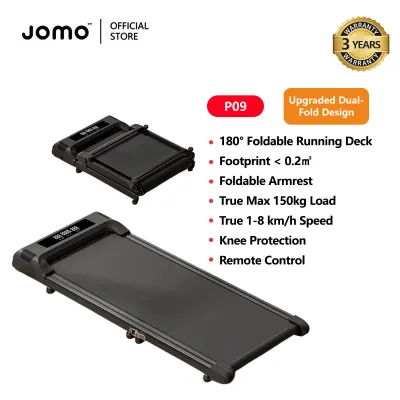
Prices are valid at publication and may change. Please refer to the product page for the latest price.
Why HDB Concrete Slabs Amplify Impact Noise
Housing and Development Board (HDB) flats in Singapore are constructed using robust reinforced concrete slabs. While concrete is excellent at blocking airborne sounds like talking or television audio, it is highly efficient at transmitting structure-borne vibrations. When your foot strikes the deck of a walking pad, the concrete slab acts as a giant speaker diaphragm, carrying the low-frequency energy directly into the ceiling of the flat below. This is why a machine that feels whisper-quiet to you can sound like a dull, repetitive hammer to your downstairs neighbour.

Relying solely on the manufacturer’s decibel rating for motor noise can lead to a false sense of security. A quiet motor specification only measures airborne sound in a controlled testing environment, completely ignoring the physical impact of a human body walking on the deck. Furthermore, your existing floor finish significantly influences how this energy is distributed. Hard floor finishes like ceramic or homogenous tiles offer virtually no acoustic cushioning, reflecting and amplifying the impact energy. While vinyl flooring or timber parquet provides a tiny amount of natural dampening, they are still insufficient on their own to stop the heavy, localized vibrations of a walking pad from migrating downstairs.
Practical Ways to Reduce Vibration and Protect Neighbours
To enjoy your daily steps without receiving a knock on your door, you must implement physical dampening strategies. The most effective tool is a dedicated anti-vibration mat. Instead of thin, soft foam mats, look for high-density rubber mats specifically engineered for heavy fitness equipment. These mats work by absorbing the kinetic energy of your footfalls and dispersing it horizontally within the rubber material, preventing the energy from penetrating the concrete floor slab.
Where you place your walking pad within your HDB layout is equally critical. Avoid placing the machine directly against shared party walls that connect to your next-door neighbours, as vibrations can travel laterally through the walls. It is also wise to position the equipment away from areas directly above your downstairs neighbours’ bedrooms. Placing the walking pad in the living room, ideally over a central area that is less likely to be occupied during your exercise hours, minimizes the chance of disrupting anyone’s sleep or quiet time.
Finally, establish a respectful usage schedule that aligns with community standards. In Singapore, official quiet hours are observed between 10:30 PM and 7:00 AM. Restricting your walking pad sessions to daytime or early evening hours is a simple way to prevent friction. If you must walk during early mornings or late nights, keep your speed to a minimum and focus on a soft, controlled walking stride to keep the impact noise as low as possible.
Pre-Purchase Checks and In-Home Testing Strategies
Before purchasing a walking pad, take the time to review the manufacturer’s technical specifications. Pay close attention to the motor type, the width of the walking belt, and the maximum weight capacity. A motor that is constantly pushed to its absolute weight limit will run louder and hotter, increasing airborne noise. Choosing a model with a weight capacity that comfortably exceeds your actual weight ensures the motor operates efficiently and quietly.
Because every HDB block has slightly different structural characteristics and floor finishes, it is highly recommended to verify the retailer’s return and exchange policies before finalizing your purchase. Ensure there is a clear return window that allows you to send the unit back if the vibration levels prove incompatible with your specific home layout.
Once the walking pad arrives, conduct a controlled in-home test before integrating it into your daily routine. Set up the machine in your intended workout spot, place your dampening mat underneath, and walk at your typical speed for a few minutes. If possible, coordinate with a family member or a friendly downstairs neighbour to stand in the room below during the test. This direct feedback will tell you immediately whether your dampening setup is working or if you need to adjust the placement or add extra layers of rubber padding.
Frequently Asked Questions (FAQ)
Do I need a special mat for a walking pad in an HDB?
Yes, a standard yoga mat is not designed to handle the heavy, localized impact of a walking pad. Yoga mats are typically made of soft, low-density foam that compresses completely under the weight of the machine and the user, offering zero vibration dampening. To protect your floor and your neighbours, you need a high-density rubber equipment mat, ideally between 6mm to 10mm thick, which can withstand heavy loads and actively absorb structure-borne shock.
Will running on a walking pad cause more noise than walking?
Yes, running dramatically increases both airborne noise and structure-borne vibration. When you run, your feet leave the deck entirely, resulting in a much harder impact when you land, which multiplies the force transmitted through the HDB concrete floor. Additionally, running speeds require the motor to spin much faster, significantly increasing the mechanical hum. Most compact walking pads are specifically engineered for walking speeds and may suffer premature motor wear or safety issues if used for high-impact running.
Community discussion
Share your experience or ask a question. Comments are reviewed before publication.