
Performing high-intensity interval training or plyometric workouts at home is an efficient way to stay fit, but living in a Housing & Development Board (HDB) flat presents unique acoustic challenges. When you use a jump box for explosive training, the impact of your landings can easily reverberate through the building, causing friction with your downstairs neighbors. Fortunately, you do not have to abandon your training routine. Minimizing workout noise in a high-density apartment requires a three-pronged approach: isolating your equipment from the floor, adjusting your landing mechanics to absorb shock physically, and planning your workouts around community living patterns. By understanding how sound travels and making targeted adjustments to your gear and form, you can maintain a challenging cardio routine without causing a disturbance.
Why Box Jumps Cause Disturbances in HDB Flats
To address the noise from your workouts, it is essential to understand the difference between airborne noise and structure-borne noise. Airborne noise, such as music or voices, travels through the air and can be partially blocked by standard walls and closed doors. Structure-borne noise, on the other hand, occurs when an object directly impacts a physical structure, sending kinetic vibrations traveling through solid materials.
HDB flats are constructed primarily with reinforced concrete slabs. While concrete is exceptionally strong and durable, its dense, rigid composition makes it an excellent conductor of low-frequency vibrations. When your feet hit a jump box, or when the box presses into the floor, that sudden kinetic energy is transmitted directly into the concrete slab. To the neighbors living directly below you, this energy manifests as a deep, structural thud that can shake light fixtures and echo loudly through their living space. Standard soundproofing methods designed for voices or music will not stop these low-frequency vibrations. While no home setup can guarantee absolute silence during explosive movements, proper physical mitigation can dramatically reduce the impact radius, keeping the disturbance well within acceptable limits.
Products mentioned in this guide
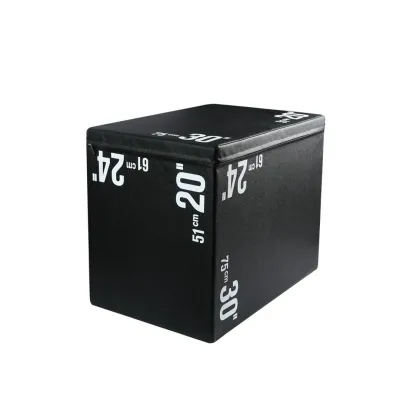
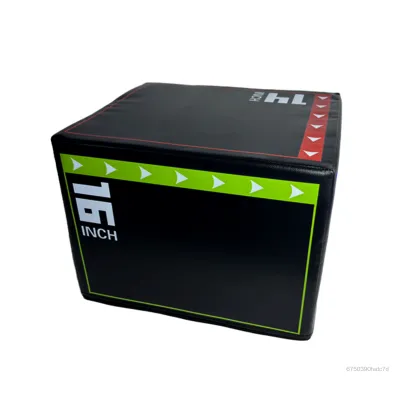
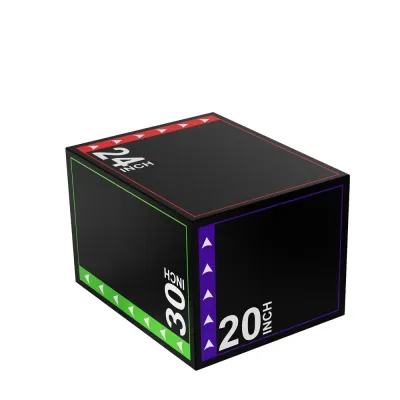
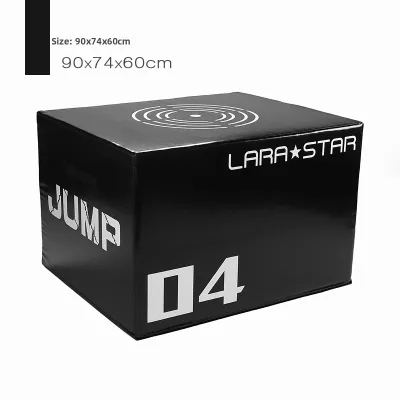
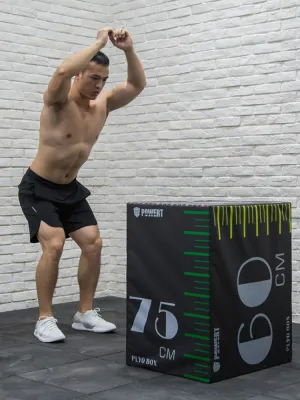
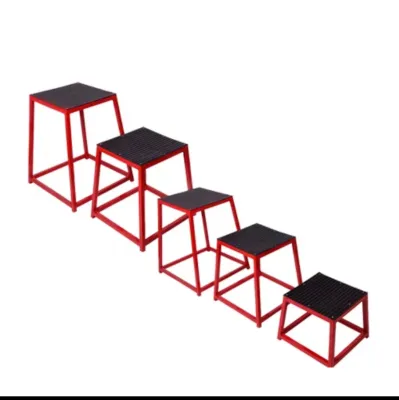
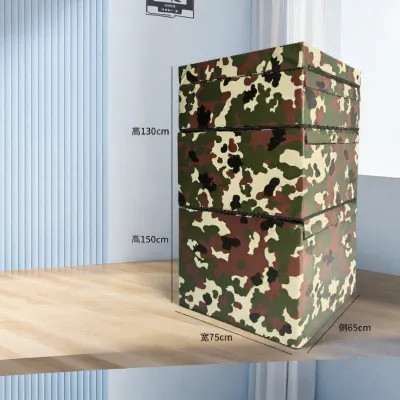
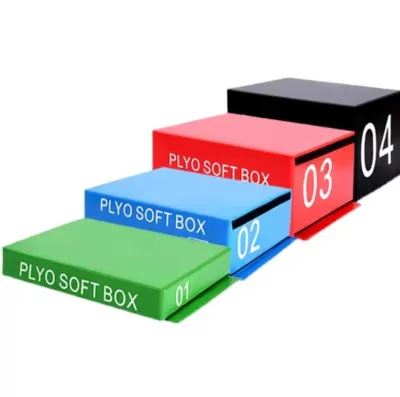
Prices are valid at publication and may change. Please refer to the product page for the latest price.
Equipment Upgrades: Selecting a Quiet Jump Box and Floor Mats
The most effective way to prevent kinetic energy from entering the HDB concrete slab is to isolate your training area. This is achieved through decoupling (physically separating your equipment from the floor) and mass-loading (using dense materials to absorb and disperse energy before it can travel).

Soft Foam vs. Rigid Jump Boxes
Traditional wooden or metal plyo boxes are highly durable, but they act like acoustic drums. When your feet strike a rigid wooden box, the hollow interior amplifies the sound, sending a sharp, loud crack through the air followed by a heavy vibration into the floor.
For apartment training, a soft foam jump box is a vastly superior option. These boxes are constructed with a high-density foam core wrapped in a durable vinyl cover. The foam compresses slightly upon impact, absorbing a significant portion of the downward force and completely eliminating the loud surface slap of your shoes. However, soft foam boxes present distinct trade-offs. They are inherently less stable on their edges than rigid wooden boxes, meaning you must land squarely in the center to prevent the box from tipping. Additionally, high-density foam can degrade over time with heavy use, so you must regularly inspect the box for soft spots or structural warping that could compromise your safety during explosive jumps.
High-Density Floor Mats and Underlays
Placing your jump box directly on bare tiles or vinyl flooring is a recipe for extreme noise and potential floor damage. To decouple your workout, you must establish a dedicated, multi-layered flooring system. Standard, thin exercise mats do not have the mass or thickness required to dissipate heavy impacts.
Instead, invest in heavy-duty, high-density rubber tiles, ideally with a thickness of at least 15mm to 25mm. These are the same style of mats used in commercial weightrooms to absorb dropped barbells. For maximum noise reduction, you can implement a layering technique. Place a specialized acoustic underlay or a thick closed-cell foam mat directly on your HDB floor to absorb the initial low-frequency vibration. On top of this soft layer, place a rigid, heavy rubber mat. This dense top layer disperses the concentrated force of your landing across a much wider surface area, while the softer bottom layer prevents that dispersed energy from penetrating the concrete slab.
Form Adjustments for Quieter, Safer Landings
While high-quality gear provides a physical barrier to noise, your movement mechanics are your most important tool for noise mitigation. Plyometric training carries inherent risks of joint strain, slips, and falls. Equipment cannot replace proper physical conditioning, body control, and focused technique.
To train quietly, you must master the art of the “soft landing.” A loud landing is a clear indicator that your joints are absorbing shock inefficiently, which sends excess kinetic energy straight into the floor. When landing on the jump box, aim to land as quietly as possible. Do not land flat-footed with locked knees. Instead, catch your weight progressively. Your toes should make contact first, followed immediately by the balls of your feet, your ankles bending, and your knees and hips flexing to absorb the downward force. Your landing position should resemble a controlled, athletic squat, with your knees aligned directly over your toes and your hips pushed back. If you cannot land quietly, the box is likely too high for your current conditioning level, and you should lower the height immediately to protect your joints and reduce noise.
Furthermore, avoid the temptation to perform rebounding jumps, where you jump backward off the box and immediately spring back up. Rebounding drastically multiplies the impact force transmitted to the floor upon landing. Instead, make it a strict rule to step down from the box one foot at a time. This simple habit cuts the floor impact by more than half and significantly lowers the risk of Achilles tendon injuries. Finally, always lift your jump box when moving it; dragging a heavy box across vinyl or tile floors creates high-frequency scraping noises that can easily irritate neighbors next door and below.
Scheduling and Low-Impact Alternatives
Even with the best gear and flawless form, some level of vibration is inevitable. Managing the social aspect of apartment fitness is just as important as managing the physical acoustics.
Smart scheduling is the easiest way to prevent neighbor disputes in Singapore’s high-density estates. Restrict your high-impact training to widely accepted daytime hours. Avoid working out in the early mornings (before 9:00 AM) when neighbors may be sleeping, or late in the evening (after 8:00 PM) when families are winding down. Mid-morning or late afternoon, when many residents are at work or school, are generally the least disruptive times to train.
Additionally, you can manage your overall noise volume by substituting some of your high-impact box jumps with highly effective, low-impact alternatives. You do not need to perform dozens of explosive jumps to get a great cardio and strength workout. Consider swapping a portion of your jumps for heavy step-ups, which build single-leg strength and cardiovascular endurance with virtually zero impact noise. Explosive kettlebell swings or resistance band jumps are also excellent alternatives that train power and rate of force development without requiring you to leave the ground. By diversifying your movement selection, you reduce the total volume of heavy landings while still achieving your fitness goals.
Frequently Asked Questions (FAQ)
Will a standard yoga mat stop the vibration from box jumps?
No, a standard yoga mat will not prevent vibrations from traveling through your floor. Yoga mats are designed to provide grip and minimal cushioning for static floor exercises; they lack the thickness, density, and structural mass required to absorb and decouple the heavy, low-frequency kinetic energy generated by plyometric landings.
Is it safe to place the jump box on a thick carpet or rug to muffle sound?
No, placing a jump box on a plush carpet, shag rug, or unstable mat is highly dangerous. These soft, uneven surfaces compress unpredictably under explosive force, which can cause the jump box to slip, slide, or tip over mid-jump. To ensure your safety, always place your jump box on a flat, stable, high-density rubber mat that offers excellent grip and slip resistance.
Community discussion
Share your experience or ask a question. Comments are reviewed before publication.