
Choosing your first Pilates reformer is a significant milestone in your fitness journey, transitioning you from studio dependence to the convenience of home practice. However, navigating the technical specifications, material choices, and safety features can quickly become overwhelming. For a beginner, the ideal reformer is not necessarily the most expensive or the one with the most complex attachments; rather, it is a stable, predictable machine that supports proper alignment and gradual progression.
To make an informed decision, you must focus on four foundational pillars: structural stability, carriage smoothness, adjustable spring resistance, and space compatibility. Prioritizing these essential elements ensures you invest in a machine that keeps you safe, matches your current skill level, and accommodates your physical space. By understanding what to look for, you can avoid overpaying for professional-grade extras while ensuring your equipment remains a reliable partner for years to come.
Quick Guide: What Actually Matters for Your First Reformer
When shopping for a reformer, it is easy to get distracted by polished wood finishes, high-tech digital consoles, or claims of “studio-grade” performance. For a novice, the core components that directly impact safety and the learning curve are the frame, the carriage, the spring system, and the footbar. These parts must work in harmony to provide a stable base of support, as any instability can compromise your form and increase the risk of strain during off-balance exercises.
Products mentioned in this guide
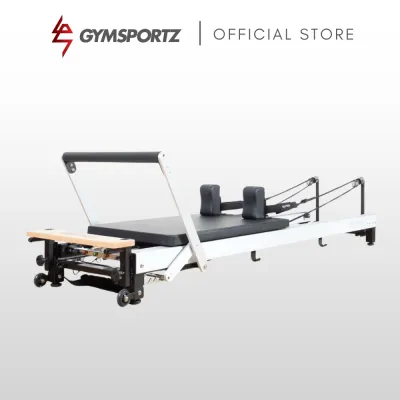
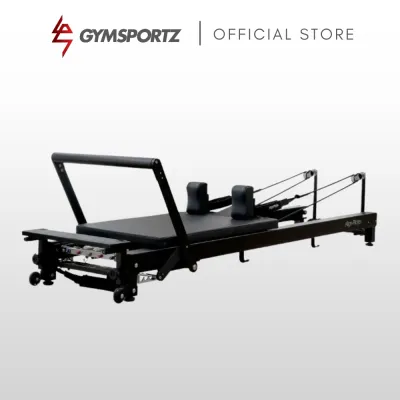
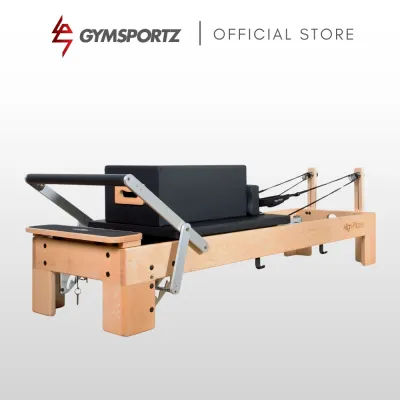
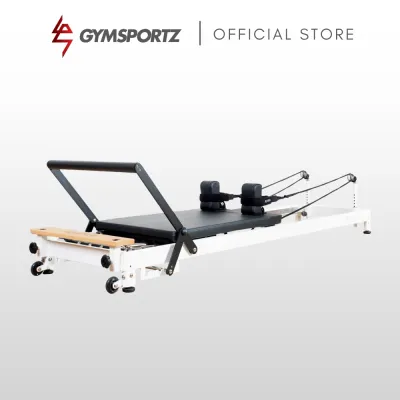
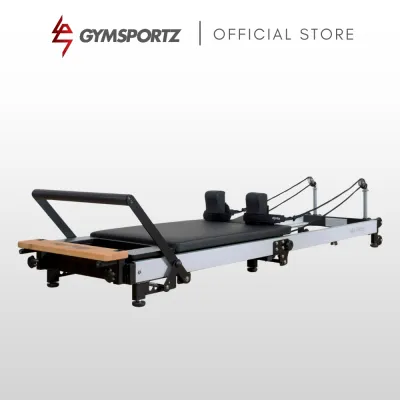
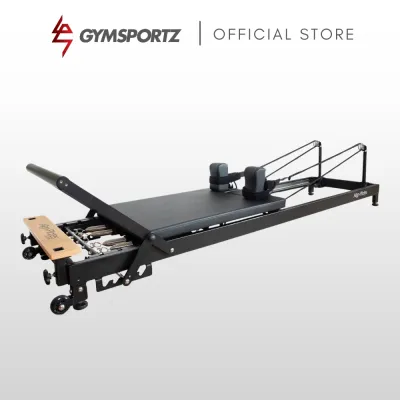
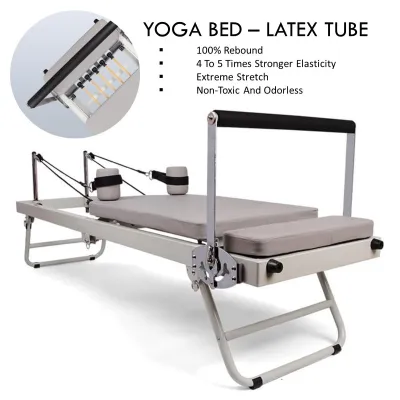
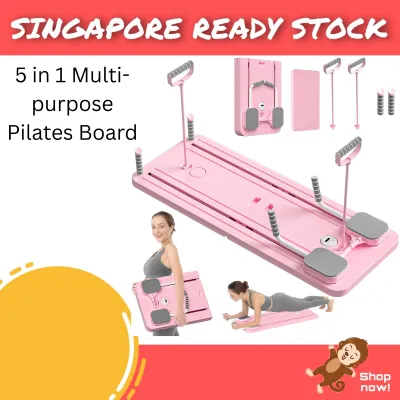
Prices are valid at publication and may change. Please refer to the product page for the latest price.
Many marketing terms used by manufacturers do not necessarily translate to a better experience for beginners. Phrases like “infinite adjustment levels” or “commercial-grade vinyl” often serve to justify a higher price tag without offering tangible benefits to someone learning foundational movements. Instead of focusing on cosmetic upgrades, prioritize clear, verifiable specifications such as the maximum weight capacity, the physical dimensions of the carriage, and the adjustability of the footbar.
To help narrow down your options, consider a basic decision matrix based on your physical height, available home space, and intended usage frequency. Taller users should verify the maximum carriage travel distance to ensure they can fully extend their legs without hitting the frame ends. If you live in a compact apartment, a folding or vertically storable model is essential, whereas a dedicated workout room allows for a heavier, rigid frame. Finally, if you plan to use the machine multiple times a week, investing in durable frame materials and high-quality springs is paramount.
How to Assess Frame Materials and Structural Stability
The frame is the backbone of your reformer, determining both its longevity and how secure you feel during dynamic exercises. The three most common frame materials are hardwood, aluminum, and steel, each offering distinct trade-offs in terms of durability, weight, and maintenance. Hardwood frames, often crafted from maple or oak, are exceptionally stable and absorb vibration well, but they are heavy, difficult to move, and sensitive to high humidity levels.

Aluminum frames offer a modern, lightweight alternative that resists moisture and humidity, making them highly suitable for tropical climates where wood might warp over time. While aluminum models are easier to maneuver, they can sometimes feel less grounded during high-velocity movements if the base is too light. Steel frames provide maximum rigidity and durability, but they are incredibly heavy and must be checked for high-quality powder coating to prevent rust in humid environments.
Before purchasing, always verify the stated weight capacities and structural warranties through the manufacturer’s official product documentation rather than relying on promotional copy. A reliable home reformer should clearly state its maximum user weight limit, which typically ranges from 100kg to 150kg. Look for a structural frame warranty of at least three to five years, as this indicates the manufacturer’s confidence in the joint integrity and material strength under repeated stress.
You can perform several visual and physical checks to assess structural stability if you are able to view the machine in person. Inspect the joints where the rails meet the legs; look for heavy-duty bolts, reinforced brackets, or clean, continuous welds rather than thin metal plates. Check the width of the base stabilizers, as a wider footprint prevents the frame from rocking or tipping when you perform lateral exercises. Gently shake the frame from side to side to ensure there is no noticeable flex or creaking.
Checking Carriage Smoothness and Track Mechanics
The carriage is the sliding platform you sit, kneel, or lie on, and its movement quality directly affects your ability to maintain control and balance. Carriage systems generally rely on either wheel-based or roller-based mechanics to glide along the frame rails. Wheel-based systems typically use polyurethane or nylon wheels that ride inside or on top of the tracks, offering a quiet, cushioned ride that is highly forgiving for beginners.
Roller-based systems often utilize heavy-duty precision bearings designed to handle higher loads with minimal friction. While roller systems provide an incredibly smooth glide, they can transmit more track vibration to the carriage if the rails are not kept perfectly clean. For a beginner, either system is acceptable, provided the wheels or rollers are aligned correctly and do not catch or stutter during movement.
To evaluate track mechanics, use a simple checklist to test the carriage before committing to a purchase. Push the carriage slowly from one end of the frame to the other with your hands, feeling for any resistance, bumps, or uneven patches along the track. Gently wiggle the carriage side-to-side to check for lateral play; there should be minimal side-to-side movement, as excess play can cause the wheels to misalign or derail. Finally, inspect the carriage stop blocks at both ends to ensure they have durable rubber bumpers to cushion any accidental impacts.
Noise reduction is another critical factor to assess, especially in a quiet home environment where squeaks or grinding sounds can disrupt your concentration. Listen closely as the carriage moves; a high-quality system should glide almost silently, with only a soft whirring sound from the wheels. Excessive noise often points to misaligned tracks, worn bearings, or accumulated debris, all of which require immediate maintenance or indicate a lower-quality build.
Matching Spring Resistance and Adjustability to Your Needs
Springs provide the resistance that challenges your muscles and supports your body weight, making them the most critical functional component of a reformer. Most home reformers feature four or five springs, which are typically color-coded or labeled to indicate different levels of tension. While there is no universal standard for color-coding, a common configuration includes heavy (red), medium (blue), and light (yellow) springs.
Before buying, consult the manufacturer’s resistance chart to understand the exact tension values of each spring at various extension lengths. A beginner does not need a highly complex or heavy spring configuration; instead, you need a balanced setup that allows for subtle progressions. For foundational Pilates exercises, a minimum of four springs—consisting of one light, two medium, and one heavy spring—is highly recommended to accommodate both upper-body and lower-body movements.
The ease of adjusting these springs and other contact points during a workout is vital for maintaining a smooth exercise flow. Evaluate how the springs attach to the springbar; look for open, accessible hooks or quick-release mechanisms that do not require excessive finger strength to secure. Similarly, check the footbar adjustment mechanism, ensuring it can be locked into multiple height positions quickly and securely without the risk of pinching your hands.
Shoulder rests and headrests should also offer basic adjustability to accommodate your unique body proportions. Look for shoulder rests that can be widened or removed entirely, which is particularly useful for users with broader shoulders or for exercises that require a flat platform. The headrest should have at least two or three elevation positions to support proper neck alignment when lying flat on the carriage.
Planning Your Space: Footprint, Clearance, and Storage
A Pilates reformer is a large piece of equipment, and failing to plan for its physical presence is a common mistake among first-time buyers. You must distinguish between the static footprint of the machine and the dynamic clearance required during actual use. While a reformer may physically fit into a narrow hallway or corner, you need at least 60cm to 100cm of clear space on all sides to perform exercises safely.
This dynamic clearance is essential for movements where your arms or legs extend beyond the frame, or when using accessories like a jumpboard or box. If your space is limited, look for space-saving designs such as folding frames, vertically storable models, or stackable units. Folding reformers are excellent for multi-purpose rooms, but they require you to verify the weight of the machine and the physical effort needed to fold and unfold it safely.
When evaluating vertically storable models, check the ceiling height of your room to ensure the upright machine will clear any light fixtures or fans. Ensure the reformer features a secure locking mechanism or wall strap to prevent it from tipping over when stored vertically, especially if you have children or pets. Additionally, verify that the machine has built-in transport wheels on one end, making it easier to roll across the floor without straining your back.
Floor protection is another practical consideration that depends on your frame material and carriage track exposure. Heavy wood or steel frames can easily dent hardwood floors or crack delicate tiles over time. Placing a high-density rubber mat under the reformer is a wise investment, costing around S$30 to S$50, to protect your floors, prevent the machine from sliding, and catch any stray lubricant or dust from the carriage tracks.
Essential Safety Checks and Pre-Purchase Verification
Safety should always be your primary concern when selecting and setting up a home Pilates reformer. Because you will be suspending your body weight and working against spring tension, any mechanical failure can lead to injury. Begin by identifying essential safety features, such as a robust carriage locking pin that secures the platform when you are mounting or dismounting the machine.
The spring anchors must be deep and securely welded or bolted to the frame, ensuring that the spring hooks cannot slip off under heavy tension. Inspect the footbar locking mechanism to confirm that it locks solidly into place and cannot collapse forward or backward when you apply force. The footbar itself should be wrapped in a non-slip, textured material to provide a secure grip for both hands and feet, even when damp with sweat.
Unless explicitly supported by the manufacturer’s documentation, do not attempt to anchor external resistance bands or suspension straps to the frame, stand on unstable parts of the machine, or combine the reformer with other unverified fitness apparatuses. Before assembling or using your new reformer, thoroughly read the user manual to understand the assembly requirements, weight limits, and recommended maintenance schedules. Pay close attention to the torque specifications for any structural bolts, and ensure you use the correct tools provided or recommended by the manufacturer.
Finally, establish clear stop conditions for your home practice to prevent accidents. If you notice hairline cracks in a wooden frame, rusted or deformed springs, loose welds, or a carriage that derails or stutters, stop using the machine immediately. Do not attempt to repair structural components yourself; instead, consult a qualified professional or contact the manufacturer directly for authorized replacement parts and guidance.
Frequently Asked Questions (FAQ)
Do I need a professional-grade reformer for beginner Pilates?
No, you do not need a professional-grade or studio-grade reformer as a beginner. Commercial models are designed to withstand eight to ten hours of continuous daily use in a busy studio, which requires heavy-duty frames, extra-thick upholstery, and highly complex adjustment systems that drive up the cost significantly. For home use, a consumer-grade reformer offers the same core functionality and resistance levels without the unnecessary bulk and expense. You can perform all foundational Pilates exercises on a well-built home model, and you can always upgrade or add accessories, such as a tower or jumpboard, as your strength and skill level progress over time.
How do I maintain the carriage tracks and springs at home?
Maintaining your reformer at home is straightforward and essential for ensuring a smooth, safe ride. Clean the carriage tracks and wheels at least once a week using a dry microfiber cloth to remove dust, hair, and skin oils that can cause the carriage to stutter. Avoid using harsh chemical cleaners or silicone sprays on the tracks unless specifically recommended by the manufacturer, as these can attract more dirt and degrade the wheel material. Visually inspect the springs every month for any signs of wear, such as gaps between the coils, rust, or uneven tension. If you detect any of these issues, stop using the affected spring immediately and contact the manufacturer for a replacement.
Are folding reformers safe and stable enough for regular use?
Yes, folding reformers are safe and stable for regular home use, provided they feature high-quality locking mechanisms and are set up correctly. When evaluating a folding model, look for heavy-duty hinges and secure locking pins that firmly connect the two halves of the frame when unfolded. Be aware that folding frames may exhibit a slight amount of vertical flex or produce slightly more noise than a rigid, one-piece frame, but this does not compromise safety if the locking pins are fully engaged. Always perform a quick physical check before each workout: ensure the frame is completely flat on the floor, the locking pins are securely locked, and the carriage tracks are aligned across the hinge joint.
Community discussion
Share your experience or ask a question. Comments are reviewed before publication.