
To maintain a safe, stable practice during a sweaty hot yoga session in Singapore’s intense humidity, the ideal anti-slip yoga towel must feature a sweat-activated material grip or a high-density silicone backing, combined with a fast-drying microfiber blend. Because the tropical climate accelerates moisture saturation and slows down natural drying, standard towels quickly become heavy, slippery hazards. Selecting a specialized towel requires evaluating how the grip mechanism responds to moisture, checking the fabric’s weight and weave, and verifying its compatibility with your existing yoga mat.
Identifying Grip Mechanisms That Work When Wet
When practicing hot yoga in a humid environment, your choice of grip mechanism determines whether you stay securely anchored or slide during transitions. There are two primary anti-slip technologies available: mechanical grip and material grip. Understanding how each responds to moisture is essential for selecting a towel that matches your specific sweat level and practice style.
Mechanical grip relies on physical elements, such as silicone dots, nubs, or grid patterns, applied to the underside of the towel. These elements physically lock onto the top surface of your yoga mat, preventing the towel from bunching or sliding. This design provides immediate, dry traction, meaning the towel remains stable even before you begin to sweat. However, you must verify the manufacturer’s care instructions, as some silicone backings can degrade or lose their stickiness if exposed to high-temperature washes or direct sunlight.
Products mentioned in this guide
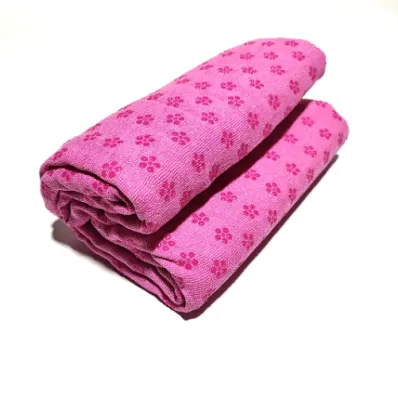
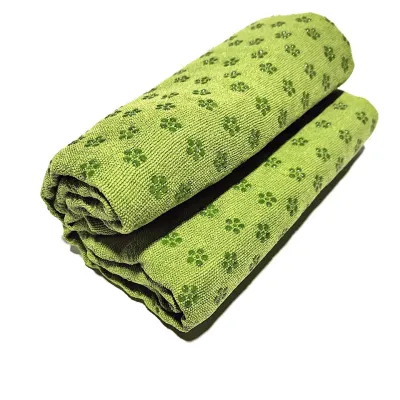
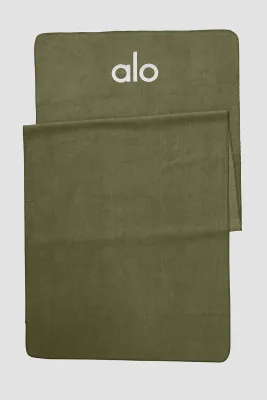
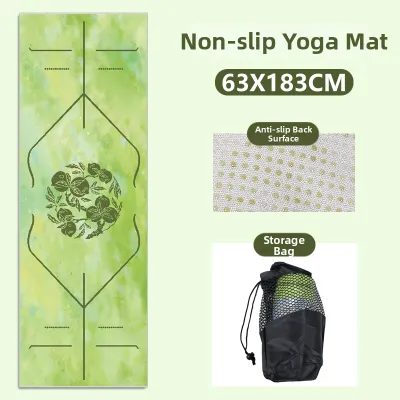
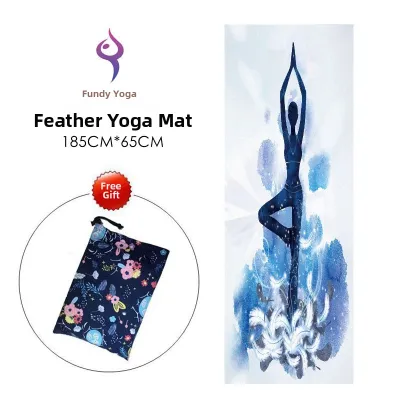
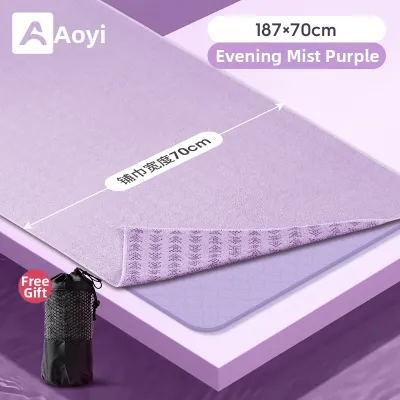
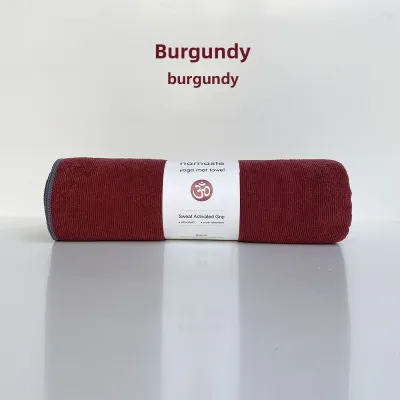
Prices are valid at publication and may change. Please refer to the product page for the latest price.
Material grip, on the other hand, utilizes specialized fabric textures like suede-like microfiber or brushed polyester. These materials rely on moisture to activate their slip-resistant properties. When dry, they might feel smooth or even slightly slippery under your hands and feet. Once you begin to sweat, or if you lightly mist the towel with water before your practice, the fibers expand and create a high-friction surface. This mechanism is highly reliable for intense, high-sweat styles where dry traction is rarely an issue after the first few sequences.
When shopping, check product labels and descriptions carefully for terms like “wet grip,” “sweat-activated,” or “moisture-reactive” rather than relying on generic “non-slip” marketing. Generic terms often refer only to dry conditions, which fail quickly once sweat begins to pool on the surface. A true hot yoga towel should explicitly state that its slip resistance improves as it absorbs moisture.
Additionally, evaluate the density and distribution of the grip elements across the towel. If you choose a silicone-backed option, look for a dense, even pattern from edge to edge. Sparse dots can cause the fabric to ripple or pocket between the anchor points, creating tripping hazards during dynamic movements. For material-only towels, ensure the brushed texture is uniform across the entire surface so your grip remains consistent regardless of your stance width on the mat.
Choosing the Right Material and Absorbency for Heavy Sweat
Fabric composition is critical in Singapore’s humid environment, where moisture evaporates slowly from surfaces. Look for microfiber blends consisting of polyester and polyamide, typically in an 80/20 or 70/30 ratio. Polyester provides structural durability and quick-drying capabilities, while polyamide significantly enhances water absorption. This combination pulls sweat away from your skin and disperses it across a wide surface area, allowing for faster evaporation even when the ambient air is humid.

Avoid standard cotton towels for hot yoga practice. While cotton is highly absorbent, it retains moisture within its fibers rather than dispersing it. This causes the towel to become heavy, soggy, and cold during a class. A waterlogged cotton towel loses its structural integrity, bunching up under your feet and sliding across the mat, which compromises your balance and safety during standing poses.
Check the towel’s GSM (grams per square meter) rating to balance absorption and portability. A GSM between 300 and 400 generally offers the optimal middle ground for hot yoga. This weight provides sufficient density to absorb heavy perspiration throughout a sixty-minute session without becoming excessively bulky or difficult to wring out by hand.
Avoid overly thick or plush towels, even if they feel comfortable to the touch. A thick towel acts like a sponge in high-humidity climates, retaining too much moisture and taking an exceptionally long time to dry after washing. Furthermore, thick fabrics create an unstable, squishy surface that makes standing balance poses, such as tree pose or warrior III, significantly more difficult by reducing your sensory feedback from the floor.
Checking for Hygiene and Odor Control in Humid Conditions
Singapore’s warm, humid climate creates an ideal breeding ground for bacteria and mildew, especially when damp gear is stored in a gym bag. When shopping, check the product specifications for built-in antimicrobial or anti-odor treatments. Some towels utilize silver-ion technology or specialized fabric finishes that inhibit the growth of odor-causing bacteria, keeping your towel fresher for longer between washes.
Examine the weave density and breathability of the fabric. A tightly woven but thin microfiber allows air to pass through easily, facilitating rapid evaporation. If a towel cannot dry completely within a few hours of hanging in a well-ventilated indoor space, mildew can quickly set in, leaving a persistent sour smell that is incredibly difficult to remove.
Review the manufacturer’s care instructions before purchasing to confirm the towel can be machine washed regularly without degrading. Some specialized backings require cold water and gentle cycles, while others can tolerate warmer temperatures that are more effective at killing bacteria. Avoid towels that require dry cleaning or highly delicate hand-washing routines, as they are impractical for daily or frequent hot yoga practices.
Ensuring Proper Fit and Mat Compatibility
A yoga towel must match the dimensions of your yoga mat to function safely. If the towel is too short, your hands or feet will slip on the exposed mat; if it is too long, the excess fabric will bunch up at the ends, creating a serious tripping hazard. Standard yoga mats are typically 173 centimeters or 183 centimeters long, so verify your mat’s measurements before selecting a towel size.
Look for specialized anchoring features that keep the towel flat and secure. Some designs include corner pockets that slip over the edges of your mat, while others feature elastic straps or weighted corners. These physical anchors prevent the towel from curling or sliding during dynamic transitions, ensuring a flat, predictable surface throughout your practice.
Assess the towel’s thickness in relation to your balance. A thin, dense towel maintains a firm connection to the ground, allowing you to engage your feet and ankles properly during standing poses. If you require extra cushioning for your knees or joints, it is safer to use a cushioned yoga mat underneath a thin towel rather than relying on a thick, unstable towel.
Consider the packed size and weight of the towel if you commute to a studio in the heat. You want a lightweight towel that folds down compactly. Microfiber towels are highly compressible, easily fitting into a small backpack or tote bag alongside your water bottle, without adding unnecessary bulk or weight to your daily carry.
Maintaining Grip and Preventing Mildew in Humid Climates
Proper maintenance is essential to preserve both the slip-resistant properties and the hygiene of your yoga towel. Always wash your towel after every single hot yoga session. Allowing sweat and body oils to sit on the fabric will clog the microfiber pores and degrade any silicone backing, rapidly reducing the towel’s grip performance over time.
Strictly avoid using fabric softeners, dryer sheets, or bleach when washing your yoga towel. Fabric softeners leave a thin, waxy coating over the fibers, which completely ruins the towel’s absorbency and turns a once-grippy surface into a slick, dangerous slide. Use a mild, clear detergent and consider adding a splash of white vinegar to the rinse cycle to help neutralize odors and remove detergent buildup.
Select the appropriate drying method based on the towel’s materials. If your towel has a silicone backing, air-drying in a well-ventilated, shaded area is usually the safest method to prevent the silicone from melting or cracking. If the care label permits tumble drying, use a low-heat setting to protect the synthetic fibers and backing elements from heat damage.
Never roll up a damp towel or leave it inside a closed gym bag for extended periods. In Singapore’s humidity, mold and mildew can begin to grow within hours in a dark, unventilated space. If you cannot wash the towel immediately after class, hang it up or drape it over a chair to air out until you can run a wash cycle.
Frequently Asked Questions (FAQ)
Can I use a regular beach or bath towel instead of a yoga towel for hot yoga?
Using a standard beach or bath towel for hot yoga is not recommended due to safety and stability risks. Regular towels lack specialized grip backings or sweat-activated textures, meaning they will easily slide across the surface of your yoga mat during transitions. Furthermore, cotton bath towels are bulky and heavy; once they absorb sweat, they become soggy, bunch up under your feet, and create an uneven, unstable surface that compromises your balance and increases the risk of slipping.
How do I know if my anti-slip yoga towel needs to be replaced?
You should replace your yoga towel when you observe physical signs of wear that compromise its safety and performance. Inspect the underside for flaking, peeling, or flattening of the silicone grip dots, as this indicates the mechanical grip is failing. Additionally, if the towel retains a persistent musty odor even after a thorough wash, or if the fabric feels stiff and has lost its ability to absorb sweat quickly, it is time to invest in a new towel to ensure a safe and hygienic practice.
Community discussion
Share your experience or ask a question. Comments are reviewed before publication.