
Selecting the right knee guard support for men in Singapore requires matching the specific mechanical demands of your sport with the correct level of joint stabilization. In a tropical climate where high humidity and heavy perspiration are constant factors, a knee guard must not only protect the joint but also manage heat and moisture effectively. Whether you are navigating sudden lateral cuts on a concrete basketball court, logging long distances along the Park Connector Network, or executing heavy squats in a local gym, the ideal support depends on your movement patterns. Understanding the structural differences between compression sleeves, patellar straps, and rigid braces allows you to make an informed decision that enhances joint awareness and comfort without restricting necessary mobility.
How to Match Knee Support to Your Sport
Every athletic activity places a unique set of physical stresses on the lower body, meaning a single type of knee support cannot serve every purpose. To find the right balance between protection and mobility, you must analyze the primary forces acting on your joints during exercise. Generally, knee supports fall into three main categories: lightweight compression sleeves for blood flow and mild stability, patellar straps for targeted pressure, and structured or hinged braces for mechanical joint alignment. While these tools are excellent for managing minor discomfort and improving spatial awareness, they are secondary to proper physical preparation. Supportive gear is designed to assist your body, but it does not replace a thorough warm-up, correct movement mechanics, or a professional medical evaluation for persistent pain.
High-Impact and Court Sports
Court sports like basketball, badminton, and tennis demand rapid acceleration, sudden deceleration, and sharp lateral cutting maneuvers. These dynamic movements subject the knee joint to intense shear forces and rotational stress, making lateral stability and patellar tracking primary concerns. For these activities, men often benefit from knee guards that feature integrated side stabilizers, such as flexible spring stays, combined with a gel ring or buttress around the kneecap. This open-patella design helps keep the kneecap centered during rapid directional changes, reducing the risk of tracking issues without locking the joint in place.
Products mentioned in this guide
![[SG Seller] Fitpro 2PCS Compression Knee Guard Support Brace Breathable Anti Slip Comfortable Arthritis Pain Relief Elastic Knee Support Gym Sport Basketball Running Leg Protecto](https://img.lazcdn.com/g/p/5257400ce36cd7ae60b656afe0979998.jpg_400x400q80.jpg_.webp)
![[BUNDLE OF 2] TAKAMIZU - Orthocare Knee Support](https://img.lazcdn.com/g/p/358694f2fd4b2405e4e66b4a4bf8105e.jpg_400x400q80.jpg_.webp)
![[$61 Buy] EBENE Bio-Ray Compression Knee Guard - Best for Active Support](https://img.lazcdn.com/g/p/18c4ecd447b81334b7d42d3631fcfe0a.jpg_400x400q80.jpg_.webp)
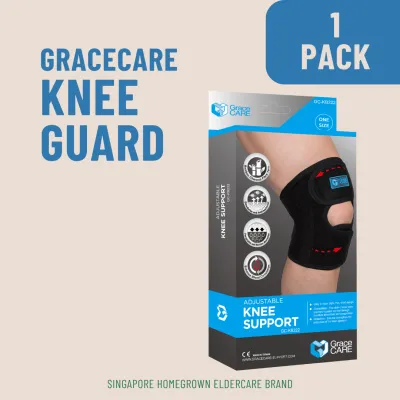
Prices are valid at publication and may change. Please refer to the product page for the latest price.
However, there is a distinct trade-off between maximum structural protection and overall mobility. Heavy, rigid hinged braces offer the highest level of mechanical protection against lateral twisting, but their bulk can slow down your reaction time and restrict quick footwork on the court. Conversely, lightweight knit compression sleeves offer excellent agility and breathability but lack the physical reinforcement needed to prevent severe joint deviation.
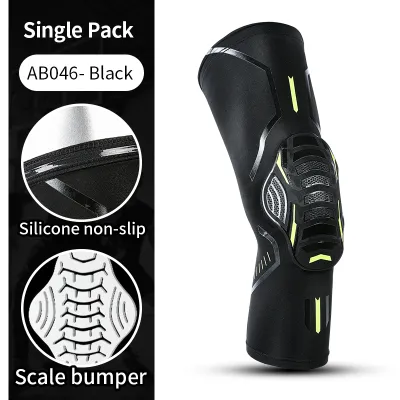
When playing on outdoor concrete courts in Singapore, intense heat leads to rapid sweating, which can cause knee guards to slide down mid-game. To counter this, look for models equipped with dual or wave-patterned silicone non-slip strips along the inner top cuff. These grips keep the guard securely in place during explosive jumps and lateral lunges, preventing the distraction of constant manual adjustments.
Endurance and Repetitive Motion
Activities such as running, cycling, and long-distance trekking involve thousands of repetitive flexion and extension cycles. In these scenarios, the primary goals of a knee guard are to manage minor overuse discomfort, improve joint proprioception, and prevent chafing over extended periods. Because these movements are linear rather than lateral, heavy structural reinforcements like hinges or thick plastic stays are generally unnecessary and can even alter your natural stride or pedal stroke.
For endurance athletes, material selection is the most critical factor. Singapore’s humid climate means that heavy, non-breathable fabrics will quickly trap sweat, leading to severe skin irritation, heat rash, and painful chafing behind the knee. Prioritize lightweight, circular-knit fabrics or thin nylon-spandex blends that feature advanced moisture-wicking properties. These materials allow air to circulate freely, keeping the skin relatively dry and cool even during long runs along East Coast Park.
Targeted compression is another key feature for repetitive motion sports. Mild, graduated compression helps promote local blood circulation, which can reduce muscle vibration and delay the onset of fatigue in the surrounding stabilizing muscles. Look for low-profile, anatomical designs that fit seamlessly under running shorts or cycling gear, ensuring the guard does not rub against bicycle frames or interfere with your movement.
Heavy Load and Stability
Weightlifting, powerlifting, and functional fitness training subject the knees to immense axial loads during deep squats, clean-and-jerks, and leg presses. Under these heavy loads, the knee joint requires maximum compression, warmth, and structural reinforcement to maintain alignment and joint integrity. This is where thick neoprene sleeves, typically ranging from 5mm to 7mm in thickness, become the standard choice for active men.
The primary mechanism of a thick neoprene sleeve is to retain localized heat, which increases blood flow and keeps the joint lubricated and pliable during heavy sets. Additionally, the tight compression provides strong proprioceptive feedback, helping you feel more stable and aligned at the bottom of a deep squat. While a 5mm sleeve offers a versatile balance of warmth and flexibility for dynamic functional workouts, a 7mm sleeve provides maximum stiffness and compression, making it ideal for dedicated, heavy powerlifting sessions.
It is important to distinguish these standard compression sleeves from specialized knee wraps or highly reinforced medical braces. Knee wraps are long elastic bands wrapped tightly around the joint before a lift to physically assist in pushing the weight back up; they are designed for temporary use during maximal attempts rather than continuous wear throughout a workout. When selecting a lifting sleeve, always check the manufacturer’s specifications regarding material density and seam construction to ensure the sleeve can withstand high outward tension without splitting.
Key Features to Check Before Buying
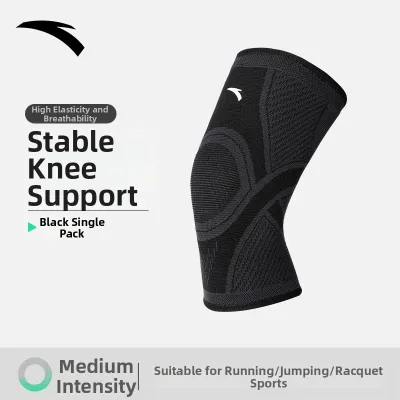
When comparing different knee guards on the market, looking past marketing claims and focusing on concrete structural features will help you find a durable, high-performing product. The first element to evaluate is the material composition. Neoprene is highly durable and offers excellent heat retention, making it perfect for lifting, but it lacks breathability for cardio-heavy sports. For running or court sports, look for engineered knit fabrics, nylon-spandex blends, or lightweight perforated neoprene, which offer a balance of elasticity and ventilation.

Next, inspect the structural reinforcements built into the guard. If you require lateral stability, look for flexible steel spring stabilizers sewn into the sides of the sleeve; these provide support during side-to-side movements without restricting your ability to bend the knee. For patellar issues, verify the presence of a molded silicone or EVA gel pad surrounding the patella opening, which helps distribute pressure evenly and keeps the kneecap tracking correctly. Adjustable strap systems, such as criss-cross elastic straps, allow you to customize the level of compression and tension based on your daily comfort levels.
Seam construction is another critical indicator of quality and comfort. Cheaply made knee guards often feature raised, rough seams that rub against the skin, leading to blisters and abrasions during movement. Look for flatlock stitching or seamless knit construction, which lays completely flat against the skin to minimize friction. Additionally, check the durability of the hook-and-loop fasteners if the guard uses straps; high-quality, injection-molded micro-velcro is less likely to snag your clothing or lose its grip over time.
Finally, review the care instructions before making a purchase. Because sports gear in Singapore is subjected to heavy sweat and humidity, your knee guard will require frequent washing to prevent bacterial growth and unpleasant odors. Ensure the product is designed to withstand regular cleaning without losing its elasticity or structural integrity.
Sizing, Fit, and Comfort Verification
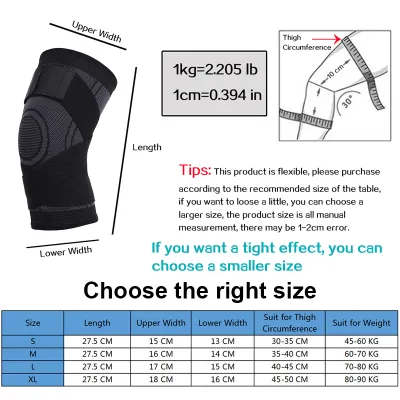
An improperly fitting knee guard is not only uncomfortable but can also fail to provide the intended support or even exacerbate joint issues. If a guard is too loose, it will slide down constantly, losing its therapeutic compression and structural alignment. If it is too tight, it can restrict blood circulation, pinch the skin, and cause numbness or swelling in the lower leg. To avoid these issues, you must take precise physical measurements before purchasing.
To find your correct size, use a flexible measuring tape while standing up with your leg slightly bent (usually at a 30-degree angle). Measure the circumference of your leg at three key points: the center of the kneecap, approximately 10 to 15 centimeters above the kneecap (lower thigh), and 10 to 15 centimeters below the kneecap (upper calf). Because sizing charts vary significantly between different brands, never assume your size based on previous clothing purchases; always compare your exact measurements against the specific manufacturer’s sizing table.
Once your knee guard arrives, perform a practical fit test before using it for a full workout. Put the guard on and check for common signs of a poor fit, such as fabric bunching or pinching in the sensitive area behind the knee, or the top cuff rolling down when you move. To verify the fit under realistic conditions, transition through a series of sport-specific movements. Perform a few deep squats, take several lateral steps, and mimic a running stride. If the guard pinches, slips, or causes any tingling sensations during these quick tests, you likely need to adjust the straps or exchange it for a different size.
Building Your Sport-Specific Shortlist
With a clear understanding of your physical requirements and measurements, you can begin filtering the options available on online marketplaces or in local sporting goods stores in Singapore. Start by establishing your non-negotiable criteria based on your primary activity. For example, if your main sport is running, your shortlist should exclude thick neoprene sleeves and heavy hinged braces, focusing exclusively on lightweight, moisture-wicking knit sleeves with non-slip silicone grips.
Next, establish a realistic budget. In Singapore, basic elastic compression sleeves can range from S$15 to S$30, which is often sufficient for mild warmth and joint awareness during light exercise. Mid-range supports featuring spring stabilizers, patellar gel pads, or adjustable straps typically cost between S$40 and S$80, offering a great balance of durability and functional support for court sports. Specialized, medical-grade hinged braces designed for ligament recovery can exceed S$100 to S$150; these are highly structured and should generally be selected in consultation with a healthcare professional.
When browsing online listings, pay close attention to user reviews, focusing specifically on long-term durability and real-world performance. Look for feedback from buyers who use the guard for the same sport as you, noting any mentions of strap degradation, loss of elasticity after washing, or silicone grips peeling off. Finally, always verify the seller’s return and exchange policies. Because achieving the perfect fit is highly individual, purchasing from a retailer that offers hassle-free size exchanges ensures you do not get stuck with an unusable product.
Care, Maintenance, and Replacement Signals
Proper maintenance is essential to preserve the elasticity, compression, and hygienic condition of your knee guard, especially given Singapore’s hot and humid weather. To prevent the buildup of sweat, bacteria, and odor, you should clean your knee guard regularly. The standard recommendation is to hand-wash the guard in cold water using a mild, liquid detergent. Avoid using fabric softeners, bleach, or harsh chemical cleaners, as these substances break down the elastic fibers, degrade the neoprene, and damage the silicone non-slip grips.
After washing, gently squeeze out the excess water without wringing or twisting the fabric, which can warp the internal stabilizers or stretch out the material. Lay the knee guard flat or hang it to air-dry in a well-ventilated indoor area, away from direct sunlight and heat sources like dryers or radiators. High heat is the primary enemy of elastic materials and will quickly cause them to lose their supportive tension.
Over time, all knee guards will eventually wear out and lose their effectiveness. You should inspect your gear regularly for visual and tactile signals of degradation. Look for stretched-out cuffs that no longer cling to your leg, fraying seams, cracked or peeling silicone grips, and velcro straps that no longer hold securely under tension. If you notice that the guard feels noticeably easier to put on or no longer provides that snug, reassuring pressure around the joint, it has lost its compression capacity and must be replaced to ensure your knees remain properly supported during activity.
Frequently Asked Questions (FAQ)
How tight should a knee guard be for running?
A knee guard for running should feel snug and firmly supportive, but it must never feel constricting or painful. You should feel a distinct, even pressure around the entire joint that helps you feel more secure during your stride. However, if you experience any numbness, coldness in your foot, sharp pinching behind the knee, or if the guard leaves deep, painful indentations in your skin, it is too tight and is restricting your blood circulation. Keep in mind that your legs will naturally swell slightly during a run due to increased blood flow; therefore, it is wise to wear the guard around the house for 10 to 15 minutes to verify its comfort before heading out for a long run.
Can I use a weightlifting knee sleeve for basketball?
While it is physically possible to wear a weightlifting sleeve on the basketball court, it is highly impractical and not recommended. Weightlifting sleeves are typically made of thick, dense neoprene (5mm to 7mm) designed to retain heat and provide maximum stiffness for linear, up-and-down movements like squats. On a basketball court, this thick material will severely restrict your lateral agility, slow down your reaction times, and cause your knee joint to overheat rapidly in Singapore’s humid climate. Basketball requires a much lighter, highly breathable knit sleeve with flexible stabilizers that allow for rapid multi-directional movement and efficient sweat evaporation.
Community discussion
Share your experience or ask a question. Comments are reviewed before publication.