
Quick Answer: Which Running Knee Support is Best?
Finding the best running knee support is not about finding a single “perfect” product, but rather matching the design to your specific joint needs. If you require general compression, mild warmth, and improved joint awareness, a knee sleeve is your best option. For targeted relief from localized pain directly under or around the kneecap, a patellar strap offers a lightweight, highly breathable solution. If you are managing severe structural instability or recovering from a ligament tear, a hinged brace provides maximum mechanical protection, though its bulk makes it less suitable for regular, high-performance running.
Ultimately, the right choice depends on your pain location, injury history, and the level of mobility your running style demands. No single design is universally best for all running scenarios, and understanding how each support functions is the first step toward pain-free miles.
Identifying Your Knee Pain and Running Needs
Before purchasing any support, you must identify where and when you feel discomfort. Pain at the front of the knee, often aggravated by running downhill or taking stairs, typically points to patellofemoral pain syndrome, commonly known as runner’s knee. Conversely, deep joint stiffness that eases as you warm up may indicate mild osteoarthritis, while sharp pain on the inner or outer sides of the joint often suggests ligament strain or iliotibial (IT) band issues.
Products mentioned in this guide
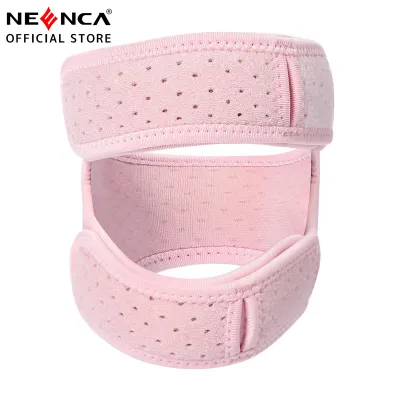
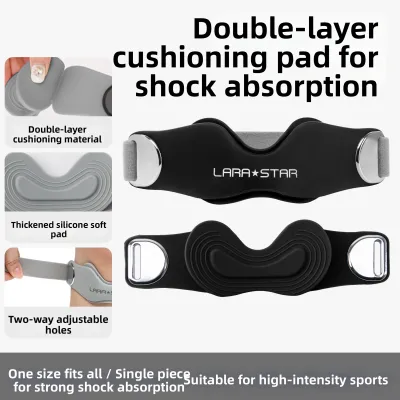
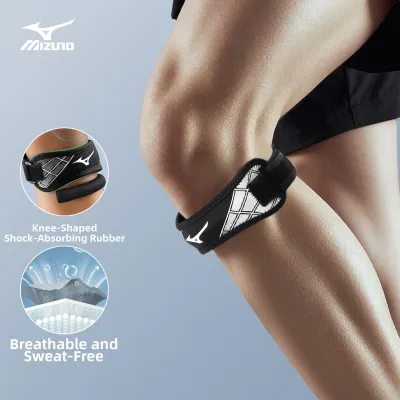
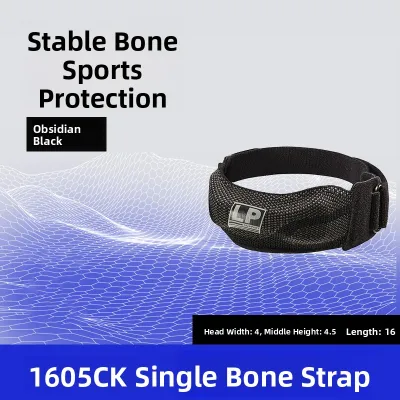
Prices are valid at publication and may change. Please refer to the product page for the latest price.

Your running environment also dictates your gear requirements. Road runners facing repetitive, hard-surface impacts often prioritize shock absorption and light compression. Trail runners navigating uneven paths, roots, and sudden lateral shifts require a higher degree of joint feedback and stability. Additionally, running in warm, humid climates requires materials that prioritize ventilation to prevent heat buildup and skin irritation.
While over-the-counter supports are excellent tools for managing discomfort, they are not a substitute for professional medical advice. If you experience sharp, sudden pain, swelling that does not subside, or a feeling that your knee is “giving way,” stop running immediately and consult a physiotherapist or sports medicine specialist for a comprehensive assessment.
Knee Sleeves: Compression, Warmth, and Mild Support
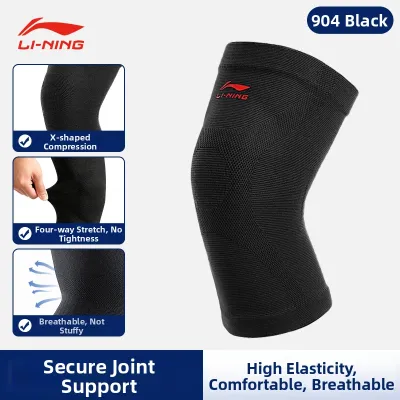
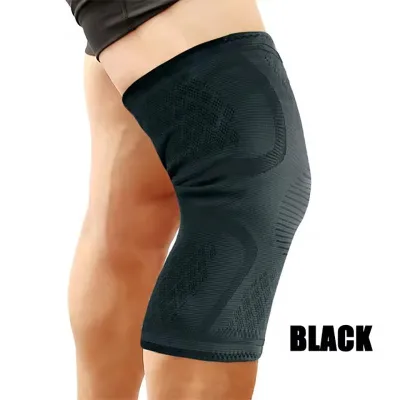
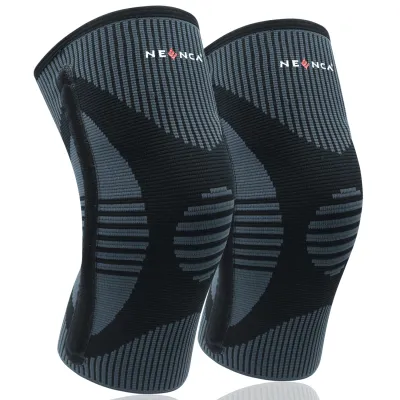
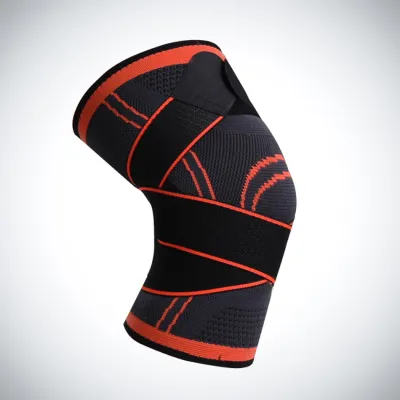
Knee sleeves are the most common type of support seen on running paths. Typically made from neoprene or elastic knit fabrics, they slide over the foot and sit snugly around the entire joint. Rather than mechanically restricting movement, sleeves work primarily through compression and heat retention.
This uniform compression increases local blood circulation, which helps manage minor swelling and keeps the joint lubricated during long runs. Additionally, the constant pressure provides valuable proprioceptive feedback—essentially enhancing your brain’s awareness of your knee’s position and movement patterns, which can improve running form and confidence.
However, sleeves come with distinct trade-offs. In warm, humid climates, thick neoprene sleeves can trap significant heat and sweat, leading to skin irritation, chafing, and slipping. Furthermore, because they lack rigid structural elements, they cannot prevent lateral joint shifting or protect against ligament sprains.
A knee sleeve is ideal for runners seeking preventative comfort, those managing mild, diffuse joint soreness, or individuals looking to keep their joints warm during early morning runs.
Patellar Straps: Targeted Relief for Tendon Pain
Patellar straps, also known as patellar bands, are minimalist supports designed to wrap tightly around the leg just below the kneecap. Unlike full sleeves, they do not cover the entire joint, focusing instead on a single, highly specific area of tension.
The primary mechanism of a patellar strap is to apply localized pressure to the patellar tendon. This pressure slightly alters the angle at which the tendon pulls on the kneecap, distributing physical stress more evenly across the joint and reducing the direct strain on the tendon during the running stride.
For runners, the primary advantage of a strap is its minimal footprint. Because it covers very little skin, it offers exceptional breathability and freedom of movement, making it highly comfortable for long-distance runs in hot weather. It allows the knee to bend fully without any fabric bunching behind the joint.
This design is best suited for runners experiencing localized anterior knee pain, patellar tendinitis (jumper’s knee), or mild tracking issues where the kneecap does not glide smoothly in its groove.
Hinged Braces: Maximum Stability and Joint Protection
Hinged knee braces represent the highest level of external joint support available without a custom medical prescription. These braces feature rigid or semi-rigid side stays, often made of lightweight metals or composite materials, connected by mechanical hinges that mimic the natural bending motion of the knee.
The primary function of a hinged brace is to provide mechanical resistance against lateral (side-to-side) movement and to prevent hyperextension. By physically locking the joint into a safe plane of motion, it protects healing ligaments from excessive stress.
Despite their protective benefits, hinged braces are generally poorly suited for active, high-performance running. Their weight and bulk can significantly alter your natural running gait, potentially causing secondary strain in your hips or ankles. Additionally, the rigid frames and multiple straps present a high risk of severe chafing during repetitive running motions.
A hinged brace is best reserved for runners recovering from major ligament injuries (such as ACL or MCL sprains) who have been cleared by a professional to perform light, straight-line jogging, or for those requiring maximum stability during daily walking and rehabilitation exercises.
Comparing the Three Supports for Running
To help you decide which option fits your training routine, it is helpful to compare their characteristics directly.
| Support Type | Support Level | Mobility | Breathability | Weight & Bulk | Primary Use Case |
|---|---|---|---|---|---|
| Knee Sleeve | Mild | High | Moderate to Low | Low | General joint soreness, warmth, and mild swelling |
| Patellar Strap | Moderate (Targeted) | Maximum | High | Very Low | Localized under-kneecap pain and patellar tendinitis |
| Hinged Brace | Maximum | Low | Low | High | Post-injury rehabilitation and severe joint instability |
When choosing between these options, apply a simple decision framework. Opt for a sleeve if you want overall joint comfort and mild compression without specific, localized pain. Choose a strap if your pain is strictly concentrated below the kneecap and you want to maintain maximum freedom of movement. Avoid a hinged brace entirely for regular running unless a medical professional has explicitly recommended it for structural joint protection.
Regardless of the type you choose, always verify the manufacturer’s sizing guidelines. A support that is too loose will slip down during your run, while one that is too tight can restrict blood flow and cause muscle cramping.
Final Checklist for Buying and Using Running Knee Support
To ensure your chosen knee support performs effectively and safely, keep this practical checklist in mind before and during use.
First, measure your leg accurately. Most brands require you to measure the circumference of your thigh a specific distance (usually 10 to 15 centimeters) above the center of your kneecap, as well as your calf circumference. Do not guess your size based on clothing measurements, as athletic supports require a precise fit to stay secure.
Second, evaluate the material properties of the support. Look for moisture-wicking synthetic blends, such as nylon and spandex, which dry quickly and reduce friction. If you choose a sleeve, check for integrated anti-slip silicone grips along the inner top hem to keep the fabric from sliding down during high-sweat activities.
Finally, establish clear boundaries for safe use. If you experience numbness, tingling, coldness in your foot, or skin rashes, remove the support immediately. These are signs of restricted circulation or material sensitivity. Remember that a support should assist your run, not mask a worsening injury.
Frequently Asked Questions (FAQ)
Can I wear a knee sleeve or strap for every run?
While wearing a support can help you get through a training block or manage a mild flare-up, relying on it for every single run is not recommended. Overusing external supports can lead to muscle laziness, as your body begins to rely on the brace rather than its own stabilizing muscles.
Instead, use supports strategically. Wear them during your longest runs, high-intensity speed sessions, or when navigating challenging trail terrain. On shorter, recovery runs, try running without the support to encourage your muscles to engage naturally.
The ultimate foundation of long-term knee health is a targeted strengthening routine. Focus on exercises that build strength in your quadriceps, hamstrings, glutes, and calves, which naturally stabilize the knee joint and reduce the need for external braces.
Will a knee brace fix my runner's knee?
It is important to understand that a knee support is a tool for symptom management, not a cure. A sleeve or strap can reduce pain, improve comfort, and help you maintain your training schedule, but it does not address the root causes of runner’s knee, which are typically muscle imbalances, poor running mechanics, or sudden increases in training volume.
To truly resolve runner’s knee, you must combine temporary support with a comprehensive recovery plan. This should include targeted physical therapy to strengthen weak hip abductors and quadriceps, a gradual progression of running mileage, and an analysis of your running form.
If your knee pain persists, worsens, or is accompanied by swelling and joint locking despite using a support, discontinue running and seek a professional medical evaluation to prevent long-term joint damage.
Community discussion
Share your experience or ask a question. Comments are reviewed before publication.