
The Li-Ning Windstorm 72 is defined by its ultra-lightweight construction, engineered to offer players exceptional speed and rapid maneuverability at the net. To understand how this racket performs on the court, you must look closely at its core physical specifications: an extremely light overall weight, a head-heavy balance point, and a flexible shaft. Together, these technical parameters dictate how the racket handles during fast-paced rallies, how much power you can generate from the baseline, and how much physical effort is required to control each exchange.
Core Specifications: Weight, Balance, and Shaft Stiffness
When evaluating any badminton racket, the overall weight is the first specification to verify on the shaft or cone. The Windstorm 72 sits in an ultra-light category, typically weighing approximately 72 grams, which corresponds to a 6U or 7U classification. A lighter frame significantly reduces physical strain on your wrist and shoulder, allowing you to react faster during rapid defensive exchanges and maintain high swing speeds over long playing sessions without experiencing early fatigue.
While a light frame improves handling, the balance point determines where that weight is distributed. You can identify this by checking the balance point measurement on the manufacturer’s specification sheet, usually expressed in millimeters. A head-heavy balance point, characteristic of this model, concentrates more mass toward the top of the frame to compensate for the lack of overall weight. This design assists in generating downward momentum during smashes, helping players produce decent power despite using a highly lightweight racket.
Products mentioned in this guide
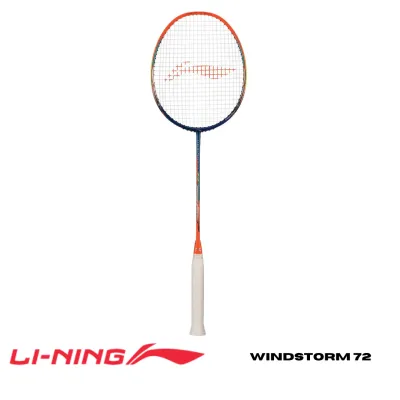
Prices are valid at publication and may change. Please refer to the product page for the latest price.
Shaft stiffness is the third critical pillar of racket performance, categorized generally as flexible, medium, or stiff. A flexible shaft acts like a spring, bending more during the swing and snapping back to provide extra whip and depth on clears, which is highly beneficial for players with slower swing speeds. Conversely, players with very fast, explosive swings often require a stiffer shaft to ensure precise energy transfer, as a highly flexible shaft can lag during rapid, high-force swings.
Frame Technology and Material Construction
The durability and feel of a lightweight racket depend heavily on its structural materials. When researching the Windstorm 72, you should review the official specifications for advanced carbon fiber composites, such as high-tensile carbon fiber or specialized resin systems. These materials are designed to enhance the structural integrity of the thin frame walls, ensuring that the racket can withstand high impact forces and minimize unwanted vibrations when striking the shuttlecock.

Frame geometry also plays a major role in how a racket cuts through the air. Many modern lightweight rackets utilize aerodynamic frame profiles, which feature tapered or curved cross-sections to reduce drag. This aerodynamic design allows you to accelerate the racket head quickly, which is particularly advantageous when executing quick intercepting shots at the front of the court or defending against fast smashes.
Before stringing your racket, always check the manufacturer’s recommended maximum string tension limits, typically printed on the cone or shaft. Exceeding these limits can cause the lightweight frame to deform or crack under the immense pressure of the strings, especially during off-center hits. Adhering to the recommended tension guidelines preserves the structural life of your racket and ensures you remain compliant with the manufacturer’s warranty policies.
Translating Specs to On-Court Performance
The unique combination of an ultra-lightweight frame and a head-heavy balance point creates a distinct set of performance characteristics. In fast-paced doubles play, this profile excels during rapid mid-court drives and quick net play, where the ability to reposition the racket instantly is crucial. The head-heavy distribution helps ensure that your defensive blocks and short pushes still carry enough depth to keep your opponents from dominating the rally.
However, players must recognize the inherent trade-offs that come with an ultra-lightweight setup. While the head-heavy balance aids in power generation, a 72-gram racket will naturally produce less raw smash power and stability from the baseline compared to a traditional 3U or 4U head-heavy racket. In heavy, aggressive singles rallies where deep clears and thunderous smashes are required, the lack of overall physical mass can make it more challenging to maintain control.
Furthermore, a highly flexible shaft paired with an ultra-light frame may not suit every playing style. If a player possesses an exceptionally fast, aggressive swing, they might find that the flexible shaft bends too much, leading to a slight delay in shot execution and a loss of directional accuracy. Understanding these mechanical interactions helps you determine whether this specific specification profile will complement your natural technique.
Verifying Authenticity and Personal Fit Before Purchase
Due to the popularity of lightweight performance rackets, verifying the authenticity of your purchase is essential. Always inspect the racket for official brand security features, such as holographic stickers, unique serial numbers engraved on the cone, and high-quality paint finishes. Purchasing your equipment from authorized physical retailers or official online brand stores is the most reliable way to avoid counterfeit products that lack the structural integrity of the original design.
Before finalizing your choice, objectively assess your current physical capabilities, playing frequency, and injury history. While a lightweight racket is generally easier on the joints, a head-heavy balance still requires proper forearm technique to avoid strain during repetitive overhead clears. If you are transitioning from a heavier or head-light racket, the change in balance point can alter your timing and swing mechanics, requiring a period of adjustment.
If you are uncertain whether these specifications align with your game, consider consulting a certified badminton coach or testing a demo racket with a similar weight and balance profile. Many local clubs and specialized pro shops offer opportunities to test rackets on-court, allowing you to feel how the shaft flex and frame weight interact with your swing style. This hands-on evaluation is invaluable for making an informed decision.
Frequently Asked Questions (FAQ)
Is the Li-Ning Windstorm 72 suitable for beginners?
Yes, the specification profile of this racket is highly suitable for many beginners, primarily due to its lightweight construction and flexible shaft. The 72-gram weight makes the racket easy to swing, which helps new players develop proper hand-eye coordination without experiencing rapid arm fatigue. Additionally, the flexible shaft provides a natural whip effect that assists in clearing the shuttlecock deep, even if the beginner has not yet mastered high swing speeds. Beginners should still verify that the grip size is comfortable to prevent improper grip technique.
How does the Windstorm 72 compare to other rackets in the same weight class?
When comparing this racket to other options in the 6U or 7U weight class, you must look beyond the overall weight and compare secondary specifications like the exact balance point and shaft stiffness. While many ultra-light rackets are designed with a head-light balance for maximum defensive speed, this model features a head-heavy balance to offer a boost in offensive power. You should review the official manufacturer specification sheets side-by-side to compare the maximum recommended string tension limits and the specific carbon fiber grades used, as these factors influence durability and feel.
Community discussion
Share your experience or ask a question. Comments are reviewed before publication.