
Selecting the right wrist support is crucial for maintaining joint stability and preventing repetitive strain injuries during athletic activities. When choosing a li ning wrist guard, the optimal choice depends entirely on the specific biomechanical demands of your sport. Badminton, basketball, and weightlifting each place vastly different stresses on the wrist joint, requiring distinct levels of flexibility, compression, and structural support. Choosing the wrong type can restrict necessary movement or fail to provide adequate joint stabilization.
Identifying Wrist Support Needs for Your Sport
In racket sports like badminton, the wrist is subjected to high-frequency, repetitive movements. Players constantly execute rapid wrist snaps, smashes, and delicate drop shots that require an extremely high degree of flexibility. Because these movements are continuous, the primary risks are repetitive strain injuries and tendonitis. Furthermore, playing in warm, humid indoor halls—a common scenario in Singapore—leads to heavy sweating. A suitable guard for this environment must offer excellent sweat management and mild compression to keep the joint warm and supported without restricting the natural range of motion.
Basketball presents a very different set of physical demands. The sport involves high-impact movements, sudden changes of direction, and frequent physical contact. Players risk hyperextending their wrists during falls, blocking shots, or contesting rebounds. Therefore, a basketball wrist guard must provide moderate joint stabilization and light padding to absorb impacts. However, because ball handling, passing, and shooting rely heavily on precise wrist flexion and tactile feedback, the guard must not be so bulky or rigid that it interferes with your feel for the basketball.
Products mentioned in this guide
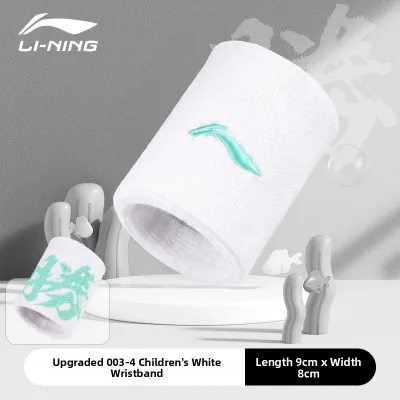

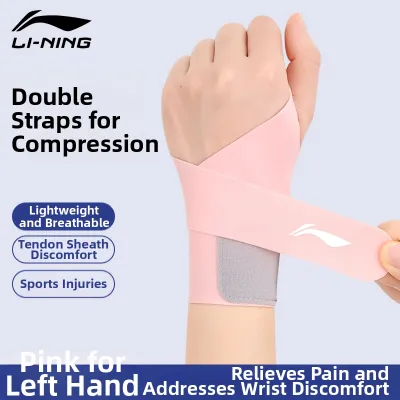
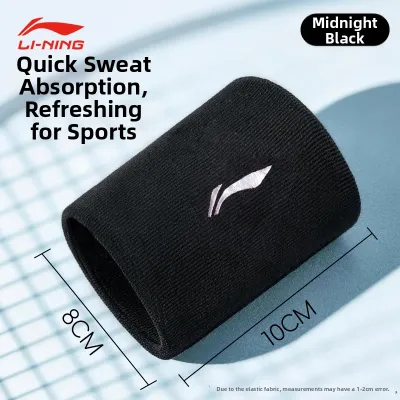
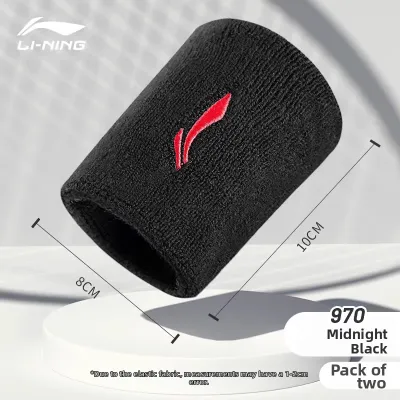
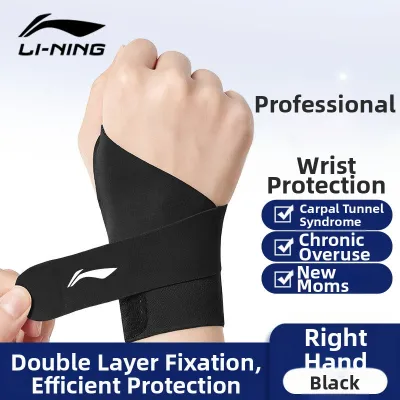
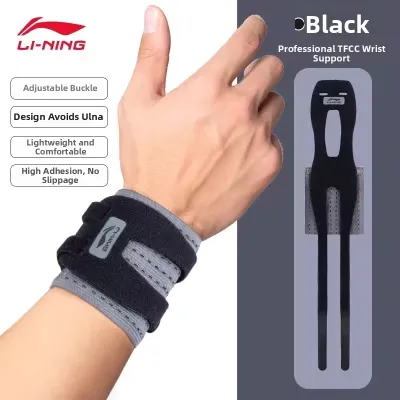
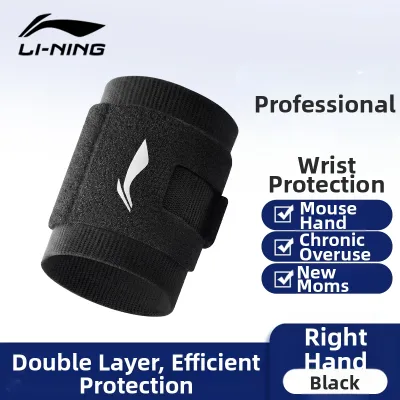
Prices are valid at publication and may change. Please refer to the product page for the latest price.
Weightlifting represents the extreme end of the support spectrum. When performing heavy overhead presses, bench presses, or cleans, the wrist joint must support massive axial loads. Under these heavy barbells, the wrist naturally wants to hyperextend, which can lead to severe joint strain or acute injury. Weightlifters do not need dynamic flexibility during a lift; instead, they require maximum rigidity and high-tension compression to lock the wrist in a safe, neutral, stacked alignment. The support must be robust enough to handle these extreme forces without slipping or stretching under load.
Evaluating Li-Ning Wrist Guard Features and Specifications
To find the right li ning wrist guard, you must know how to evaluate product specifications and material labels. The material composition is the first indicator of how a guard will perform during activity. For high-sweat sports, look for blends containing nylon, polyester, and spandex. These synthetic fibers are highly breathable and wick moisture away from the skin, which is essential for maintaining a secure grip and preventing skin chafing in humid climates. Neoprene is another common material that offers excellent heat retention and durability, making it highly suitable for joint warmth, though it is less breathable than knit fabrics.

Next, evaluate the compression mechanism of the guard. Li-Ning designs generally fall into three categories: elastic sleeves, adjustable wrap-around straps, and rigid splints. Elastic sleeves provide continuous, low-level compression and are highly flexible, making them ideal for recovery or light support. Adjustable wrap-around straps use hook-and-loop fasteners, allowing you to customize the tightness and support level on the fly. Rigid splints contain metal or plastic inserts designed to immobilize the joint; these are typically reserved for post-injury rehabilitation and are not suitable for active sports participation unless prescribed by a medical professional.
Finally, inspect the build quality indicators to ensure the guard can withstand the rigors of regular training. Look closely at the stitching along the edges; double-stitched or reinforced edge binding prevents the elastic material from fraying and losing its shape over time. The quality of the hook-and-loop fastener is also critical. High-density micro-hooks provide a secure hold that will not easily peel open during high-velocity movements, ensuring the guard remains firmly in place throughout your entire workout.
Matching Guard Structures to Your Activity
For badminton players, the priority is maintaining a lightweight, low-profile setup. A bulky guard will interfere with your racket grip and slow down your reaction time. Look for thin, slip-on elastic sleeves or very lightweight wrap-around bands. These structures provide mild compression to keep the tendons warm and supported while allowing full, unrestricted wrist articulation. This ensures you can still execute precise, high-speed wrist snaps without feeling held back by your gear.
For basketball players, a mid-thickness wrap-around guard is generally the most effective choice. These models typically feature an adjustable strap that wraps around the wrist joint, secured by a hook-and-loop closure. This structure allows you to tighten the guard during intense defensive play or loosen it slightly when you need maximum flexibility for shooting. The mid-thickness fabric provides a layer of protection against minor impacts and falls without adding excessive bulk that would compromise your ball-handling skills.
For weightlifters, heavy-duty, wide wrap-around models are essential. These wraps are typically made from stiff, high-tension elastic or heavy woven cotton blends, often featuring a thumb loop to assist with wrapping. They are designed to be wound tightly around the wrist joint multiple times, creating a rigid cast-like support. This structure is specifically engineered to handle heavy barbell loads safely by preventing any backward bending of the wrist during maximum efforts.
It is important to understand the cross-sport limitations of these different structures. A single wrist guard rarely optimizes performance and safety across all three activities. If you try to use a stiff weightlifting wrap for badminton, you will find it impossible to snap your wrist, severely limiting your play and potentially causing strain elsewhere in your arm. Conversely, using a thin badminton sleeve while attempting a heavy bench press offers virtually no structural protection against joint hyperextension, leaving you vulnerable to injury under heavy loads.
Sizing, Fit, and Safety Checks
Before using any wrist guard during intense physical activity, you must ensure it fits correctly. Start by measuring your wrist circumference accurately. Use a flexible measuring tape to measure around the narrowest part of your wrist, just above the wrist bone. Do not rely on generic small, medium, or large labels, as sizing standards can vary significantly between different product lines. Compare your exact measurement to the manufacturer’s specific sizing chart to select the correct size.
Once you have the guard, perform a tightness and circulation check. The guard should feel snug and supportive, but it must never cut off your circulation. After putting it on, check your fingers for any signs of numbness, tingling, coldness, or skin discoloration. If you experience any of these symptoms, the guard is too tight and must be loosened immediately to prevent nerve compression or vascular restriction.
Next, conduct a sport-specific range-of-motion check. For badminton, mimic a few overhead smashes and backhand clears to ensure the guard does not pinch your skin or restrict your natural swing. For basketball, practice your shooting release to verify that the guard allows proper wrist flexion. For weightlifting, test your grip on an empty barbell to ensure the wrap supports the joint without shifting or digging painfully into your hand.
Always prioritize your safety and listen to your body. If you notice signs of improper fit, persistent skin irritation, or if your wrist pain worsens while wearing the guard, stop the activity immediately. Remove the guard and consult a qualified healthcare professional or sports therapist. Remember that protective gear is designed to support healthy joints and assist in injury prevention; it is not a substitute for proper athletic training, correct technique, or professional medical treatment.
Frequently Asked Questions (FAQ)
Can I use the same Li-Ning wrist guard for both badminton and weightlifting?
No, using the same wrist guard for both sports is highly discouraged due to the conflicting physical demands of each activity. Badminton requires maximum flexibility and a low-profile design to allow rapid wrist snaps and precise racket control. Weightlifting, on the other hand, demands extreme rigidity and high-tension compression to stabilize the joint under heavy axial loads. A guard designed for weightlifting will completely restrict the movement needed for badminton, while a lightweight badminton sleeve will fail to provide the structural support required to lift heavy weights safely. To maintain optimal safety and performance, you should use separate, sport-specific guards.
How should I clean and maintain my wrist guard to prolong its lifespan?
To prolong the lifespan of your wrist guard, you should clean it regularly using gentle hand-washing methods. Wash the guard in cool or lukewarm water using a mild detergent, gently squeezing the fabric to remove sweat and dirt. Avoid using bleach or fabric softeners, as these chemicals can degrade the elastic fibers and weaken the hook-and-loop fasteners. Always air-dry the guard flat or hang it up away from direct sunlight and high heat sources, such as dryers or radiators. High heat can cause the elastic materials to warp, shrink, or lose their supportive tension permanently.

Community discussion
Share your experience or ask a question. Comments are reviewed before publication.