
Quick Answer: Which Liforme Thickness Should You Choose?
Choosing between the Liforme Original (4.2mm) and the Liforme Travel (2mm) yoga mats depends primarily on your typical practice environment, joint sensitivity, and daily transit habits. If your yoga sessions occur mostly at home or in a dedicated studio where you do not need to carry your equipment over long distances, the 4.2mm Original mat is the ideal selection. This thickness offers substantial cushioning that protects sensitive joints from hard floors, making it highly suitable for daily Vinyasa, Hatha, or Yin practices.
Conversely, if you are a commuter navigating public transit, a frequent traveler, or an outdoor practitioner who prioritizes portability, the 2mm Travel mat is designed for your lifestyle. This thinner model folds flat to fit into a backpack or suitcase, allowing you to maintain your practice on the go. However, this convenience requires a trade-off, as the minimal padding means you must rely more on natural body mechanics or use additional props to protect your joints during floor poses.
Given that Liforme mats sit in a premium price tier (typically ranging from S$180 to S$240 depending on the model and retailer), verifying your preferences before purchasing is key to protecting your investment.
Products mentioned in this guide
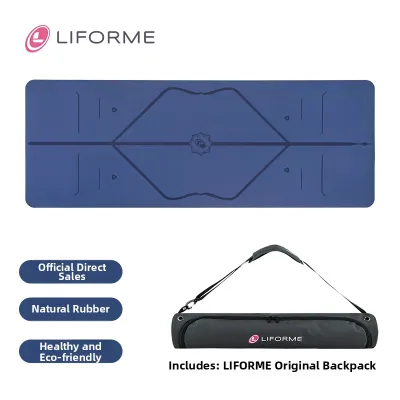
Prices are valid at publication and may change. Please refer to the product page for the latest price.
Cushioning, Stability, and Portability Compared
To determine which mat best supports your wellness routine, you must compare how these two thickness options perform across three core physical dimensions. The difference of 2.2 millimeters in material volume significantly alters how your body interacts with the ground, affecting joint comfort, balance, and the ease of transporting your gear.

Joint Cushioning and Comfort
The 4.2mm thickness of the Original mat serves as a robust barrier between your body and hard flooring surfaces, such as tiles, hardwood, or concrete. Liforme mats utilize a high-density natural rubber base that absorbs impact more effectively than standard PVC or lightweight foam mats. When executing poses that place direct pressure on small joints—such as low lunges, tabletop positions, or camel pose—this dense padding prevents your knees, wrists, and spine from pressing directly against the hard floor. This level of support is particularly beneficial for practitioners recovering from joint strain or those who enjoy holding restorative postures for extended periods.
In contrast, the 2mm Travel mat provides minimal cushioning, offering a highly firm surface that keeps you close to the ground. If you practice on this thinner mat, you will feel the hardness of the floor beneath you during kneeling or wrist-heavy poses. To prevent discomfort, you must engage your core and stabilizing muscles more actively to lift your weight out of your joints, rather than sinking into them. Practitioners with sensitive joints who choose the Travel mat often find it necessary to place a folded blanket, towel, or knee pad underneath their pressure points for added comfort. Before choosing, carefully evaluate your personal joint tolerance and the typical hardness of the surfaces where you plan to practice.
Balance and Stability in Standing Poses
While thicker mats offer superior comfort, they can sometimes introduce subtle instability during standing and balancing postures. The 4.2mm Original mat strikes an excellent balance between padding and firmness due to its dense rubber construction, which does not compress excessively underfoot. However, because there is still a layer of cushioning beneath you, your feet and ankles must make minor micro-adjustments to maintain stillness during challenging poses like Tree Pose or Warrior III. This slight movement is natural, but it requires a bit more active stabilization from your lower body.
The 2mm Travel mat excels in standing poses by providing a direct, unyielding connection to the floor. With less material compressing under your feet, your proprioception—the body’s ability to sense its position and movement in space—is significantly enhanced. This firm grounding makes it easier to find stability and maintain balance, as there is virtually no soft material to wobble against. Your toes can actively grip the solid surface, allowing for a more immediate and responsive connection to your foundation. For practitioners who focus heavily on standing balances, Ashtanga, or advanced arm balances, the solid feedback of the thinner mat can feel highly reassuring.
Weight, Foldability, and Travel Convenience
The logistical differences between these two options are substantial and will directly impact your daily routine. The Original mat is a heavy-duty piece of equipment, weighing approximately 2.5 kilograms. Because of its 4.2mm thickness and dense rubber core, it must be rolled for storage and transport, making it bulky to carry. While it typically comes with a customized carry bag featuring an adjustable shoulder strap, carrying this weight during a long walk or on a crowded transit commute can become a physical chore. It is best suited for a permanent home setup, a dedicated studio locker, or for practitioners who travel to local studios by car.
The Travel mat is specifically engineered to solve the problem of mobility, weighing approximately 1.6 kilograms. Its slim 2mm profile allows it to be folded flat into a compact rectangle, fitting easily into a standard backpack, tote bag, or carry-on suitcase. This foldability is a major advantage for mobile yogis, though you should note that frequent folding can create temporary crease lines in the polyurethane surface. While these creases typically flatten out during practice, they are a cosmetic trade-off of the foldable design. If minimizing carrying weight is your primary concern, the lighter load of the Travel mat is highly advantageous.
Matching the Mat to Your Yoga Practice
Aligning your choice with your specific yoga style, routine, and daily environment ensures you get the most value from your investment. Your physical location and the intensity of your practice will dictate which thickness keeps you grounded and comfortable.
Studio, Hot Yoga, and Home Practice
For a dedicated home practice or regular visits to a nearby yoga studio, the Original mat is generally the superior option. The extra cushioning supports daily routines, especially slower, longer-held styles like Yin, Hatha, or Restorative yoga where joint comfort is paramount. You can roll it out on a tiled floor or hardwood deck without worrying about the hard surface beneath. Having a dedicated, high-quality mat at home also encourages a more consistent practice, providing a designated wellness space that is always ready for use.
When it comes to Hot Yoga, both mats perform exceptionally well in terms of surface traction, as both utilize the brand’s signature moisture-absorbing top layer. However, sweat management is crucial. Because the open-cell polyurethane surface absorbs sweat to maintain its grip, you must verify the specific care and cleaning instructions on the product label. The thickness of the mat does not alter how the surface absorbs moisture, but a thicker mat may take slightly longer to dry completely in humid environments.
Traveling, Outdoor Sessions, and Commuting
If you frequently practice outdoors in parks, attend classes after a long transit commute, or travel abroad, the 2mm Travel mat is the logical companion. It is highly suited for navigating busy urban environments, such as commuting on the MRT in Singapore during peak hours, where carrying a bulky rolled mat is highly inconvenient. The ability to slip your folded mat into a regular work bag allows you to transition seamlessly from the office to the studio.
However, practicing outdoors introduces unique challenges. When using the 2mm mat on uneven grass, concrete, or wooden decking, you will feel every pebble and slope. To manage this trade-off, you may need to seek out softer ground, such as a flat grassy lawn, or overlay the mat with a travel towel to provide a slight buffer. If you commute but still want maximum cushioning, you must weigh the physical effort of carrying a 2.5kg mat against the comfort it provides once you arrive.
Durability, Grip, and Maintenance
Both the Original and Travel mats are constructed using high-quality, eco-friendly materials, typically featuring a natural rubber base paired with a polyurethane top layer. This means that the legendary dry and wet grip the brand is known for remains consistent regardless of the thickness you choose. The surface texture and alignment guide lines are designed to perform identically on both models, ensuring you never have to sacrifice traction for portability.
However, durability and wear patterns can differ based on how you store and transport them. Because the Travel mat is designed to be folded, it may develop temporary crease lines along the folds. While these creases generally flatten out during practice, repeatedly folding the mat in the exact same spots over several years can place localized stress on the material, potentially leading to faster wear along those lines. The Original mat, which is always rolled, avoids these crease points but requires more storage space and must be rolled with the colored top side facing outwards to prevent creasing.
To maximize the lifespan of either mat, you must follow low-risk, consistent maintenance steps. Always avoid exposing your mat to direct sunlight for extended periods, as UV rays degrade natural rubber, causing it to become brittle, fade, and lose its grip. Clean the surface using a soft, damp cloth with a tiny amount of mild, diluted soap if necessary. Avoid harsh chemical cleaners, alcohol, or abrasive scrubs, which can strip the polyurethane top layer and ruin the alignment markings.
In humid climates, such as Singapore, ensuring your mat is completely dry before rolling or folding it for storage is critical. Storing a damp mat can lead to musty odors, mold growth, and accelerate the breakdown of the natural rubber base. After a sweaty session, lay the mat flat in a shaded, well-ventilated indoor area—ideally under a ceiling fan or in an air-conditioned room—until it is completely dry to the touch. Always consult the care label and manufacturer’s instructions included with your specific purchase to ensure proper maintenance and protect your investment.
Final Verdict: How to Make Your Choice
To finalize your decision, evaluate your practice habits against these clear criteria:
Choose The Original (4.2mm) if:
- You primarily practice at home or commute to a local studio by car.
- You have sensitive knees, wrists, or ankles that require reliable joint protection.
- You practice slower, floor-based yoga styles like Yin or Restorative.
- You prefer a traditional, rolled mat that lies completely flat instantly.
Choose The Travel (2mm) if:
- You are a frequent traveler, commuter, or outdoor practitioner who prioritizes a lightweight load.
- You need a mat that can fold flat to fit inside standard suitcases or backpacks.
- You have strong joints and do not mind a firmer, more grounded connection to the floor.
- You are willing to use a towel or blanket overlay when extra cushioning is required.
Verify first if: If you are uncertain about your joint tolerance on a 2mm surface, try practicing on a hard floor with a thin towel to test your comfort level before purchasing. You should also check the current stock, color options, and exact product dimensions on the brand’s official website or through authorized local retailers to ensure you get the perfect fit for your wellness journey.
Frequently Asked Questions (FAQ)
Can I use the 2mm Travel mat for my daily home practice?
Yes, you can use the 2mm Travel mat for daily home practice, but it may not offer the comfort you desire for long-term floor work. If you choose to use it as your primary mat, consider placing it on top of a carpeted floor or using a folded blanket or yoga towel under your knees and wrists during high-pressure poses to prevent joint discomfort.
Do both mats feature the same alignment guide system?
Yes, the brand typically prints their signature alignment guide system on both the Original and Travel versions. This visual guide helps you maintain proper hand and foot placement during your practice. However, you should always verify the specific design and product details on the official website before making your purchase, as limited editions may vary.
Is the thicker mat better for hot yoga?
The thicker mat is not inherently better at managing sweat, as both options utilize the same moisture-absorbing polyurethane top layer to provide grip when wet. However, because the 4.2mm mat contains more material, it may retain moisture longer in humid environments. Both mats require thorough air-drying in a shaded, well-ventilated space after hot yoga sessions to prevent odors and material degradation.
Community discussion
Share your experience or ask a question. Comments are reviewed before publication.