
When your target muscles are ready for another three reps but your fingers are slipping off the barbell, your grip becomes the limiting factor in your training. This common bottleneck can stall progress in your back and posterior chain development, leaving you with understimulated muscles and fatigued forearms. Choosing the right lifting grip aid—whether lifting straps, lifting hooks, or grip pads—allows you to bypass this limitation safely. Each tool serves a distinct purpose, balancing security, setup speed, and tactile feedback to match your specific workout routine and experience level.
Identifying Your Grip Limitations and Training Needs
Recognizing when to introduce a lifting grip aid is key to optimizing your training. The most obvious signal of grip failure is when your forearms fatigue or burn intensely before the target muscle group, such as your lats during a row or your hamstrings during a Romanian deadlift. If you find your fingers slowly uncurling from the bar while your primary muscles still have energy left, your grip is limiting your muscular development.
Your training style and current phase also dictate your reliance on these accessories. Bodybuilders, who focus on muscle hypertrophy, often benefit from isolating target muscles without the distraction of grip fatigue. Powerlifters, on the other hand, must balance raw grip strength for competition rules with the need to handle high-volume accessory work. For general fitness enthusiasts, grip aids can help maintain proper lifting form during challenging pulling movements.
Products mentioned in this guide
Prices are valid at publication and may change. Please refer to the product page for the latest price.
However, mechanical assistance should not completely replace raw grip training. If you are a beginner, prioritizing natural grip development through raw lifts, hangs, and dedicated forearm exercises is essential. Introduce grip aids only when your primary goal is target-muscle overload, and your grip has demonstrably become the weak link preventing further progress on your heaviest working sets.
Lifting Straps: Maximum Security for Heavy Pulls
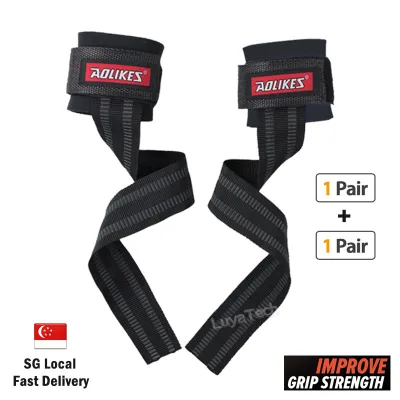
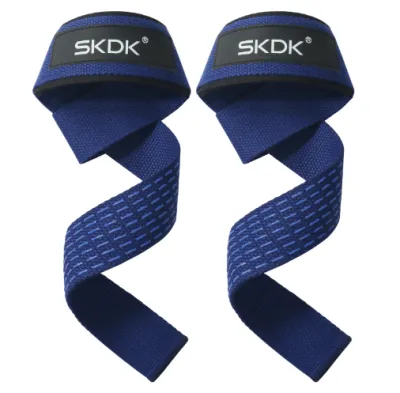
Lifting straps are the traditional choice for securing heavy loads, offering a highly customizable and secure connection to the barbell. They come in several structural variations, each suited to different exercises. Traditional loop straps (lasso straps) are the most versatile, wrapping securely around both your wrist and the bar, making them excellent for deadlifts, rows, and lat pulldowns. Figure-8 straps loop over the wrist, under the bar, and back over the wrist, locking you tightly to the bar; this design is highly favored by heavy deadlifters but does not allow for a quick release. Speed straps, or single-loop Olympic straps, are shorter and allow you to let go of the bar instantly, making them the standard choice for dynamic Olympic lifts like snatches.

While lifting straps provide excellent wrist support by distributing the load across the wrist joint, they do restrict wrist mobility. This restriction is beneficial when keeping the wrist in a neutral position during heavy pulls, but it makes them unsuitable for movements requiring wrist flexibility.
The primary trade-off with lifting straps is the learning curve and setup time. Wrapping lasso straps tightly around a bar requires practice, especially when using your non-dominant hand. Additionally, because they lock your hands to the bar, they are completely unsuitable for pressing movements. Using them during exercises like the bench press or overhead press can lead to severe injury if you lose control of the weight and cannot quickly free your hands.
Lifting Hooks: Quick Engagement for High-Volume Pulling
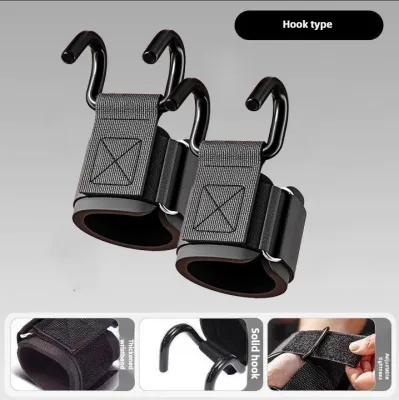
Lifting hooks offer a mechanical alternative to straps, utilizing a rigid metal or hard plastic hook coated in non-slip rubber, attached to a padded wrist strap. Instead of wrapping fabric around the bar, you simply place the hooks over or under the bar. This design transfers the weight of the bar directly to your wrists, bypassing finger fatigue entirely.
This quick-engagement mechanism makes hooks ideal for high-volume pulling exercises where wrapping straps between every set becomes tedious. They excel during shrugs, static holds, and heavy machine rows. However, they are highly incompatible with dynamic movements or exercises requiring wrist flexion, such as cleans, snatches, or wrist curls, as the rigid hook can slip or alter the bar path awkwardly.
Before choosing lifting hooks, you must verify that the hook curvature matches your hand size and palm width. If the hook is too wide, the bar will roll around inside it, causing uneven pressure and instability. If the hook is too narrow, it can pinch your fingers against the bar.
Additionally, because the load is transferred directly to your wrist joint, you must check for excessive wrist compression during use. Ensure the wrist strap features thick, high-density neoprene padding to distribute the weight comfortably and prevent nerve pinching or restricted circulation during heavy sets.
Grip Pads: Comfort and Callus Protection Without Full Lock-In
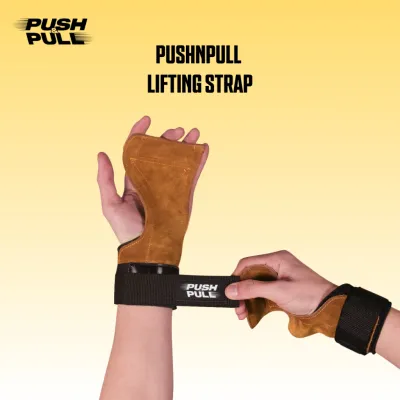
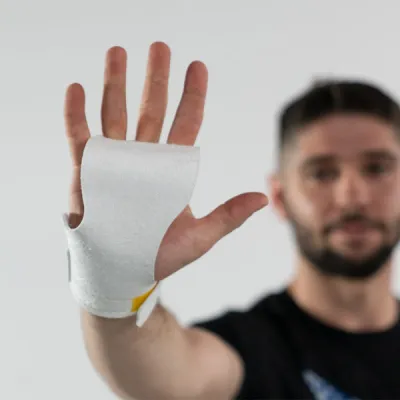
Grip pads are designed for lifters who prioritize skin protection and friction over a mechanical lock. Typically made of neoprene, textured rubber, or leather, these pads sit between your palm and the bar without wrapping around your wrist.
The material and thickness of the pad significantly alter your perception of the barbell. Thicker neoprene pads offer excellent cushioning against calluses and blisters, but they increase the effective diameter of the bar. A thicker grip can actually increase forearm fatigue because your hand must open wider to hold the bar. Textured rubber pads are thinner and offer high friction, making them excellent for maintaining a secure hold on sweaty or worn barbells without altering your grip mechanics.
While grip pads are highly effective at preventing calluses and slipping caused by sweat, they do not mechanically secure your hands to the bar. Therefore, they are not suitable for preventing bar slippage during maximal, heavy deadlifts where your grip strength is completely exhausted.
Instead, grip pads are highly versatile for moderate-weight training. They are ideal for dumbbell presses, pull-ups, moderate rows, and machine-based exercises where you want a hygienic barrier and a reliable, non-slip surface without the bulk of wrist straps.
Decision Matrix: Matching the Grip Aid to Your Routine
To select the right tool for your workout split, consider how your training goals align with the specific strengths of each accessory.
Choose lifting straps if your routine centers on maximal pulling loads, such as heavy deadlifts, Romanian deadlifts, or heavy barbell rows. They provide the most secure lock-in and allow you to focus entirely on posterior chain recruitment without worrying about dropping the weight.
Choose lifting hooks if your workouts involve high-volume back training, shrugs, or lat pulldowns, and you prefer a fast setup. Hooks are perfect for lifters who find the wrapping process of traditional straps frustrating or physically demanding.
Choose grip pads if your routine consists of a mix of pulling and pressing movements, moderate weights, and dumbbell work. They are the best choice if your primary goals are callus prevention, hygiene, and maintaining a secure grip in humid gym environments.
Verify first if you have pre-existing wrist discomfort or injury. If so, avoid heavy lifting hooks that transfer the entire load directly to the wrist joint. Instead, opt for a supportive, adjustable lasso strap that wraps snugly around the wrist, or use simple grip pads that do not involve wrist attachment at all.
Remember to preserve scenarios where no grip aid is used. Performing your warm-up sets, light accessory work, and dedicated grip exercises without assistance ensures your natural grip strength continues to adapt and grow alongside your major muscle groups.
Safety Checks and Maintenance for Lifting Grips
To prevent equipment failure and ensure safe training sessions, establish a regular inspection and maintenance routine for your grip aids.
Before every workout, perform a quick visual check of your gear. Look for fraying threads along the edges of cotton or nylon straps, cracking in the rubber coating of lifting hooks, and seam separation or weakening Velcro on wrist closures. If any component appears compromised, do not use it for heavy lifts.
When using straps or hooks, apply proper wrapping and wearing techniques. Ensure straps are wrapped smoothly around the bar without overlapping lumps, which can create painful pressure points on your palms. Wrist straps should be snug enough to stay in place but not so tight that they cause tingling, numbness, or coldness in your fingers, which indicates restricted blood flow or nerve compression.
Gym bags can quickly become breeding grounds for bacteria, especially in warm, humid environments. Hand wash your fabric straps and neoprene pads regularly using mild soap and warm water, then allow them to air dry completely in a well-ventilated area. Never store damp grip aids in a sealed gym bag, as this accelerates material breakdown and causes unpleasant odors.
Establish clear stop conditions for your gear. Retire and replace your lifting grip aids immediately if you observe deep tears in the fabric, bent metal hooks, or Velcro closures that easily pop open under light tension. Continuing to use worn gear risks sudden failure during a heavy lift, which can lead to severe muscle strains or dropped weights.
Frequently Asked Questions (FAQ)
Will using lifting grip aids weaken my natural grip strength?
Using grip aids will only weaken your natural grip if you rely on them excessively. If you use straps or hooks for every single exercise, including light warm-ups, your forearm muscles will not receive the stimulus needed to grow stronger. To prevent this, perform all warm-up sets and moderate-weight exercises with your raw grip. Reserve your grip aids strictly for your heaviest working sets where your target muscles require overload that your grip cannot support.
Can I use the same grip aid for both deadlifts and bench presses?
Generally, no. Deadlifts and bench presses have opposing mechanical demands. Deadlifts require a pulling aid to secure a hanging load, whereas bench presses require your hands to be completely free to push the weight and, if necessary, safely release the bar in an emergency. While grip pads can be used during bench presses to prevent slipping and protect your palms, lifting straps and hooks should never be used for pressing movements, as they can trap your hands under a failing barbell and cause catastrophic injury.
Community discussion
Share your experience or ask a question. Comments are reviewed before publication.